BULK MATCHA SAMPLES AVAILABLE REQUEST SAMPLES

Category: Matcha Applications

  • Matcha Latte Mix vs Pure Matcha Powder: Which Should Your Café Use?

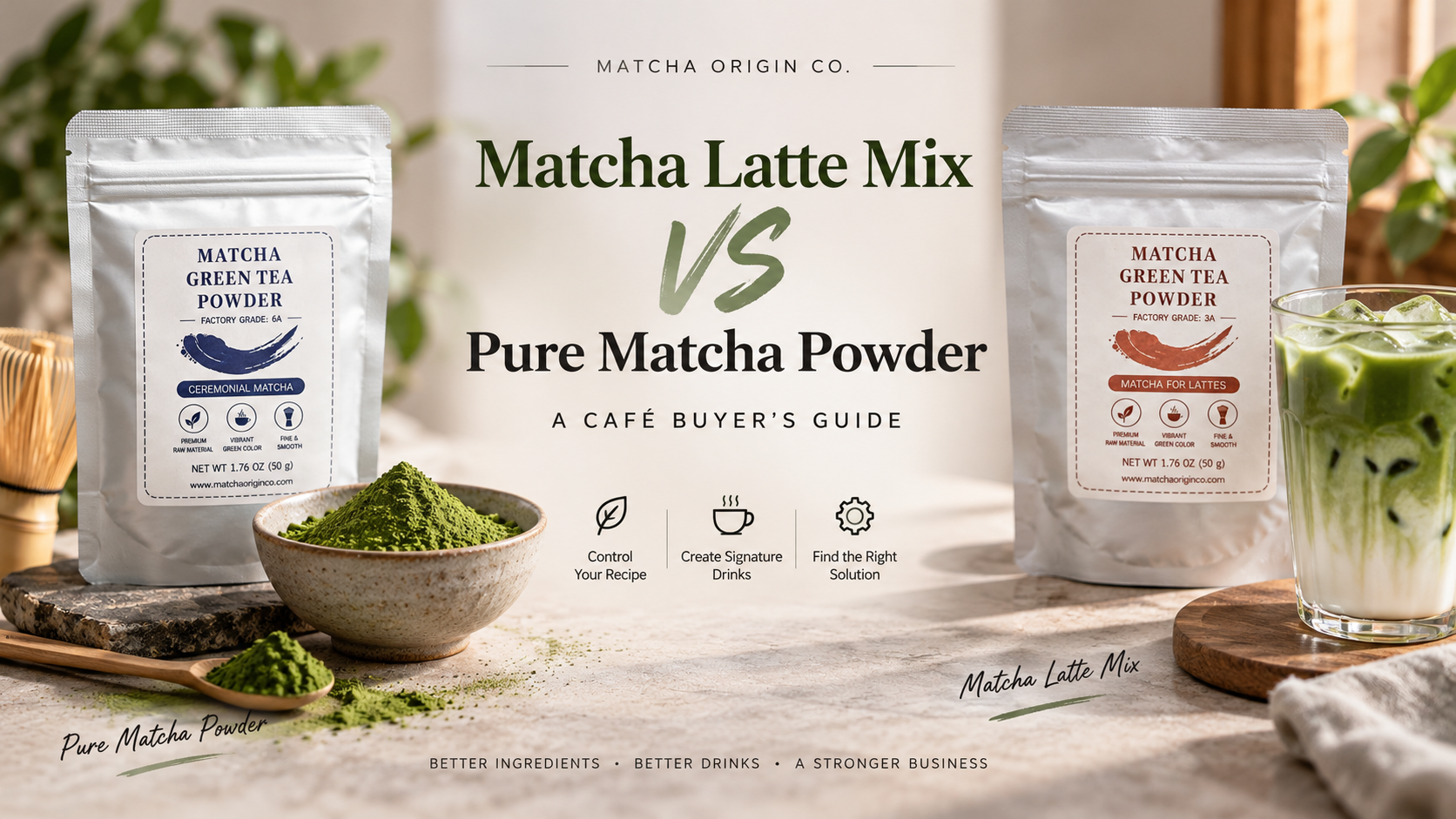
    Matcha Latte Mix vs Pure Matcha Powder: Which Should Your Café Use?

    Matcha latte mix and pure matcha powder are not necessarily interchangeable.

    A matcha latte mix may combine matcha with sugar, sweeteners, flavorings or other ingredients, depending on the product. Pure matcha powder gives a café more control over sweetness, milk choice, flavoring and recipe formulation because those elements are added separately.

    Neither format is automatically better for every business.

    The right choice depends on your menu, preparation workflow, ingredient-control requirements, target drink profile and cost per finished serving.

    For commercial buyers, the most important rule is simple:

    Do not choose only by the words “matcha,” “latte powder” or “latte mix” on the front of the package. Check the actual ingredient list, preparation instructions and recommended dose.

    What Is Matcha Latte Mix?

    A matcha latte mix is a formulated product intended to make matcha-style lattes easier to prepare.

    The formulation varies by product. Some mixes combine matcha with sugar. Others may use alternative sweeteners, flavor ingredients or other components.

    That means the term matcha latte mix does not describe one universal formula.

    Before buying, check:

    • the complete ingredient list;
    • whether the product is sweetened;
    • whether it contains flavors or other added ingredients;
    • the recommended amount per serving;
    • how the supplier recommends preparing it;
    • the packaging and storage instructions;
    • what product specifications or supporting documents are available.

    For a café, these details matter because a formulated mix can affect sweetness, drink cost, recipe flexibility and preparation workflow before milk or other ingredients are added.

    What Is Pure Matcha Powder?

    Pure matcha powder is used as a stand-alone tea ingredient rather than a pre-formulated latte blend.

    If a product is sold as 100% matcha, confirm that the ingredient information supports that claim.

    Using pure matcha allows the café to build the rest of the drink separately. The team can decide how much matcha to use, which milk base to pair with it, how much sweetener to add and whether the drink needs syrups, fruit, foam or other flavor components.

    This can be useful when a café wants to develop its own recipes rather than work from a pre-set blend.

    Pure matcha should still be evaluated in the finished drink. Dry powder appearance alone does not tell you how a product will perform with milk, ice, sweetener and the actual serving ratio.
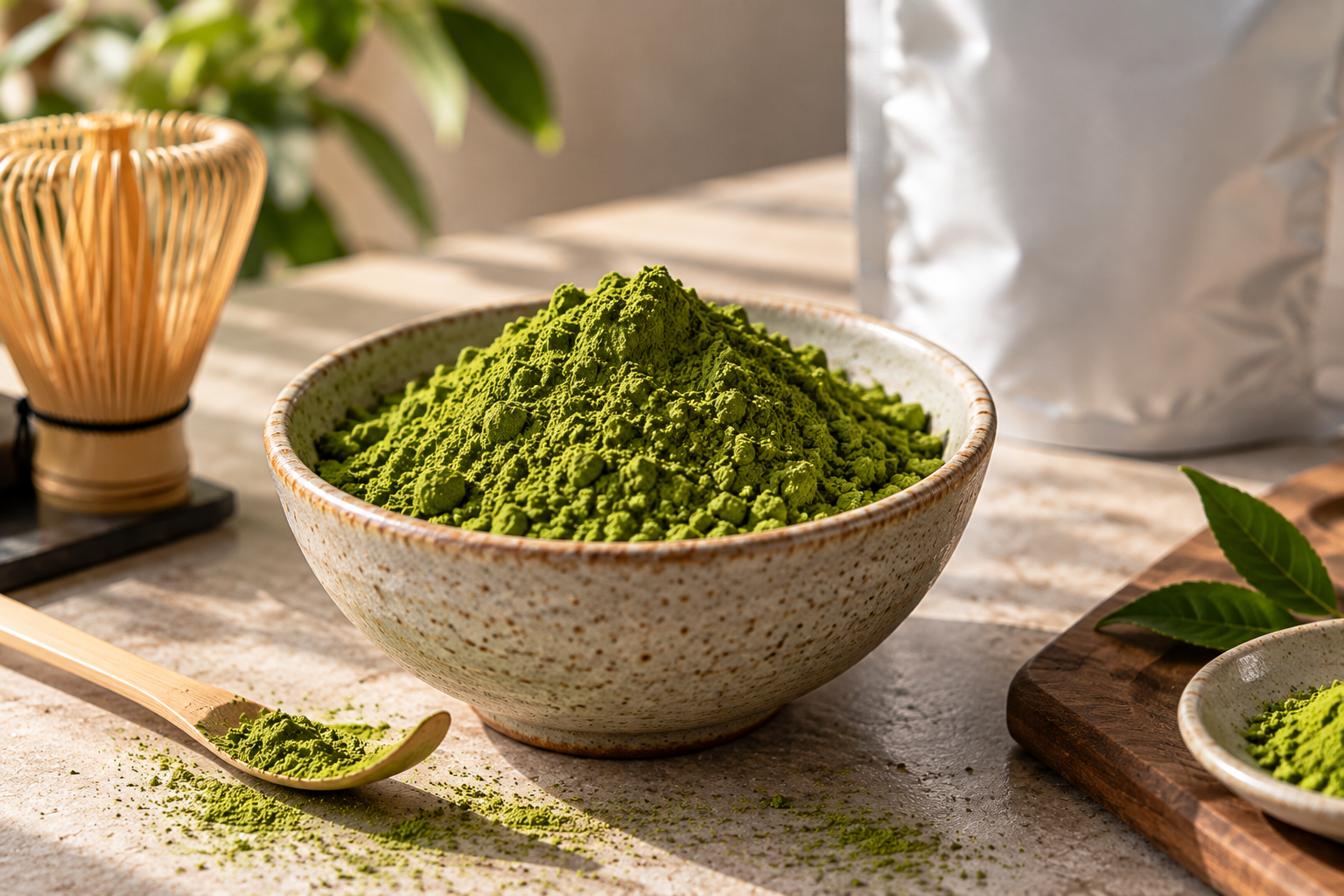
    Pure matcha powder in a bowl for café recipe evaluation

    For more on application testing, see Matcha for Lattes & Café Drinks.

    Is “Matcha Latte Powder” the Same as Matcha Latte Mix?

    Not always.

    The phrase matcha latte powder can be used in different ways by different suppliers. It may describe a formulated latte mix, or it may describe matcha powder positioned for use in lattes.

    For that reason, cafés should not classify a product by the marketing name alone.

    Check the ingredient list and preparation guidance first.

    A product name tells you how a supplier positions the product. The ingredient and specification information tells you what you are actually buying.

    Matcha Latte Mix vs Pure Matcha Powder

    Buying Factor Pure Matcha Powder Matcha Latte Mix
    Ingredients Matcha is used as the tea ingredient; confirm the actual ingredient statement for the product Formulation varies and may include matcha plus sweeteners, flavors or other ingredients
    Sweetness control Café controls sweetness separately Sweetness may already be partly or fully built into the formulation
    Milk choice Café selects milk independently Usually added separately, but follow the actual product instructions
    Recipe flexibility High control over dose, sweetness and other ingredients Depends on how much of the recipe is already built into the mix
    Preparation workflow Requires the café to define and document its recipe Can simplify some preparation steps if the formulation fits the menu
    Dosage Must be tested for the actual drink size and recipe Follow and test the recommended mix dose for the finished drink
    Cost comparison Compare matcha dose plus the cost of other drink ingredients Compare mix dose plus any additional ingredients still required
    Menu development Useful for custom and signature drink development Useful when a standardized formulation fits the intended workflow
    Sample testing Test the matcha in the real milk base and recipe Test the complete mix in the real milk base and service format
    Best fit Cafés that want ingredient and recipe control Cafés that value a more pre-defined formulation, if the product matches the menu

    The table is a purchasing framework, not a quality ranking.

    A pure matcha powder is not automatically better because it is pure, and a latte mix is not automatically lower quality because it is formulated.

    The decision should be based on what the product needs to do in the finished drink.

    When Pure Matcha Powder May Fit a Café Better

    Pure matcha may be a better starting point when the café wants to control the recipe itself.

    Typical reasons include:

    • developing signature matcha drinks;
    • changing sweetness by drink or customer preference;
    • using several milk bases;
    • testing different matcha doses;
    • using the same matcha across several menu items;
    • pairing matcha with seasonal syrups, fruit, cold foam or other flavor components;
    • comparing different matcha profiles in the same base recipe.

    For example, a café testing two matcha samples can keep the milk, sweetener, cup size and preparation method constant, then change only the matcha.

    That produces a more useful comparison than changing several recipe variables at the same time.
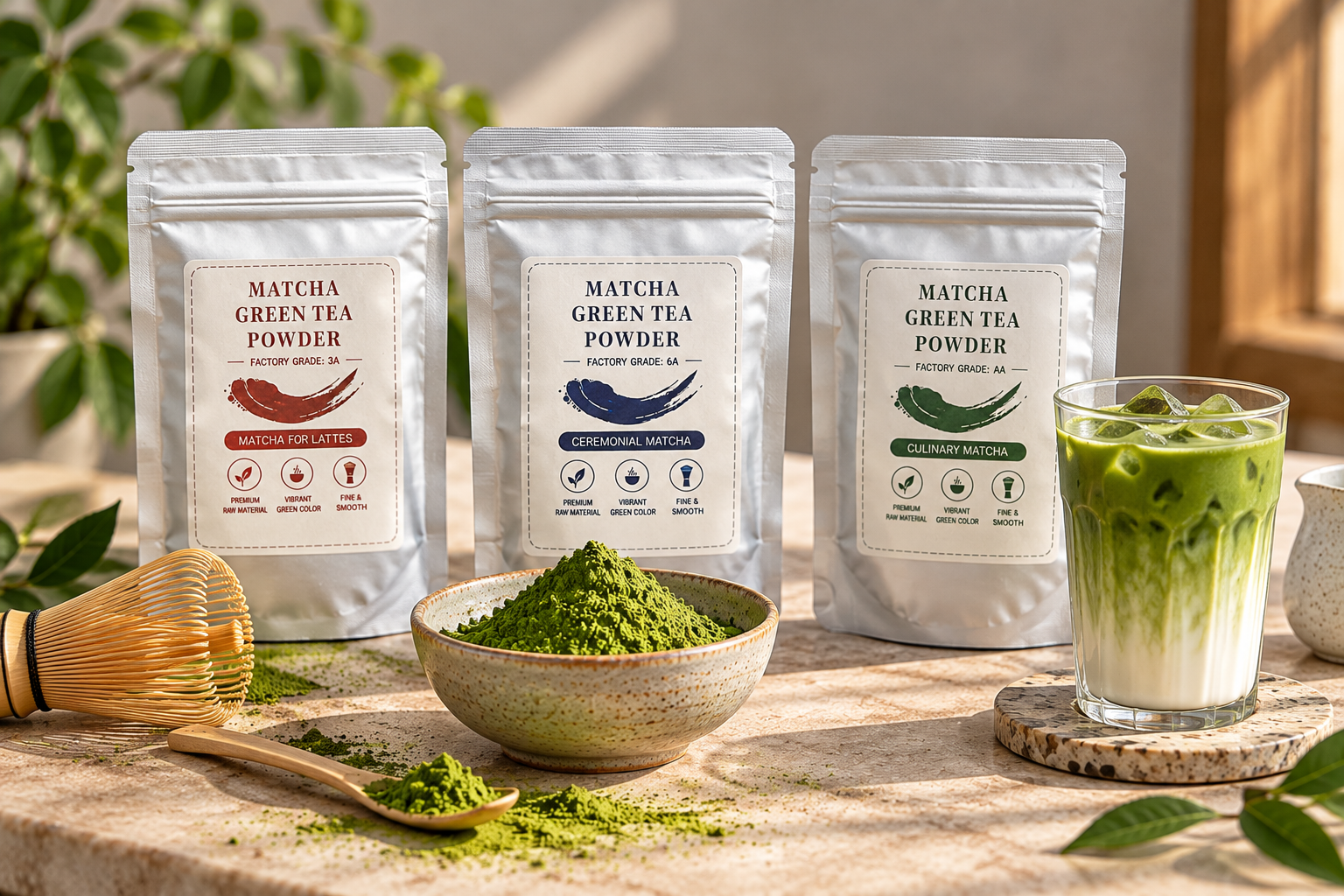
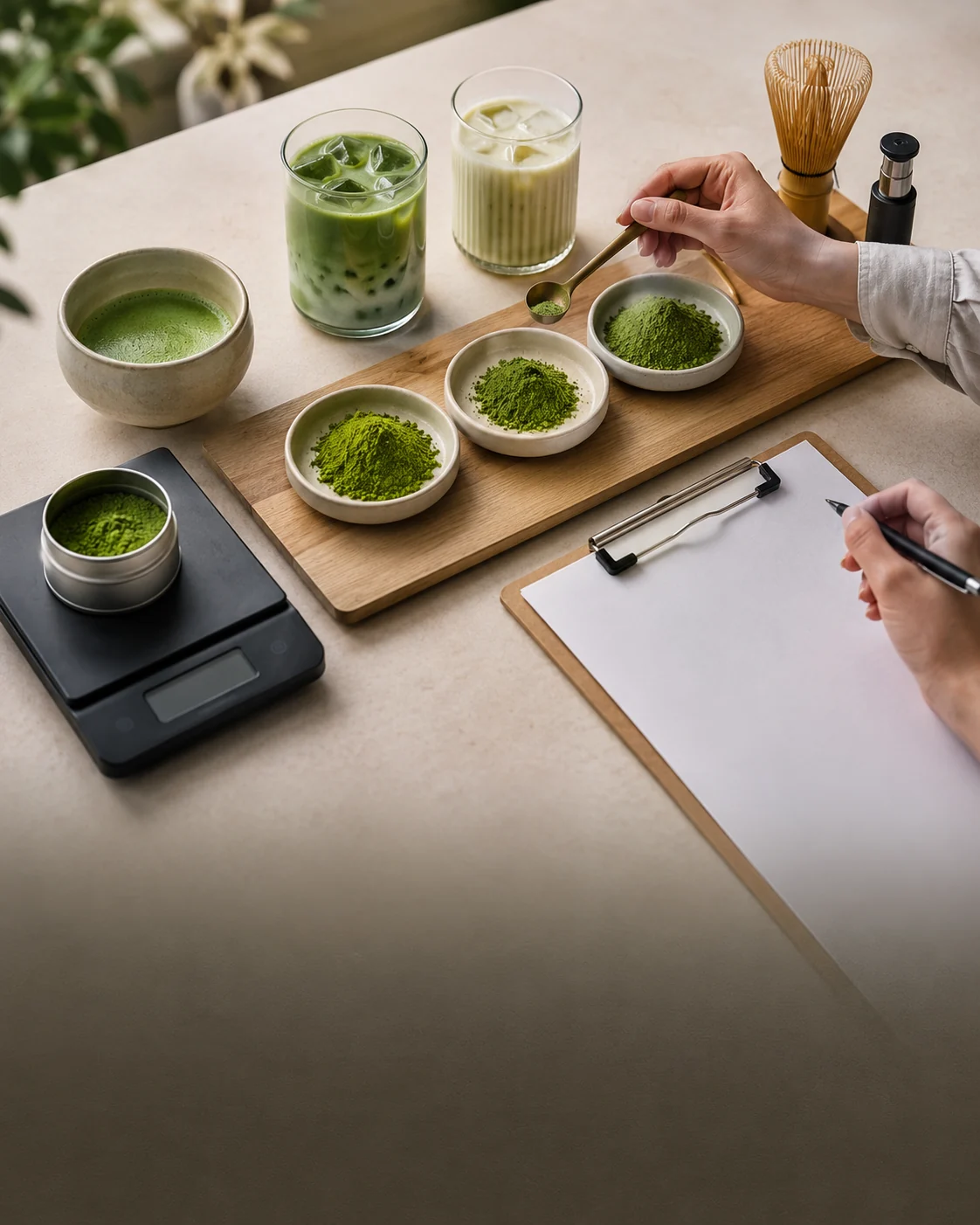
    Pure matcha powder profiles prepared for café latte testing

    If you are still defining the dose, review How Much Matcha Powder for a Latte?.

    When a Matcha Latte Mix May Fit Better

    A formulated mix may be practical when the operation wants a more standardized starting point.

    Possible reasons include:

    • fewer recipe components;
    • a more pre-defined sweetness level;
    • simpler staff instructions;
    • a fixed product concept;
    • a workflow built around a supplier-recommended serving dose.

    But the word mix is not enough to make the decision.

    Two matcha latte mixes can have different ingredient lists, serving doses, sweetness levels, flavors and costs per drink.

    A café should therefore test the actual product rather than assume that one mix can replace another at the same dose.

    Compare Cost per Finished Drink, Not Only Price per Kilogram

    Price per kilogram can be useful, but it does not tell you the full cost of the finished latte.

    For pure matcha powder, a simple starting calculation is:

    Matcha ingredient cost per drink = price per kilogram ÷ 1,000 × grams of matcha used per drink

    For a latte mix, use the same basic approach with the actual grams of mix used per drink:

    Mix ingredient cost per drink = mix price per kilogram ÷ 1,000 × grams of mix used per drink

    Then account for the remaining recipe.

    Depending on the drink, that may include:

    • milk;
    • syrup or other sweetener;
    • fruit or flavor ingredients;
    • foam or toppings;
    • cup, lid and other packaging.

    Do not assume that the lower price per kilogram produces the lower-cost drink.

    A product that requires a different serving dose or changes the number of additional ingredients can produce a different finished cost.

    If you are evaluating pure matcha powder for a café program, use the Matcha Cost Per Serving Calculator as a starting point for the matcha ingredient calculation.

    How to Test Matcha Powder and Latte Mix for a Café Menu

    Do not compare products under different preparation conditions.

    Build a simple test sheet and keep the relevant variables controlled.

    Record the product

    For each sample, record:

    • product name or sample code;
    • whether it is pure matcha or a formulated mix;
    • ingredient list;
    • supplier-recommended serving dose;
    • date or batch information when available.

    Fix the drink format

    Use the same:

    • finished drink size;
    • milk type;
    • milk volume;
    • ice quantity;
    • preparation equipment;
    • serving temperature;
    • cup format.

    If you are testing pure matcha powders against each other, keep the sweetener and matcha dose consistent unless dose is the variable you are intentionally testing.

    If you are testing a formulated latte mix, follow its preparation guidance first, then document any recipe adjustment separately.

    Evaluate the finished drink

    Review:

    • matcha flavor in the finished drink;
    • bitterness and astringency balance;
    • sweetness balance;
    • texture;
    • dispersion;
    • appearance;
    • preparation consistency;
    • preparation time in your workflow;
    • ingredient cost per serving.

    Appearance can be important for a customer-facing drink, but it should not be treated as a stand-alone measure of matcha quality.

    The goal is to identify the product and formulation that fit your actual menu.

    What Should a Café Ask Before Buying Matcha Latte Powder or Mix?

    Before committing to a larger order, ask the supplier for the information that affects your real application.

    Café Buyer Checklist

    1. What is the full ingredient list?
    Confirm whether you are buying pure matcha or a formulated product.

    2. What serving dose is recommended?
    A price comparison is difficult without knowing how much product is used per drink.

    3. Are sweeteners or flavors already included?
    This affects recipe design, labeling and ingredient cost.

    4. What product specifications are available?
    Ask for information relevant to the product you are actually evaluating.

    5. What quality or testing documents are available for this product or batch?
    Do not assume that one certificate or report applies to every product.

    6. What packaging formats are available?
    The right format depends on purchasing volume, storage and service workflow.

    7. What storage and shelf-life guidance applies?
    Use the supplier’s actual product guidance rather than a generic matcha rule.

    8. Can the café evaluate a sample before scaling?
    Testing in the real drink is more useful than choosing only from photos or category names.

    9. What commercial terms apply to repeat supply?
    Confirm the current order quantity, lead time, packaging and other project-specific conditions with the supplier.

    Which Format Should Your Café Choose?

    Choose based on the job the product needs to perform.

    Pure matcha powder may be the stronger fit when:

    • your café wants recipe control;
    • sweetness is adjusted separately;
    • the same matcha will be used in several drinks;
    • you want to compare matcha profiles in your own recipe;
    • your menu relies on custom or seasonal formulations.

    A matcha latte mix may be the stronger fit when:

    • the formulation already matches your intended drink;
    • you want a more standardized starting point;
    • simplifying part of the preparation process is valuable;
    • the mix performs consistently in your real milk base and service workflow.

    Neither option should be selected from the category name alone.

    Compare the actual ingredients, preparation method, finished-drink performance and cost per serving.


    Frequently Asked Questions

    What is matcha latte mix?

    Matcha latte mix is a formulated product intended for preparing matcha lattes. The formulation varies by product and may include matcha together with sugar, alternative sweeteners, flavors or other ingredients. Check the actual ingredient list rather than assuming every mix is formulated the same way.

    Is matcha latte powder the same as pure matcha powder?

    Not necessarily. “Matcha latte powder” is a product-positioning term and can be used differently by different suppliers. It may refer to pure matcha selected for latte applications or to a formulated latte product. Check the ingredient list and preparation instructions.

    Does every matcha latte mix contain sugar?

    No. Formulations vary. Some products contain sugar, some use other sweeteners and some may use different formulations. The product name alone is not enough to determine the ingredient composition.

    Can a café replace matcha latte mix with pure matcha powder at the same dose?

    Do not assume the same dose will produce the same drink. A formulated mix and pure matcha can differ in ingredient composition and intended serving amount. Re-test the recipe, sweetness and matcha dose under the café’s actual preparation conditions.

    How should cafés compare the cost of matcha powder and latte mix?

    Compare cost per finished drink, not price per kilogram alone. Calculate the actual amount of matcha powder or mix used per serving, then include the other ingredients required by each recipe.

    Which is better for cafés: matcha latte mix or pure matcha powder?

    It depends on the menu and workflow. Pure matcha gives the café more control over recipe formulation. A latte mix can provide a more pre-defined formulation. Test the actual products in the finished drink before deciding.


    Evaluate Matcha for Your Café Menu

    If you are evaluating pure matcha powder for hot, iced or milk-based drinks, test it in your actual recipe before scaling.

    Share your drink format, milk base, target flavor and expected purchasing volume. Matcha Origin Co. can review the application and recommend suitable matcha sample options for evaluation.

    Request Matcha Samples

    Sample availability, quantity, pricing, shipping and applicable documentation are confirmed according to the selected product and project.


  • How Much Matcha Powder Should You Use for a Latte?

    Quick Answer

    For a commercial matcha latte, start by comparing 2 g, 3 g and 4 g of matcha under the same cup size, milk, sweetness and preparation conditions.

    There is no universal dose. Choose the final amount based on the finished drink’s matcha intensity, color, balance and cost per serving—not the dry powder alone.

    1. Start With a Practical Matcha Dosage Test

    Instead of choosing one dose immediately, begin with a controlled comparison.

    For example:

    TestMatcha DosageWhat You Are Evaluating
    A2 gLighter, more milk-forward profile
    B3 gBalanced café-style matcha presence
    C4 gStronger matcha-forward profile

    These are testing points, not universal recipe standards.

    The same 3 g dose may perform very differently depending on the matcha product, milk volume and sweetener level.

    Keep the rest of the recipe identical during the test. That means the same:

    Application Test

    Keep milk, cup size, sweetener, water, ice and preparation method unchanged. Change only the matcha dose so the comparison reflects the matcha amount rather than a different recipe.

    • cup size
    • milk
    • sweetener
    • water
    • ice
    • preparation method
    • serving temperature

    Only change one variable: the amount of matcha.

    This gives you a much clearer comparison.

    2. Matcha Dosage by Cup Size

    A dosage that performs well in a smaller cup may taste weak when the same amount is used in a larger serving.

    Increasing milk volume without adjusting the matcha changes the ratio between tea and the rest of the drink.

    When testing recipes, record:

    • cup volume
    • matcha dosage
    • milk volume
    • water volume
    • sweetener quantity
    • ice quantity
    • preparation method

    Do not rely only on labels such as small, medium and large because actual serving volumes differ between cafés.

    The more useful metric is grams of matcha per finished serving.

    Build a Matcha Latte Recipe Matrix

    Commercial cafés benefit from recording recipes in a repeatable format. A simple testing matrix might look like this:

    VariableTest ATest BTest C
    Matcha2 g3 g4 g
    Cup SizeSameSameSame
    MilkSameSameSame
    SweetenerSameSameSame
    IceSameSameSame
    PreparationSameSameSame

    Then score each version for:

    • color
    • aroma
    • matcha intensity
    • sweetness balance
    • bitterness and astringency
    • mouthfeel
    • overall preference
    • cost per serving

    This creates a repeatable recipe-development process rather than relying on one person’s first impression.

    3. Why Milk Type Matters

    Key Takeaway

    If the final product is a latte, choose the matcha based on how it performs in milk—not on dry-powder appearance alone.

    Different milks can significantly change both the flavor and visual appearance of matcha.

    Dairy milk, oat milk, soy milk and other plant-based alternatives can affect:

    • perceived matcha intensity
    • sweetness
    • mouthfeel
    • finished color
    • bitterness perception
    • aroma

    A matcha that tastes strong when whisked with water may become much softer after being combined with milk.

    For that reason, cafés should test matcha in the same milk that will actually be used on the menu.

    If your café offers several milk options, the same dosage may not produce exactly the same sensory result across all of them. You do not necessarily need a different recipe for every milk, but the differences should at least be evaluated before launch.

    4. How Sweetness Changes Matcha Intensity

    Sugar and flavored syrups can reduce the perceived intensity of matcha.

    This becomes especially important in drinks containing ingredients such as:

    • vanilla
    • brown sugar
    • strawberry
    • coconut
    • fruit purée
    • flavored cold foam
    • sweetened milk

    A matcha that works well in a lightly sweetened drink may become difficult to perceive in a heavily flavored beverage.

    Rather than automatically increasing the matcha dosage, test the complete recipe first.

    The correct balance is between matcha intensity + sweetness + milk + finished flavor, not matcha dosage alone.

    5. Hot vs Iced Matcha Lattes

    Hot and iced drinks should not automatically be treated as the same formulation.

    Ice changes both dilution and serving temperature. Cold temperature can also change how customers perceive:

    • sweetness
    • aroma
    • bitterness
    • matcha intensity

    For an iced drink, additional dilution may occur as the ice melts.

    A café offering both formats should therefore run separate tests for hot matcha latte and iced matcha latte before locking the final recipes.

    6. Matcha Profile and Dosage

    Using more matcha is not always the solution to a weak latte.

    Different matcha profiles vary in:

    • flavor intensity
    • color
    • aroma
    • bitterness
    • astringency
    • texture
    • dispersion
    • performance in milk

    A stronger matcha profile may achieve the desired latte character at a different dosage than a softer profile.

    This is why commercial recipe development should evaluate matcha profile + dosage + finished application together.

    For café sourcing, see our matcha powder for lattes and café drinks.

    Do Not Judge Matcha Only by Powder Color

    Dry powder appearance is useful, but it does not tell you how the matcha will perform in your actual beverage.

    Dry Powder → Whisked Matcha → Finished Latte → Customer-Ready Recipe

    A very bright powder may still perform differently once combined with milk, sweetener and ice. The finished beverage is ultimately what your customer will experience.

    For a broader evaluation framework, see how to evaluate matcha powder quality for commercial use.

    7. Consider Matcha Cost per Serving

    For cafés, price per kilogram is only one part of the commercial calculation.

    Matcha cost per serving = Matcha price per kg ÷ 1,000 × grams used per serving

    If one recipe uses 2 g and another uses 4 g, the ingredient cost contribution from matcha doubles even though the matcha price per kilogram has not changed. This becomes significant across hundreds or thousands of drinks.

    However, the lowest dosage is not automatically the best commercial choice.

    If reducing the amount produces weak color, poor matcha flavor, excessive milk dominance or lower customer satisfaction, the lower-cost recipe may not be the better commercial recipe.

    The objective is to balance:

    • finished flavor
    • color
    • menu positioning
    • customer expectation
    • consistency
    • cost per serving

    Compare Matcha Cost by Finished Performance

    Two matcha products with different prices per kilogram should not necessarily be compared only by purchase price.

    Product A may cost less per kilogram but require a higher dosage, while Product B may cost more per kilogram but achieve the desired finished profile at a different dosage. That does not automatically mean either product is cheaper.

    Commercial buyers should compare price per kg + dosage + finished performance.

    This is one reason sample testing should happen before a larger purchasing decision.

    8. How to Run a Café Sample Test

    When evaluating several matcha products, use controlled conditions.

    Keep these variables identical:

    • milk
    • sweetener
    • matcha dosage
    • water temperature
    • water volume
    • preparation method
    • cup size
    • ice quantity

    Then compare:

    • finished color
    • matcha intensity
    • aroma
    • bitterness
    • astringency
    • dispersion
    • mouthfeel
    • aftertaste
    • cost per serving

    This method gives a much more useful comparison than evaluating powders only from photographs or dry appearance.

    Start with controlled product comparisons by requesting matcha samples for your café recipe.

    Use a Simple Café Evaluation Scorecard

    For a commercial sample test, your café team can score each matcha using the same criteria.

    Evaluation AreaWhat to Check
    ColorDoes the finished latte match your menu positioning?
    AromaIs the matcha still noticeable after adding milk?
    FlavorIs the tea character strong enough?
    BitternessIs it balanced at the intended dosage?
    MouthfeelDoes the finished drink feel smooth?
    DispersionDoes the matcha integrate consistently?
    Sweetness BalanceDoes the matcha remain noticeable with your sweetener?
    Cost per ServingIs the final recipe commercially practical?

    The scoring system does not need to be complicated. Its main purpose is to make every sample comparison more consistent.

    9. Standardize the Recipe Before Scaling

    Before purchasing larger commercial quantities, confirm both the matcha product and the recipe.

    Once your café has selected a matcha and locked the recipe, record:

    • matcha product
    • dosage
    • cup size
    • water volume
    • milk
    • sweetener
    • ice
    • whisking or mixing method
    • serving instructions

    This helps staff reproduce the same drink and gives purchasing teams a clearer estimate of expected matcha consumption.

    For commercial supply planning, calculate approximate monthly demand using:

    Drinks per day × matcha grams per drink × operating days

    This makes bulk purchasing and reorder planning much more accurate.

    Frequently Asked Questions About Matcha Dosage for Lattes

    How much matcha powder should I use in a latte?

    There is no universal dosage for every latte. For commercial recipe development, test several controlled dosage points—such as 2 g, 3 g and 4 g per serving—using the same milk, cup size, sweetness and preparation method. Choose the final amount based on the finished drink rather than the powder alone.

    Is 2 grams of matcha enough for a latte?

    It can be, depending on the cup size, matcha profile, milk volume and desired flavor intensity. A 2 g test is useful as a lower-dose reference point. If the finished drink tastes too milk-forward or the matcha character is difficult to perceive, compare it with a higher-dose version under the same conditions.

    Should an iced matcha latte use more matcha?

    Not necessarily. Iced drinks should be tested separately because ice, dilution and cold serving temperature can change the finished result. Rather than automatically increasing the dosage, test the actual iced recipe and compare matcha intensity, sweetness and dilution.

    Does stronger matcha mean I can use less powder?

    Potentially, but this should be confirmed through recipe testing. Different matcha products vary in sensory intensity and performance in milk. A stronger profile may achieve the desired result at a different dosage, but commercial decisions should be based on the finished drink.

    Does milk type change how much matcha I need?

    It can. Different dairy and plant-based milks affect sweetness, mouthfeel, color and perceived matcha intensity. Test the matcha with the milk actually used on your menu before deciding on the final dosage.

    Should cafés evaluate matcha in water before making a latte?

    Water evaluation can help buyers understand the matcha’s aroma, taste and whisking characteristics. However, if the final product is a latte, the commercial decision should ultimately be based on performance in the actual latte formulation.

    How do I calculate matcha cost per latte?

    Use: matcha price per kg ÷ 1,000 × grams of matcha used per drink. This gives the direct matcha ingredient cost per serving. For commercial evaluation, calculate milk, sweetener, packaging, labor and other ingredient costs separately.

    Can I request matcha samples for café testing?

    Yes. Sample evaluation allows café buyers to compare different matcha profiles using their actual milk, cup size, sweetness and preparation method before moving to larger commercial quantities. Request Matcha Samples.

    Ready to Test Matcha in Your Café Recipe?

    The most reliable way to select matcha for a commercial latte program is to test it in the drink you actually plan to sell.

    Tell us your cup size, milk type, target flavor, hot or iced format, estimated volume and destination market. Matcha Origin Co. can help you compare suitable matcha profiles through sample evaluation before moving to commercial supply.

    Turn the recipe into a purchasing plan: After standardizing grams per drink, use the Matcha Cost Calculator to estimate cost per cup, monthly usage and a practical planning quantity.