Matcha Cost Per Serving Calculator for Cafés
Estimate matcha cost per drink, monthly usage and a practical planning quantity using your café recipe, supplier price and service volume.
- 01Price per kilogramConverted to cost per gram
- 02Your recipe doseApplied to each finished drink
- 03Service volumeProjected across operating days
How Matcha Cost Per Serving Is Calculated
The calculator starts with a straightforward recipe-level formula:
Matcha cost per serving = Price per kilogram ÷ 1,000 × grams used per drink
Dividing the kilogram price by 1,000 gives the cost of one gram. That number is multiplied by the amount used in the café’s actual drink recipe. If a waste or preparation buffer is entered, the calculator increases the working dose by that percentage before calculating per-drink and monthly requirements.
Price per kilogram is useful, but it can be misleading when products perform differently in a finished drink. A lower-priced matcha that needs a larger dose to remain noticeable through milk may cost more per serving than expected. Compare products using the dose required for the approved recipe, not a universal dose or grade label.
What Should a Café Include in Matcha Drink Cost?
A useful café estimate begins with matcha, then adds the variable ingredients and service items used for each drink. Depending on the menu, this may include dairy or plant milk, a water or juice base, cups, lids, sleeves, straws, syrups, sweeteners and other recipe ingredients. Preparation waste can be included as a percentage when it reflects real service conditions.
| Cost input | What to enter | Why it matters |
|---|---|---|
| Matcha | Supplier or landed price per kilogram | Creates the recipe-level matcha cost |
| Recipe dose | Approved grams used per drink | Connects product price to actual performance |
| Milk or base | Per-drink dairy, plant milk, juice or water-base cost | Builds a broader variable ingredient estimate |
| Packaging | Cup, lid, sleeve and other service items | Captures takeaway costs that scale with volume |
| Other ingredients | Syrup, sweetener or recipe additions | Prevents an incomplete per-drink comparison |
These inputs produce a variable ingredient cost rather than a complete operating-cost model. Full operating profit also depends on labor, rent, equipment, utilities, freight, import duties, taxes, payment fees, promotions and other overhead. For that reason, the calculator labels the result as ingredient-level contribution and never as net profit.
Compare Cost and Finished-Drink Performance Together
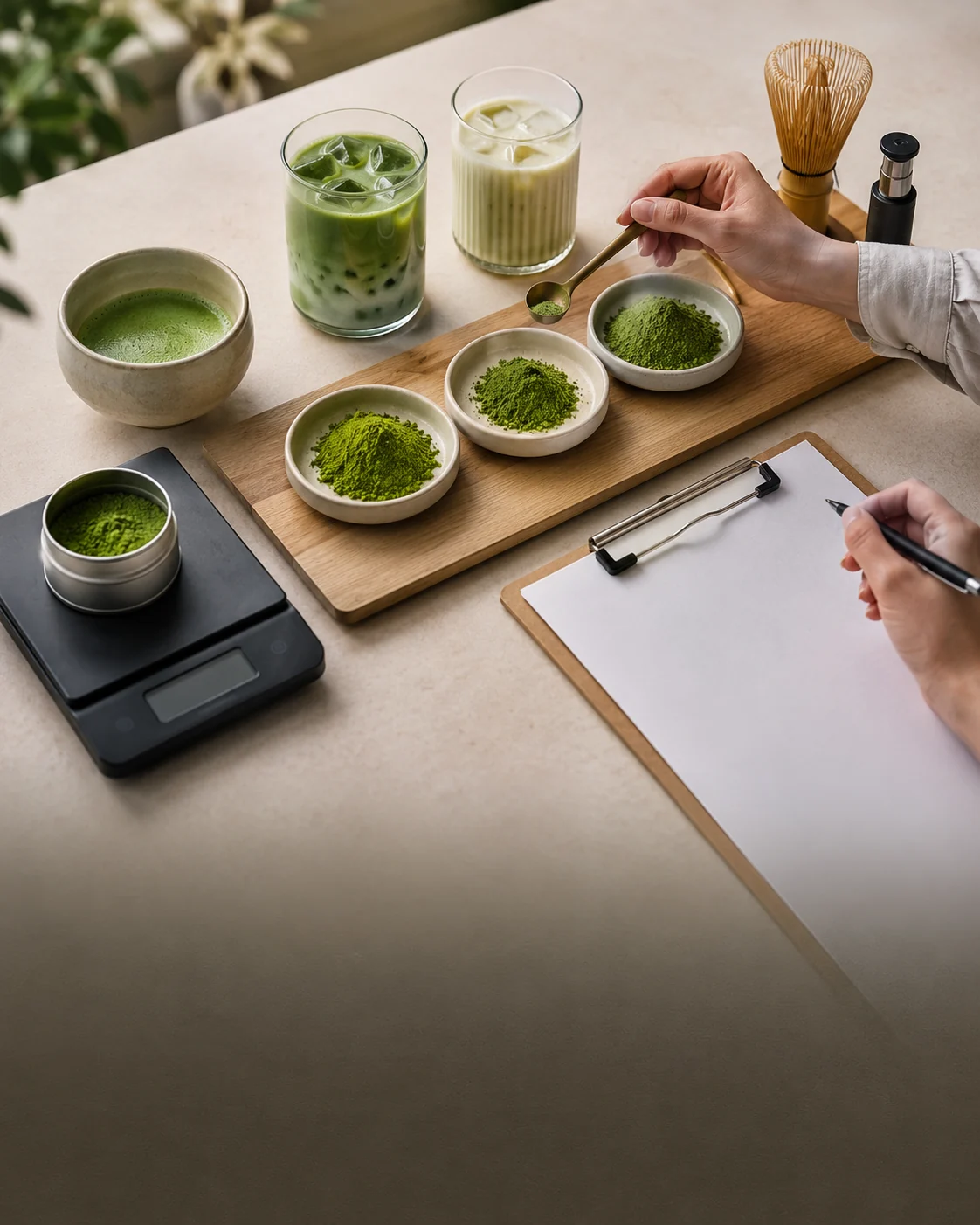
A cheaper product per kilogram is not automatically cheaper per finished latte if more powder is required to achieve the target tea intensity. Cost evaluation should therefore happen beside a controlled drink test. Keep the cup size, milk, sweetness, water temperature and preparation method consistent while comparing samples.
Review flavor through milk, finished-drink color, bitterness, texture and consistency across repeated preparations. Hot and iced drinks can present the same matcha differently: dilution, ice, temperature and the order of assembly can change perceived strength and color. Dairy milk, oat milk and other bases can also change sweetness, body and the way tea character comes through.
Use the approved dose, not the lowest possible dose, when comparing products.
Use projected volume as a starting point, then account for lead time and inventory buffer.
Read this as an ingredient-level estimate, not a complete profit calculation.
The dose scenario table shows the financial effect of a small dose change around the recipe entered. It is an illustrative planning aid, not a recommendation to reduce or increase dosage. A recipe change should only be approved after checking taste, appearance and service repeatability.
From Café Samples to Commercial Supply
A practical development path is Profile → Sample → Recipe Test → Cost Per Serving → Repeat Supply. Start by defining the desired drink profile and service format. Compare application-matched samples in the café’s real recipe, then calculate the cost of the recipe that performs best. Monthly usage can then help frame an initial commercial planning range.
Explore matcha for lattes and café drinks for milk-performance considerations, or review how matcha grades and profiles relate to intended applications. When the recipe and expected volume are clearer, review bulk matcha supply and the site’s available documentation.
The planning range is based on projected usage only. A final order should also allow for lead time, safety stock, demand growth, preparation loss and reorder frequency. If the profile is not yet approved, request B2B samples before scaling.
Use the Estimate in Your Café Workflow
Compare milk performance, hot and iced use, color and recipe fit.
→ SUPPLYBulk MatchaReview commercial supply paths after recipe and volume are clearer.
→ DOCUMENTATIONAvailable DocumentationCheck which commercial and product documents may be available.
→ EVALUATIONRequest B2B SamplesValidate finished-drink performance before scaling the selected profile.
→Matcha Cost Per Serving Questions
How do I calculate matcha cost per latte?
Divide the matcha price per kilogram by 1,000 to calculate the price per gram, then multiply by the grams used in the drink. Add milk, packaging and other ingredient costs if you want a broader variable-cost estimate.
Should cafés compare matcha by price per kilogram?
Price per kilogram is useful but should not be evaluated alone. A matcha that requires a higher dose to remain noticeable through milk can have a different cost per serving than expected.
How much matcha should a café use per latte?
There is no single universal dose for every matcha, cup size or recipe. Test the actual product with the milk, sweetness and serving style used on the menu.
Does this calculator show café profit?
It estimates ingredient-level contribution only. It does not include labor, rent, utilities, equipment, taxes, freight, payment fees or other operating expenses.
How much matcha should I order each month?
Projected monthly usage is a starting point. Inventory buffer, lead time, preparation loss, menu growth and reorder frequency should also be considered.