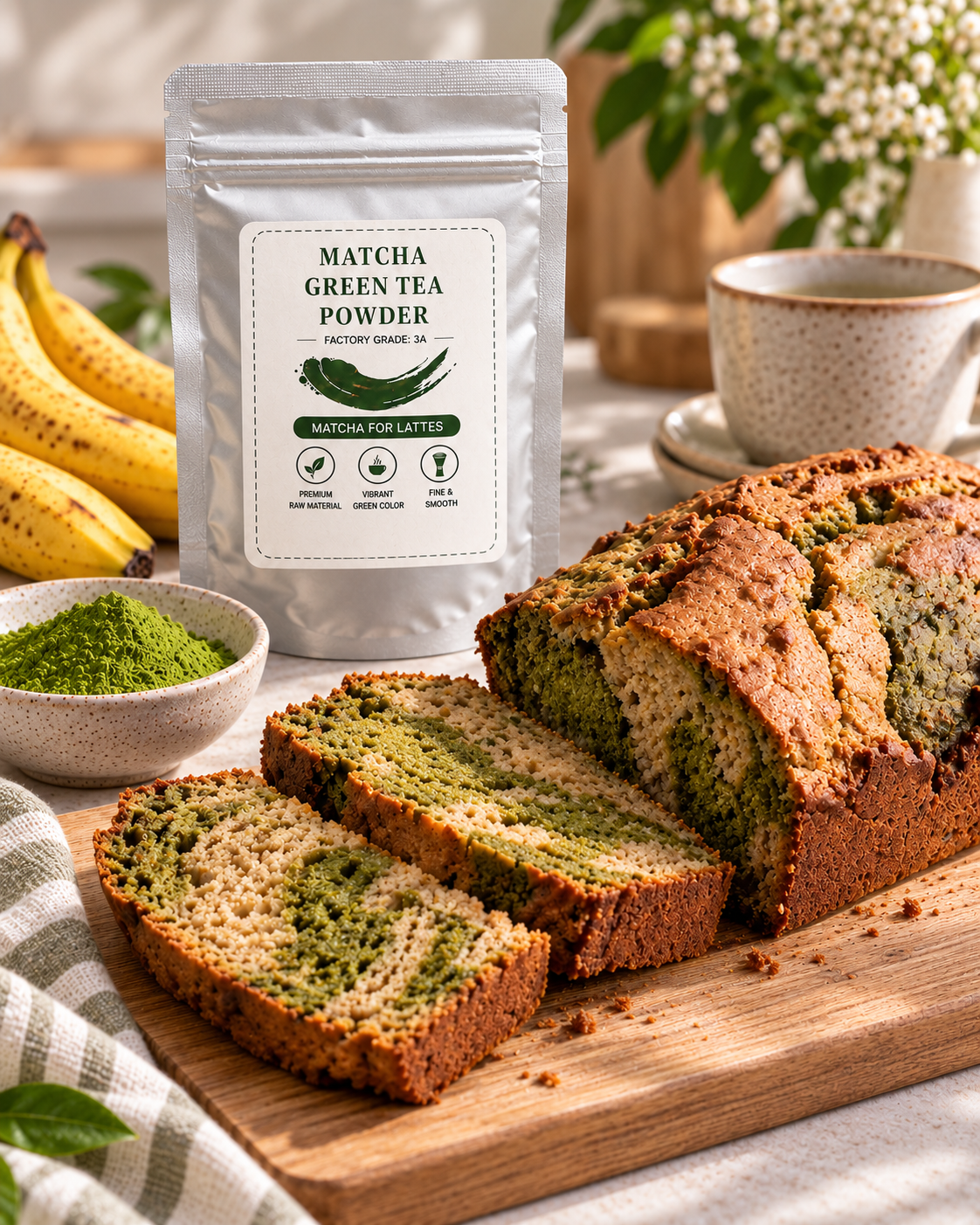
Brown butter, ripe bananas and matcha come together in this moist, lightly nutty banana bread with an earthy green-tea finish.
Browning the butter adds a deeper toasted flavor, while matcha gives the loaf a distinctive color and tea character. This recipe works for home baking and as a practical starting point for cafés and bakeries developing matcha loaf cakes, breakfast slices or seasonal bakery items.
For commercial baking applications, begin testing with a Culinary Matcha Profile. Baked products need matcha that remains noticeable alongside flour, butter, sugar and prolonged heat exposure.
Recipe Information
- Yield: 1 loaf, about 8–10 slices
- Prep Time: About 20 minutes
- Bake Time: 55–65 minutes
- Oven: 350°F / 175°C
- Matcha: 10–12 g
- Application: Bakery / Loaf Cake / Café Pastry
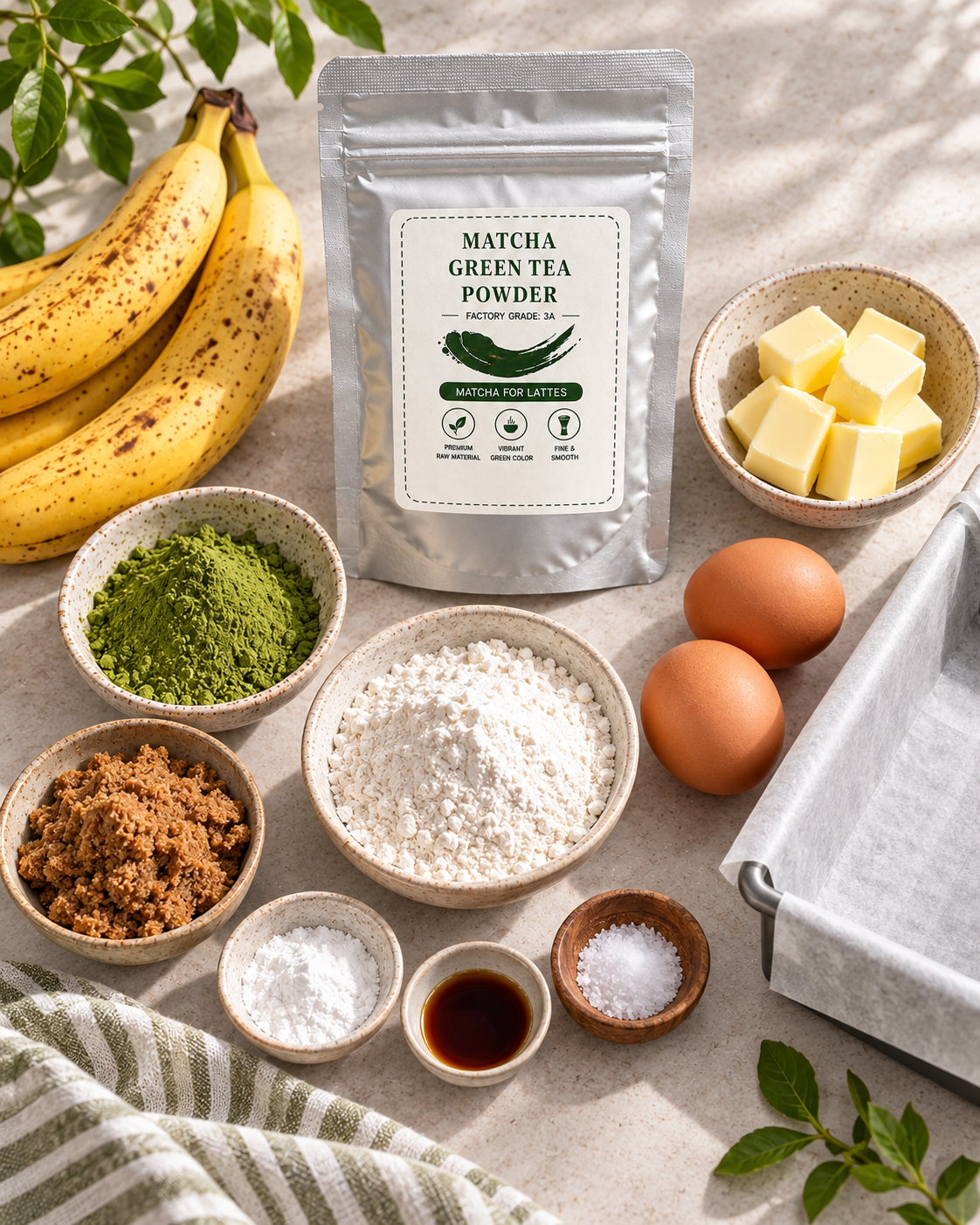
Ingredients
Wet Ingredients
- 3 ripe bananas, about 330–350 g mashed
- 115 g unsalted butter
- 150 g light brown sugar
- 2 large eggs
- 1 tsp vanilla extract
Dry Ingredients
- 220 g all-purpose flour
- 1 tsp baking powder
- 1/2 tsp baking soda
- 1/2 tsp salt
- 10–12 g matcha powder
Optional Additions
- 60–80 g white chocolate chips
- Chopped walnuts or pecans
How to Make Brown Butter Matcha Banana Bread
1. Brown the butter
Place the butter in a light-colored saucepan over medium heat. Let it melt, foam and gradually turn golden brown. When the milk solids become toasted and the butter develops a nutty aroma, remove it from the heat and cool for several minutes.
2. Prepare the bananas
Mash the ripe bananas in a large bowl until mostly smooth. A few small pieces are fine. Add the brown sugar, eggs, vanilla and cooled brown butter, then whisk until evenly combined.
3. Combine the dry ingredients
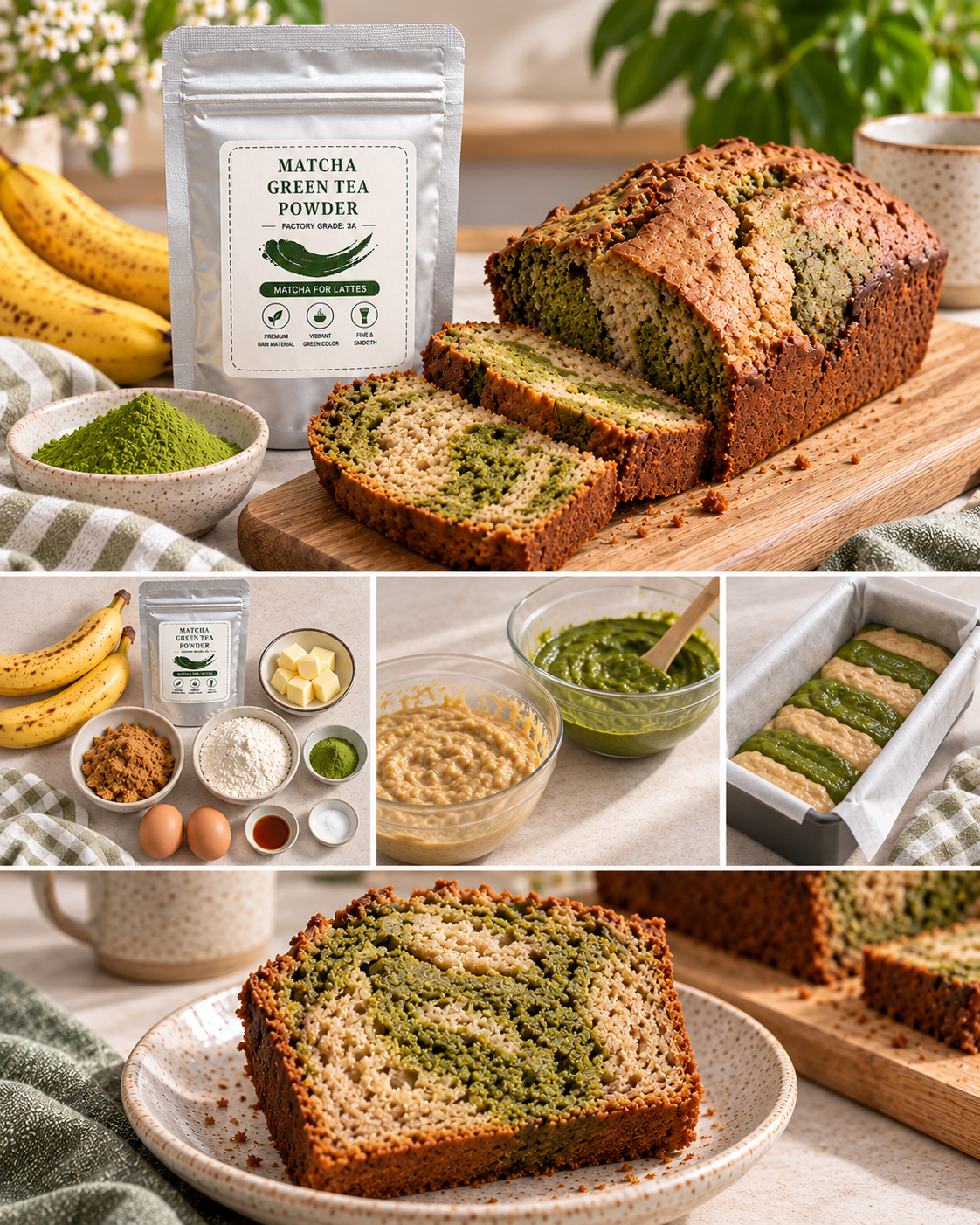
In a separate bowl, whisk together the flour, baking powder, baking soda and salt. Keep the matcha separate if you want a defined marbled loaf.
4. Make the banana bread batter
Fold the dry ingredients into the banana mixture only until the flour is mostly incorporated. Avoid overmixing, which can make the finished loaf dense.
5. Create the matcha batter
Divide the batter approximately in half. Sift the matcha into one portion and fold gently until evenly green. For a stronger matcha presence, use slightly more than half of the batter for the matcha portion.
6. Create the marble pattern
Line a loaf pan with parchment paper. Alternate spoonfuls of plain banana batter and matcha batter in the pan. Run a knife or skewer through the mixture once or twice. Do not over-swirl, or the colors will blend together.
7. Bake
Bake at 350°F / 175°C for approximately 55–65 minutes. Check the center with a skewer or toothpick; the loaf is ready when it comes out with only a few moist crumbs. If the top browns too quickly, cover loosely with foil near the end.
8. Cool before slicing
Cool the bread in the pan for about 15 minutes. Transfer it to a rack and allow it to cool further before slicing so the crumb can finish setting.
Why Brown Butter Works with Matcha Banana Bread
Brown butter develops toasted, nutty aromas as its milk solids caramelize. Those deeper flavors balance the sweetness of ripe bananas and add more complexity than ordinary melted butter. Matcha contributes an earthy tea note and visual contrast. A balanced loaf should still taste clearly of banana while retaining a noticeable matcha finish.
A Note About Matcha Color When Baking
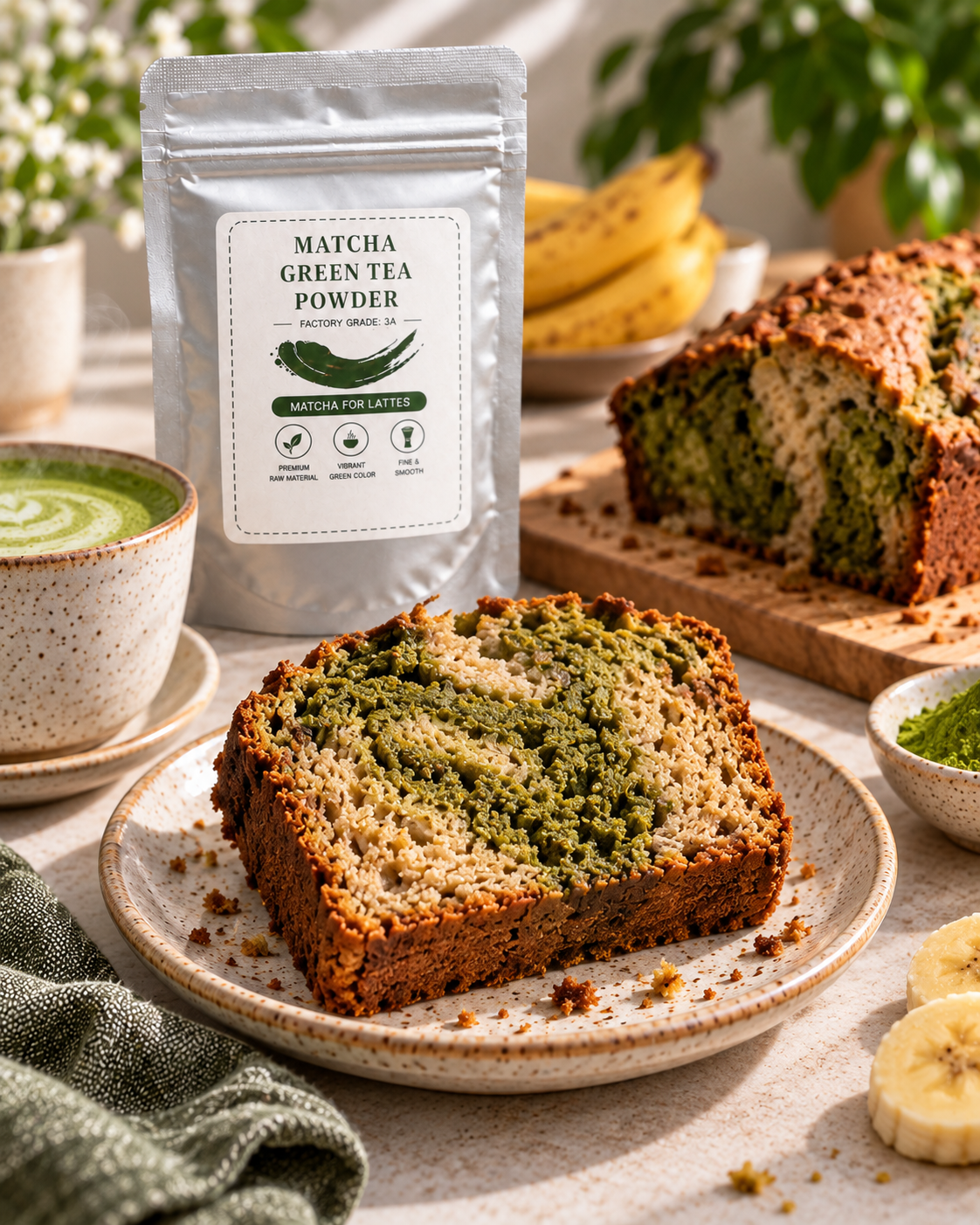
Matcha usually looks brighter in raw batter than it does after baking. Heat, baking time and the natural ingredients in banana bread can make the finished crumb appear more muted or olive-toned.
For cafés and bakeries, evaluate matcha based on finished color after baking, flavor after cooling, matcha dose, recipe sweetness and the actual baking temperature and time. Avoid judging performance only from the dry powder or raw batter.
Best Matcha Profile for Banana Bread
For this recipe, begin with the Culinary Matcha Profile. It is intended for baking, desserts, loaf cakes, cookies and food manufacturing. Because banana bread contains flour, butter, sugar and prolonged heat exposure, evaluate matcha in the finished baked product rather than only as dry powder.
Bakery Testing Notes
- Test the final baked color: Compare the loaf only after it has completely cooled.
- Avoid excessive baking time: Overbaking can darken the crust, reduce moisture and further mute the green appearance.
- Control matcha dosage: Too little matcha may disappear behind banana and brown butter; too much may add unnecessary bitterness or astringency.
- Consider the marble ratio: Test 50% matcha batter / 50% plain batter or 70% matcha / 30% plain, depending on the visual target for each slice.
Commercial Batch Guidance
| Batch | Matcha | Flour | Banana |
|---|---|---|---|
| 1 loaf | 10–12 g | 220 g | 330–350 g |
| 5 loaves | 50–60 g | 1.1 kg | 1.65–1.75 kg |
| 10 loaves | 100–120 g | 2.2 kg | 3.3–3.5 kg |
Testing Matcha for Bakery Products?
Different recipes can change how matcha looks and tastes after baking. Test the powder in your actual finished product before selecting a commercial matcha for banana bread, cookies, cakes or desserts.