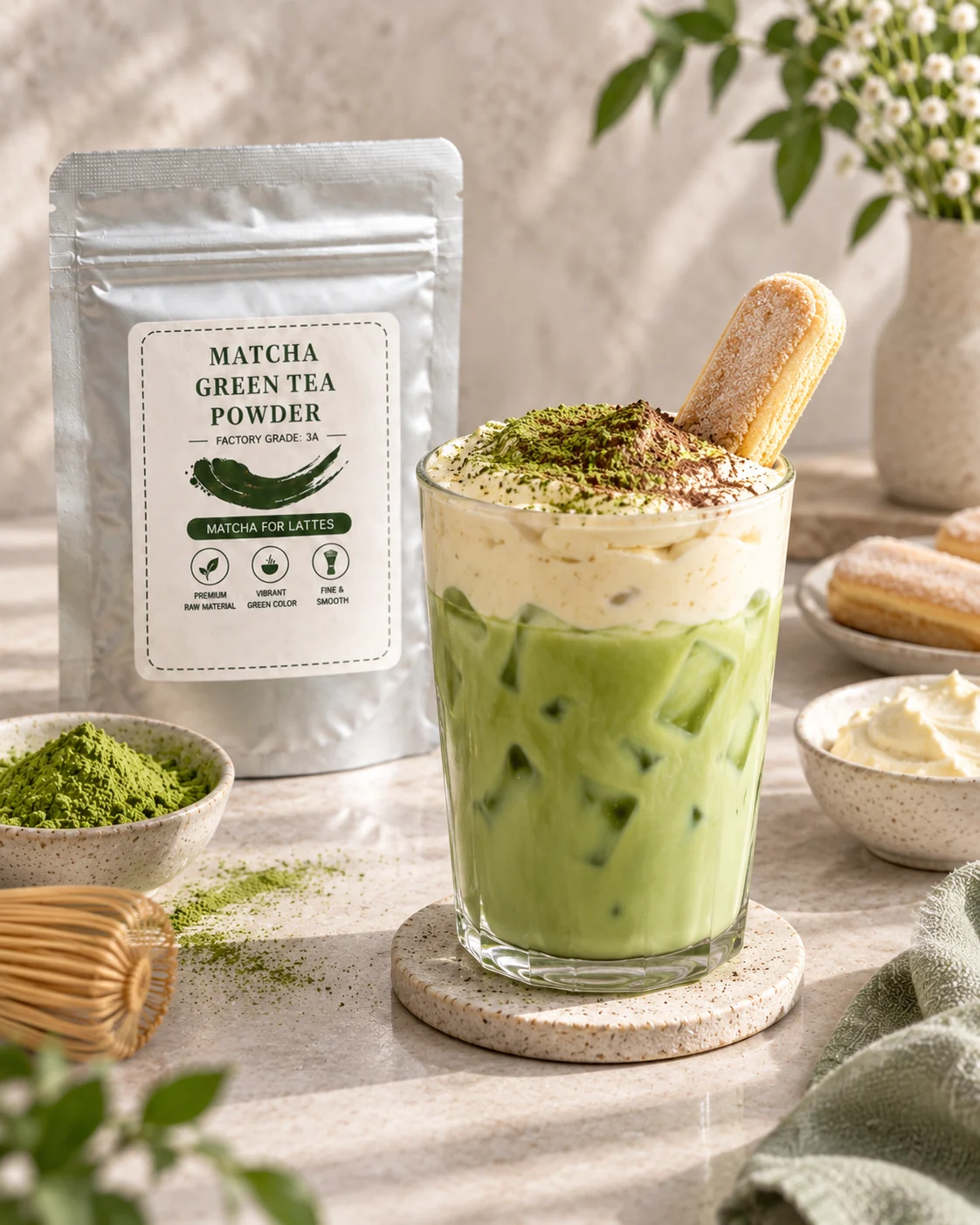
Creamy mascarpone, smooth matcha and cold milk come together in this dessert-inspired tiramisu matcha latte. Rather than recreating tiramisu exactly, the drink borrows the dessert’s signature mascarpone character while keeping matcha visible in both color and flavor.
The result is indulgent enough for a specialty menu while remaining recognizable as an iced matcha latte instead of becoming an overly heavy dessert shake.
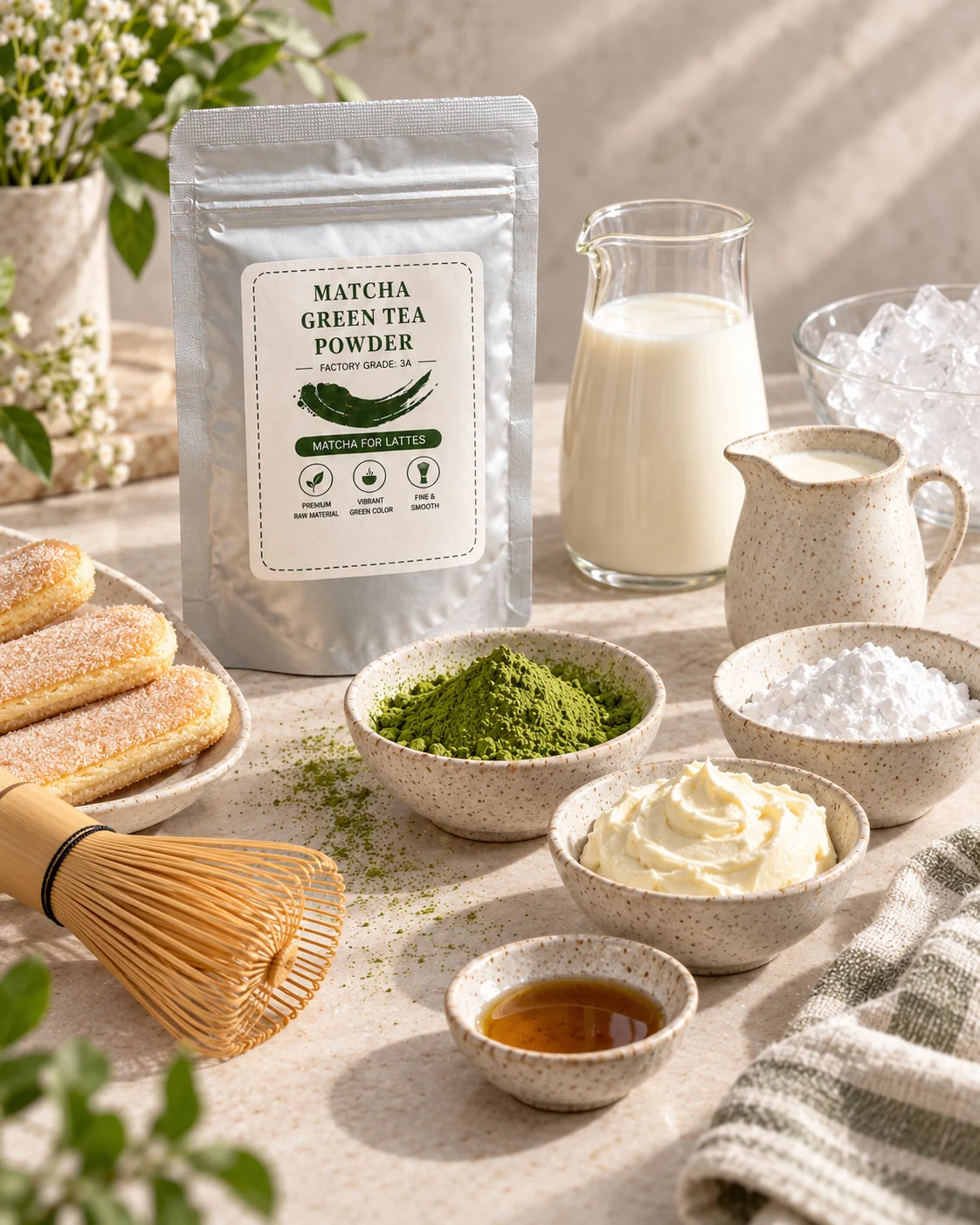
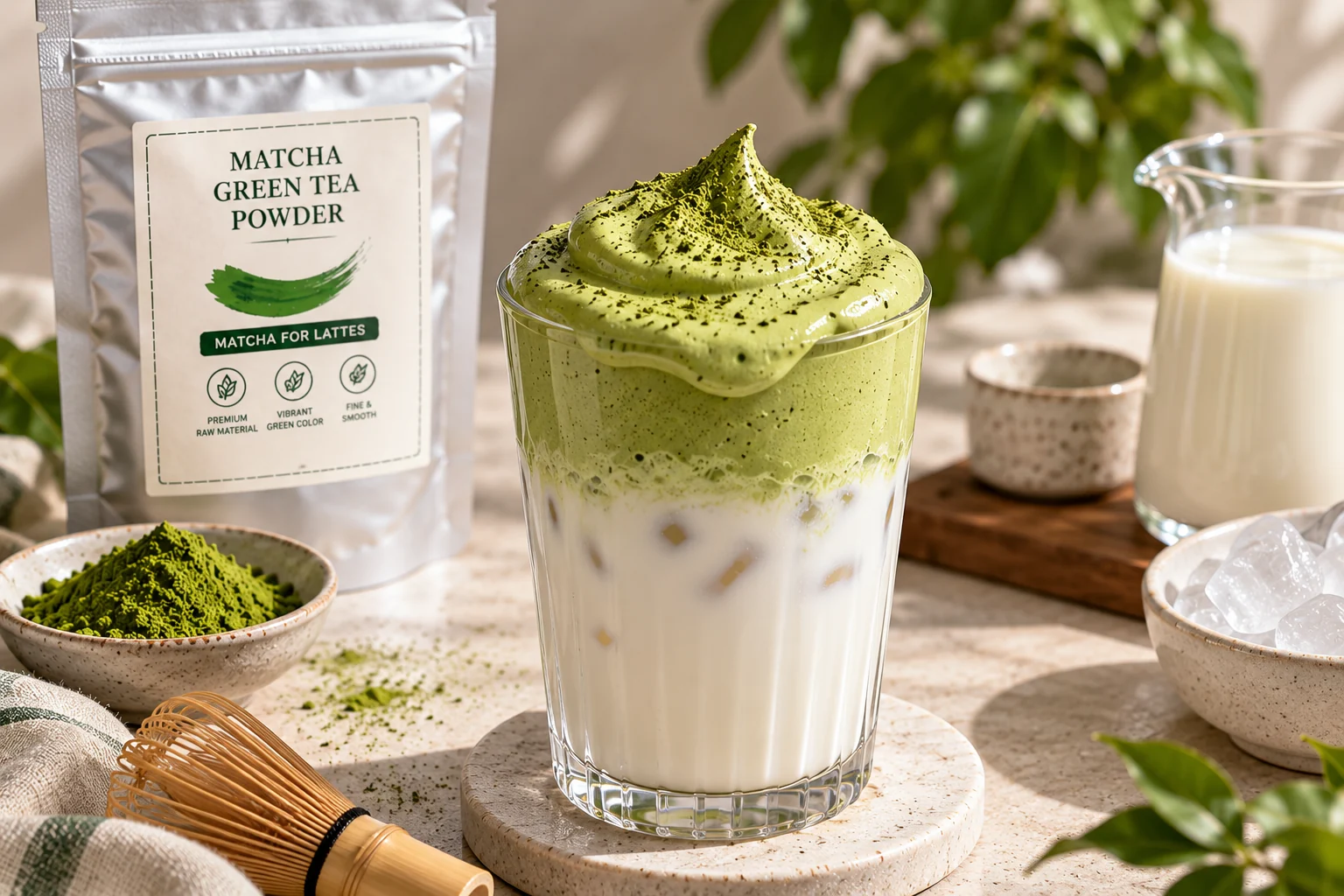
Matcha, mascarpone, cream, milk and vanilla create the dessert-inspired drink.
Tiramisu Matcha Latte Ingredients
Matcha Latte
3 g matcha powder
50 ml warm water
180 ml cold milk or preferred milk alternative
5–10 ml vanilla syrup, optional
Ice
Mascarpone Cream
35 g mascarpone
35 ml heavy cream
5 g powdered sugar
5 ml vanilla syrup
To Finish
Light dusting of matcha powder
Optional unsweetened cocoa powder
Optional ladyfinger biscuit for garnish
How to Make a Tiramisu Matcha Latte
1. Prepare the matcha
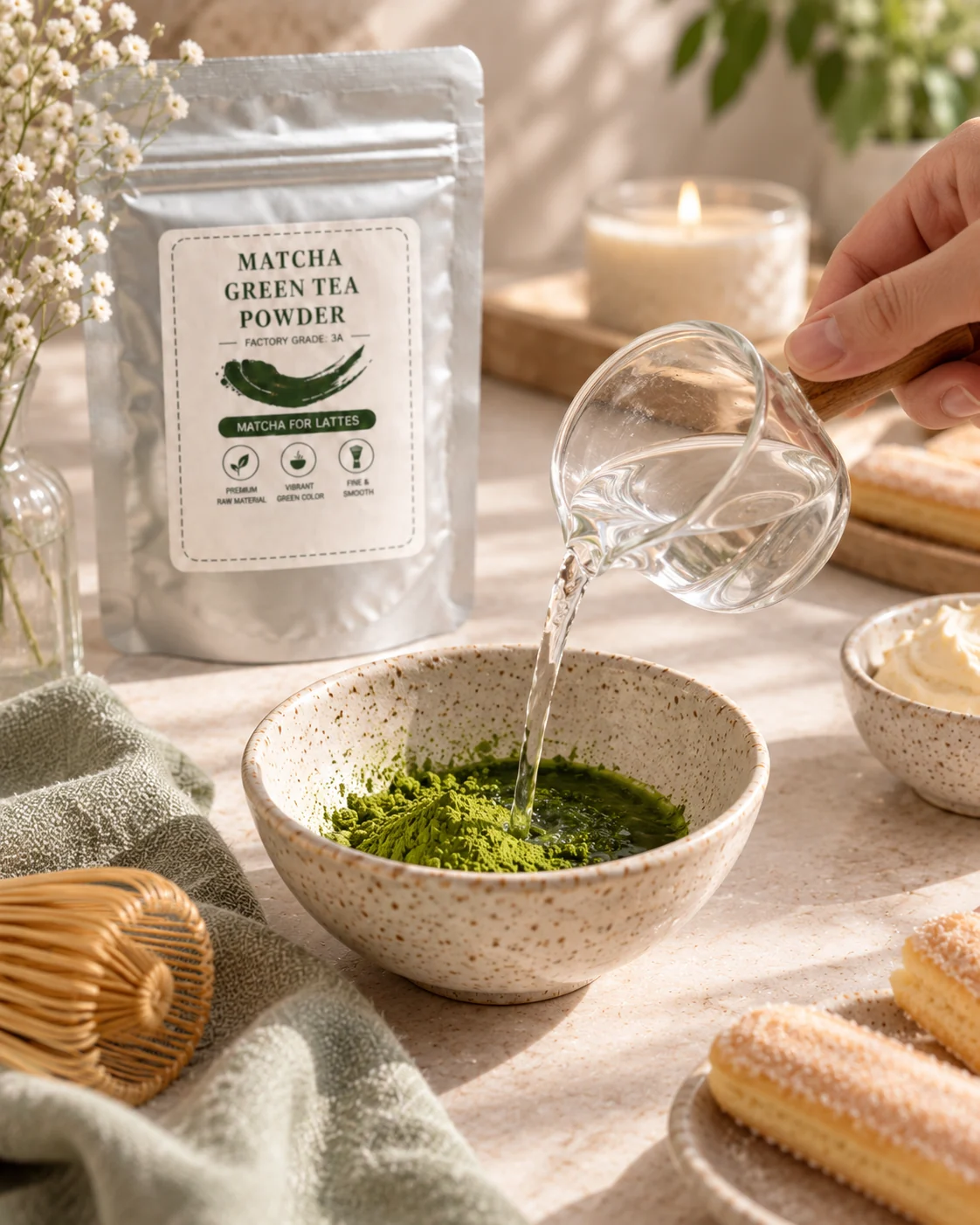
Sift 3 g of matcha into a bowl. Add 50 ml warm water and whisk until smooth and evenly dispersed. Set it aside briefly while preparing the glass.
Sift and whisk the matcha until no visible clumps remain.
2. Build the latte
Fill a tall glass with ice, then add the cold milk and optional vanilla syrup. Slowly pour the prepared matcha over the upper ice layer for a more defined presentation.
3. Prepare the mascarpone cream
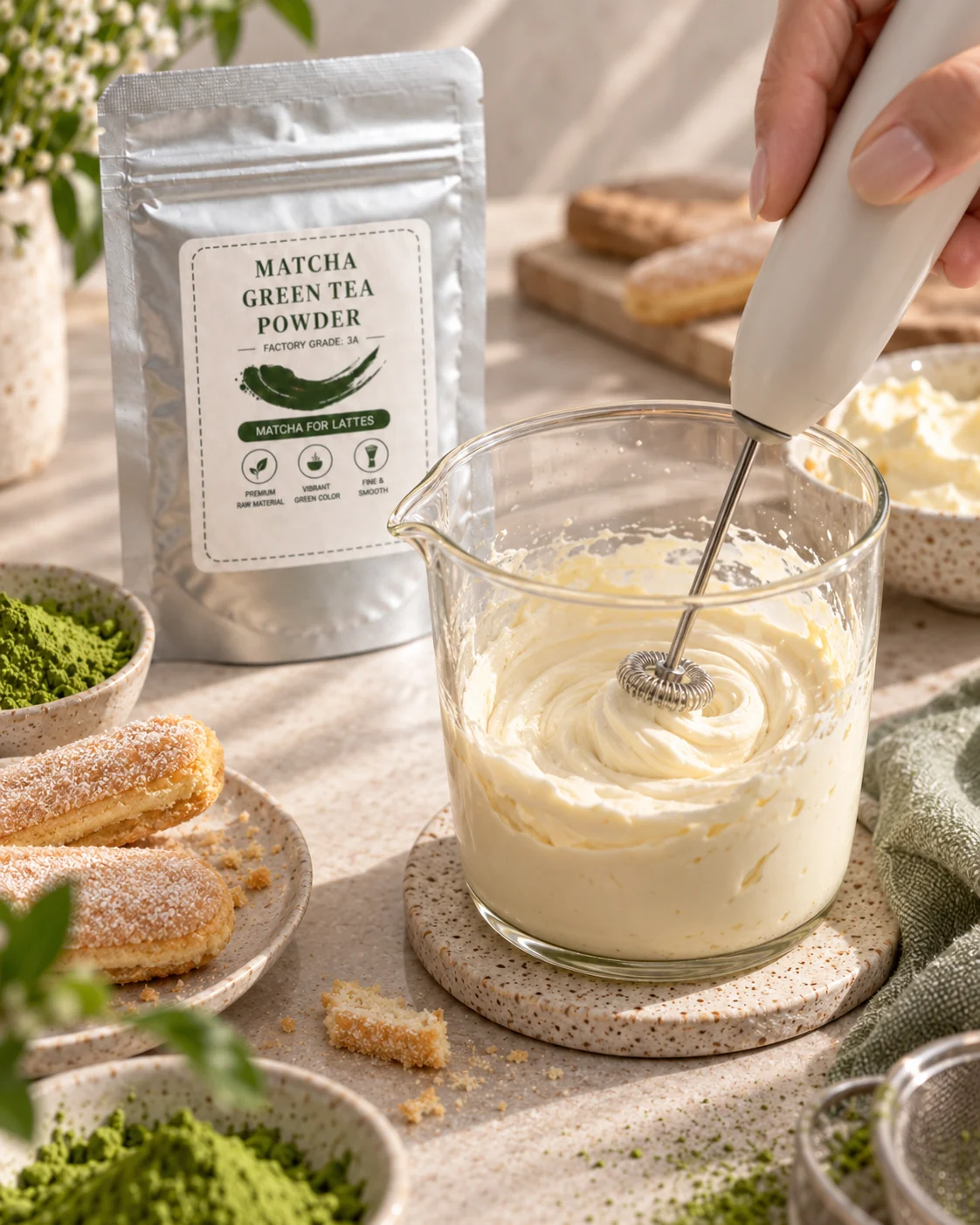
Add mascarpone, heavy cream, powdered sugar and vanilla syrup to a chilled bowl. Whisk until smooth and slightly thickened. The cream should sit on top of the drink while remaining soft enough to spoon or pipe.
Whisk the mascarpone topping until smooth, light and spoonable.
4. Add the cream
Spoon or pipe the mascarpone mixture onto the matcha latte. Keep the layer thick enough to create clear visual contrast between the green matcha and pale cream topping.
5. Finish the drink
Dust lightly with matcha. For a more classic tiramisu reference, add a very small amount of unsweetened cocoa powder. Serve with a ladyfinger if desired.
6. Serve immediately
The mascarpone layer is most visually defined shortly after assembly. Stir before drinking for a more integrated creamy texture.
What Makes This a Tiramisu Matcha Latte?
Classic tiramisu is associated with mascarpone cream, coffee-soaked ladyfingers and cocoa. This recipe does not attempt to reproduce the dessert exactly. Instead, mascarpone cream provides the main tiramisu reference while matcha remains the primary tea flavor—an important distinction for a café menu.
Best Matcha Profile for This Recipe
Café / Latte Matcha Profile is the recommended starting point. Milk, mascarpone, cream, vanilla and optional cocoa can soften the perceived tea intensity, so the matcha needs enough presence to remain noticeable.
A Premium Latte Matcha Profile can also be tested for a brighter green appearance, a more refined matcha character and a premium specialty-drink presentation.
Keep the topping light: too much mascarpone can make the drink dense and mask the matcha.
Watch the cocoa quantity: a light dusting gives the tiramisu cue without overpowering the tea.
Test sweetness with the actual milk: mascarpone, vanilla and different milk types all affect perceived sweetness.
Assemble close to service: mascarpone cream softens over time, so validate its holding time before batching.
Keep the garnish practical: a ladyfinger looks attractive but adds inventory and may soften on wet cream; dusting alone can suit higher-volume service.
Commercial Batch Guidance
Service
Matcha
Water
Milk
Mascarpone
1 drink
3 g
50 ml
180 ml
35 g
10 drinks
30 g
500 ml
1.8 L
350 g
25 drinks
75 g
1.25 L
4.5 L
875 g
For café service, prepare mascarpone cream in controlled refrigerated batches and validate its holding time before standardizing service procedures.
Planning the Cost of a Specialty Matcha Drink?
A dessert-style drink carries more ingredient cost than a standard matcha latte because it includes mascarpone, cream and garnish. Estimate the matcha portion separately before adding your actual dairy, topping and labor costs.
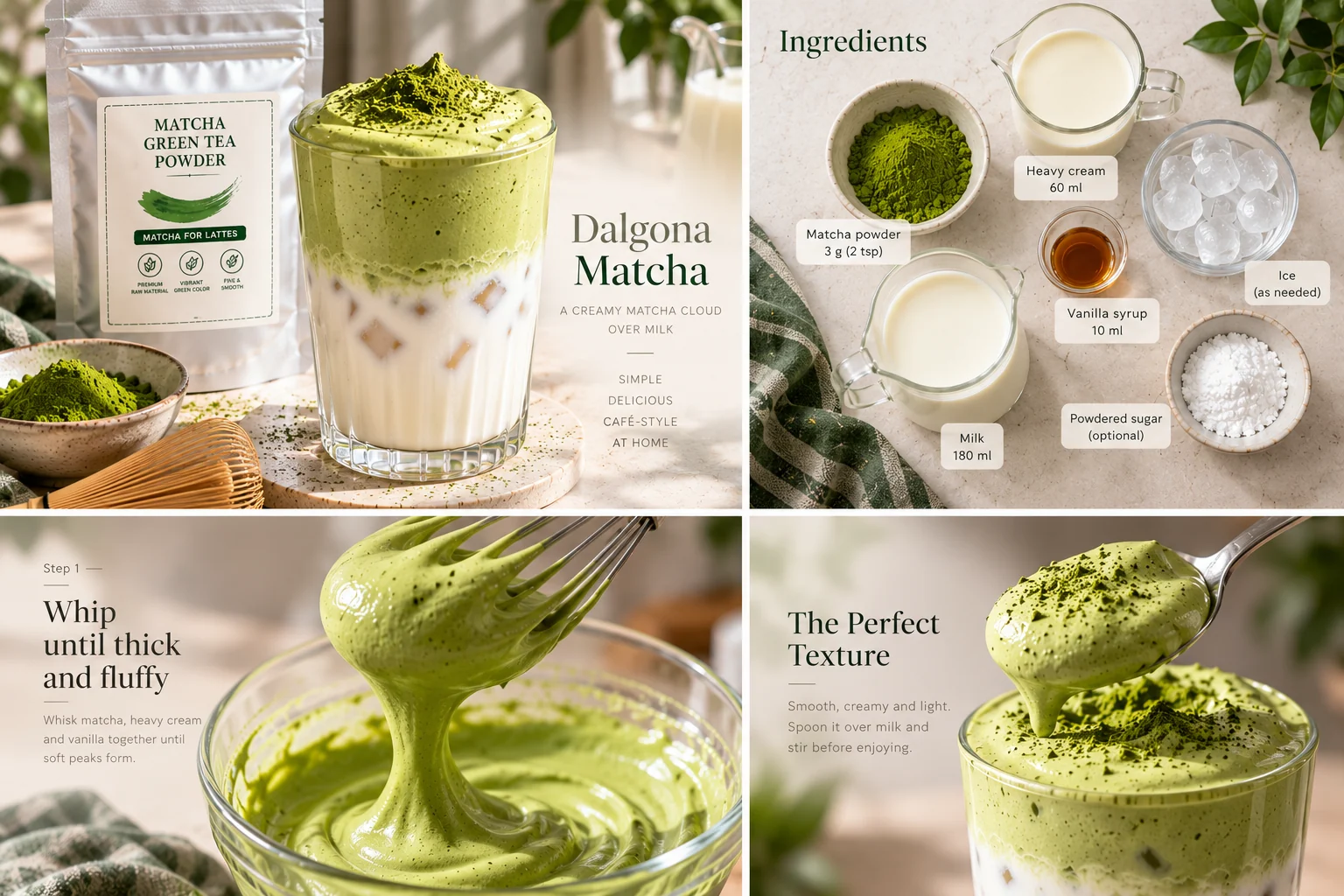
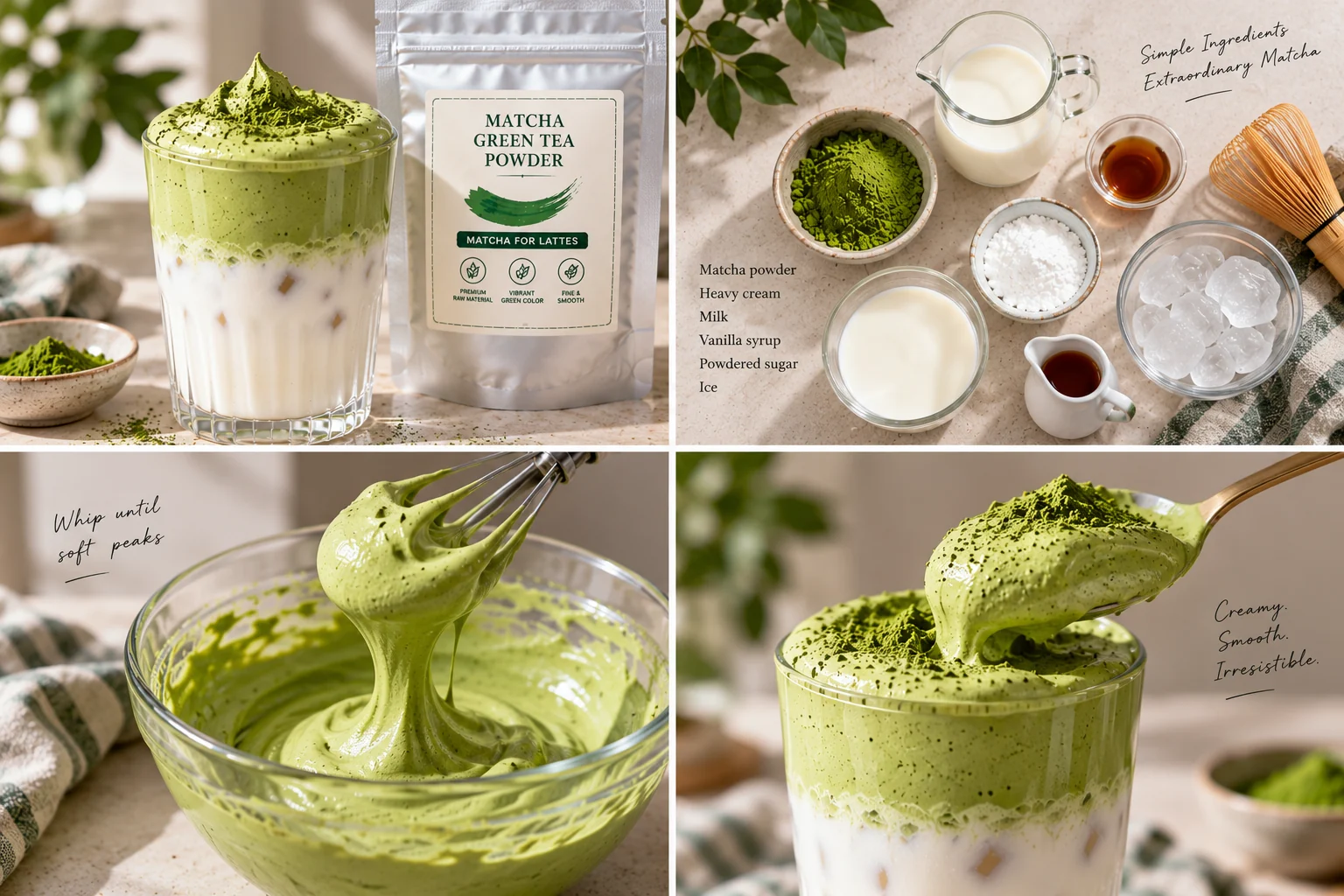
Dalgona matcha is a creamy whipped matcha drink built around a soft green matcha cloud served over milk. Unlike whipped coffee, matcha needs a cream-based or otherwise stabilizing structure to hold its shape, making this version a practical starting point for café menu testing.
Recipe Information
Servings: 1
Prep Time: 8 minutes
Matcha: 3 g
Style: Hot or iced
Application: Café drink / whipped matcha latte
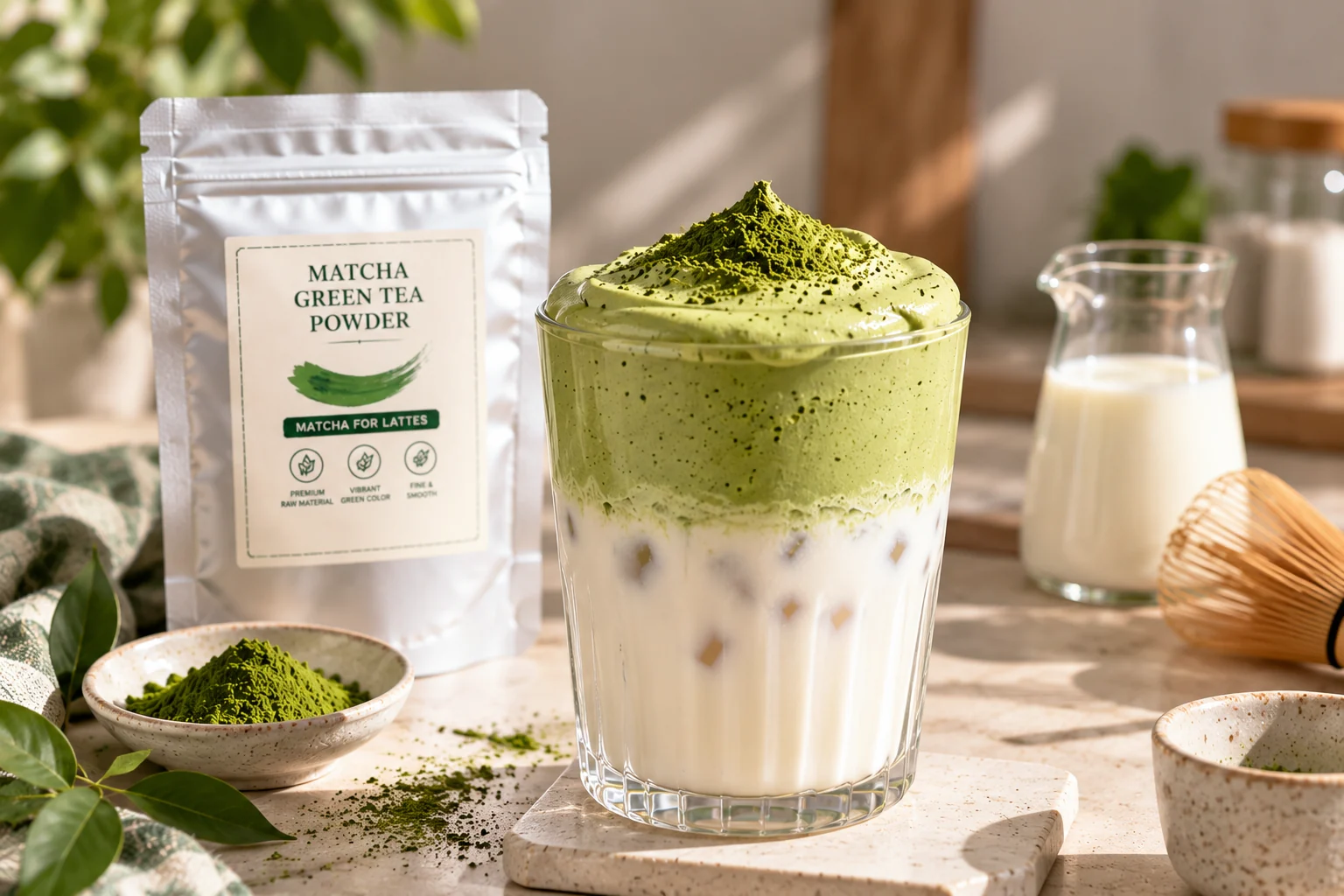
Matcha, cream, milk and vanilla form the base of this whipped matcha latte.
Dalgona Matcha Ingredients
Whipped Matcha Foam
60 ml cold heavy cream
3 g matcha powder
10 ml vanilla syrup
Optional: 5–10 g powdered sugar
Milk Base
180 ml milk or milk alternative
Ice, as needed
Matcha powder for a light garnish
How to Make a Whipped Matcha Latte
1. Chill the mixing bowl
Use a cold bowl and cold cream so the matcha foam develops structure quickly and consistently.
2. Sift the matcha
Sift 3 g of matcha into the bowl to reduce clumps and improve the finished texture.
3. Add cream and vanilla
Add the cold heavy cream and vanilla syrup. Include powdered sugar if a sweeter, slightly firmer foam is preferred.
4. Whip to soft peaks
Whip until the matcha foam is thick, smooth and spoonable. Stop at soft peaks; overwhipping can make the topping stiff or grainy.
5. Prepare the milk base
For an iced version, fill a glass with ice and add the milk. For a warm version, heat the milk gently before pouring.
6. Finish the drink
Spoon the whipped matcha cloud over the milk, dust lightly with matcha and serve promptly. Stir before drinking.
Whip the chilled mixture only until it reaches soft, spoonable peaks.
Why Dalgona Matcha Needs a Whipped Base
Instant coffee can form a stable foam with sugar and water, but matcha does not behave the same way. A whipped matcha topping needs a structure such as heavy cream, coconut cream, aquafaba or egg white. For café service, chilled cream is usually the simplest option to test because it is familiar, quick to prepare and easy to portion.
The finished drink should have a smooth matcha cloud that remains soft enough to stir into the milk.
Best Matcha Profile for This Recipe
Café / Latte Matcha Profile is the recommended starting point for this milk-based whipped drink. It is designed to remain visible and balanced alongside dairy or plant-based milk.
For a brighter green appearance and a more refined finished drink, the Premium Latte Matcha Profile can also be tested in the actual cream, milk and sweetener system.
For a commercial matcha latte, start by comparing 2 g, 3 g and 4 g of matcha under the same cup size, milk, sweetness and preparation conditions.
There is no universal dose. Choose the final amount based on the finished drink’s matcha intensity, color, balance and cost per serving—not the dry powder alone.
Instead of choosing one dose immediately, begin with a controlled comparison.
For example:
Test
Matcha Dosage
What You Are Evaluating
A
2 g
Lighter, more milk-forward profile
B
3 g
Balanced café-style matcha presence
C
4 g
Stronger matcha-forward profile
These are testing points, not universal recipe standards.
The same 3 g dose may perform very differently depending on the matcha product, milk volume and sweetener level.
Keep the rest of the recipe identical during the test. That means the same:
Application Test
Keep milk, cup size, sweetener, water, ice and preparation method unchanged. Change only the matcha dose so the comparison reflects the matcha amount rather than a different recipe.
cup size
milk
sweetener
water
ice
preparation method
serving temperature
Only change one variable: the amount of matcha.
This gives you a much clearer comparison.
2. Matcha Dosage by Cup Size
A dosage that performs well in a smaller cup may taste weak when the same amount is used in a larger serving.
Increasing milk volume without adjusting the matcha changes the ratio between tea and the rest of the drink.
When testing recipes, record:
cup volume
matcha dosage
milk volume
water volume
sweetener quantity
ice quantity
preparation method
Do not rely only on labels such as small, medium and large because actual serving volumes differ between cafés.
The more useful metric is grams of matcha per finished serving.
Build a Matcha Latte Recipe Matrix
Commercial cafés benefit from recording recipes in a repeatable format. A simple testing matrix might look like this:
Variable
Test A
Test B
Test C
Matcha
2 g
3 g
4 g
Cup Size
Same
Same
Same
Milk
Same
Same
Same
Sweetener
Same
Same
Same
Ice
Same
Same
Same
Preparation
Same
Same
Same
Then score each version for:
color
aroma
matcha intensity
sweetness balance
bitterness and astringency
mouthfeel
overall preference
cost per serving
This creates a repeatable recipe-development process rather than relying on one person’s first impression.
3. Why Milk Type Matters
Key Takeaway
If the final product is a latte, choose the matcha based on how it performs in milk—not on dry-powder appearance alone.
Different milks can significantly change both the flavor and visual appearance of matcha.
Dairy milk, oat milk, soy milk and other plant-based alternatives can affect:
perceived matcha intensity
sweetness
mouthfeel
finished color
bitterness perception
aroma
A matcha that tastes strong when whisked with water may become much softer after being combined with milk.
For that reason, cafés should test matcha in the same milk that will actually be used on the menu.
If your café offers several milk options, the same dosage may not produce exactly the same sensory result across all of them. You do not necessarily need a different recipe for every milk, but the differences should at least be evaluated before launch.
4. How Sweetness Changes Matcha Intensity
Sugar and flavored syrups can reduce the perceived intensity of matcha.
This becomes especially important in drinks containing ingredients such as:
vanilla
brown sugar
strawberry
coconut
fruit purée
flavored cold foam
sweetened milk
A matcha that works well in a lightly sweetened drink may become difficult to perceive in a heavily flavored beverage.
Rather than automatically increasing the matcha dosage, test the complete recipe first.
The correct balance is between matcha intensity + sweetness + milk + finished flavor, not matcha dosage alone.
5. Hot vs Iced Matcha Lattes
Hot and iced drinks should not automatically be treated as the same formulation.
Ice changes both dilution and serving temperature. Cold temperature can also change how customers perceive:
sweetness
aroma
bitterness
matcha intensity
For an iced drink, additional dilution may occur as the ice melts.
A café offering both formats should therefore run separate tests for hot matcha latte and iced matcha latte before locking the final recipes.
6. Matcha Profile and Dosage
Using more matcha is not always the solution to a weak latte.
Different matcha profiles vary in:
flavor intensity
color
aroma
bitterness
astringency
texture
dispersion
performance in milk
A stronger matcha profile may achieve the desired latte character at a different dosage than a softer profile.
This is why commercial recipe development should evaluate matcha profile + dosage + finished application together.
A very bright powder may still perform differently once combined with milk, sweetener and ice. The finished beverage is ultimately what your customer will experience.
For cafés, price per kilogram is only one part of the commercial calculation.
Matcha cost per serving = Matcha price per kg ÷ 1,000 × grams used per serving
If one recipe uses 2 g and another uses 4 g, the ingredient cost contribution from matcha doubles even though the matcha price per kilogram has not changed. This becomes significant across hundreds or thousands of drinks.
However, the lowest dosage is not automatically the best commercial choice.
If reducing the amount produces weak color, poor matcha flavor, excessive milk dominance or lower customer satisfaction, the lower-cost recipe may not be the better commercial recipe.
The objective is to balance:
finished flavor
color
menu positioning
customer expectation
consistency
cost per serving
Compare Matcha Cost by Finished Performance
Two matcha products with different prices per kilogram should not necessarily be compared only by purchase price.
Product A may cost less per kilogram but require a higher dosage, while Product B may cost more per kilogram but achieve the desired finished profile at a different dosage. That does not automatically mean either product is cheaper.
Commercial buyers should compare price per kg + dosage + finished performance.
This is one reason sample testing should happen before a larger purchasing decision.
8. How to Run a Café Sample Test
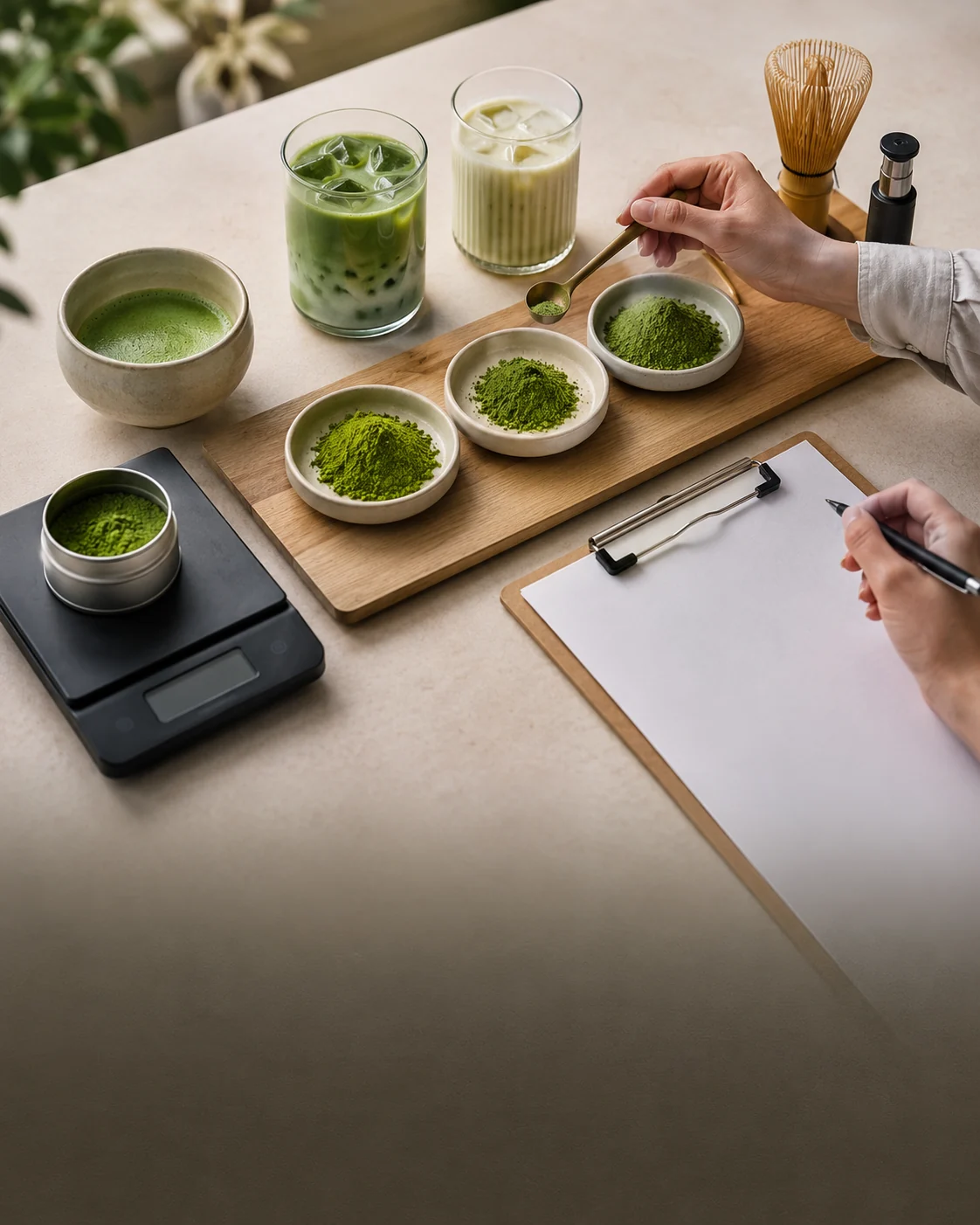
When evaluating several matcha products, use controlled conditions.
Keep these variables identical:
milk
sweetener
matcha dosage
water temperature
water volume
preparation method
cup size
ice quantity
Then compare:
finished color
matcha intensity
aroma
bitterness
astringency
dispersion
mouthfeel
aftertaste
cost per serving
This method gives a much more useful comparison than evaluating powders only from photographs or dry appearance.
For a commercial sample test, your café team can score each matcha using the same criteria.
Evaluation Area
What to Check
Color
Does the finished latte match your menu positioning?
Aroma
Is the matcha still noticeable after adding milk?
Flavor
Is the tea character strong enough?
Bitterness
Is it balanced at the intended dosage?
Mouthfeel
Does the finished drink feel smooth?
Dispersion
Does the matcha integrate consistently?
Sweetness Balance
Does the matcha remain noticeable with your sweetener?
Cost per Serving
Is the final recipe commercially practical?
The scoring system does not need to be complicated. Its main purpose is to make every sample comparison more consistent.
9. Standardize the Recipe Before Scaling
Before purchasing larger commercial quantities, confirm both the matcha product and the recipe.
Once your café has selected a matcha and locked the recipe, record:
matcha product
dosage
cup size
water volume
milk
sweetener
ice
whisking or mixing method
serving instructions
This helps staff reproduce the same drink and gives purchasing teams a clearer estimate of expected matcha consumption.
For commercial supply planning, calculate approximate monthly demand using:
Drinks per day × matcha grams per drink × operating days
This makes bulk purchasing and reorder planning much more accurate.
Frequently Asked Questions About Matcha Dosage for Lattes
How much matcha powder should I use in a latte?
There is no universal dosage for every latte. For commercial recipe development, test several controlled dosage points—such as 2 g, 3 g and 4 g per serving—using the same milk, cup size, sweetness and preparation method. Choose the final amount based on the finished drink rather than the powder alone.
Is 2 grams of matcha enough for a latte?
It can be, depending on the cup size, matcha profile, milk volume and desired flavor intensity. A 2 g test is useful as a lower-dose reference point. If the finished drink tastes too milk-forward or the matcha character is difficult to perceive, compare it with a higher-dose version under the same conditions.
Should an iced matcha latte use more matcha?
Not necessarily. Iced drinks should be tested separately because ice, dilution and cold serving temperature can change the finished result. Rather than automatically increasing the dosage, test the actual iced recipe and compare matcha intensity, sweetness and dilution.
Does stronger matcha mean I can use less powder?
Potentially, but this should be confirmed through recipe testing. Different matcha products vary in sensory intensity and performance in milk. A stronger profile may achieve the desired result at a different dosage, but commercial decisions should be based on the finished drink.
Does milk type change how much matcha I need?
It can. Different dairy and plant-based milks affect sweetness, mouthfeel, color and perceived matcha intensity. Test the matcha with the milk actually used on your menu before deciding on the final dosage.
Should cafés evaluate matcha in water before making a latte?
Water evaluation can help buyers understand the matcha’s aroma, taste and whisking characteristics. However, if the final product is a latte, the commercial decision should ultimately be based on performance in the actual latte formulation.
How do I calculate matcha cost per latte?
Use: matcha price per kg ÷ 1,000 × grams of matcha used per drink. This gives the direct matcha ingredient cost per serving. For commercial evaluation, calculate milk, sweetener, packaging, labor and other ingredient costs separately.
Can I request matcha samples for café testing?
Yes. Sample evaluation allows café buyers to compare different matcha profiles using their actual milk, cup size, sweetness and preparation method before moving to larger commercial quantities. Request Matcha Samples.
Ready to Test Matcha in Your Café Recipe?
The most reliable way to select matcha for a commercial latte program is to test it in the drink you actually plan to sell.
Tell us your cup size, milk type, target flavor, hot or iced format, estimated volume and destination market. Matcha Origin Co. can help you compare suitable matcha profiles through sample evaluation before moving to commercial supply.
Understand TDS, batch COA, third-party testing, certification scope and traceability before scaling.
Turn the recipe into a purchasing plan: After standardizing grams per drink, use the Matcha Cost Calculator to estimate cost per cup, monthly usage and a practical planning quantity.