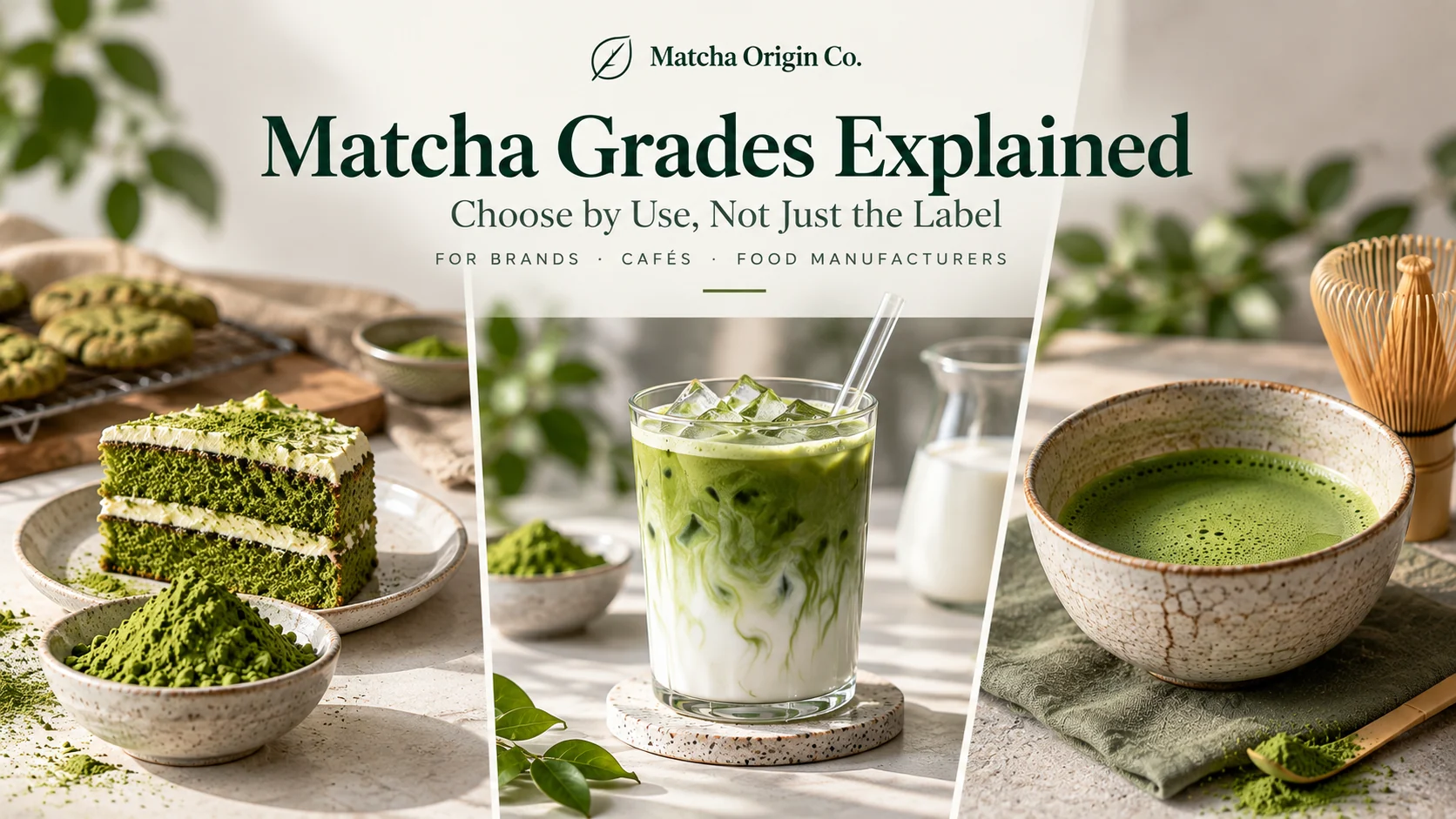
Bulk Matcha Samples Available · Commercial Supply · Private Label Support Samples · Bulk Supply · Private Label

Request Samples

Tag: matcha quality

  • Matcha Grades Explained: How to Choose the Right Matcha for Your Use

    Matcha Grades Explained: How to Choose the Right Matcha for Your Use

    Matcha grades are commonly used to describe differences in intended use, color, flavor, bitterness, umami, texture and price. However, terms such as ceremonial, latte and culinary are not part of one universal grading system used identically by every producer or supplier.

    That is why the most useful question is usually not:

    “What is the highest grade of matcha?”

    It is:

    “Which matcha profile performs best for the way I plan to use it?”

    A matcha selected for straight whisking may prioritize smoothness, aroma and umami. A café may need a profile that remains visible through milk and ice. A bakery may benefit more from stronger tea character and practical cost-in-use.

    This guide explains how matcha grades are commonly described, how culinary, latte and ceremonial profiles differ, and what commercial buyers should actually test before choosing a matcha.

    Table of Contents

    What Are Matcha Grades?

    The word grade is often used in the matcha market to help communicate differences between products.

    A supplier may use terms such as:

    culinary, café, latte, premium, ceremonial or reserve

    to indicate a product’s intended application or sensory positioning.

    The difficulty is that these words do not always mean exactly the same thing from one producer to another.

    For example, one supplier’s “ceremonial” matcha may have a different color, harvest specification, bitterness level or price from another supplier’s ceremonial product.

    The same applies to terms such as premium or latte grade.

    For this reason, commercial buyers should treat the grade name as a starting point for evaluation, rather than as proof of quality by itself.

    Key takeaway: A matcha grade name helps narrow the search, but actual application testing, sensory evaluation and product specifications are more useful when making a purchasing decision.

    Matcha Grades Chart: Choosing by Application
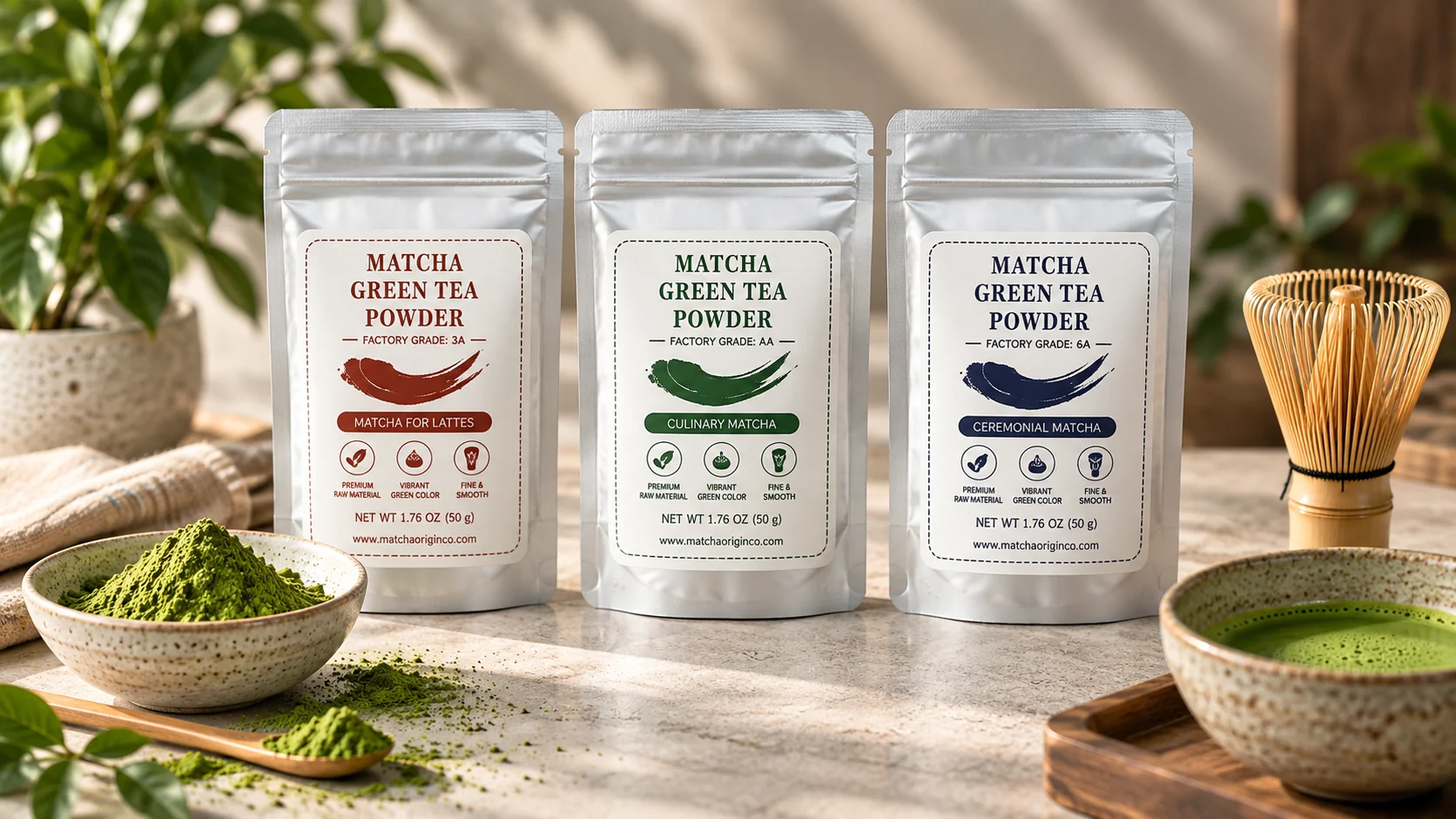
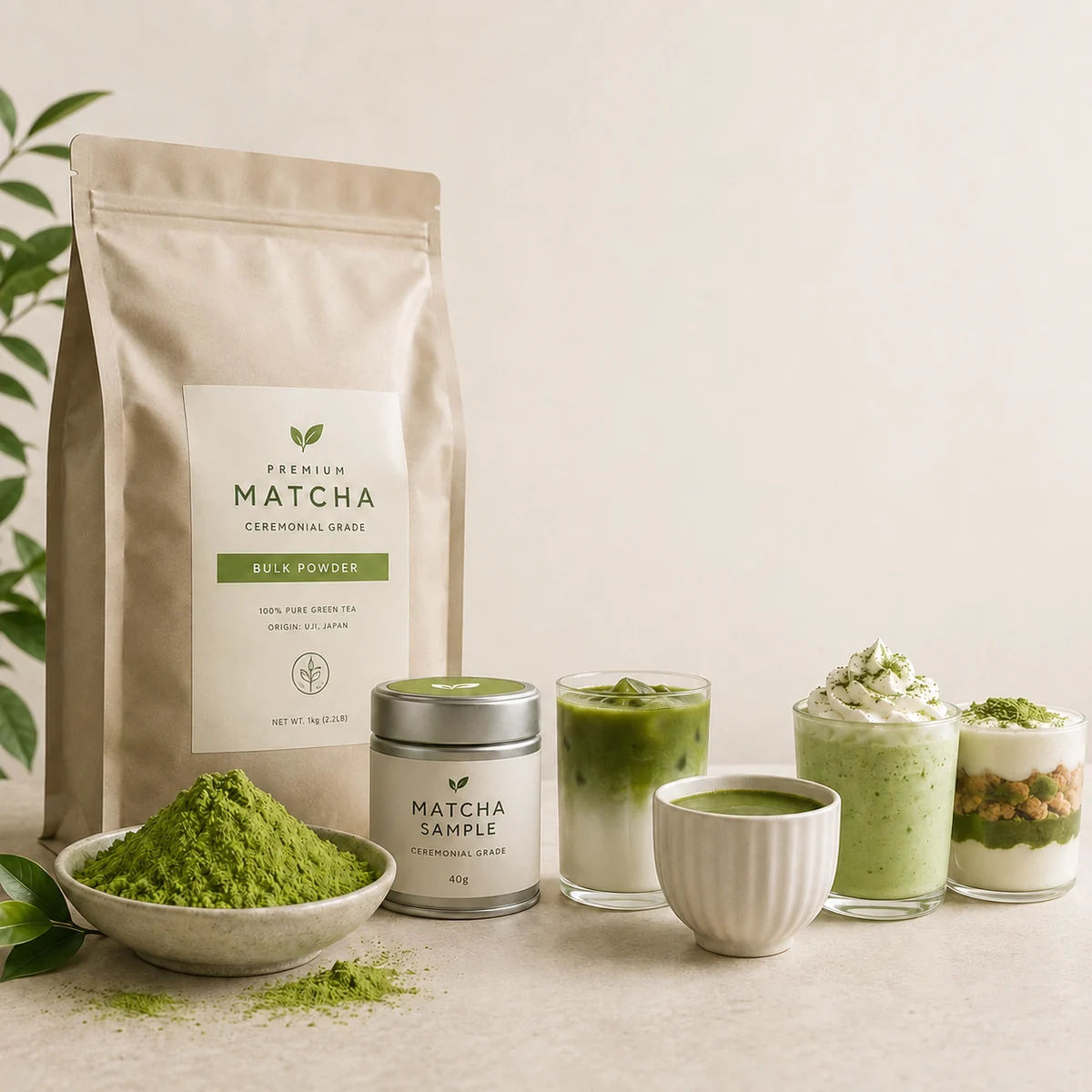
    Packaged matcha product profiles for culinary, latte and ceremonial applications
    Matcha product profiles for culinary, latte and ceremonial applications.

    The chart below shows a practical way to think about matcha profiles based on how they are typically used.

    Matcha ProfileBest ForTypical Sensory DirectionBuyer Priority
    Culinary MatchaBaking, desserts, confectionery, food manufacturingStronger tea character, more noticeable bitterness or astringencyFlavor visibility and cost-in-use
    Café / Latte MatchaHot and iced lattes, café drinksBalanced tea flavor that remains noticeable with milkColor, tea intensity and serving cost
    Premium Latte MatchaSpecialty café drinks, premium beverage programsSmoother and more refinedPremium milk performance
    Classic Ceremonial ProfileEveryday straight whiskingBalanced, smoother, less aggressive bitternessWhisking experience
    Premium Ceremonial ProfilePremium straight whiskingMore refined aroma, umami and finishSensory refinement
    Reserve Ceremonial ProfileHigh-end straight whiskingDelicate, smooth and umami-focusedPremium sensory experience

    At Matcha Origin Co., these public profile names are used to help commercial buyers compare products by application and sensory target.

    They should not be interpreted as a universal industry grading standard.

    Culinary Matcha: Built for Formulated Foods

    Culinary matcha is usually selected for recipes where the matcha must remain noticeable after being combined with other ingredients.

    That can include flour, sugar, dairy, chocolate, fats, sweeteners or other strong flavors.

    This is why culinary matcha should not simply be described as “low-quality matcha.”

    A product that is not ideal for delicate straight whisking may actually perform better in a baked product because its tea character is strong enough to remain noticeable after processing.

    Common culinary applications include cakes, cookies, pastries, fillings, chocolate, confectionery, ice cream, frozen desserts, noodles and commercial food formulations.

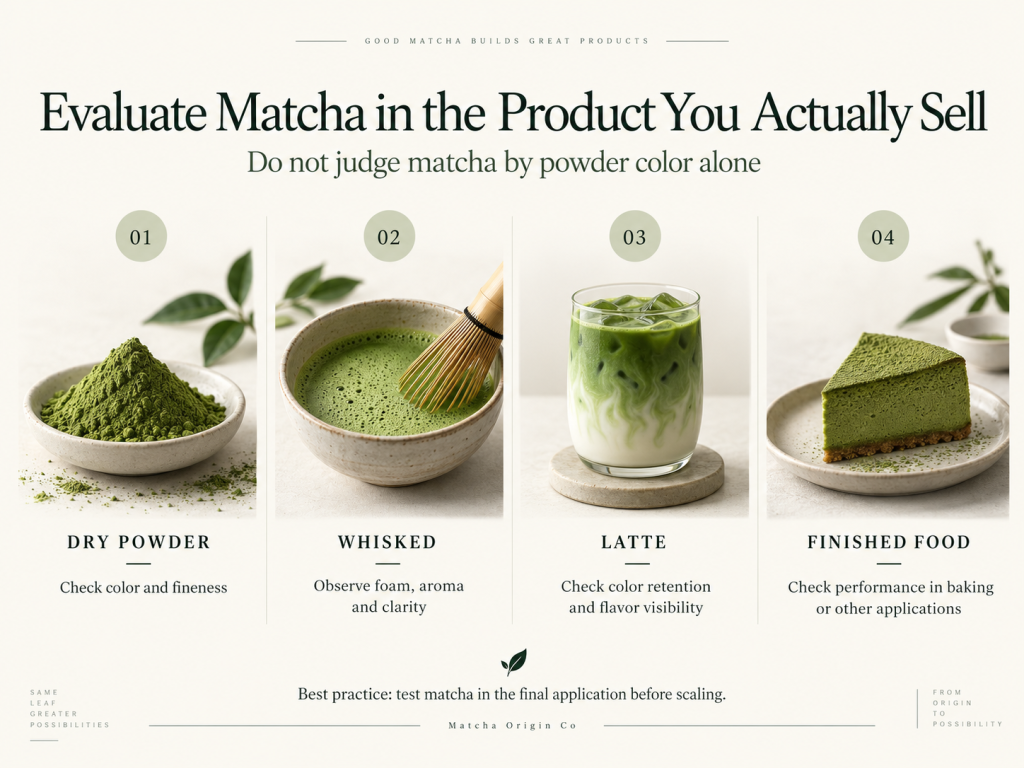
    For commercial buyers, the most useful evaluation is therefore the finished application.

    A bakery should look at factors such as finished-product color, matcha flavor after baking, bitterness, dosage and cost per recipe.

    A food manufacturer may also need to consider consistency between commercial batches and how the powder behaves during processing.

    Explore our Matcha for Baking & Desserts selection for application-focused sourcing.

    Café and Latte Matcha: Designed to Work With Milk
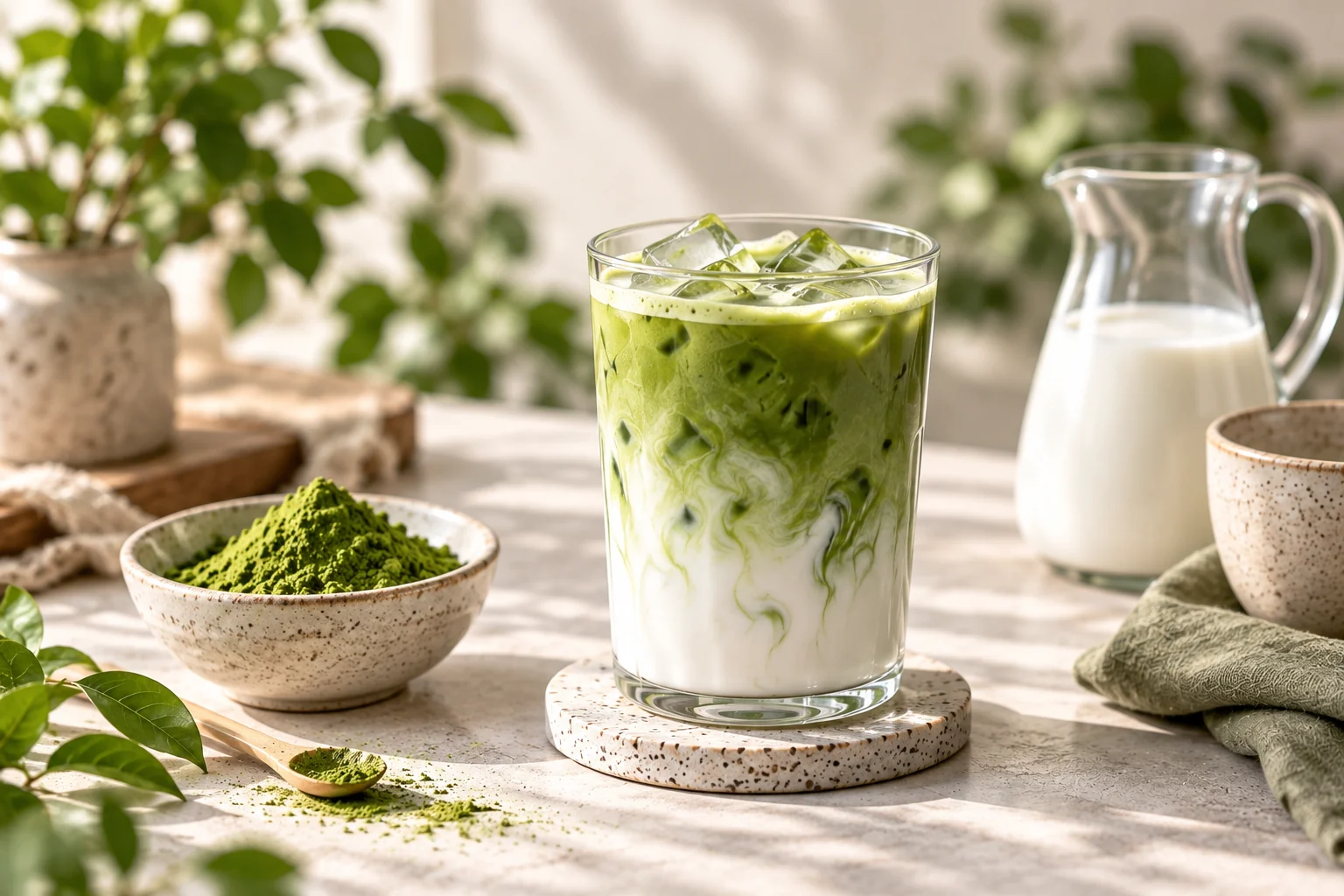
    Iced matcha latte with matcha powder prepared for a milk-based drink

    Matcha for café drinks has a different job.

    Once matcha is mixed with milk, ice, syrups or sweeteners, some of its aroma and tea character can become less noticeable.

    A café therefore does not necessarily need the same matcha that it would choose for straight whisking.

    Café / Latte Matcha

    A café-oriented profile is typically selected to maintain a recognizable tea character in milk-based drinks.

    Buyers should evaluate:

    color in the finished drink, flavor intensity through milk, bitterness balance, dispersion, dosage and cost per serving.

    For a busy café, repeatability can be just as important as sensory quality.

    If the same recipe produces noticeably different results from one order to the next, that becomes an operational problem.

    Premium Latte Matcha

    A premium latte profile may be appropriate when the café wants a more refined beverage experience.

    The goal may include:

    brighter visual presentation, softer bitterness, smoother mouthfeel or a more premium flavor position.

    That does not mean every café should automatically choose the more expensive option.

    A high-volume iced drink program and a specialty hot matcha menu may require different products.

    See Matcha for Lattes & Café Drinks for commercial beverage applications.

    Ceremonial Matcha Profiles for Straight Whisking

    The term ceremonial matcha is widely used in the international matcha market for products positioned toward straight whisking and a more refined sensory experience.

    Because supplier terminology varies, the name alone is not enough to determine how a product will taste.

    At Matcha Origin Co., we use three public sourcing profiles to help buyers compare straight-whisking options.

    Classic Ceremonial Profile

    This is intended as an accessible straight-whisking profile.

    The focus is on a balanced cup with a smoother sensory experience than matcha designed primarily for strong formulated applications.

    It may be suitable for brands looking for an everyday whisking product without immediately moving to the highest-priced profile.

    Premium Ceremonial Profile

    A premium ceremonial profile places greater emphasis on sensory refinement.

    Buyers may evaluate aroma, umami, smoothness, mouthfeel and finish more critically because the matcha is being consumed with fewer ingredients masking its natural characteristics.

    Reserve Ceremonial Profile

    Reserve positioning is intended for buyers seeking the most refined straight-whisking experience within a supplier’s range.

    However, reserve should still be understood as a supplier-specific product position rather than a universal global grade.

    A commercial buyer should always evaluate the actual sample instead of purchasing based only on the name.

    Explore Matcha for Whisking for straight-whisking profiles.

    Ceremonial vs Culinary Matcha: What Is the Difference?

    One of the most common questions is whether ceremonial matcha is simply “better” than culinary matcha.

    That is too simplistic.

    They are usually optimized for different uses.

    Ceremonial ProfileCulinary Matcha
    Primary applicationStraight whiskingFormulated foods
    Sensory targetSmoother, more refinedStronger tea visibility
    Milk / sugar performanceNot the primary targetOften important
    Buyer prioritySensory experienceApplication performance
    Cost considerationPremium cup experienceCost-in-use
    Best evaluation methodWhisked cupFinished recipe

    A ceremonial-style matcha can certainly be used in a latte or dessert.

    A culinary matcha can also technically be whisked with water.

    The question is whether doing so makes sense for the intended experience and budget.

    Using a very refined matcha in a strongly flavored chocolate dessert, for example, may add cost without creating a meaningful improvement in the finished product.

    How Commercial Buyers Should Compare Matcha Grades

    For a business, comparing matcha should go beyond looking at the label on the bag.

    A more useful evaluation process starts with the application.

    First, define whether the matcha will be used for straight whisking, café drinks, baking, desserts or food manufacturing.

    Next, define the sensory result you want. That may include powder color, finished-product color, tea intensity, bitterness, umami, aroma, mouthfeel or finish.

    Then test the matcha at the actual dosage used in your business.

    A supplier sample may taste excellent at one dosage but perform differently when your café uses a different recipe.

    The same principle applies to food manufacturing.

    Testing the matcha in plain water tells you very little about how it will behave after being mixed with sugar, milk, flour, chocolate or fat.

    Commercial buyers should therefore test the product in the finished application.

    After sensory performance, compare cost-in-use rather than looking only at the price per kilogram.

    Imagine two products.

    One costs less per kilogram but requires a higher dosage to achieve the desired flavor.

    Another costs more per kilogram but produces the required result at a lower dosage.

    The cheaper kilogram is not necessarily the cheaper product to use.

    Finally, review the information available for the specific product and commercial batch.

    This may include product specifications, TDS, batch COA, testing information and supply documentation where applicable.

    See our Available Documentation and Quality & Testing resources for more information.

    Is More Expensive Matcha Always Better?

    No.

    A higher-priced matcha may offer characteristics that are valuable for one application but unnecessary for another.

    For example, a premium straight-whisking matcha may offer a smoother finish and more refined aroma.

    Those differences can be meaningful when the product is served simply with water.

    But once the same matcha is mixed into a chocolate cake containing sugar, flour, cocoa and fat, those subtle characteristics may become much harder to notice.

    A more robust culinary profile may actually provide stronger matcha presence at a lower cost.

    The same principle applies to cafés.

    The most expensive product is not automatically the best choice for every iced latte program.

    The better question is:

    Which product gives the desired result at a commercially practical dosage and cost?

    In other words:

    Better for whisking does not automatically mean better for baking or milk-based drinks.

    Are Matcha Grades in Order?

    There is no single universal matcha grade order followed by every producer and supplier.

    You may see terms such as:

    culinary → latte → premium → ceremonial → reserve

    but another supplier may use a completely different naming system.

    That is why buyers should be cautious when comparing grade names across different companies.

    At Matcha Origin Co., our public sourcing profiles move broadly from food-focused applications toward milk-based beverages and then straight-whisking sensory profiles:

    Food Formulation
    Culinary Matcha

    Milk-Based Beverages
    Café / Latte Matcha
    Premium Latte Matcha

    Straight Whisking
    Classic Ceremonial
    Premium Ceremonial
    Reserve Ceremonial

    This is an application-oriented product framework, not a universal industry ranking.

    Is Organic Matcha a Higher Grade?

    No.

    Organic is not a matcha grade.

    Organic status relates to production and certification requirements rather than automatically determining sensory quality or intended application.

    That means a product can theoretically be:

    Organic Culinary Matcha

    Organic Latte Matcha

    or

    Organic Ceremonial Matcha.

    An organic certification also should not be assumed to cover every product sold by a supplier.

    Commercial buyers should confirm whether the specific product, producer and applicable documentation are covered before making certification-related claims.

    What Should You Look for Beyond the Grade Name?

    The grade name is only one piece of information.

    When comparing commercial matcha, buyers may also consider origin, producer, harvest information where available, color, aroma, bitterness, umami, particle size, dispersion, moisture, packaging, documentation and batch consistency.

    Not every product needs to excel in every category.

    The importance of each characteristic depends on the application.

    For example, a bakery may care much more about finished-product color and flavor strength after baking than about how the matcha tastes when whisked by itself.

    A premium tea brand may care much more about aroma, texture and finish.

    This is why application-led sourcing is more useful than trying to identify one matcha that is supposedly “best” for every situation.

    Frequently Asked Questions

    What are the different grades of matcha?

    Common commercial descriptions include culinary, latte, premium and ceremonial matcha. However, terminology varies between producers and suppliers, so buyers should compare the actual product characteristics and intended use rather than relying only on the grade name.

    What is the highest grade of matcha?

    There is no universally regulated highest matcha grade. Suppliers may use terms such as premium, ceremonial or reserve for their more refined products, but the terminology and specifications vary.

    Is ceremonial matcha better than culinary matcha?

    Not for every application. Ceremonial-style matcha is generally positioned toward straight whisking, while culinary matcha is selected for formulated foods where stronger flavor visibility and practical cost-in-use may matter more.

    Can I use ceremonial matcha for lattes?

    Yes, but it may not always be economically necessary. A latte-specific profile can often provide the color and tea intensity needed for milk-based drinks at a more practical commercial cost.

    Can I drink culinary matcha?

    Culinary matcha can be consumed as matcha, but its stronger bitterness or astringency may make it less suitable for customers looking for a smooth straight-whisking experience.

    What matcha grade is best for lattes?

    A café or latte-focused matcha is usually the best starting point because it is selected to remain noticeable when mixed with milk. The final decision should be based on recipe testing, dosage, color, flavor and cost per serving.

    Are matcha grades standardized?

    No single global grading system is used consistently by every matcha producer and supplier. Commercial grade names should therefore be interpreted together with product specifications and sample evaluation.

    Is organic matcha a higher grade?

    No. Organic describes a production or certification attribute, not a universal sensory grade. Organic products can exist across culinary, latte and straight-whisking profiles.

    Not Sure Which Matcha Profile Fits Your Product?

    The best way to select matcha for a commercial project is to start with the application, then evaluate the product in the way it will actually be used.

    Matcha Origin Co. supports cafés, bakeries, food businesses and brands with application-based sourcing, B2B evaluation samples, bulk supply and technical documentation support.
    Request B2B Samples

    Explore Matcha by Application

    View Bulk Matcha Supply

  • How Is Matcha Made? From Tea Leaves to Fine Matcha Powder

    How Is Matcha Made? From Tea Leaves to Fine Matcha Powder

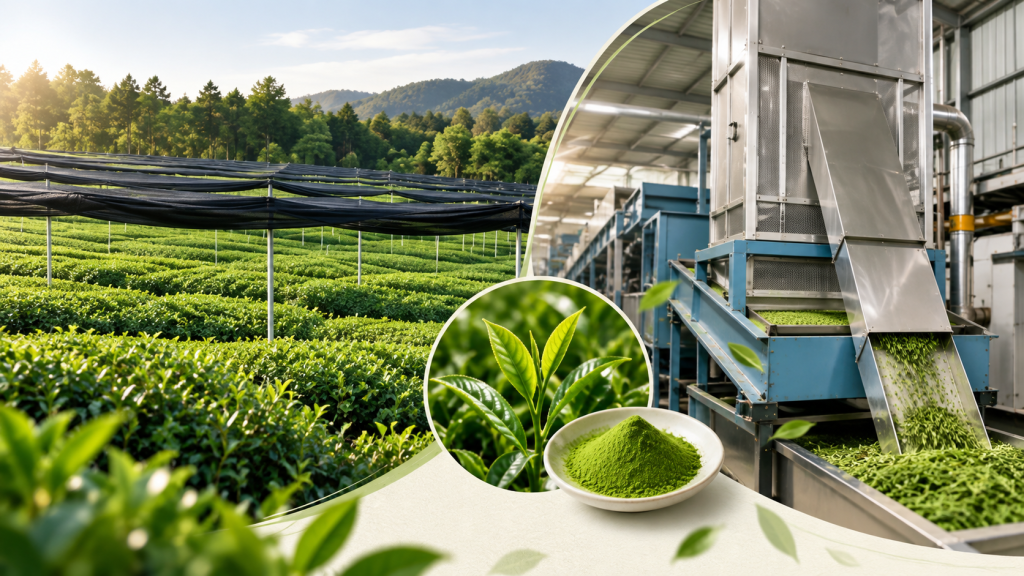
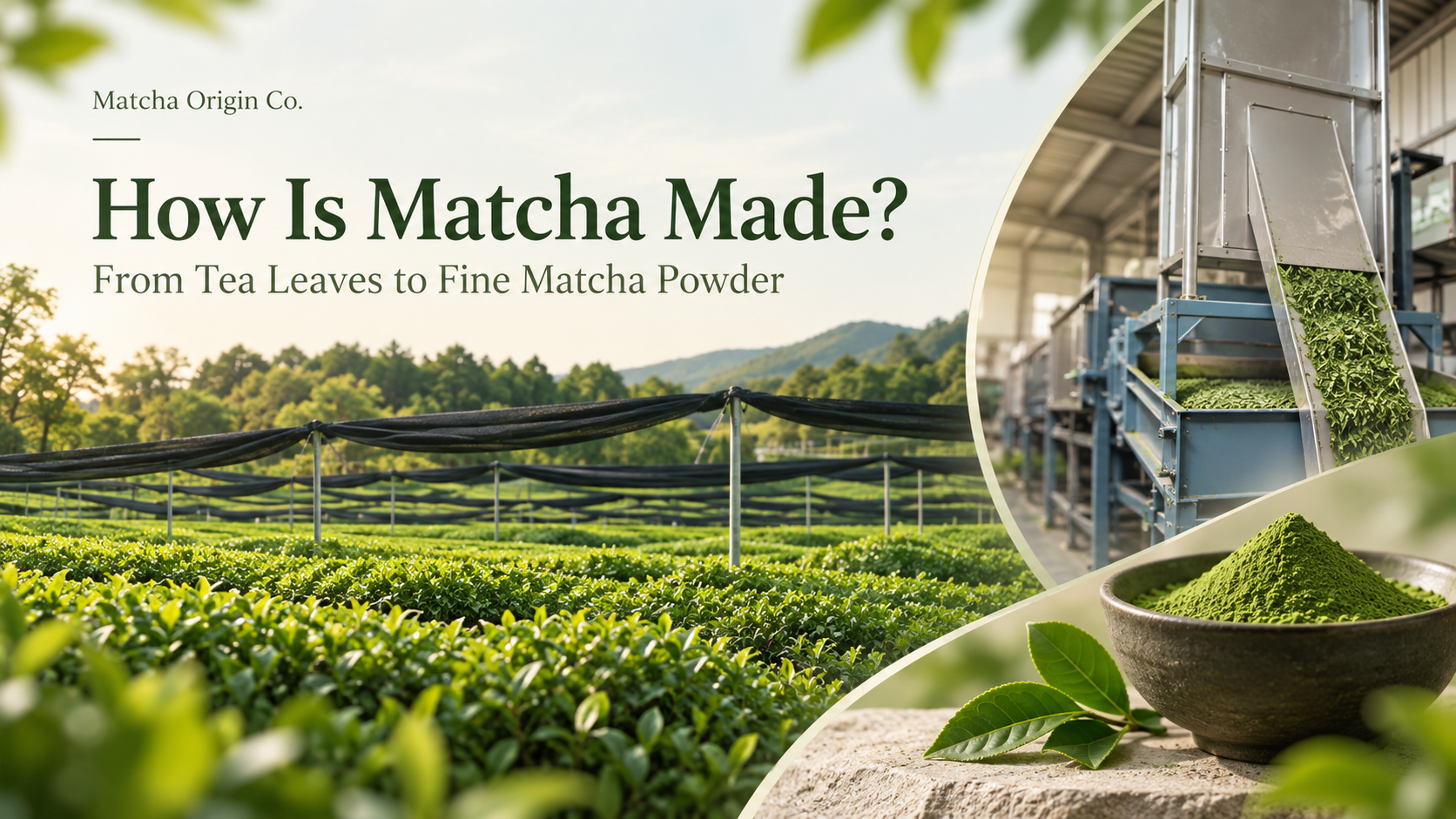
    Matcha may look simple in the cup, but producing a fine, stable matcha powder requires control at every stage—from cultivation and harvest to heat fixation, refining, milling and storage.

    For commercial buyers, understanding how matcha is made is more than a look behind the scenes. Production choices can influence color, aroma, bitterness, umami, particle size, dispersion and performance in a finished application.

    A matcha selected for straight whisking may be evaluated differently from one intended for café lattes, bakery products or large-scale food manufacturing. This guide follows the production process from shaded tea leaves to finished powder and explains what B2B buyers should verify before scaling an order.

    What Is Matcha Made Of?

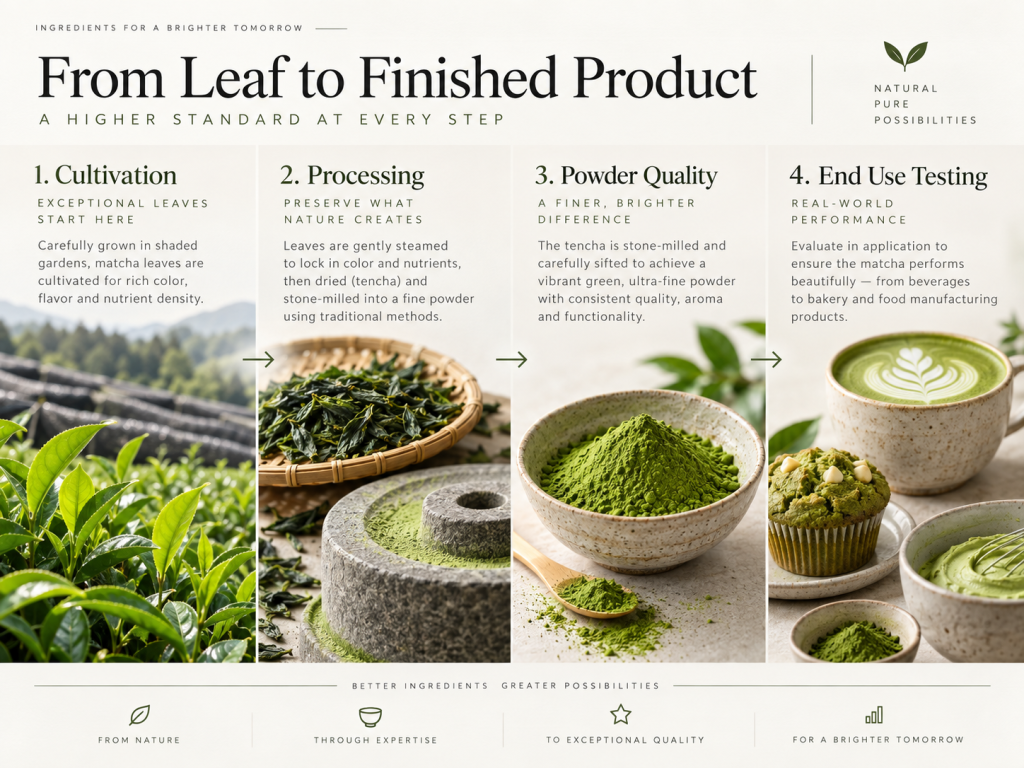
    Matcha is made from finely milled green tea leaf material from the tea plant Camellia sinensis. In traditional Japanese production, shaded leaves are processed into tencha: leaf material that is steamed, dried without rolling, refined and then milled into powder.

    Matcha is not simply ordinary finished green tea placed into a grinder. Cultivation, leaf selection, fixation, drying, refining, milling and storage all contribute to the finished product.

    Commercial methods vary by producer, origin and specification. Buyers should therefore assess the actual product, its intended use and its supporting documentation instead of relying on a single production term.

    How Is Matcha Made? The 7 Main Steps

    The sequence below describes the main stages. Exact equipment and process controls can differ, but each stage has a practical effect on the powder a buyer eventually evaluates.

    1. Tea Plants Are Cultivated and Shaded

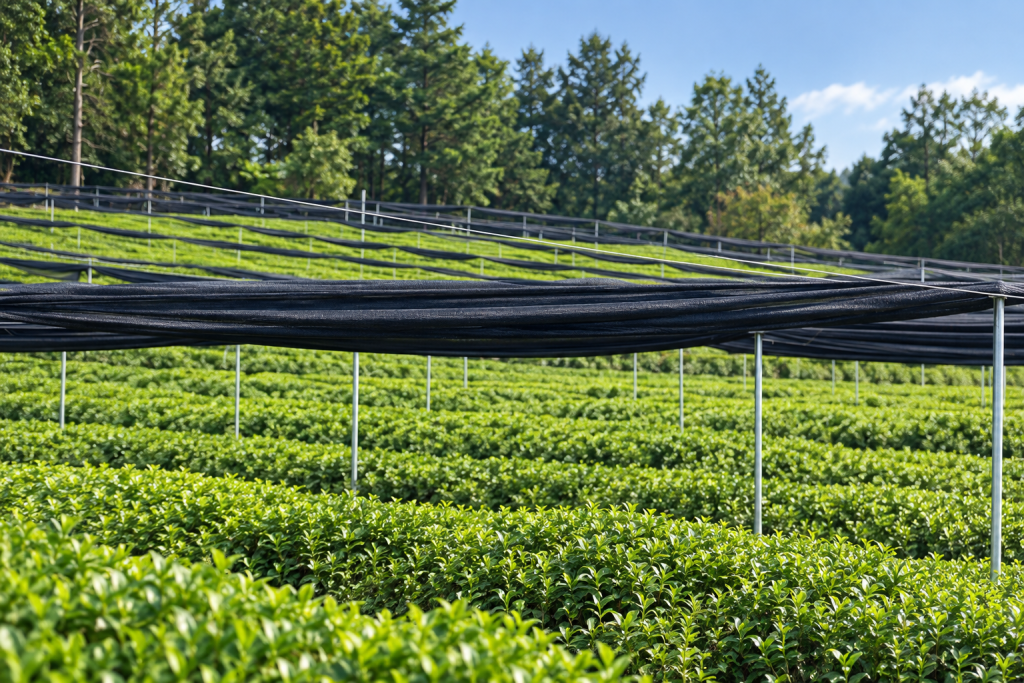
    Shade cultivation reduces the direct sunlight reaching the leaves before harvest. This changes leaf development and can influence green color, amino-acid composition, umami, bitterness and astringency.

    The number of shaded days should not be treated as a universal quality score. Cultivation schedules vary, and the better sourcing question is whether the finished matcha fits the intended application and specification.

    Shade-grown tea field covered for matcha production
    Shade cultivation reduces direct sunlight before harvest and helps shape the finished leaf profile.

    2. Tea Leaves Are Harvested

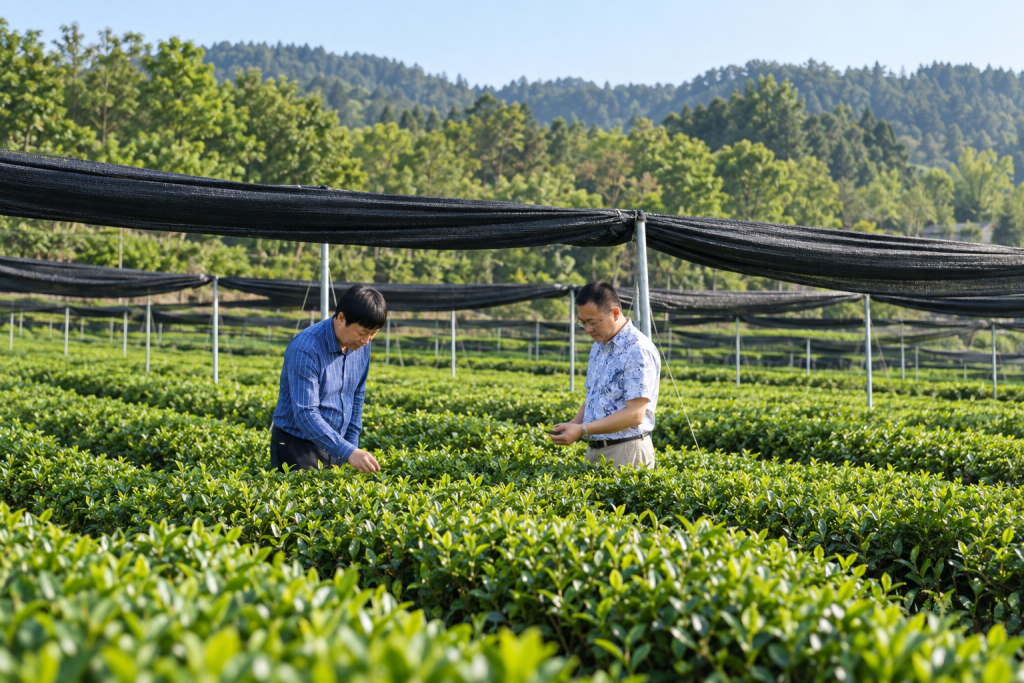
    After shading, the leaves are harvested according to the producer’s target profile. Harvest timing, leaf maturity and field conditions can influence aroma, tea intensity, astringency and refinement.

    One harvest is not automatically right for every buyer. A bakery may need a stronger tea character that remains noticeable after flour, sugar, dairy or chocolate are added. Straight-whisked service may place more emphasis on aroma, smoothness, umami and a restrained finish.

    Tea producer inspecting leaves in a matcha tea field before harvest
    Leaf condition and harvest timing are assessed before matcha processing begins.

    3. The Leaves Are Heat-Fixed

    Freshly harvested tea leaves contain enzymes that drive oxidation. Heat fixation is used shortly after harvest to stop that enzymatic activity. Steaming is closely associated with Japanese matcha production, although exact conditions vary by producer.

    This stage can affect fresh vegetal aroma, green appearance, bitterness and flavor stability. Careful process control matters even when the starting leaf material is strong.

    4. The Leaves Are Dried and Refined

    After fixation, the leaves are dried under controlled conditions. Refining can reduce or remove stems, coarse veins and unsuitable material according to the product specification. The prepared leaf material then becomes the basis for milling.

    Consistency at this stage matters to commercial buyers because the composition of the material entering the mill can affect repeat-batch appearance and performance.

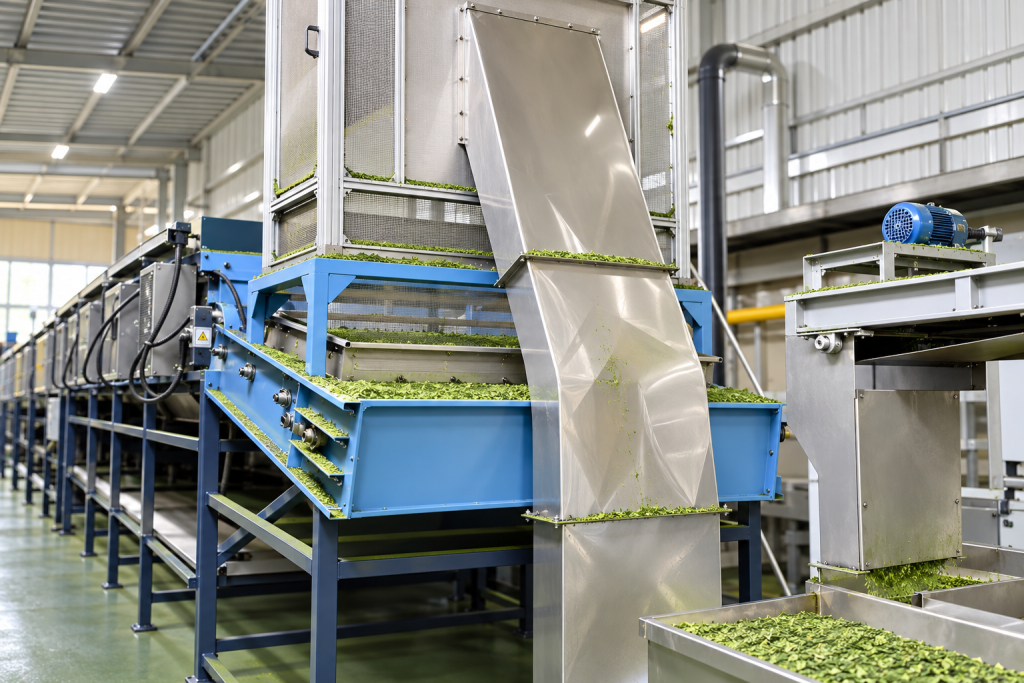
    Matcha tea processing equipment used for drying and refining green tea leaves
    Controlled processing prepares harvested tea leaves for refining and fine milling.

    5. The Tea Material Is Finely Milled

    The refined material is milled into a fine powder. Traditional matcha is strongly associated with stone milling, while commercial production may also use other controlled fine-milling systems. The relevant question for a buyer is how the finished powder performs.

    • Is the powder uniform?
    • Does it disperse appropriately for the recipe?
    • Is the mouthfeel suitable for the intended drink or food?
    • Does the product remain consistent across approved commercial batches?

    A finer powder can support smoother mouthfeel and dispersion, but particle size should always be considered together with the intended use. Review our Matcha Production Process page for more supply-side context.

    6. The Matcha Is Evaluated

    Once milling is complete, the powder can be evaluated through sensory review, application testing and relevant technical measurements.

    Visual

    • Powder color
    • Uniformity
    • Prepared color

    Sensory

    • Aroma and umami
    • Bitterness and astringency
    • Sweetness and finish

    Technical

    • Moisture
    • Fineness or particle size
    • Other confirmed specifications

    Not every buyer needs every measurement. A café may care most about color in milk, tea intensity and dispersion. A food manufacturer may prioritize process performance, finished-product color, cost-in-use and specification consistency. A premium tea brand may focus more heavily on straight-whisking performance.

    7. Matcha Is Packed and Stored

    Matcha is sensitive to oxygen, moisture, heat, light and strong surrounding odors. Packaging and storage are therefore part of quality management, not only logistics.

    High-barrier packaging, sealed liners and appropriate storage can help protect color, aroma and sensory stability. Commercial formats may range from evaluation pouches to larger bulk packs according to the order quantity and project requirements. See our Packaging & Storage Guide.

    How Production Affects Matcha Quality

    Production FactorWhat a Buyer May Notice
    ShadingColor and the balance of umami, bitterness and astringency
    Leaf and harvest selectionAroma, tea intensity and sensory refinement
    Heat fixationFreshness, vegetal character and color preservation
    Drying and refiningCleanliness, uniformity and repeatability
    MillingFineness, mouthfeel and dispersion
    Packaging and storageProtection of color, aroma and finished-product stability
    Shade-covered matcha tea field beside a processing facility
    Matcha quality management begins in the field and continues through processing, packing and storage.

    Two products can both be described as 100% green tea powder and still perform very differently. The meaningful comparison is the finished matcha in the buyer’s actual application.

    Is Bulk Matcha Made Differently From Retail Matcha?

    Not necessarily. Bulk matcha is not a quality grade. The word “bulk” generally describes commercial quantity or packaging rather than one sensory level.

    Bulk supply can include matcha for baking, food manufacturing, café drinks, straight whisking and premium private-label products. A larger order does not automatically mean lower quality; it means the product and packing format have been selected for a commercial requirement.

    This is why buyers should compare samples before scaling. Explore our Bulk Matcha Supply options.

    Culinary, Latte and Whisking Matcha Prioritize Different Results

    Culinary Matcha

    Common uses include baking, desserts, confectionery and food manufacturing. Buyers may prioritize recognizable tea character, finished-product visibility and practical cost-in-use.

    Matcha for Baking & Desserts →

    Café / Latte Matcha

    Hot and iced lattes, smoothies and café drinks require testing with the actual milk, sweetener and serving format. Color and tea flavor must remain suitable after mixing.

    Matcha for Lattes & Café Drinks →

    Straight-Whisking Profiles

    When matcha is served with water, aroma, umami, texture, bitterness and finish are more exposed. Sampling should reproduce the intended preparation method.

    Matcha for Whisking →

    What Commercial Matcha Buyers Should Verify

    CheckWhy It Matters
    Country of originIt should be stated accurately for the selected product.
    Product specificationReview the confirmed parameters relevant to the intended application.
    Batch informationA general specification and a batch-specific COA serve different purposes.
    Testing scopeConfirm which sample, method, date and product a report covers.
    Available documentationTDS, COA, testing and certification availability varies by product and project.
    Application performanceThe product should be tested in the buyer’s real recipe or preparation method.
    Packaging and repeat supplyConfirm pack format, storage, lead time and repeat-order requirements.

    A production story is useful context, but it should not replace product evaluation. Review the selected product alongside its quality and testing information and the Available Documentation Hub.

    Does Matcha Have to Come From Japan?

    Japan has the strongest historical and cultural association with matcha, and traditional Japanese tencha production remains an important reference for the category. Commercial matcha is also produced in other tea-growing regions, including China.

    For B2B sourcing, origin should always be disclosed, but country name alone does not establish whether a product fits a particular café, food or retail application. Buyers should compare cultivation, processing, sensory profile, technical specification, documentation and batch consistency for the product being offered.

    Learn more in our guide to Chinese Matcha for Commercial Applications.

    Frequently Asked Questions

    What is matcha made of?

    Matcha is made from green tea leaf material from Camellia sinensis that is cultivated, harvested, heat-fixed, dried, refined and finely milled. Traditional Japanese matcha is associated with tencha, while exact commercial methods and specifications vary by producer and origin.

    Is matcha just ground green tea?

    Not exactly. Matcha production begins before milling. Shade cultivation, leaf selection, fixation, drying and refining all affect the material that enters the mill. Ordinary finished green tea that is simply ground does not automatically share the same production profile.

    Why are tea plants shaded before harvest?

    Shading reduces direct sunlight and changes how the leaves develop. It can influence color, amino-acid composition, umami, bitterness and astringency. The finished product should still be evaluated against its intended application rather than judged by shading duration alone.

    Is culinary matcha made differently from ceremonial matcha?

    They may share the same broad production stages, but leaf selection, harvest, processing specifications and finished-product targets can differ. Culinary products are selected for performance in food, while straight-whisking profiles place more emphasis on exposed sensory qualities.

    Is bulk matcha lower quality than retail matcha?

    No. “Bulk” describes commercial quantity or packaging, not one universal quality level. Bulk supply can range from cost-conscious culinary ingredients to premium straight-whisking profiles. The correct choice depends on the intended product and purchasing requirements.

    What should a commercial buyer test first?

    Test the matcha in the actual finished application. A café should use its real milk and recipe; a bakery should evaluate the baked result; and a manufacturer should reproduce its formulation and process as closely as practical before approving commercial supply.

    Official Production References

    Sourcing Matcha for a Commercial Project?

    Matcha Origin Co. supports cafés, bakeries, food manufacturers and brands with application-based product matching, evaluation samples, bulk supply and technical documentation support.
    Continue with our guide to where matcha is grown and how origin affects commercial sourcing.

  • How to Evaluate Matcha Powder Quality for Commercial Use

    How to Evaluate Matcha Powder Quality for Commercial Use

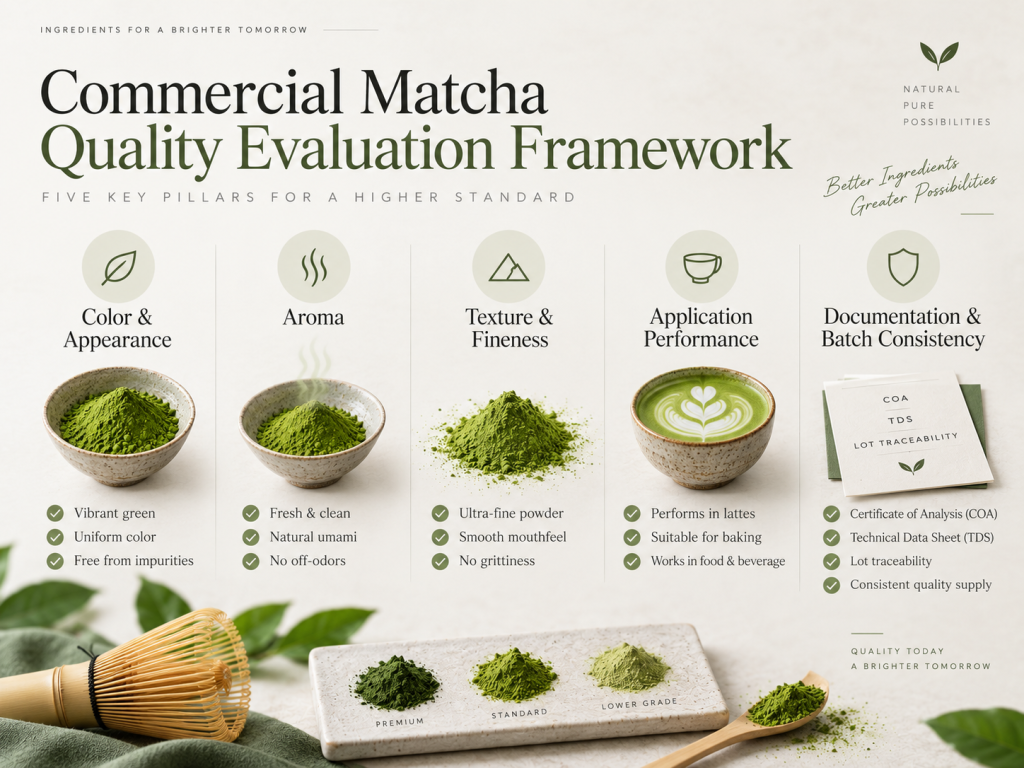
    For a commercial buyer, matcha quality cannot be judged from color or origin alone.

    The right evaluation depends on what the matcha will be used for.

    A matcha designed for straight whisking may be evaluated differently from one intended for lattes, baking or food manufacturing.

    The most useful question is:

    How does this product perform in the application you plan to sell?

    Start With the Intended Application

    Before comparing samples, define the use case.

    Commercial matcha may be evaluated for:

    • straight whisking
    • café lattes
    • milk tea
    • desserts
    • baking
    • ice cream
    • packaged beverages
    • food manufacturing

    Application affects which characteristics matter most.

    Evaluate Dry Powder Appearance

    Dry powder can provide an initial indication of product characteristics.

    Buyers commonly examine:

    • color
    • uniformity
    • texture
    • visible agglomeration
    • aroma

    However, dry powder appearance should not be the final purchasing decision.

    A visually attractive powder may behave differently once mixed into a commercial formulation.

    Evaluate Particle Size and Texture

    Particle size can affect:

    • mouthfeel
    • dispersion
    • suspension
    • whisking performance
    • processing behavior

    For technical purchasing, ask the supplier how fineness is specified or tested.

    Depending on the product, documentation may use sieve measurements, micron measurements or another defined method.

    The important point is to compare results using a consistent testing basis.

    Evaluate Aroma and Flavor

    Sensory evaluation should consider:

    • fresh tea character
    • vegetal notes
    • umami
    • bitterness
    • astringency
    • sweetness perception
    • aftertaste

    Avoid assuming that one description automatically represents every batch or product.

    Sensory performance should be evaluated using actual samples.

    Test the Finished Application

    This is one of the most important steps.

    For latte programs, evaluate matcha in milk.

    For baking, evaluate the finished baked product.

    For food manufacturing, test the matcha inside the actual formula and process.

    Compare:

    • finished color
    • flavor intensity
    • aroma
    • mouthfeel
    • dispersion
    • processing behavior
    • cost-in-use

    Review Physical and Chemical Specifications

    For commercial procurement, technical information may include parameters such as:

    • moisture
    • ash
    • particle size
    • caffeine
    • tea polyphenols
    • L-theanine

    The exact values and test methods depend on the product, supplier, sample and batch.

    A buyer should not assume that one analytical result represents every future shipment.

    Review Contaminant and Microbiological Information

    Depending on market and application, buyers may also need information relating to:

    • heavy metals
    • pesticide residues
    • total plate count
    • yeast and mould
    • E. coli
    • Salmonella
    • other relevant microbiological parameters

    Which tests are required depends on destination market, product category and buyer requirements.

    Look at Batch Consistency

    A strong commercial sourcing decision considers more than the first sample.

    Ask how the supplier manages:

    • product specification
    • batch identification
    • COA availability
    • repeat-order consistency
    • origin information
    • documentation changes

    This becomes increasingly important as purchasing volume grows.

    Documentation Should Match the Product

    Do not treat one certificate or test report as universal evidence.

    Commercial documentation should be checked against:

    product
    sample
    batch
    operator
    certification scope
    test scope

    You can review our quality and testing support for more information.

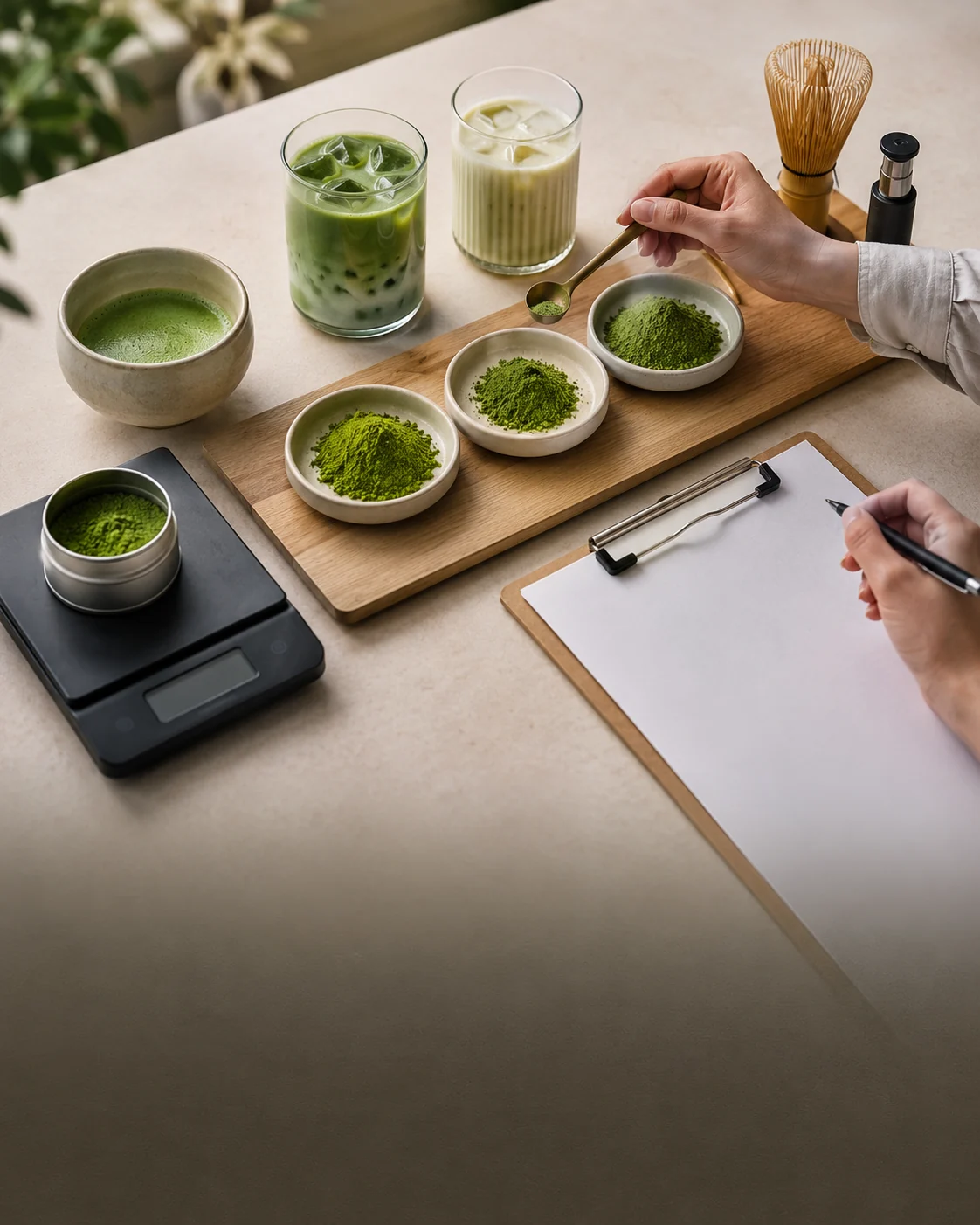
    Sample Evaluation Before Scaling

    The best way to compare matcha quality is controlled sample testing.

    Use identical preparation or processing conditions and document the results.

    Then compare both technical data and finished-product performance.

    For products intended for commercial supply, explore our bulk matcha supply options.

    Evaluate Matcha for Your Application

    Request Matcha Samples