BULK MATCHA SAMPLES AVAILABLE REQUEST SAMPLES

Category: Matcha Recipes

  • Dalgona Matcha Recipe: Whipped Matcha Cloud Latte

    Dalgona Matcha Recipe: Whipped Matcha Cloud Latte

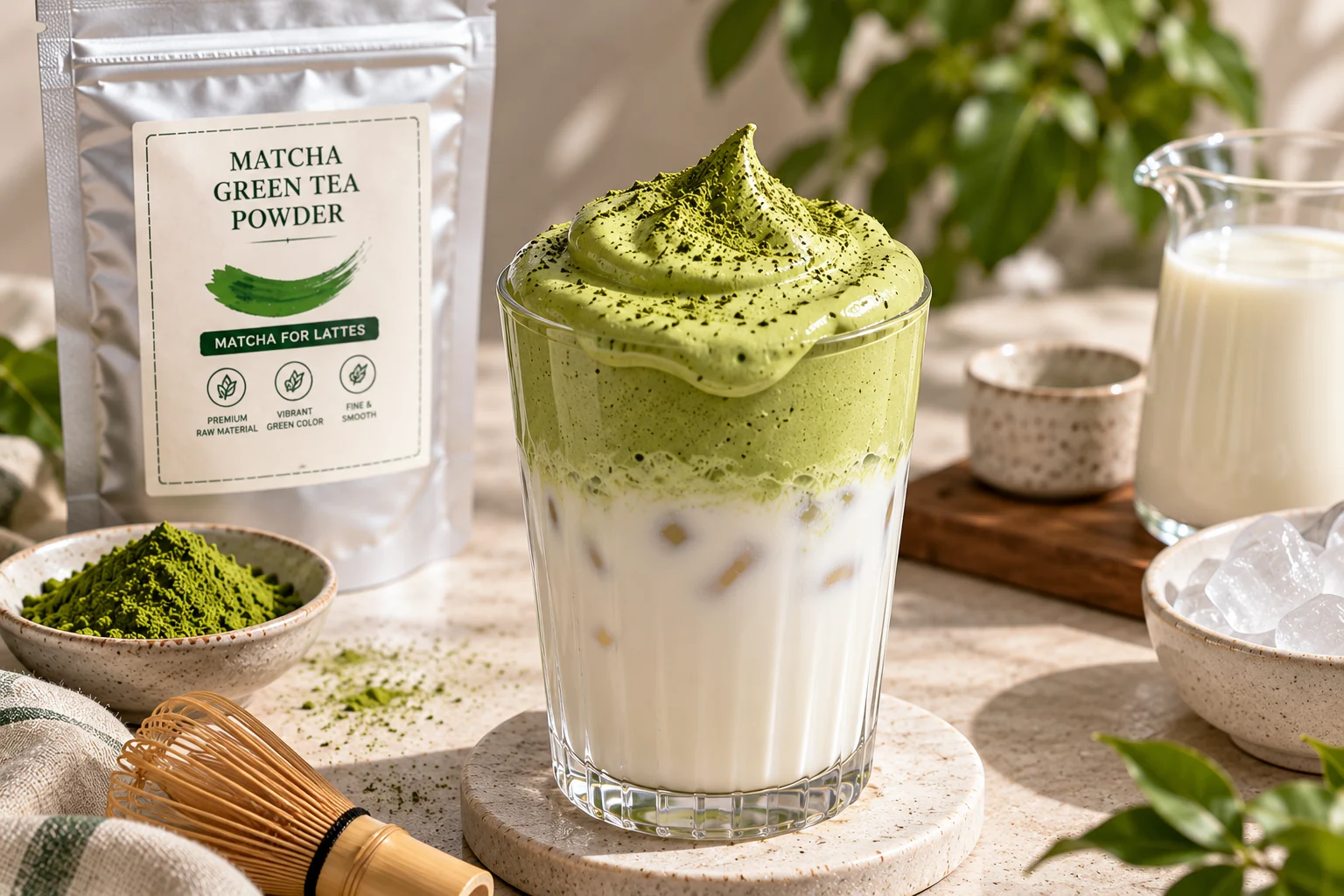
    Dalgona matcha is a creamy whipped matcha drink built around a soft green matcha cloud served over milk. Unlike whipped coffee, matcha needs a cream-based or otherwise stabilizing structure to hold its shape, making this version a practical starting point for café menu testing.

    Recipe Information

    Servings: 1

    Prep Time: 8 minutes

    Matcha: 3 g

    Style: Hot or iced

    Application: Café drink / whipped matcha latte
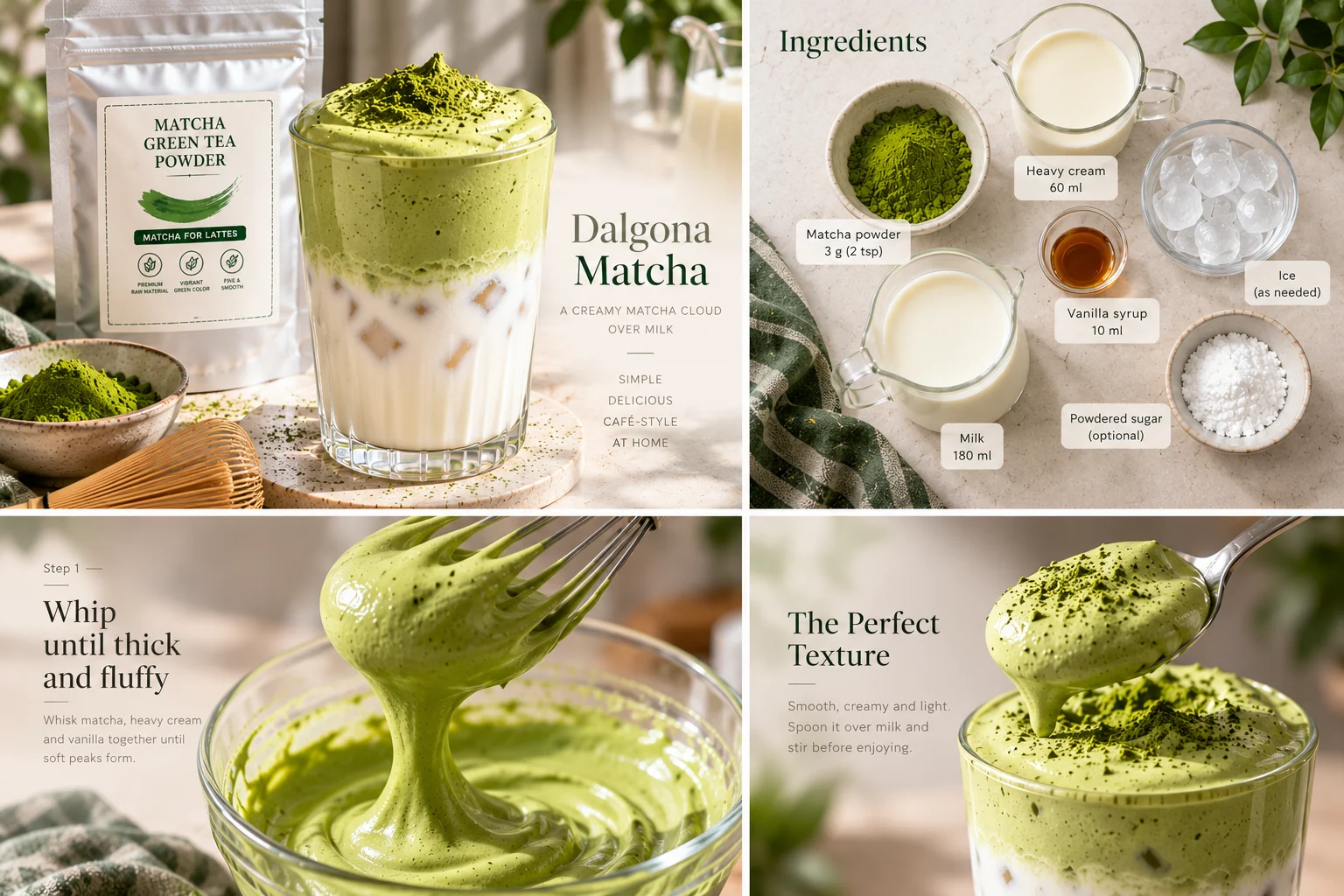
    Ingredients and preparation overview for a dalgona matcha latte
    Matcha, cream, milk and vanilla form the base of this whipped matcha latte.

    Dalgona Matcha Ingredients

    Whipped Matcha Foam

    • 60 ml cold heavy cream
    • 3 g matcha powder
    • 10 ml vanilla syrup
    • Optional: 5–10 g powdered sugar

    Milk Base

    • 180 ml milk or milk alternative
    • Ice, as needed
    • Matcha powder for a light garnish

    How to Make a Whipped Matcha Latte

    1. Chill the mixing bowl

    Use a cold bowl and cold cream so the matcha foam develops structure quickly and consistently.

    2. Sift the matcha

    Sift 3 g of matcha into the bowl to reduce clumps and improve the finished texture.

    3. Add cream and vanilla

    Add the cold heavy cream and vanilla syrup. Include powdered sugar if a sweeter, slightly firmer foam is preferred.

    4. Whip to soft peaks

    Whip until the matcha foam is thick, smooth and spoonable. Stop at soft peaks; overwhipping can make the topping stiff or grainy.

    5. Prepare the milk base

    For an iced version, fill a glass with ice and add the milk. For a warm version, heat the milk gently before pouring.

    6. Finish the drink

    Spoon the whipped matcha cloud over the milk, dust lightly with matcha and serve promptly. Stir before drinking.
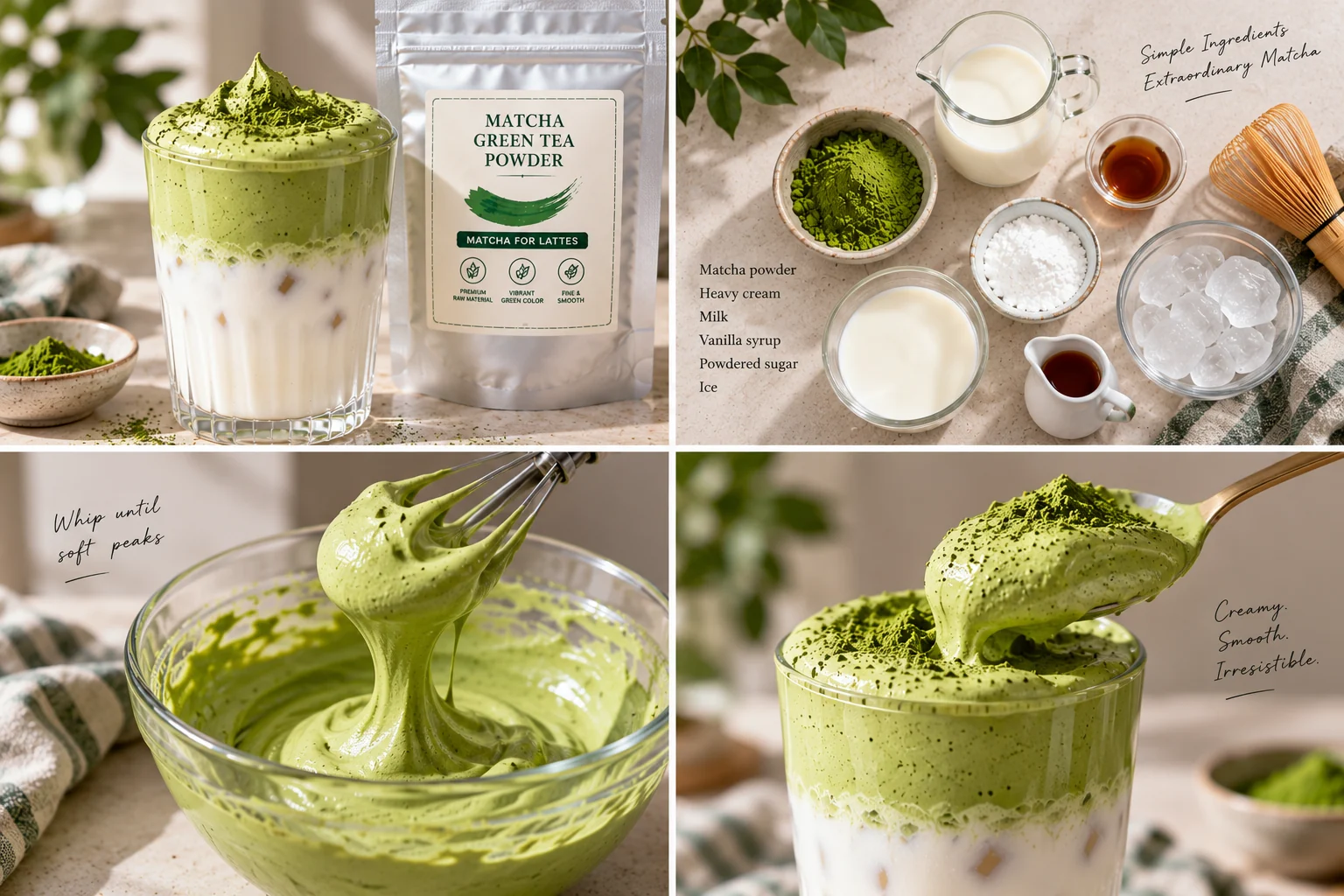
    Dalgona matcha ingredients, whipping process and finished matcha foam
    Whip the chilled mixture only until it reaches soft, spoonable peaks.

    Why Dalgona Matcha Needs a Whipped Base

    Instant coffee can form a stable foam with sugar and water, but matcha does not behave the same way. A whipped matcha topping needs a structure such as heavy cream, coconut cream, aquafaba or egg white. For café service, chilled cream is usually the simplest option to test because it is familiar, quick to prepare and easy to portion.
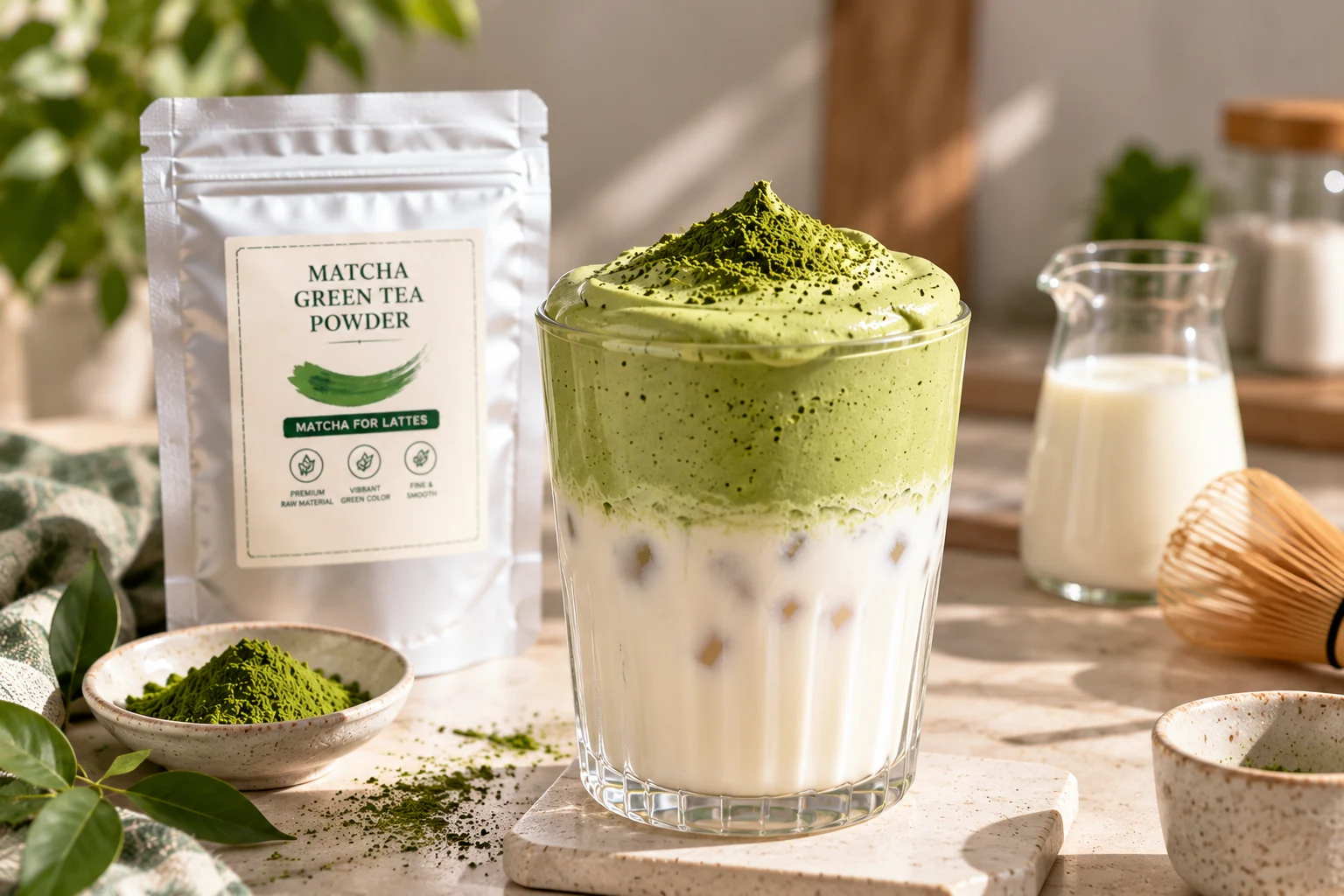
    Finished dalgona matcha latte with a thick whipped matcha cloud over milk
    The finished drink should have a smooth matcha cloud that remains soft enough to stir into the milk.

    Best Matcha Profile for This Recipe

    Café / Latte Matcha Profile is the recommended starting point for this milk-based whipped drink. It is designed to remain visible and balanced alongside dairy or plant-based milk.

    For a brighter green appearance and a more refined finished drink, the Premium Latte Matcha Profile can also be tested in the actual cream, milk and sweetener system.

    Café Testing Notes

    • Keep the cream cold: warm cream takes longer to whip and produces less reliable structure.
    • Do not overwhip: the topping should remain soft enough to spoon and stir.
    • Watch liquid sweeteners: extra syrup can loosen the foam, so test the exact formula.
    • Serve promptly: prepare the topping in small controlled batches and validate its holding time.
    • Test alternatives separately: coconut cream and other bases will change flavor, texture and stability.

    Commercial Batch Guidance

    BatchMatchaHeavy CreamVanilla SyrupMilk
    1 drink3 g60 ml10 ml180 ml
    10 drinks30 g600 ml100 ml1.8 L
    25 drinks75 g1.5 L250 ml4.5 L

    Prepare foam in small controlled batches and validate holding time, texture and service speed before using the formula in full service.

    Testing a Whipped Matcha Drink for Your Menu?

    Compare matcha profiles, estimate your serving cost and request B2B samples for recipe testing in your own milk and sweetener system.
  • Japanese Matcha Parfait Recipe with Matcha Jelly, Shiratama & Red Bean

    Japanese Matcha Parfait Recipe with Matcha Jelly, Shiratama & Red Bean

    A Japanese-inspired matcha parfait brings several textures into one dessert: cool matcha jelly, chewy shiratama, sweet red bean and creamy matcha ice cream or soft serve. For cafés, dessert bars and food businesses, the components can be prepared separately, portioned consistently and assembled close to service.

    Recipe Information

    Servings: 4

    Prep Time: About 30 minutes

    Chill Time: 2–3 hours

    Matcha: Approximately 10–12 g

    Application: Café dessert / Japanese-inspired plated dessert / parfait

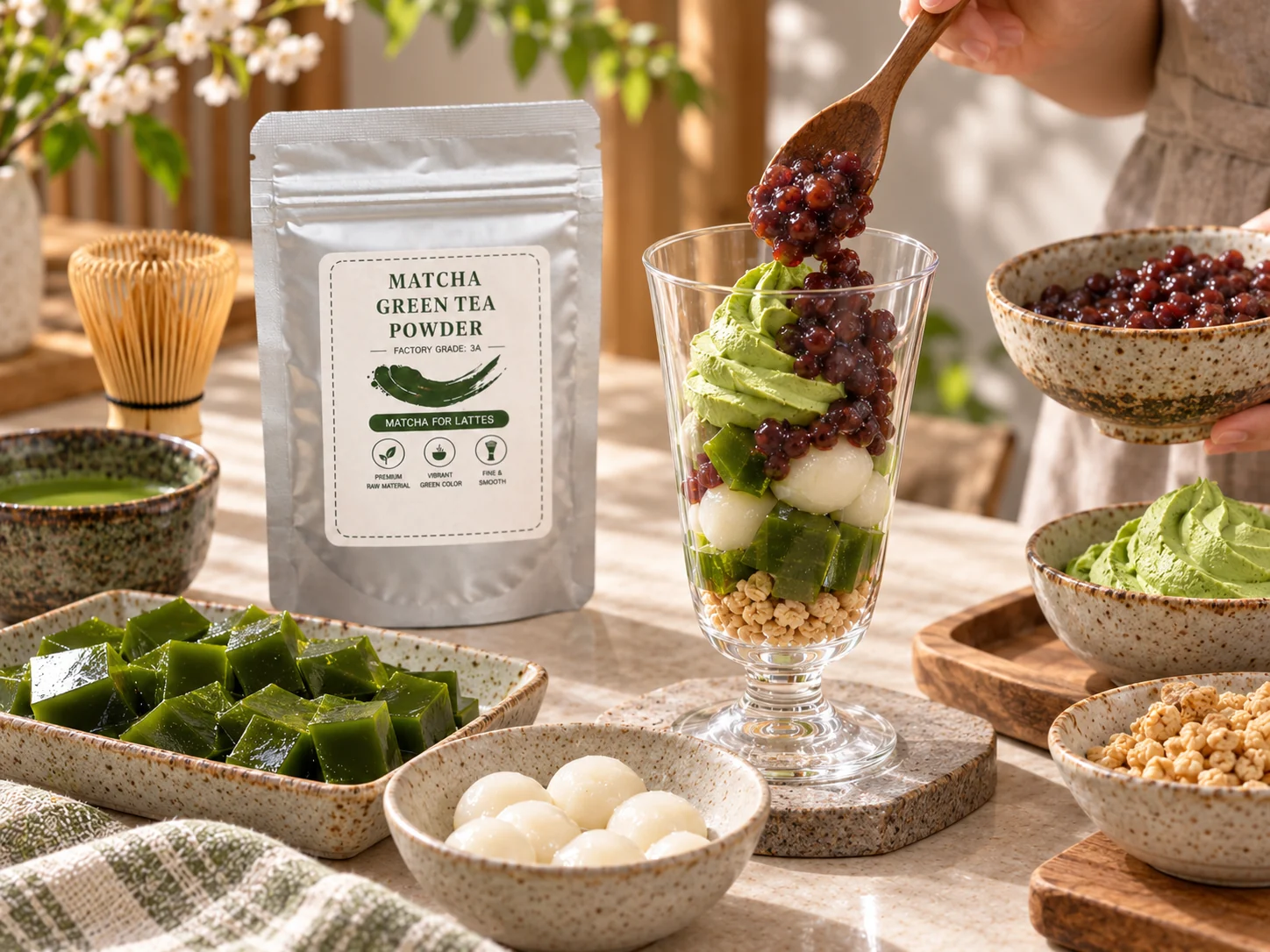
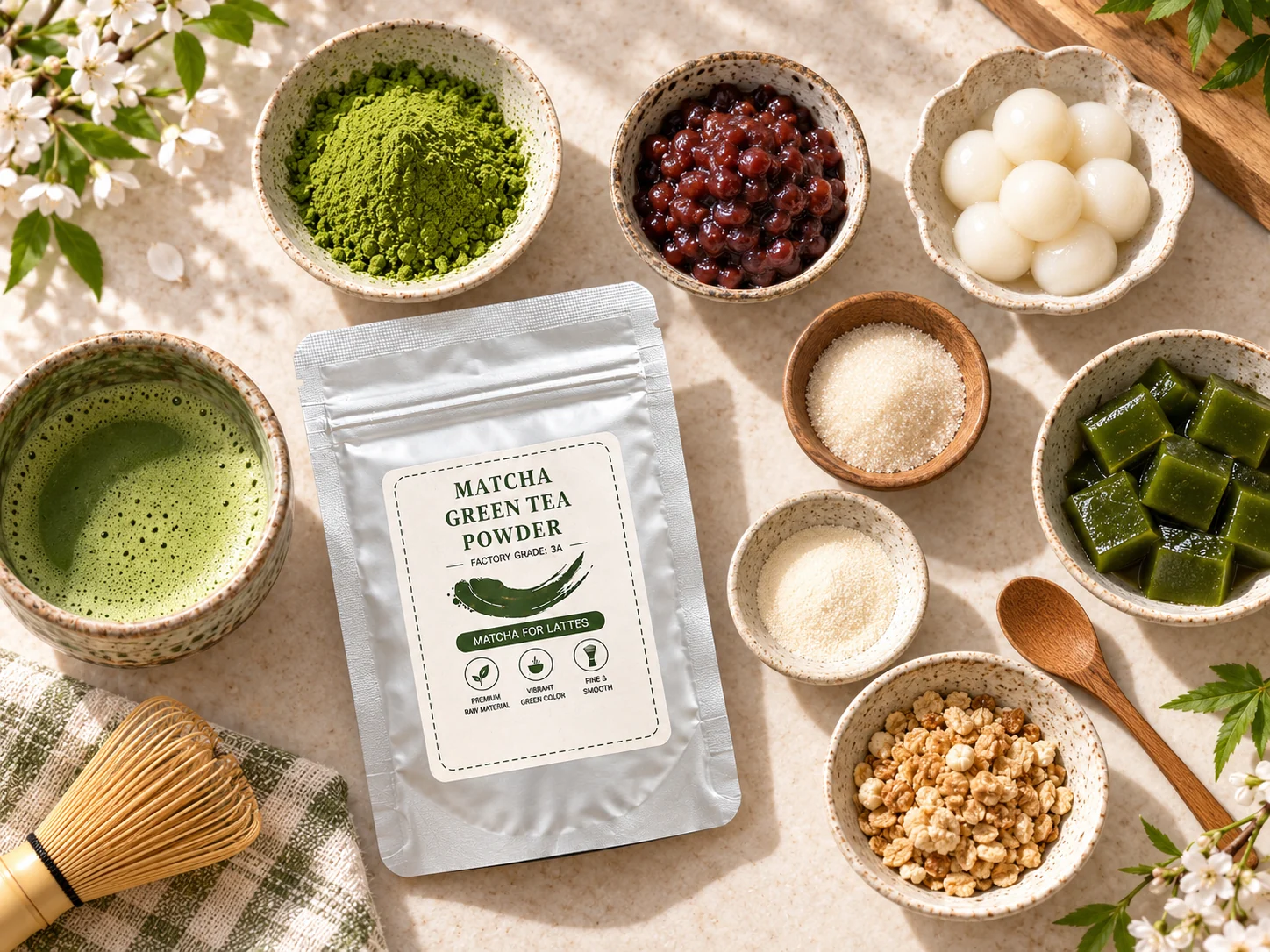
    Ingredients for a Japanese matcha parfait with jelly, shiratama and red bean
    Matcha, sweet red bean, shiratama, jelly ingredients and crunchy garnish.

    Matcha Parfait Ingredients

    Matcha Jelly

    • 6 g matcha powder
    • 400 ml water
    • 50 g sugar
    • 6 g powdered gelatin

    Shiratama

    • 100 g shiratamako glutinous rice flour
    • Approximately 90 ml water, added gradually

    For Assembly

    • 120 g sweet red bean paste, smooth or chunky
    • 4 portions matcha ice cream or matcha soft serve
    • Optional whipped cream
    • Matcha powder for light dusting
    • Optional kuromitsu or condensed milk
    • Optional crisp wafer or granola for texture

    How to Make a Japanese Matcha Parfait

    1. Make the matcha jelly

    Mix the matcha and sugar first so the powder disperses evenly. Warm part of the water, dissolve the gelatin and gradually whisk in the matcha mixture. Add the remaining water, strain into a shallow container and chill until fully set.

    2. Prepare the shiratama

    Place the shiratamako in a bowl. Add water gradually while kneading until the dough is smooth and soft enough to shape without cracking. Roll into small balls, cook in boiling water until they float, continue briefly, then transfer to cold water and drain.

    3. Portion the red bean

    Use smooth or chunky sweetened azuki according to the desired texture. For café service, portion it in advance to keep sweetness and cost consistent.

    4. Cut the matcha jelly

    Cut the chilled jelly into clean, visible cubes. Keep refrigerated until service.

    5. Add the frozen matcha component

    Use one portion of matcha soft serve or ice cream as the main creamy element. Add it immediately before serving.

    6. Assemble the parfait

    Layer a crisp garnish, matcha jelly, shiratama and red bean in the glass. Add the matcha ice cream or soft serve, finish with a light matcha dusting and serve optional sauce in a controlled amount.

    Assembling a matcha parfait with red bean, matcha jelly and shiratama
    Layer the prepared components and add the frozen matcha element close to service.

    Why This Matcha Dessert Works

    The key is texture contrast. Matcha jelly gives a light, cool bite. Shiratama adds chewiness. Red bean provides sweetness and body, while matcha ice cream or soft serve brings creaminess. Together, the dessert feels more complete than a single frozen matcha component served alone.

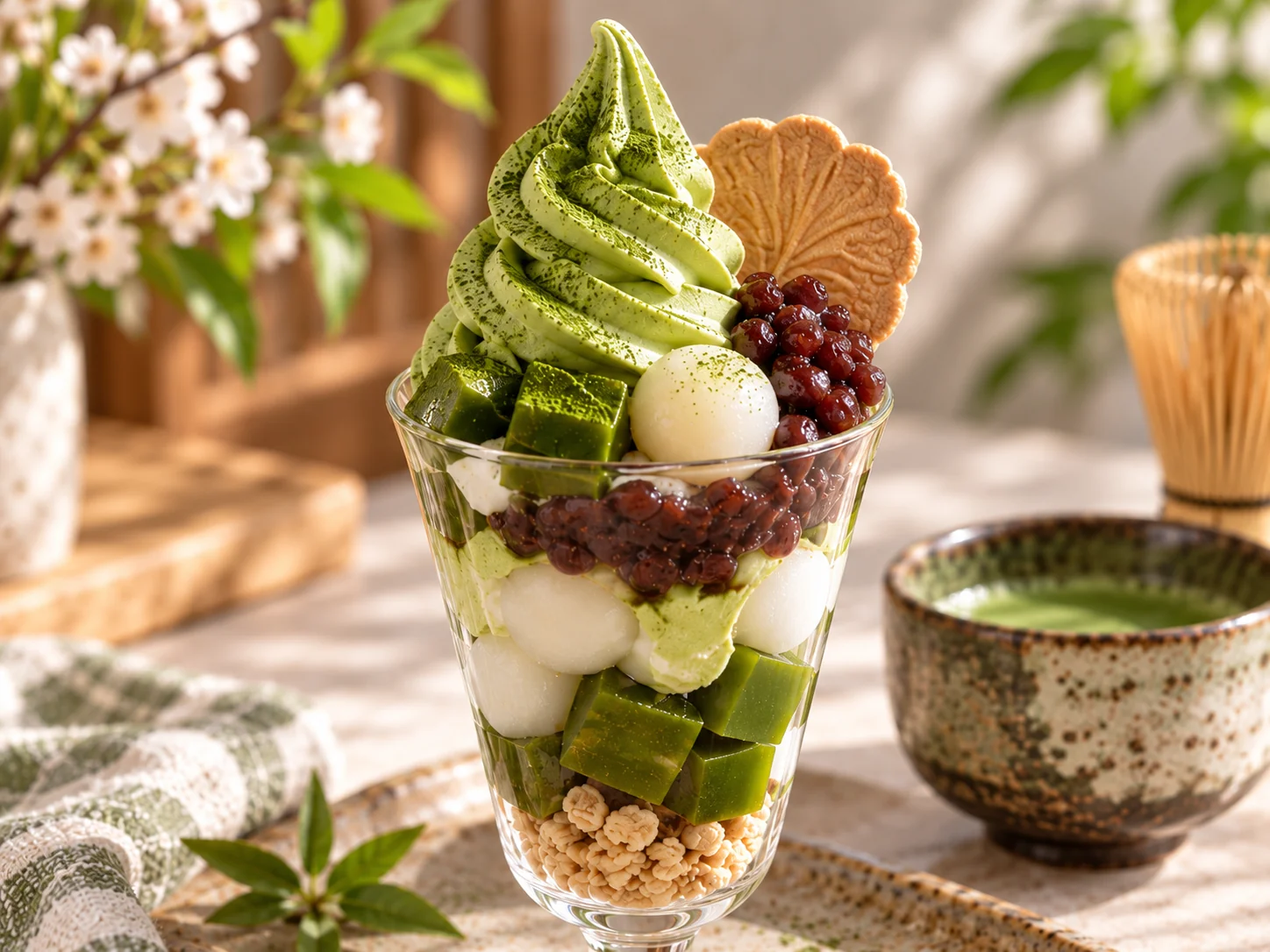
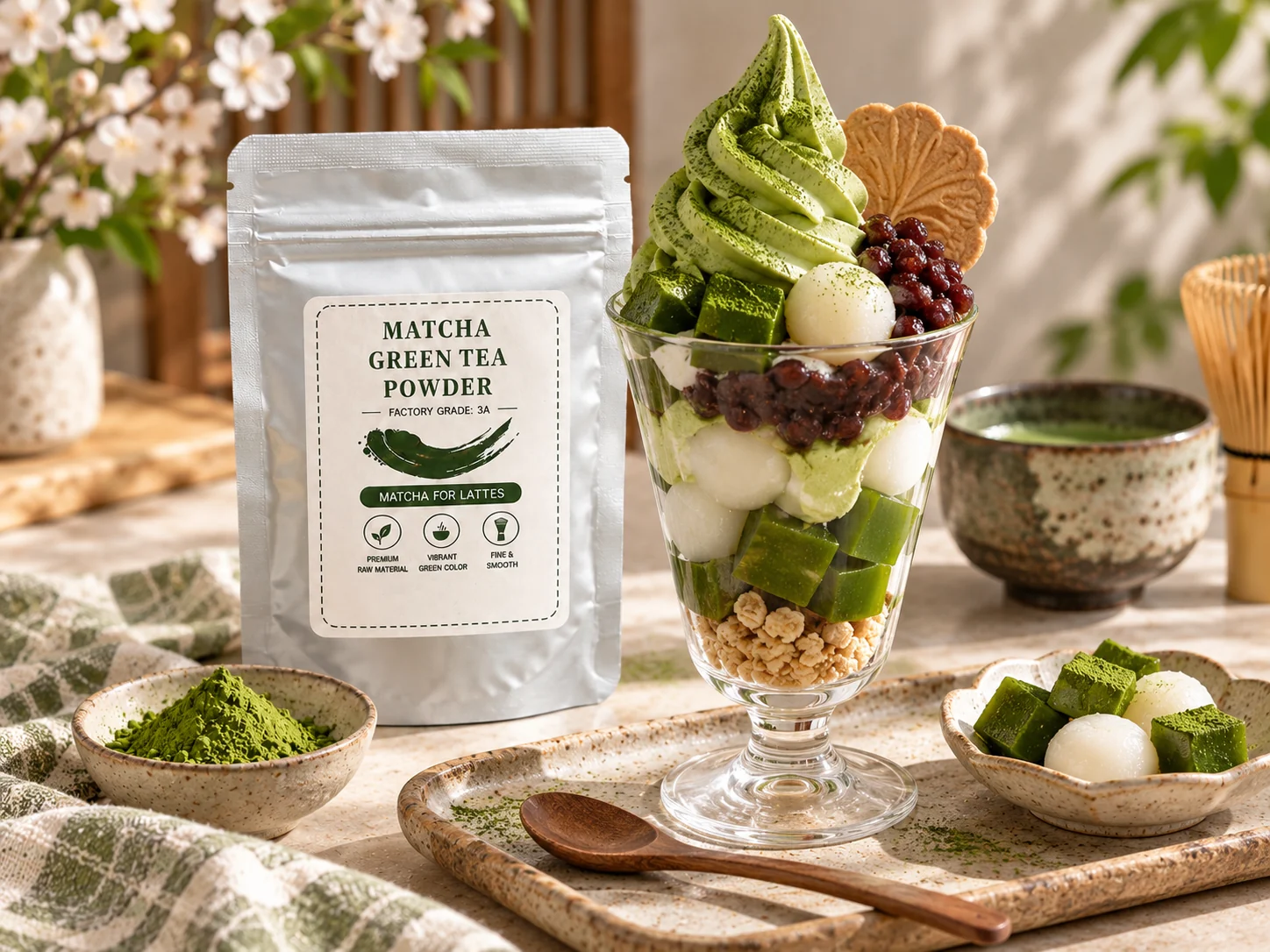
    Japanese matcha parfait with matcha jelly, shiratama, red bean and matcha soft serve
    A finished matcha parfait with layered color, texture and balanced portioning.

    Best Matcha Profile for This Recipe

    Culinary Matcha Profile is the recommended starting point for the jelly and dessert components. It is designed for desserts, cream applications, ice cream and other food-service recipes.

    For a brighter green finish or a more refined matcha flavor in the frozen component, the Premium Latte Matcha Profile can also be tested. Evaluate the powder inside the actual dairy, sugar and dessert formulation.

    Café Dessert Testing Notes

    • Judge the finished jelly color: jelly can visually mute matcha compared with dry powder, so evaluate it after chilling.
    • Prevent sediment: sift and mix matcha with sugar before adding liquid to improve dispersion.
    • Test shiratama holding time: its texture changes during extended storage, so establish a realistic service window.
    • Add soft serve last: pre-portion the other components and assemble the frozen element to order.
    • Control sweetness: red bean, ice cream and sauce can easily overpower the matcha.

    Commercial Portioning Example

    For one serving, begin with approximately 60–80 g matcha jelly, 2–3 shiratama, 25–30 g red bean and 70–90 g matcha ice cream or soft serve.

    Adjust the portion according to glass size, menu price and whether the parfait is offered as a full dessert or a smaller add-on.

    Testing Matcha for Café Desserts?

    Matcha behaves differently in jelly, ice cream, cream fillings and baked desserts. Test it in the actual formulation before standardizing a commercial recipe.

  • Apple Cider Matcha Mimosa Recipe for Fall Brunch

    Apple Cider Matcha Mimosa Recipe for Fall Brunch

    Crisp apple cider, smooth matcha and sparkling bubbles come together in this fall-inspired matcha mimosa. It is a bright seasonal option for brunch menus, autumn events and café specials, with an easy alcohol-free variation for broader service.

    Recipe Information

    Servings: 1

    Prep Time: 5 minutes

    Matcha: 2–3 g

    Style: Sparkling / Fall Brunch Drink

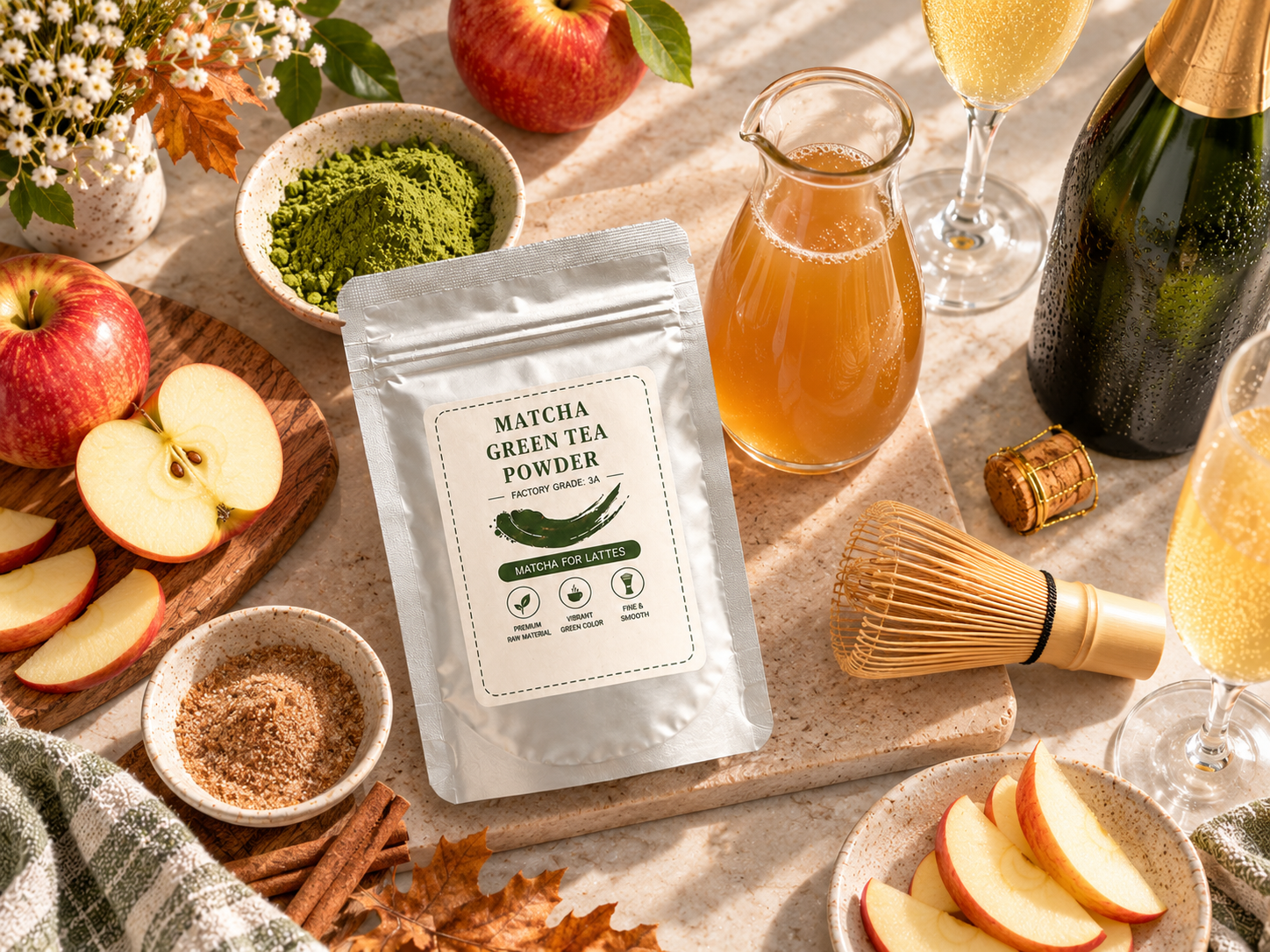
    Ingredients for an apple cider matcha mimosa recipe
    Apple cider, matcha, sparkling wine and optional cinnamon garnish.

    Apple Cider Matcha Mimosa Ingredients

    Matcha Concentrate

    • 2–3 g matcha powder
    • 45 ml warm water

    Apple Mimosa

    • 90 ml chilled apple cider
    • 90 ml chilled prosecco or dry sparkling wine
    • Prepared matcha concentrate

    Optional Garnish

    • Thin apple slice
    • Cinnamon-sugar rim
    • Cinnamon stick

    How to Make an Apple Cider Matcha Mimosa

    1. Chill the ingredients. Keep the cider, sparkling wine and serving glass cold before assembly.
    2. Prepare the glass. If using a cinnamon-sugar rim, lightly moisten the rim and dip it into the mixture.
    3. Whisk the matcha. Sift 2–3 g matcha into a bowl, add 45 ml warm water and whisk until smooth.
    4. Add the apple cider. Pour the chilled cider into the glass.
    5. Add the sparkling wine. Pour slowly to preserve carbonation and leave room for the matcha.
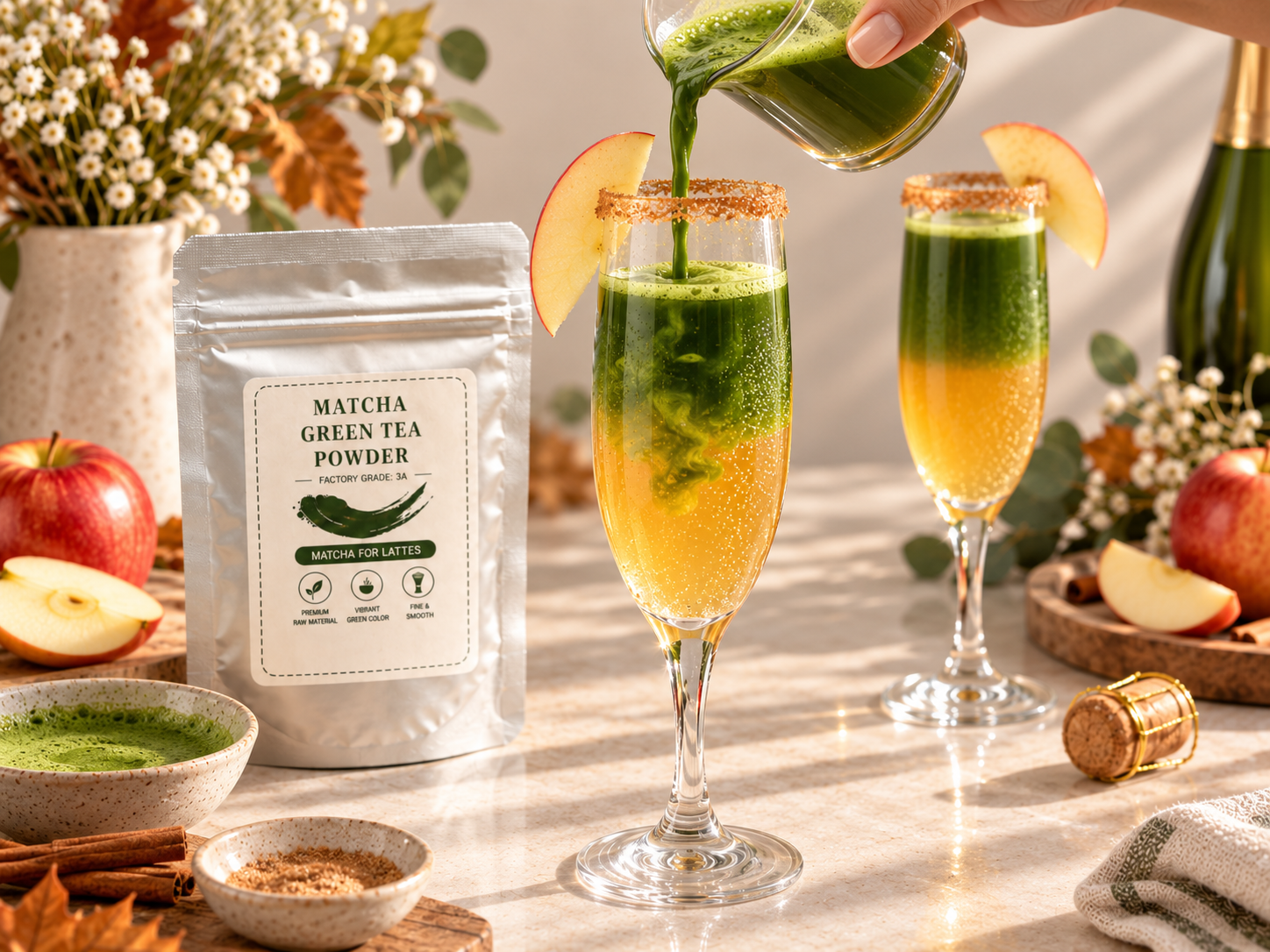
    6. Finish with matcha. Add the matcha concentrate last for a layered appearance, garnish with apple and serve immediately.
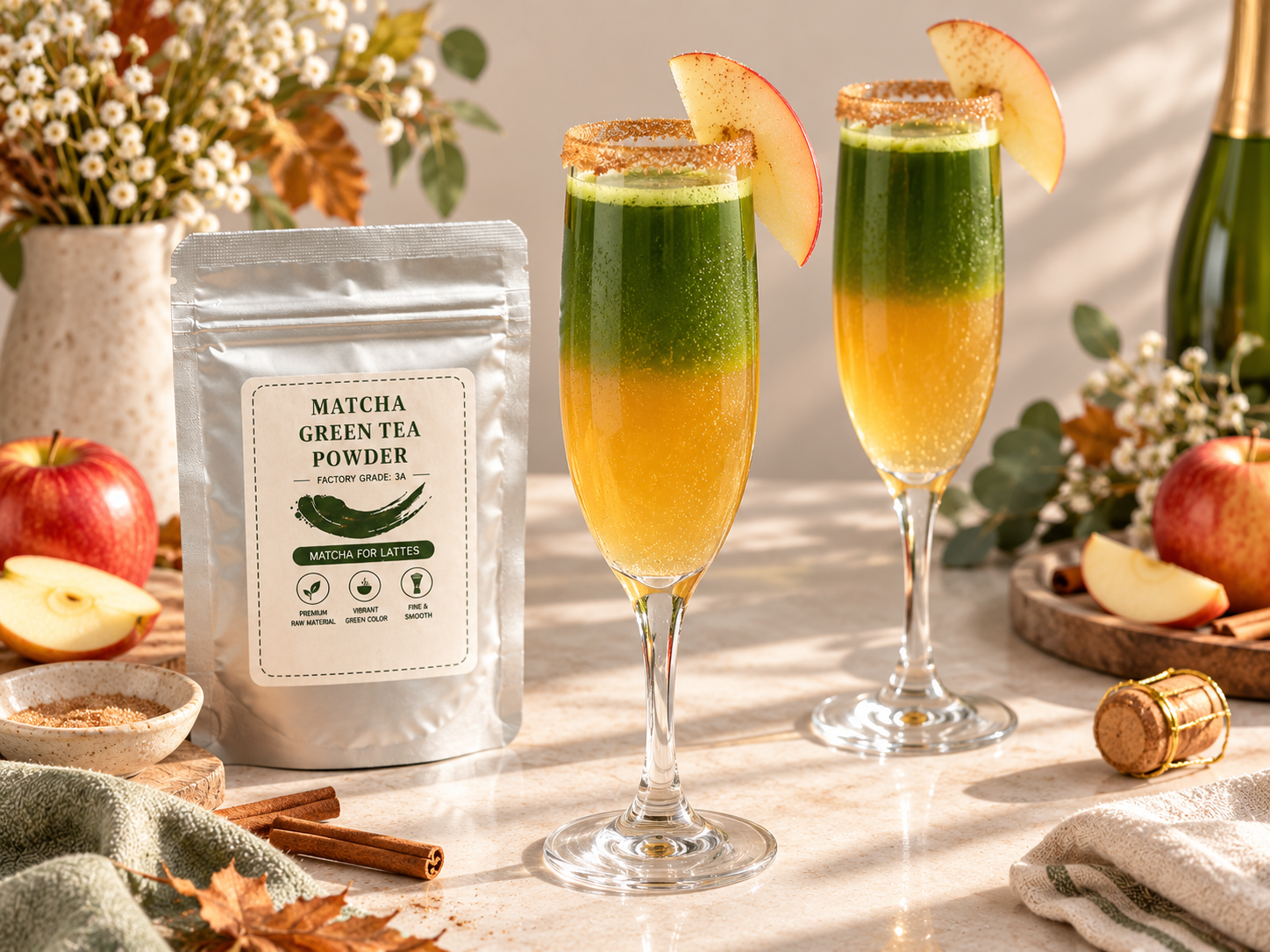
    Pouring matcha concentrate into chilled apple cider
    Add the matcha concentrate last to create a distinct green layer.

    Alcohol-Free Sparkling Apple Matcha

    For a non-alcoholic café or event option, replace the wine with sparkling apple cider, sparkling white grape juice or unsweetened sparkling water.

    • 45 ml matcha concentrate
    • 120 ml chilled apple cider
    • 60–90 ml sparkling water or sparkling cider
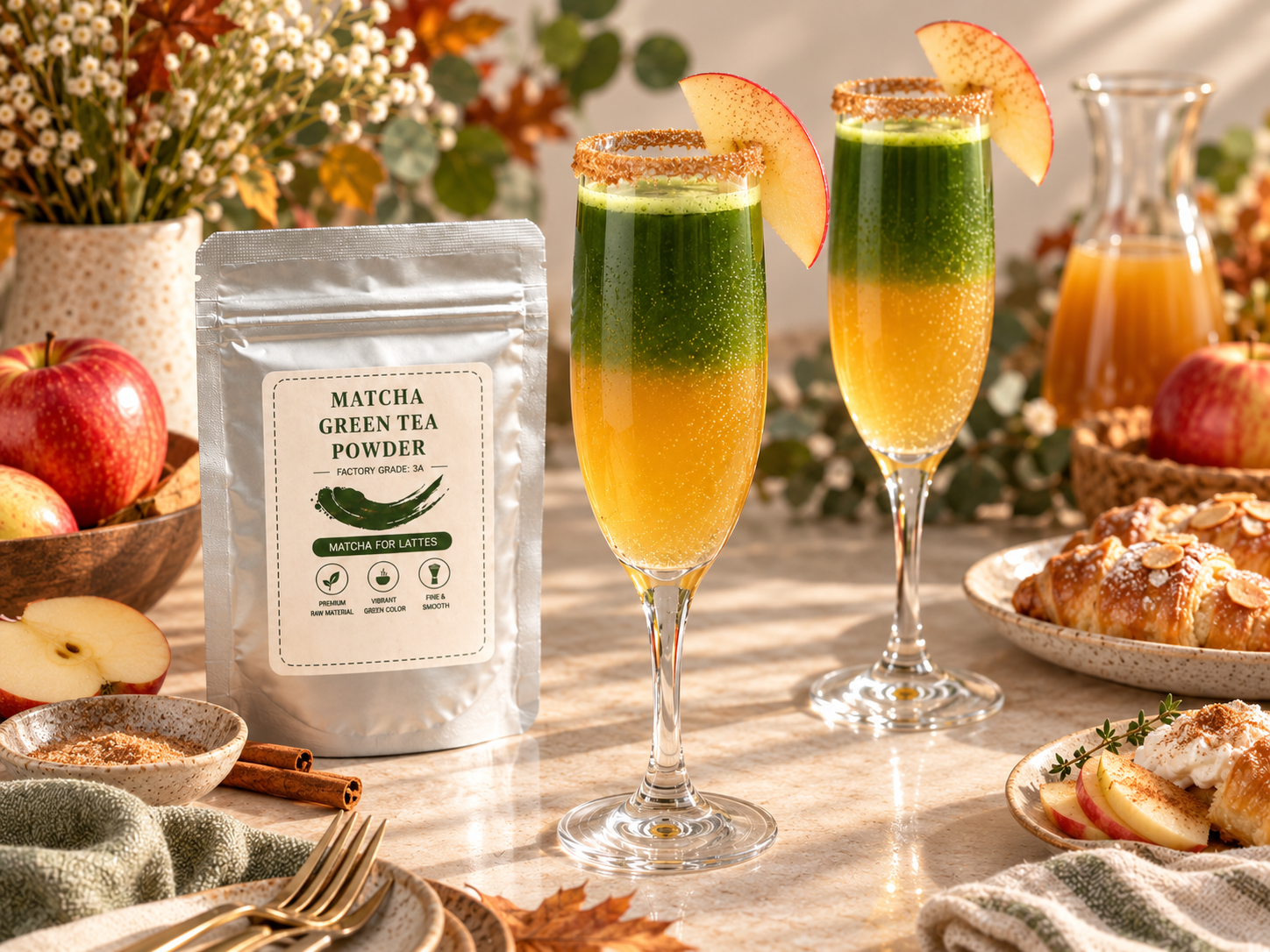
    Alcohol-free sparkling apple matcha drink for a fall café menu
    The same seasonal presentation can be adapted to an alcohol-free service format.

    What Does a Matcha Mimosa Taste Like?

    Apple cider brings sweet-tart fruit notes, while matcha adds a clear tea character and mild bitterness. Dry sparkling wine keeps the finish light; a restrained cinnamon garnish can reinforce the autumn profile without covering the matcha.

    Best Matcha Profile for This Recipe

    Premium Latte Matcha Profile is the recommended starting point when you want visible green color and a refined finish in a fruit-forward sparkling drink.

    A Classic Ceremonial profile can also be tested for menus that prioritize a smoother tea-led character.

    Café Menu Testing Notes

    • Keep everything chilled: cold ingredients preserve carbonation and reduce dilution.
    • Control sweetness: cider sweetness varies, so test before adding any extra syrup.
    • Add matcha last: this supports the layered presentation customers expect from a seasonal special.
    • Build to order: matcha concentrate and cider can be prepared in advance, but add the sparkling component close to service.

    Commercial Batch Guidance

    BatchMatchaWarm WaterApple Cider
    1 drink2–3 g45 ml90 ml
    10 drinks20–30 g450 ml900 ml
    50 drinks100–150 g2.25 L4.5 L
    Prepare matcha concentrate and apple components in controlled batches. Add the sparkling component close to service.

    Planning Seasonal Drink Costs?

    Testing a Fall Matcha Menu?

    Compare application profiles, explore matcha for café drinks or request B2B samples for recipe testing in your own ingredients and service format.

  • Brown Butter Matcha Banana Bread Recipe

    Brown Butter Matcha Banana Bread Recipe

    Brown butter, ripe bananas and matcha come together in this moist, lightly nutty banana bread with an earthy green-tea finish.

    Browning the butter adds a deeper toasted flavor, while matcha gives the loaf a distinctive color and tea character. This recipe works for home baking and as a practical starting point for cafés and bakeries developing matcha loaf cakes, breakfast slices or seasonal bakery items.

    For commercial baking applications, begin testing with a Culinary Matcha Profile. Baked products need matcha that remains noticeable alongside flour, butter, sugar and prolonged heat exposure.

    Recipe Information

    • Yield: 1 loaf, about 8–10 slices
    • Prep Time: About 20 minutes
    • Bake Time: 55–65 minutes
    • Oven: 350°F / 175°C
    • Matcha: 10–12 g
    • Application: Bakery / Loaf Cake / Café Pastry
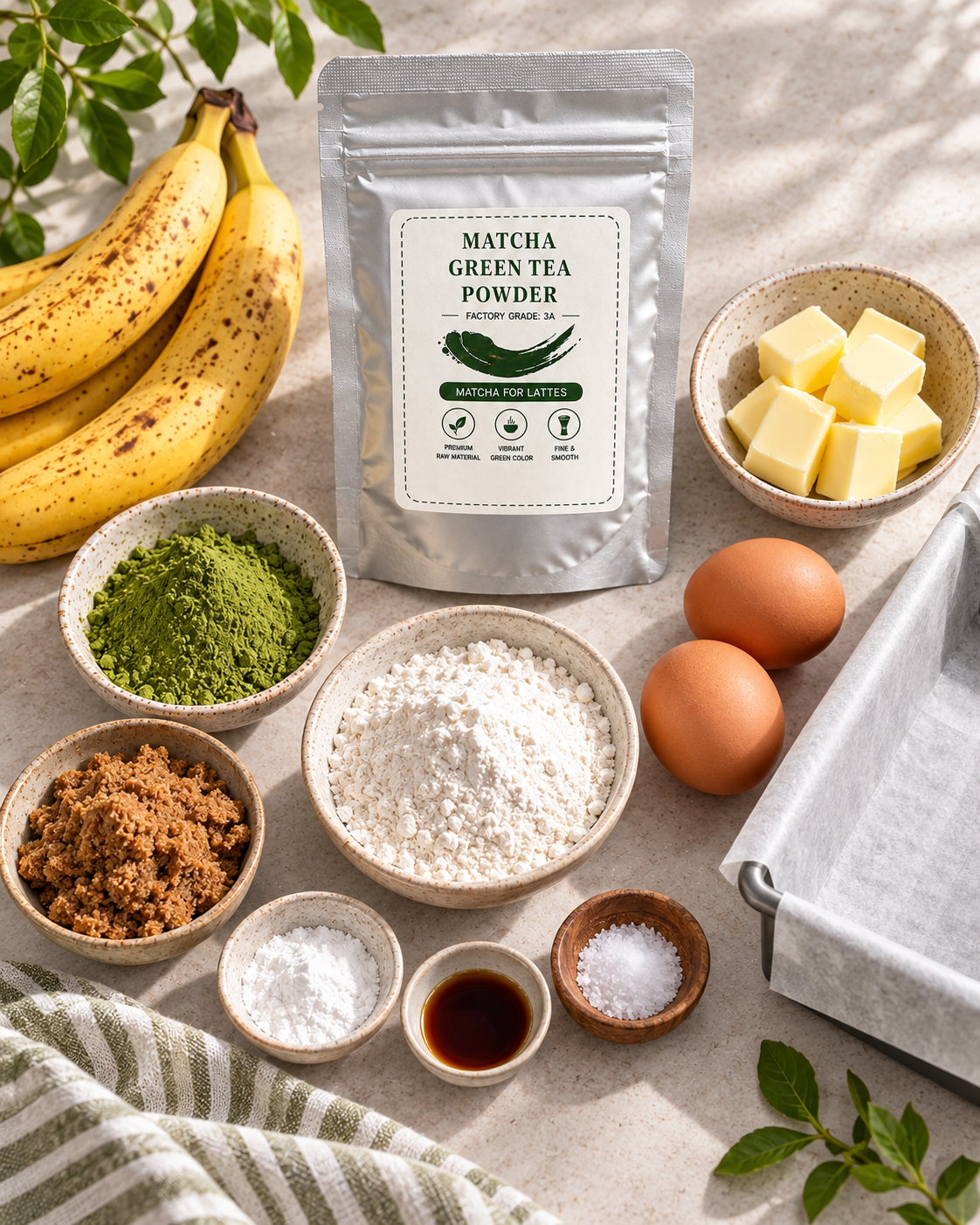
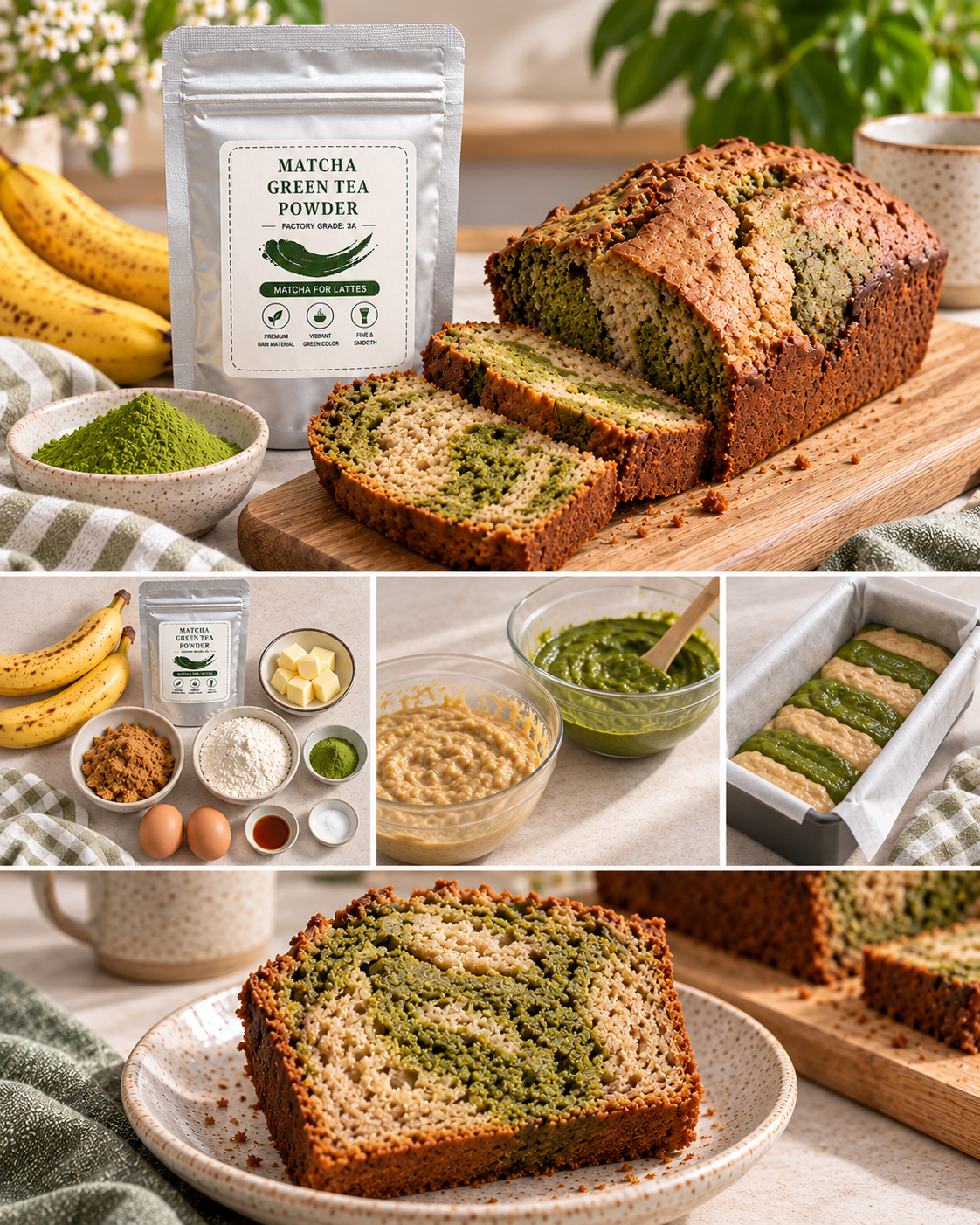
    Ingredients for brown butter matcha banana bread with culinary matcha
    Ripe bananas, brown butter and matcha form the flavor base of this marbled loaf.

    Ingredients

    Wet Ingredients

    • 3 ripe bananas, about 330–350 g mashed
    • 115 g unsalted butter
    • 150 g light brown sugar
    • 2 large eggs
    • 1 tsp vanilla extract

    Dry Ingredients

    • 220 g all-purpose flour
    • 1 tsp baking powder
    • 1/2 tsp baking soda
    • 1/2 tsp salt
    • 10–12 g matcha powder

    Optional Additions

    • 60–80 g white chocolate chips
    • Chopped walnuts or pecans

    How to Make Brown Butter Matcha Banana Bread

    1. Brown the butter

    Place the butter in a light-colored saucepan over medium heat. Let it melt, foam and gradually turn golden brown. When the milk solids become toasted and the butter develops a nutty aroma, remove it from the heat and cool for several minutes.

    2. Prepare the bananas

    Mash the ripe bananas in a large bowl until mostly smooth. A few small pieces are fine. Add the brown sugar, eggs, vanilla and cooled brown butter, then whisk until evenly combined.

    3. Combine the dry ingredients

    In a separate bowl, whisk together the flour, baking powder, baking soda and salt. Keep the matcha separate if you want a defined marbled loaf.

    4. Make the banana bread batter

    Fold the dry ingredients into the banana mixture only until the flour is mostly incorporated. Avoid overmixing, which can make the finished loaf dense.

    5. Create the matcha batter

    Divide the batter approximately in half. Sift the matcha into one portion and fold gently until evenly green. For a stronger matcha presence, use slightly more than half of the batter for the matcha portion.

    Marbling matcha and banana bread batter in a loaf pan
    Keep the plain and matcha batters distinct, then alternate them in the prepared loaf pan.

    6. Create the marble pattern

    Line a loaf pan with parchment paper. Alternate spoonfuls of plain banana batter and matcha batter in the pan. Run a knife or skewer through the mixture once or twice. Do not over-swirl, or the colors will blend together.

    7. Bake

    Bake at 350°F / 175°C for approximately 55–65 minutes. Check the center with a skewer or toothpick; the loaf is ready when it comes out with only a few moist crumbs. If the top browns too quickly, cover loosely with foil near the end.

    8. Cool before slicing

    Cool the bread in the pan for about 15 minutes. Transfer it to a rack and allow it to cool further before slicing so the crumb can finish setting.

    Why Brown Butter Works with Matcha Banana Bread

    Brown butter develops toasted, nutty aromas as its milk solids caramelize. Those deeper flavors balance the sweetness of ripe bananas and add more complexity than ordinary melted butter. Matcha contributes an earthy tea note and visual contrast. A balanced loaf should still taste clearly of banana while retaining a noticeable matcha finish.

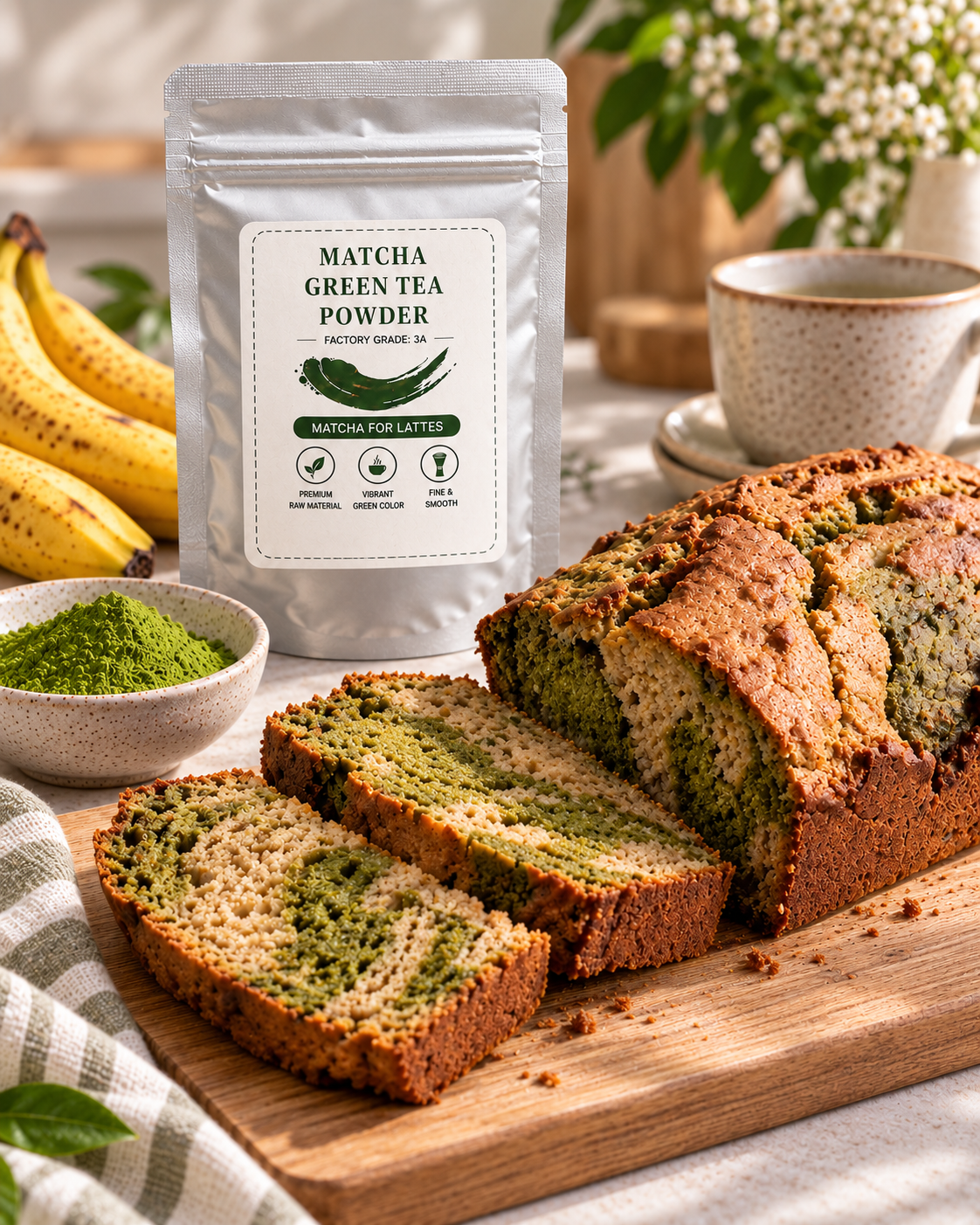
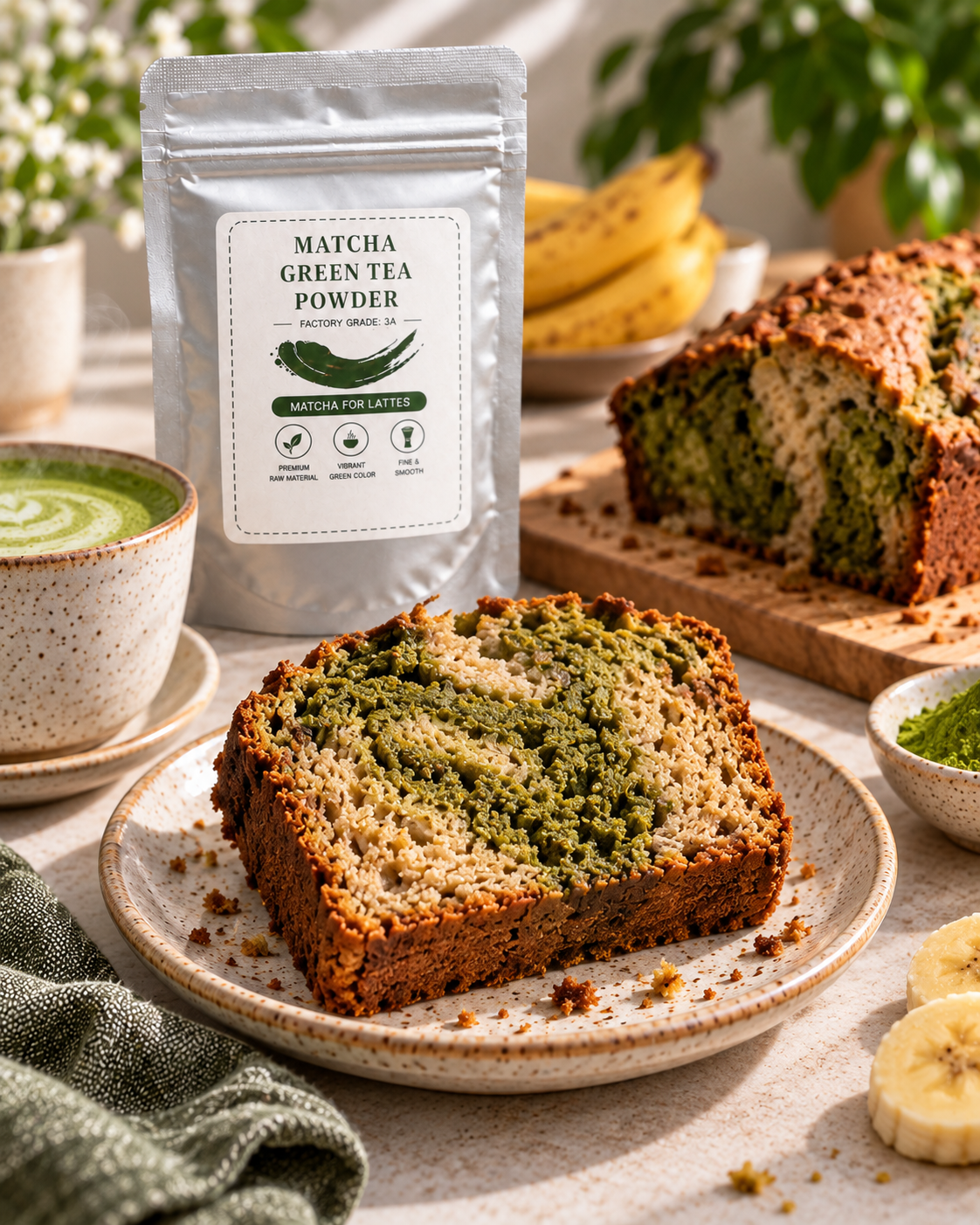
    Sliced matcha banana bread showing green marble layers
    Evaluate both the finished green color and matcha flavor after the loaf has cooled.

    A Note About Matcha Color When Baking

    Matcha usually looks brighter in raw batter than it does after baking. Heat, baking time and the natural ingredients in banana bread can make the finished crumb appear more muted or olive-toned.

    For cafés and bakeries, evaluate matcha based on finished color after baking, flavor after cooling, matcha dose, recipe sweetness and the actual baking temperature and time. Avoid judging performance only from the dry powder or raw batter.

    Best Matcha Profile for Banana Bread

    For this recipe, begin with the Culinary Matcha Profile. It is intended for baking, desserts, loaf cakes, cookies and food manufacturing. Because banana bread contains flour, butter, sugar and prolonged heat exposure, evaluate matcha in the finished baked product rather than only as dry powder.

    Bakery Testing Notes

    • Test the final baked color: Compare the loaf only after it has completely cooled.
    • Avoid excessive baking time: Overbaking can darken the crust, reduce moisture and further mute the green appearance.
    • Control matcha dosage: Too little matcha may disappear behind banana and brown butter; too much may add unnecessary bitterness or astringency.
    • Consider the marble ratio: Test 50% matcha batter / 50% plain batter or 70% matcha / 30% plain, depending on the visual target for each slice.

    Commercial Batch Guidance

    BatchMatchaFlourBanana
    1 loaf10–12 g220 g330–350 g
    5 loaves50–60 g1.1 kg1.65–1.75 kg
    10 loaves100–120 g2.2 kg3.3–3.5 kg
    For commercial production, scale the full formula by weight and validate bake time, pan size and matcha performance before standardizing the recipe.

    Testing Matcha for Bakery Products?

    Different recipes can change how matcha looks and tastes after baking. Test the powder in your actual finished product before selecting a commercial matcha for banana bread, cookies, cakes or desserts.

  • Raspberry Matcha Lemonade Recipe: A Fresh Summer Café Drink

    Raspberry Matcha Lemonade Recipe: A Fresh Summer Café Drink

    Bright, fruity and refreshing, this raspberry matcha lemonade pairs a vivid raspberry base with fresh lemon and a smooth green matcha layer. The strong red-and-green contrast makes it especially useful for summer café menus, seasonal launches and social content.

    This recipe starts with matcha powder, fresh raspberries and lemon rather than a premixed matcha lemonade powder, giving operators more control over sweetness, acidity, color and matcha intensity during menu testing.

    Recipe Information

    • Servings: 1
    • Prep Time: 10 minutes
    • Matcha: 3 g
    • Style: Iced / Fruit-Based
    • Best For: Summer Café & Seasonal Menus
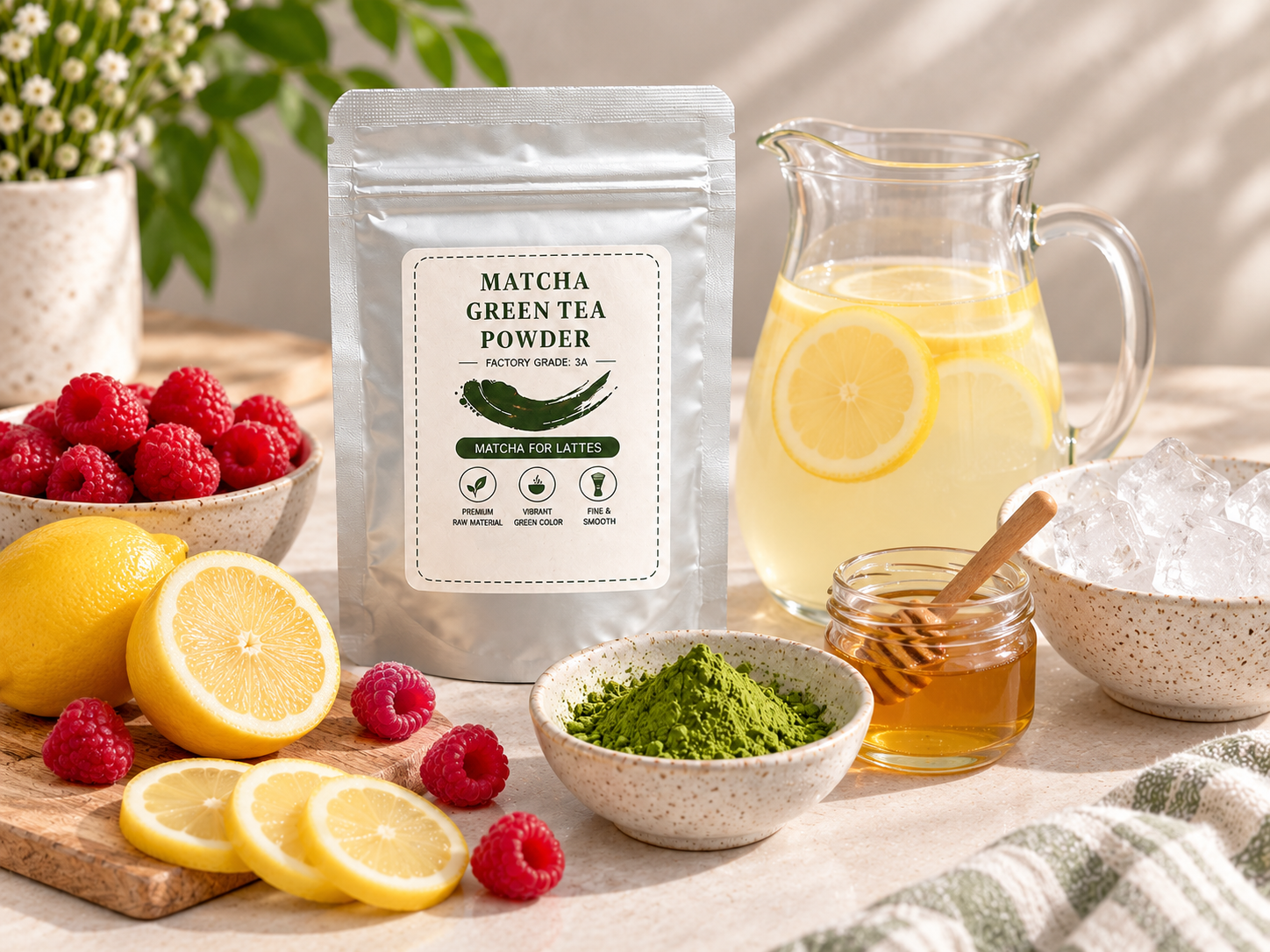
    Ingredients for raspberry matcha lemonade with fresh fruit and matcha powder
    Fresh raspberries, lemon, matcha and sweetener create a flexible base for café recipe testing.

    Ingredients

    Raspberry Base

    • 8–10 fresh raspberries
    • 15 ml honey or simple syrup
    • 15 ml cold water

    Lemonade

    • 30 ml fresh lemon juice
    • 150 ml cold water
    • 10–15 ml honey or simple syrup

    Matcha Layer

    • 3 g matcha powder
    • 60 ml warm water

    To Serve

    • Ice
    • Fresh raspberries
    • Lemon slice
    • Mint, optional

    How to Make Raspberry Matcha Lemonade

    1. Prepare the raspberry base

    Muddle the raspberries with 15 ml sweetener and 15 ml cold water until juicy. Spoon the mixture into the bottom of a tall serving glass.

    2. Mix the lemonade

    Stir the lemon juice, 150 ml cold water and 10–15 ml sweetener until fully combined. Adjust sweetness only after tasting with the raspberry base.

    3. Prepare the matcha

    Sift 3 g matcha into a bowl or shaker, add 60 ml warm water and whisk or shake until smooth with no visible clumps.

    4. Build the drink

    Fill the glass with ice and pour the lemonade over the raspberry base. Pour slowly if you want to retain a more visible red layer.

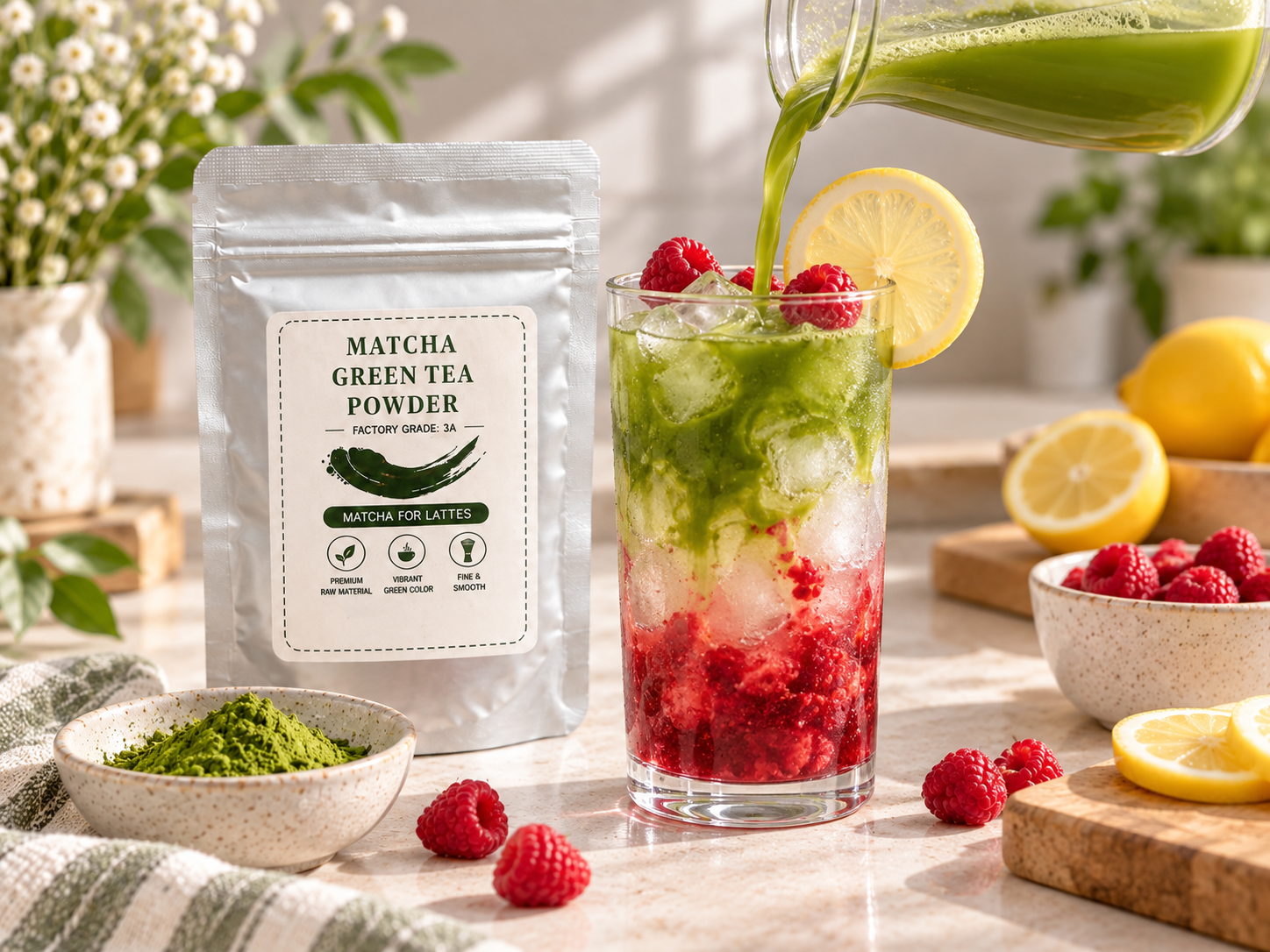
    Pouring matcha over raspberry lemonade and ice
    Pour the prepared matcha slowly to create a clear layered presentation.

    5. Add the matcha

    Slowly pour the prepared matcha over the ice. Serve layered for visual impact, then stir before drinking.

    6. Garnish and serve

    Finish with fresh raspberries, a lemon slice and optional mint. Serve immediately while the ice and color layers remain defined.

    Why This Raspberry Matcha Lemonade Works

    • Raspberry color: The red fruit base creates a strong visual contrast with green matcha.
    • Lemon refreshment: Fresh acidity keeps the drink bright and suitable for warm-weather menus.
    • Matcha structure: Matcha adds body, color and a tea finish that balances the fruit and sweetener.
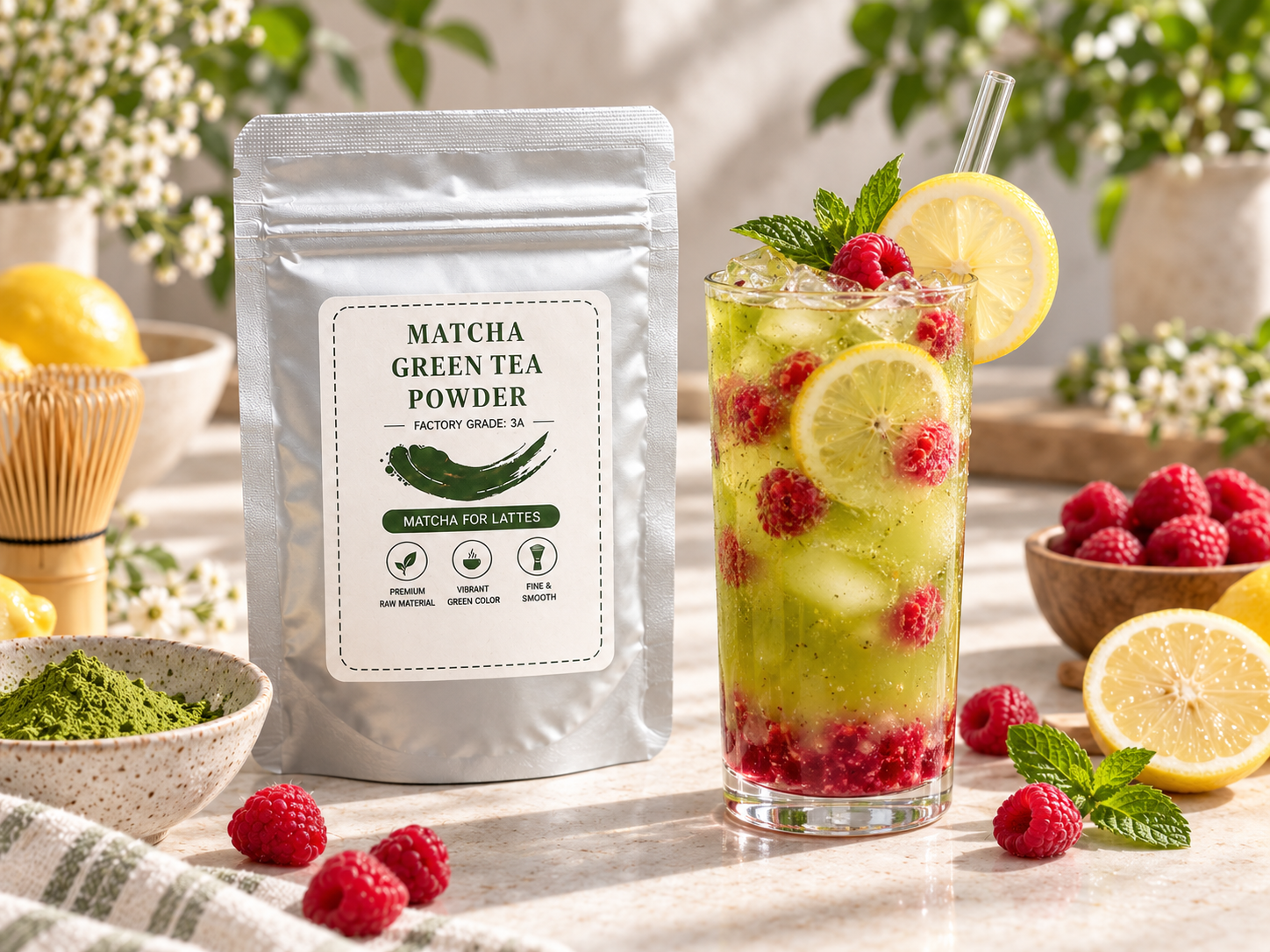
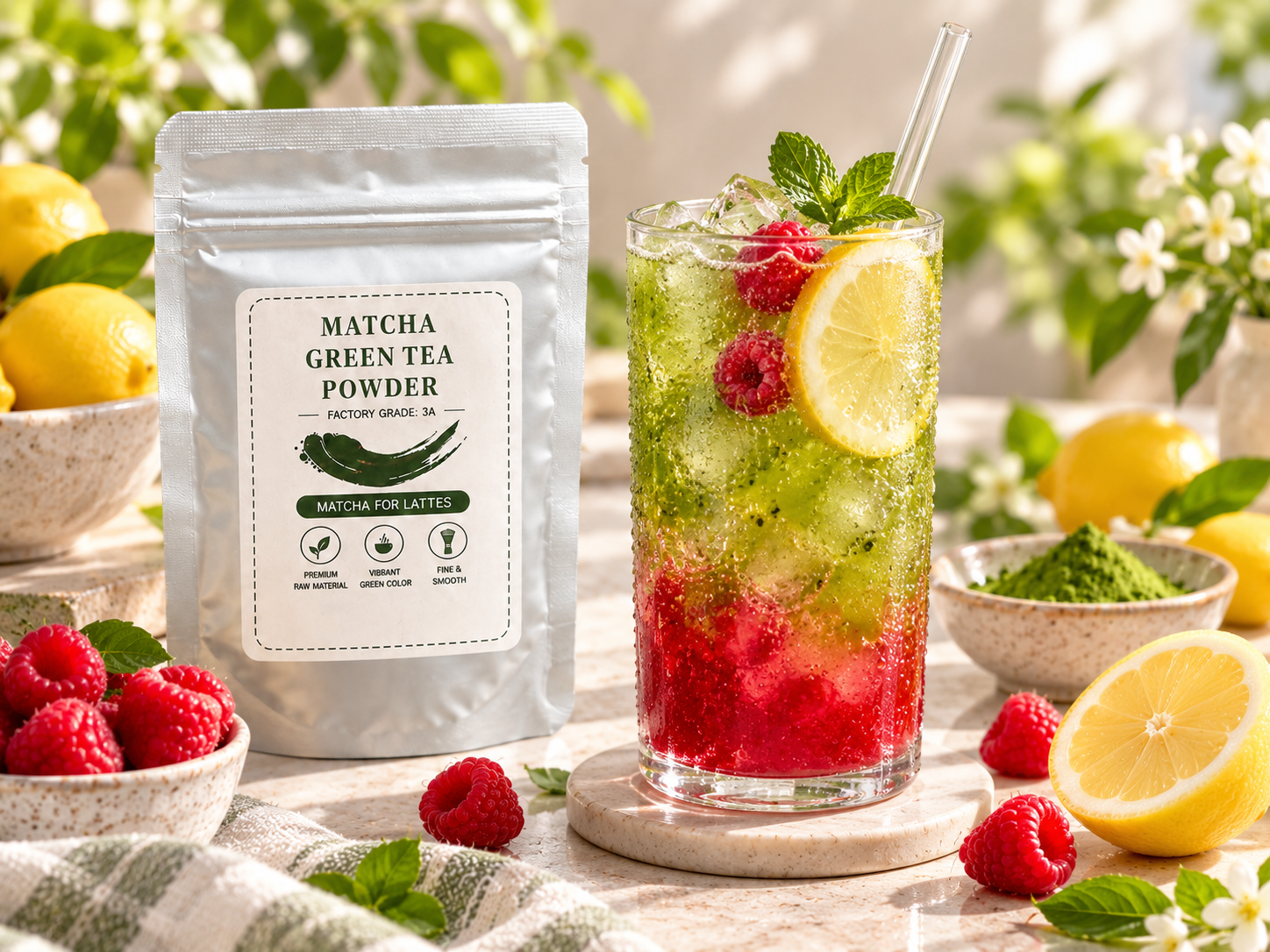
    Finished raspberry matcha lemonade for a summer café menu
    A finished raspberry matcha lemonade with a clear fruit, lemonade and matcha presentation.

    Best Matcha Profile for This Recipe

    Café / Latte Matcha Profile is the practical starting point for this fruit-based iced drink. Its color and flavor are designed to remain noticeable alongside lemon, raspberry and sweetener.

    For cafés prioritizing a brighter green appearance and a more refined finished drink, the Premium Latte Matcha Profile can also be tested in the final recipe system.

    Café Testing Notes

    • Check acidity: Lemon can sharpen perceived bitterness, so test the complete drink rather than the matcha base alone.
    • Watch color over time: Review the drink at 5, 15 and 30 minutes to understand separation and color changes.
    • Test pulp and serviceware: Raspberry seeds and pulp may affect straw choice, takeaway lids and drinking texture.
    • Standardize sweetness: Fruit ripeness varies. Establish a target syrup level after testing repeat batches with your actual ingredients.

    Commercial Batch Guidance

    Use the quantities below as a starting point for controlled recipe trials. Confirm acidity, sweetness, color and holding performance before introducing the drink into full service.

    BatchMatchaLemon JuiceTotal WaterRaspberries
    1 drink3 g30 ml210 ml8–10
    10 drinks30 g300 ml2.1 L80–100
    50 drinks150 g1.5 L10.5 L400–500
    Sweetener and fruit quantities should be standardized after supply and service testing.

    Planning Your Cost per Serving?

    Estimate how matcha dose, ingredient costs and menu price affect the commercial potential of this drink.

    Developing a Summer Matcha Menu?

    Compare suitable matcha profiles, explore café applications or request B2B samples for recipe testing in your own ingredients and service format.

  • Halloween Matcha Latte Recipe: Frankenstein Vanilla Cold Foam

    Halloween Matcha Latte Recipe: Frankenstein Vanilla Cold Foam

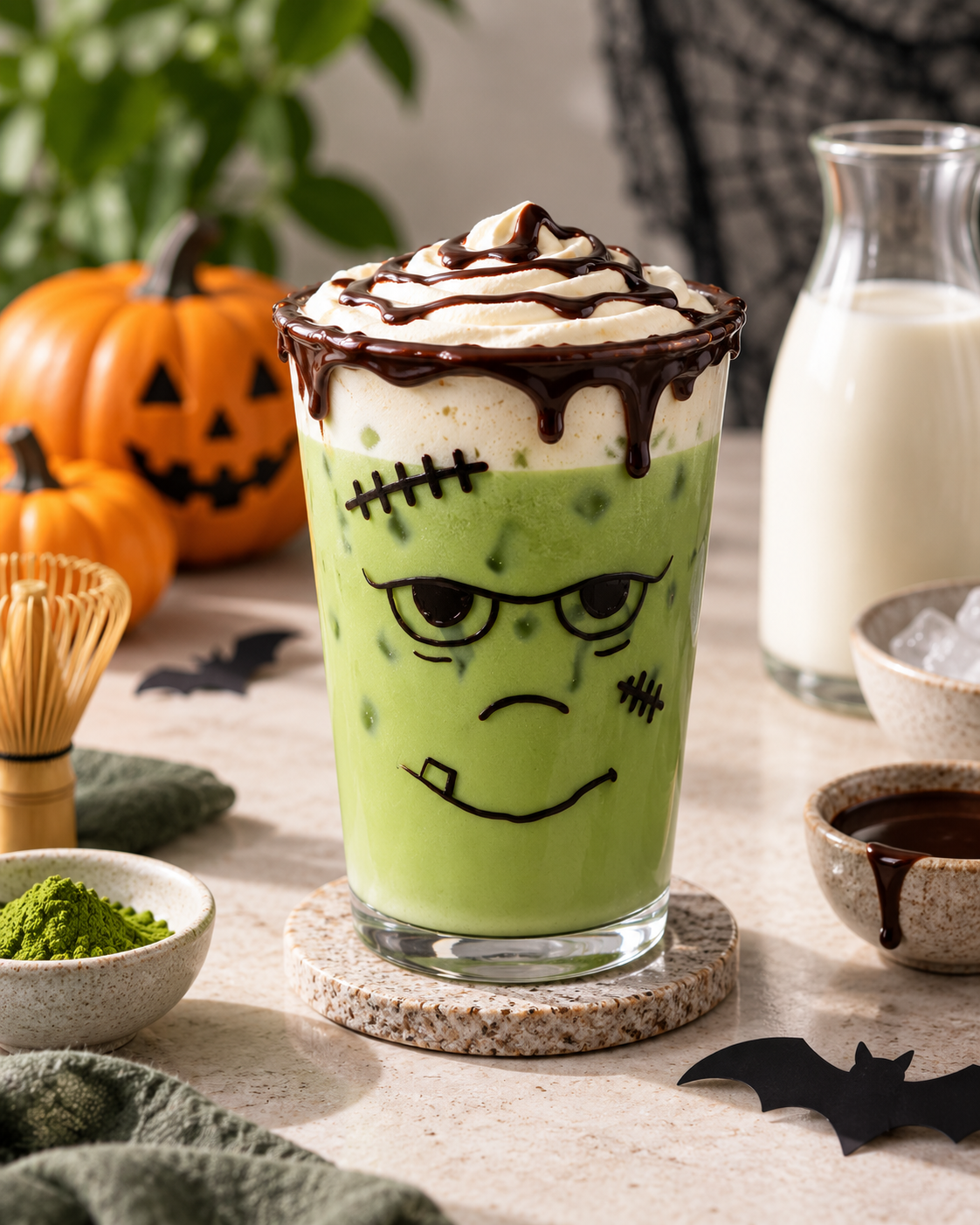
    Give your fall drink menu a playful seasonal twist with this Frankenstein-inspired Halloween matcha latte. Bright green iced matcha, creamy vanilla cold foam and a chocolate-dripped rim create a drink that is easy to recognize, fun to photograph and suitable for Halloween café specials, seasonal events or recipe testing.

    The recipe uses a milk-based matcha base, making it a natural application for our Café / Latte Matcha Profile. Cafés looking for a brighter green appearance or a more refined finished cup can also compare the Premium Latte Matcha Profile during sample testing.

    Recipe Information

    • Servings: 1 drink
    • Prep Time: About 10 minutes
    • Matcha Amount: 3 g
    • Drink Style: Iced matcha latte
    • Application: Seasonal café drink / Halloween menu

    Ingredients

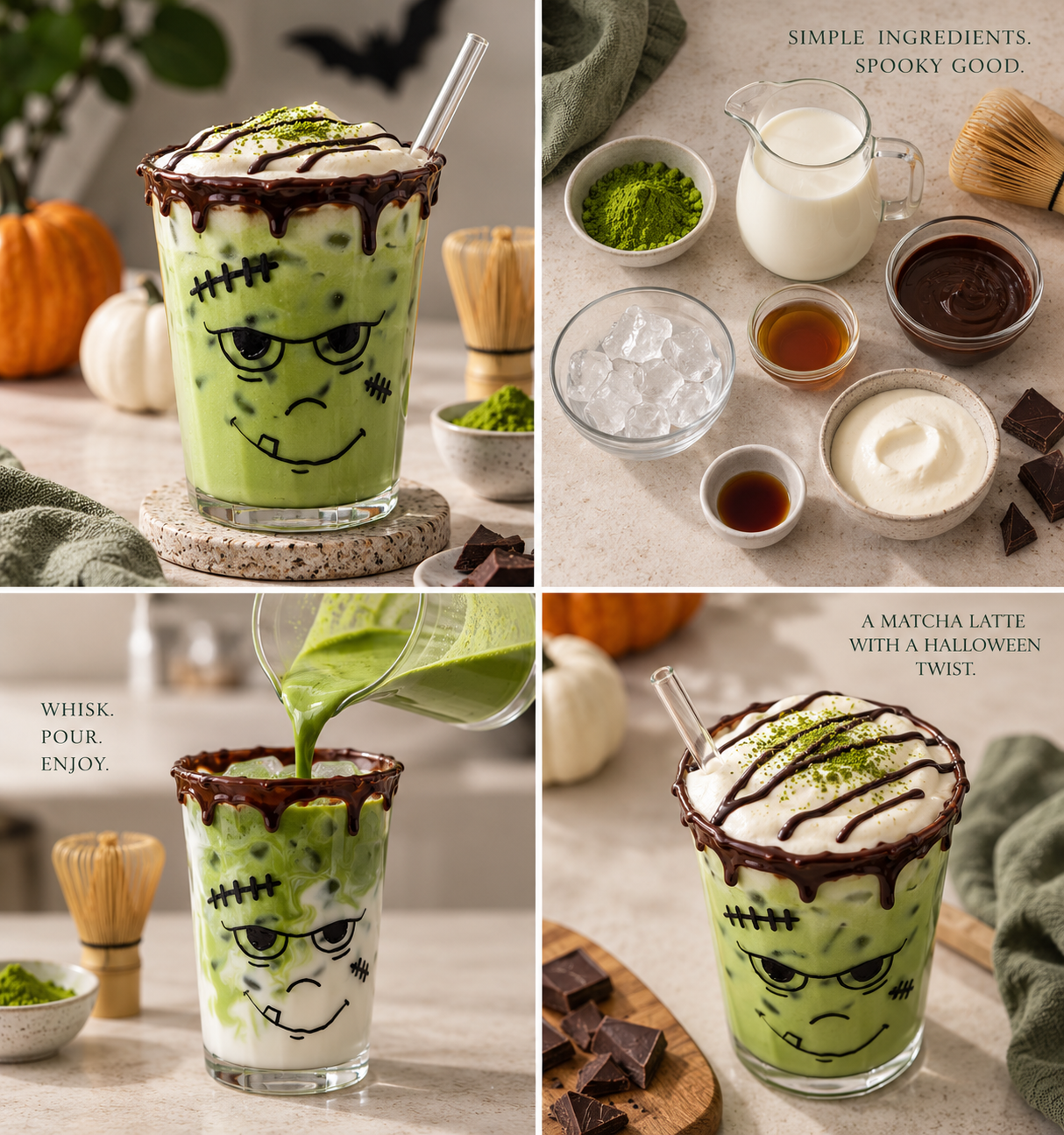
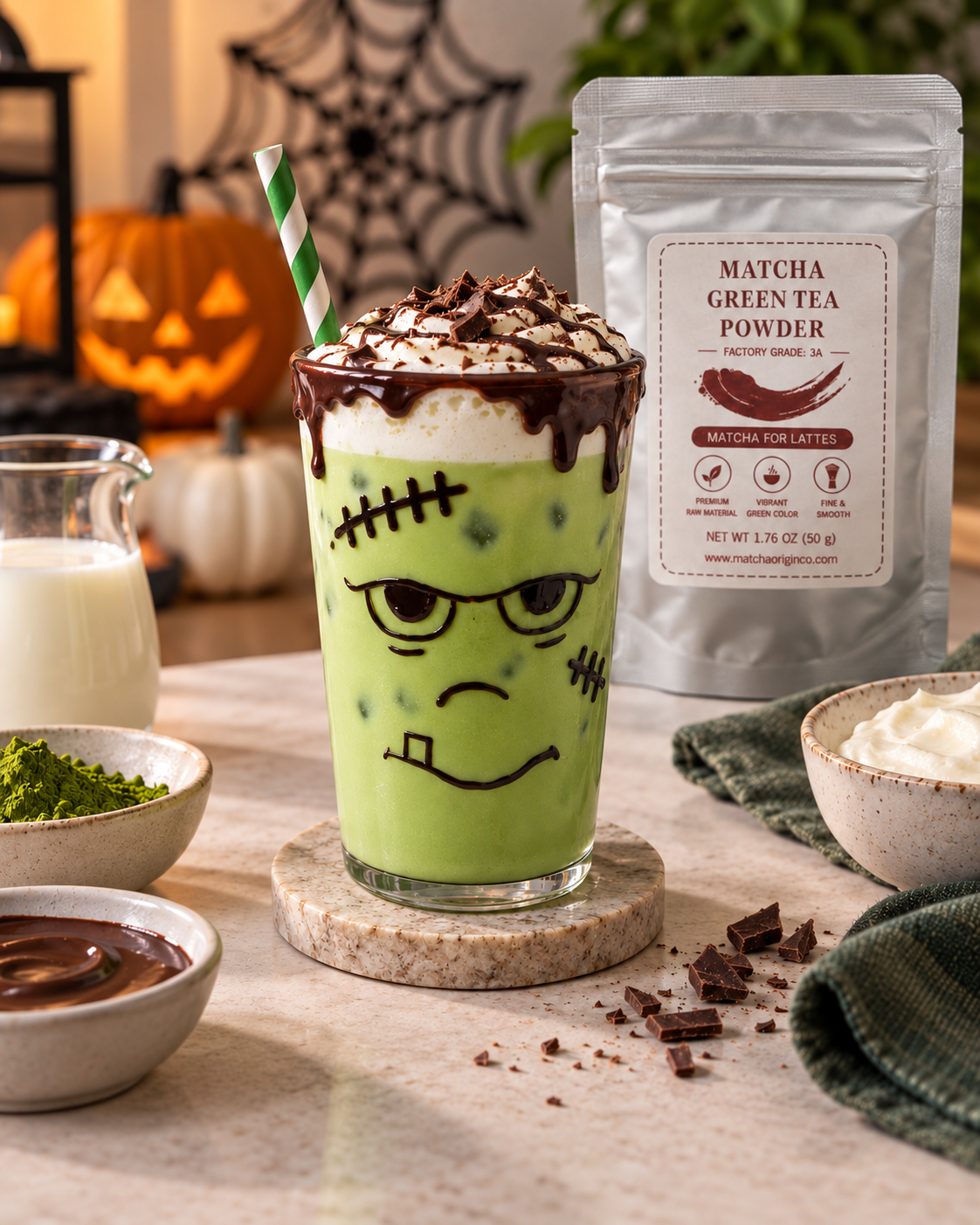
    Ingredients and preparation steps for a Halloween matcha latte with vanilla cold foam
    Matcha, milk, vanilla cold foam, chocolate and ice create the color and contrast for this seasonal café drink.

    Matcha Latte

    • 3 g matcha powder
    • 60 ml warm water
    • 180 ml milk or preferred milk alternative
    • 10 ml maple syrup or simple syrup
    • Ice

    Chocolate Rim

    • 25 g dark chocolate
    • 1/2 tsp coconut oil

    Vanilla Cold Foam

    • 45 ml heavy cream
    • 30 ml milk
    • 1 tsp vanilla syrup

    Decoration

    • A small amount of melted chocolate for decoration
    • Optional matcha dust or chocolate shavings

    How to Make a Halloween Frankenstein Matcha Latte

    1. Decorate the glass

    Create a simple Frankenstein-style face on the outside of a clean glass. Keep any external decorative marker below the drinking rim and away from surfaces that come into contact with the beverage. For café service, test the decoration method in advance so it remains clean and consistent during preparation.

    2. Prepare the chocolate rim

    Melt the dark chocolate with the coconut oil until smooth. Carefully coat or drizzle the chocolate around the outer rim of the glass and allow it to begin setting. The dark chocolate creates the visual contrast that gives the drink its Halloween look.

    3. Prepare the matcha

    Sift 3 g of matcha into a bowl. Add 60 ml of warm water and whisk until the matcha is smooth and evenly dispersed. Avoid using boiling water.

    4. Build the iced latte

    Fill the decorated glass with ice. Add the milk and sweetener, then pour in the prepared matcha. Gently stir for a uniform green appearance or keep some layering for presentation.

    5. Prepare the vanilla cold foam

    Combine the heavy cream, milk and vanilla syrup. Froth until the mixture becomes thick and creamy but is still pourable.

    Preparing a Frankenstein Halloween matcha latte for a seasonal café menu
    A seasonal serving concept showing the matcha application, chocolate rim and vanilla cold foam.

    6. Finish the drink

    Spoon or pour the vanilla cold foam over the iced matcha latte. Finish with a light chocolate drizzle, matcha dust or chocolate shavings, then serve immediately.

    Best Matcha Profile for This Recipe

    Café / Latte Matcha Profile

    This is the primary profile we would test for this recipe. Milk, vanilla cold foam and chocolate introduce several competing flavors, so the matcha needs enough presence to remain noticeable in the finished drink.

    It is suited to iced matcha lattes, flavored café drinks, milk-based applications and seasonal menu testing. The Premium Latte Matcha Profile may also be worth testing where brighter color and a more refined sensory profile are priorities. The final choice should be confirmed using the café’s actual milk, sweetener and serving format.

    Café Menu Testing Notes

    Keep the green visually strong

    The Halloween concept depends on the contrast between bright matcha green and dark chocolate. Too much milk can soften the appearance, so test the final milk-to-matcha ratio in the actual serving glass.

    Watch the chocolate intensity

    Chocolate works visually, but a heavy rim can overpower the tea flavor. Compare different chocolate quantities before standardizing the recipe.

    Test cold foam stability

    If the drink will be offered during busy service, test how the vanilla cold foam behaves after several minutes. Presentation immediately after preparation may differ from the drink after pickup or delivery.

    Build for photography

    The green matcha, dark chocolate and Halloween decoration are naturally suited to seasonal social content. Prepare the final garnish immediately before photography.

    Commercial Batch Guidance

    BatchMatchaWarm WaterMilk
    1 drink3 g60 ml180 ml
    10 drinks30 g600 ml1.8 L
    50 drinks150 g3 L9 L

    Sweetener, cold foam and chocolate quantities should be standardized according to the café’s final cup size, sweetness target and service workflow.

    Planning the Cost of a Seasonal Matcha Drink?

    For cafés testing this recipe commercially, ingredient cost should be evaluated using the actual matcha dose, milk, cold foam, chocolate and expected waste. Use the Matcha Origin Co. calculator to estimate matcha usage and cost per serving before scaling the recipe.

    Testing Matcha for a Halloween or Seasonal Menu?

    Different milk, sweetener and flavor combinations can change how matcha performs in a finished drink. Test samples in the actual formulation before choosing a commercial profile.

  • Iced Banana Cream Matcha Latte Recipe

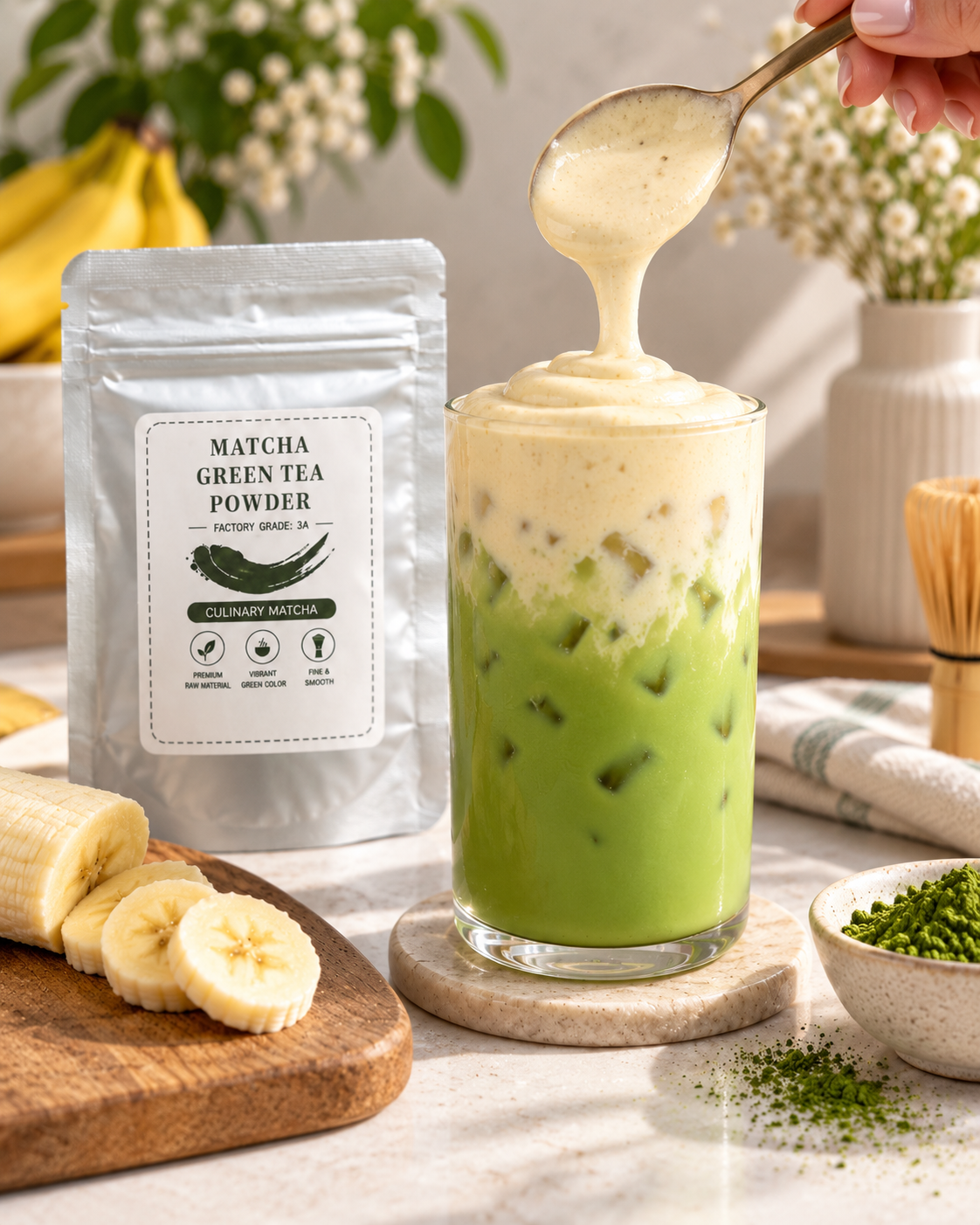
    Iced Banana Cream Matcha Latte Recipe

    Creamy, refreshing and visually distinctive, this iced banana cream matcha latte pairs a smooth milk-based matcha base with a lightly sweet banana cream topping. It is a practical recipe for home preparation and a useful starting point for cafés developing seasonal or signature matcha drinks.

    Recipe at a Glance

    • Yield: 1 serving
    • Preparation time: About 10 minutes
    • Application: Iced milk-based café drink
    • Suggested profile: Café / Latte or Premium Latte Matcha

    Ingredients

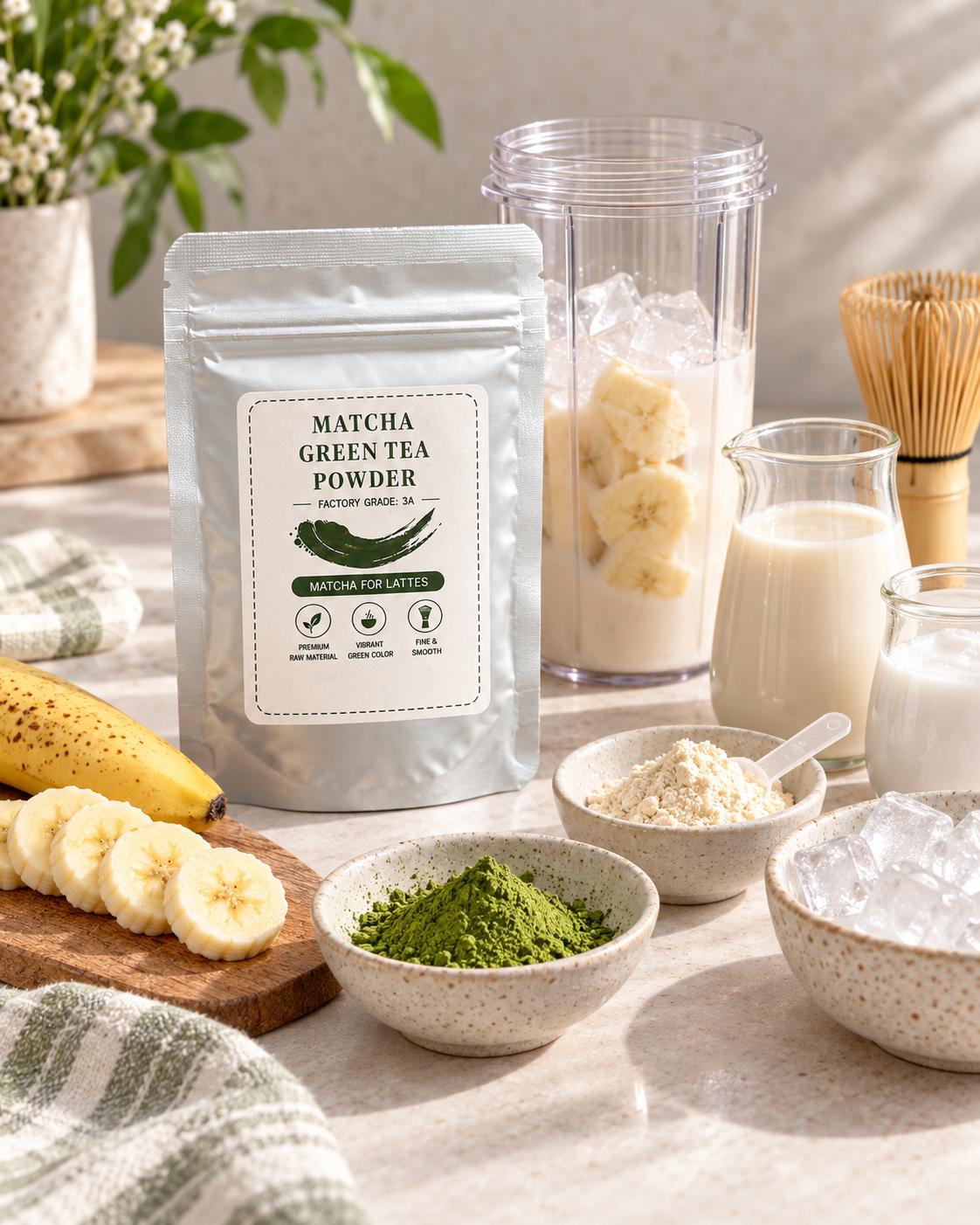
    Ingredients for an iced banana cream matcha latte with matcha powder, banana and milk
    Matcha, banana, milk and optional protein powder form the base of this café-style recipe.

    Matcha Latte Base

    • 1 teaspoon matcha powder
    • 60 ml warm water, ideally below boiling
    • 200 ml oat milk or milk of choice
    • Ice

    Banana Cream Topping

    • 1/2 ripe banana
    • 120 ml coconut milk or milk of choice
    • 1 scoop vanilla protein powder, optional
    • A small amount of ice, if needed for blending

    Directions

    1. Prepare the matcha. Sift the matcha into a bowl, add the warm water and whisk until smooth and free of lumps.
    2. Build the latte base. Fill a tall glass with ice, pour in the milk and add the whisked matcha. Stir gently for an even base or leave partially layered for presentation.
    3. Blend the banana cream. Blend the banana, coconut milk and optional vanilla protein powder until smooth, creamy and lightly aerated.
    4. Finish the drink. Spoon or slowly pour the banana cream over the iced matcha latte to create a soft layered effect.
    5. Serve immediately. Present the drink cold while the topping remains light and defined.

    Why This Recipe Works

    • Banana adds natural sweetness and a creamy texture without overwhelming the matcha.
    • The milk-based format softens bitterness while keeping the matcha character visible.
    • The contrasting layers create strong visual appeal for café menus and social content.
    • The topping can be adjusted for dairy, oat, coconut or other menu requirements.

    Choosing a Matcha Profile

    For everyday milk-based service, a Café / Latte Matcha Profile can provide a clear green appearance and enough flavor presence to remain noticeable alongside banana and milk. A Premium Latte Matcha Profile may be preferred when a smoother finish or more refined presentation is the priority.

    Because milk type, sweetness and serving size all affect the result, sample testing in the actual recipe is the best way to confirm the right profile. You can compare matcha profiles or review our guidance for matcha for lattes and café drinks.

    Notes for Café Operators

    • Standardize the matcha dose and water temperature before adjusting sweetness.
    • Prepare the banana cream in small batches and keep it chilled for service.
    • Test the topping with your chosen milk because thickness and separation can vary.
    • For a 10-serving trial, multiply each ingredient by ten and evaluate holding time before using the recipe in full service.

    Developing a Milk-Based Matcha Menu?

    Compare our Café / Latte and Premium Latte profiles, then test performance in your own milk, sweetness level and serving format.