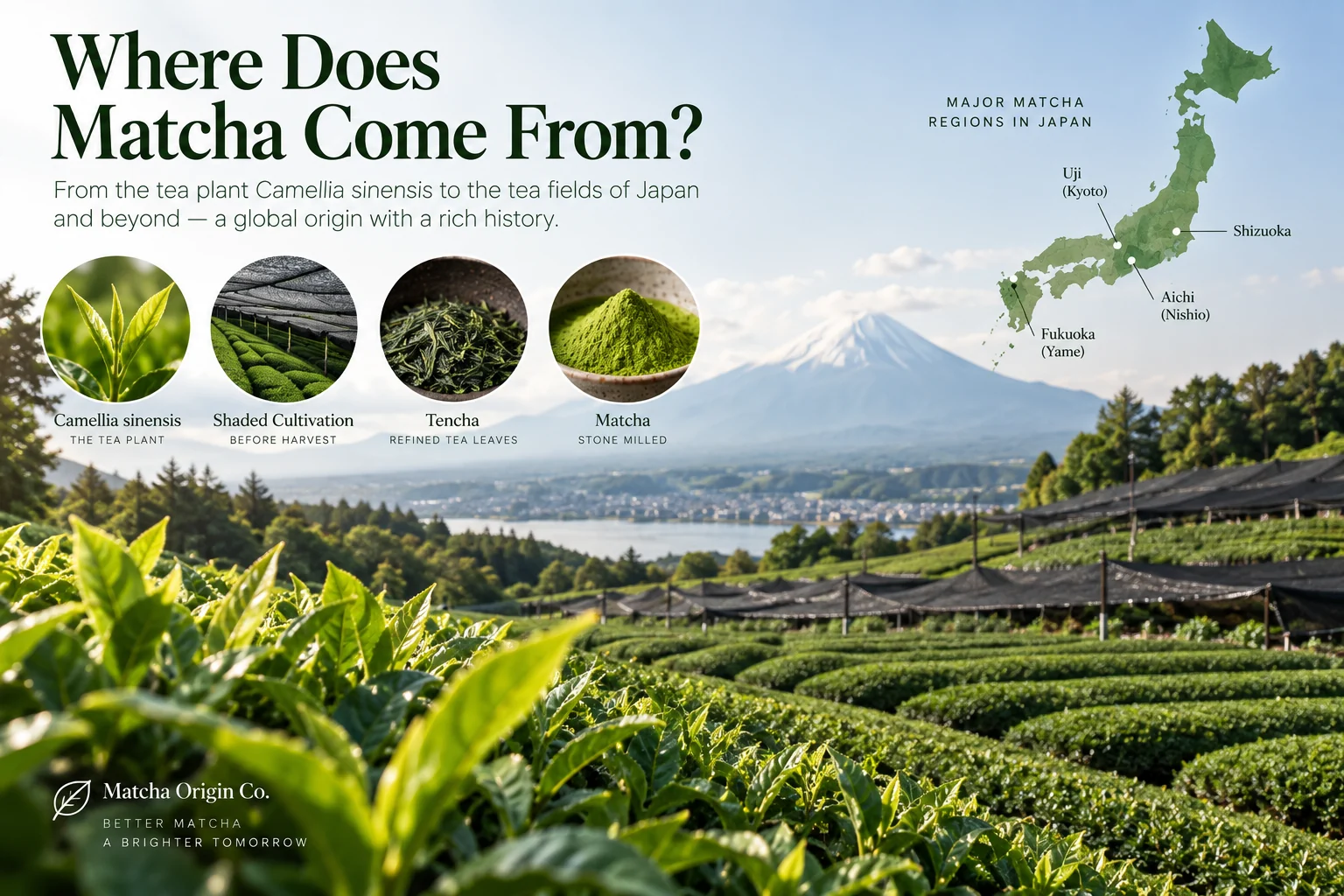
Matcha comes from the tea plant Camellia sinensis, the same plant used to produce many other types of tea.
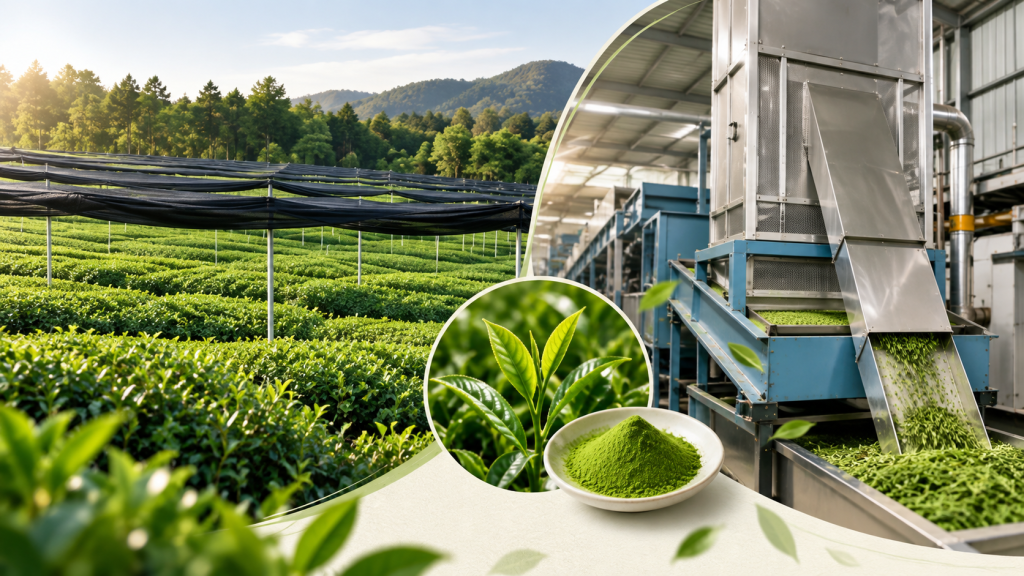
What makes matcha different is not a completely different plant. It is the combination of cultivation, shading, harvesting, processing and fine milling used to create a powdered green tea intended to be consumed as the whole leaf.
Historically, powdered tea practices originated in China and were later introduced to Japan, where matcha became deeply integrated into Japanese tea culture and was refined over centuries. Today, Japan remains the country most strongly associated with matcha, but commercial matcha is also produced outside Japan, including in China. (JETRO)
For commercial buyers, origin matters—but it should not be treated as the only measure of quality.
A more useful question is:
Where was the tea grown, how was it cultivated and processed, and does the finished matcha perform well for the intended application?
What Plant Does Matcha Come From?
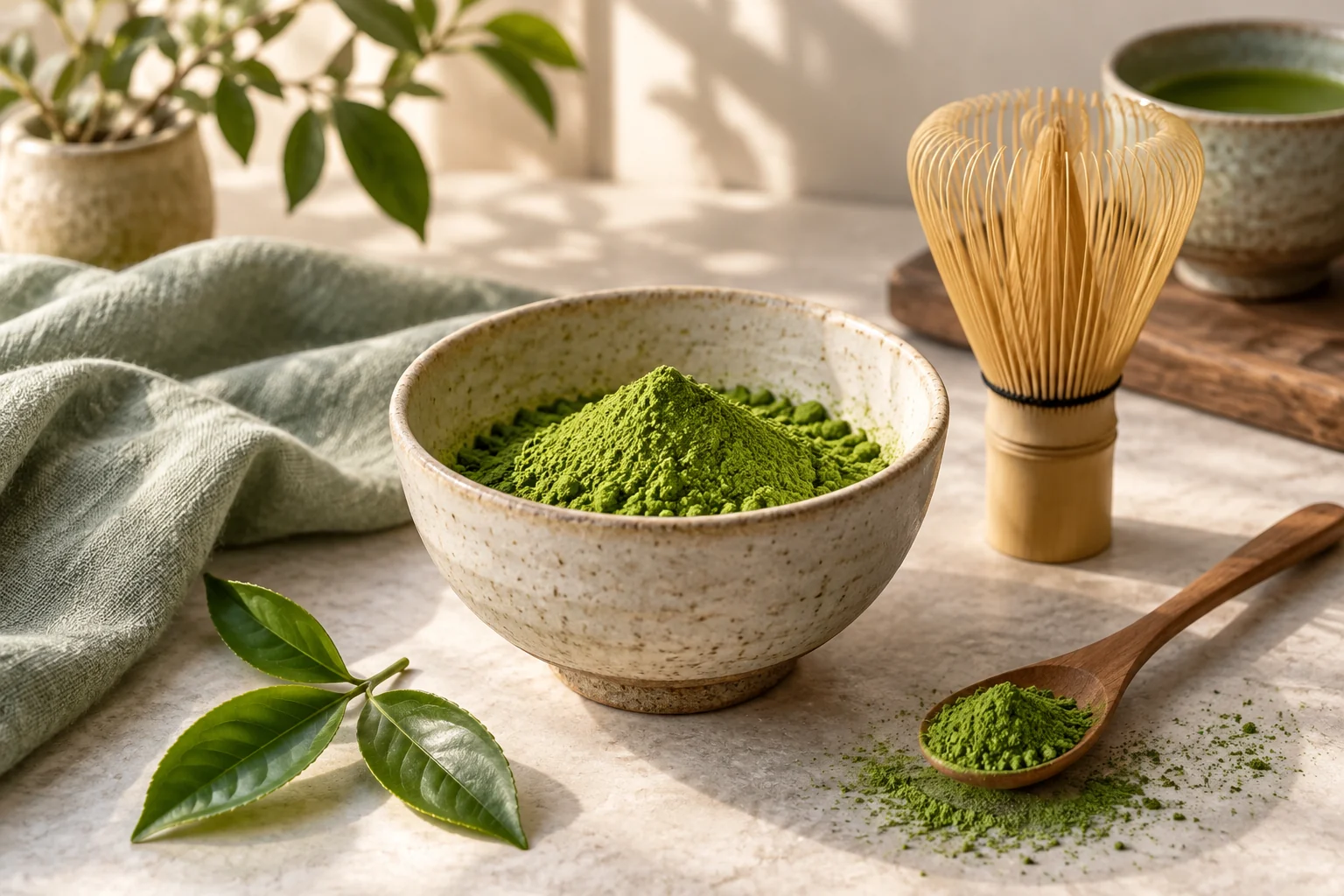
Matcha comes from Camellia sinensis.
This is the same botanical species used to produce green tea, black tea, oolong tea and many other tea styles.
The difference comes from what happens before and after harvest.
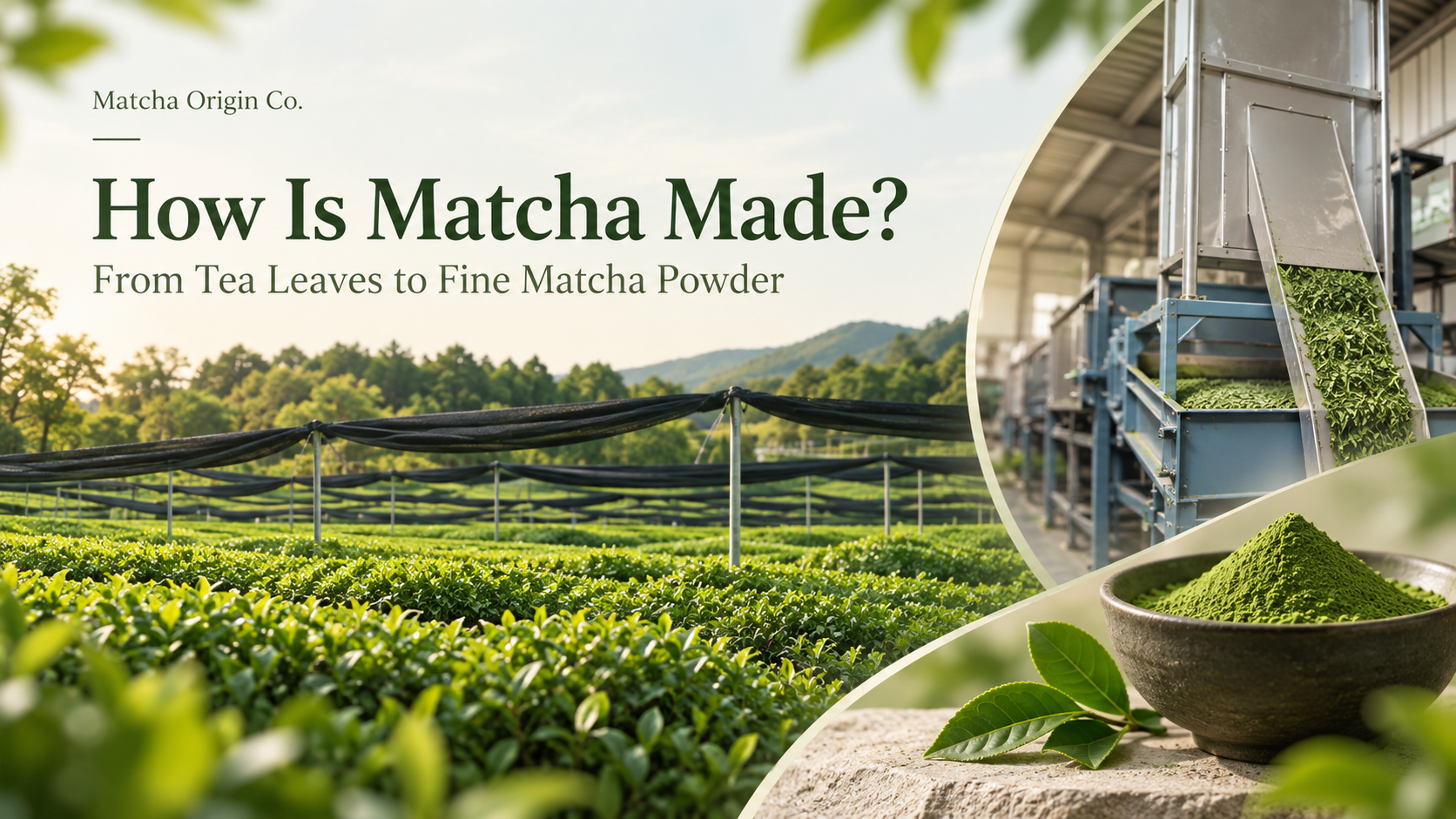
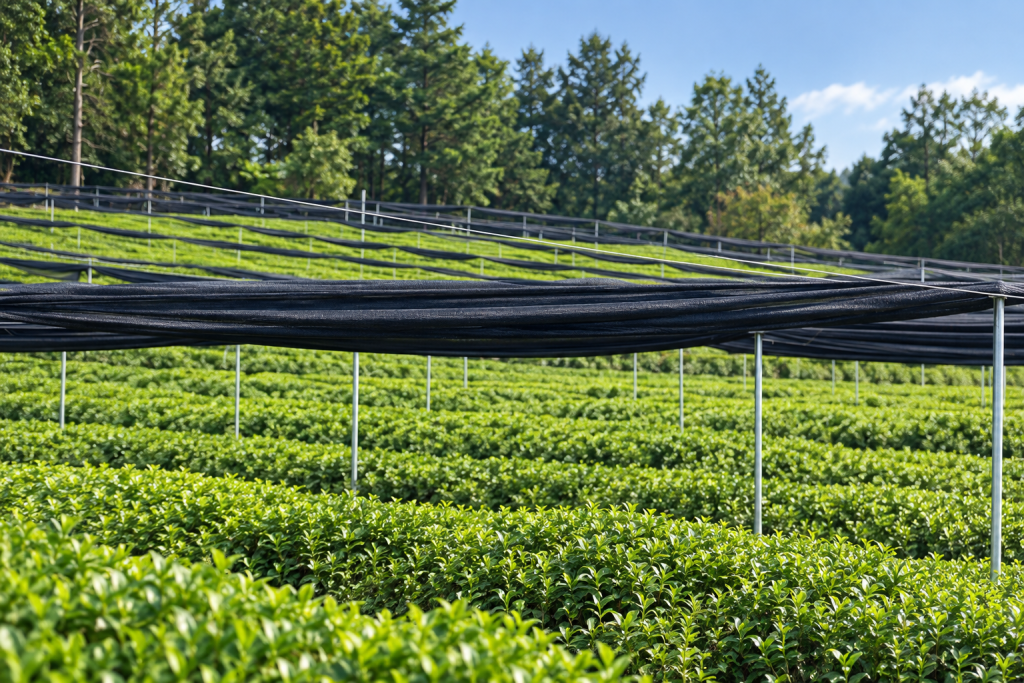
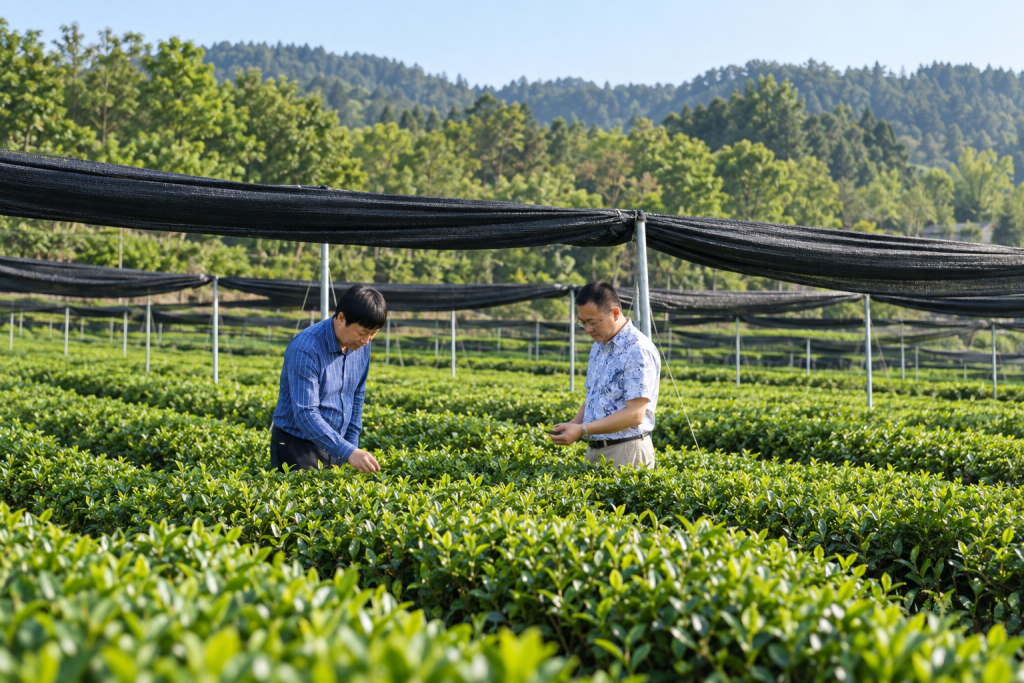
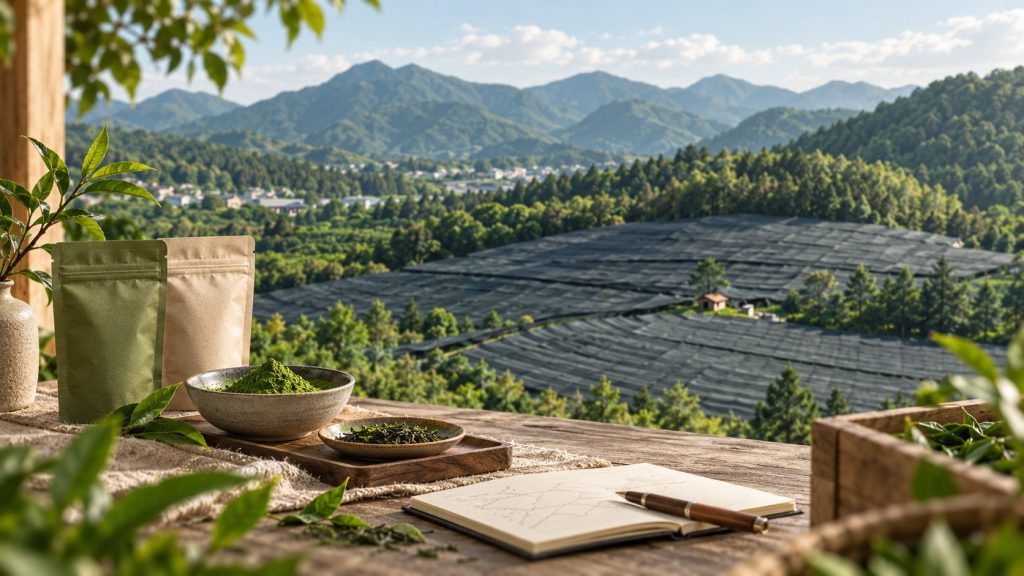
Tea intended for matcha is typically grown under shade before harvesting. Shading changes how the developing leaves respond to light and can influence chlorophyll, amino acids, bitterness and the overall sensory profile.
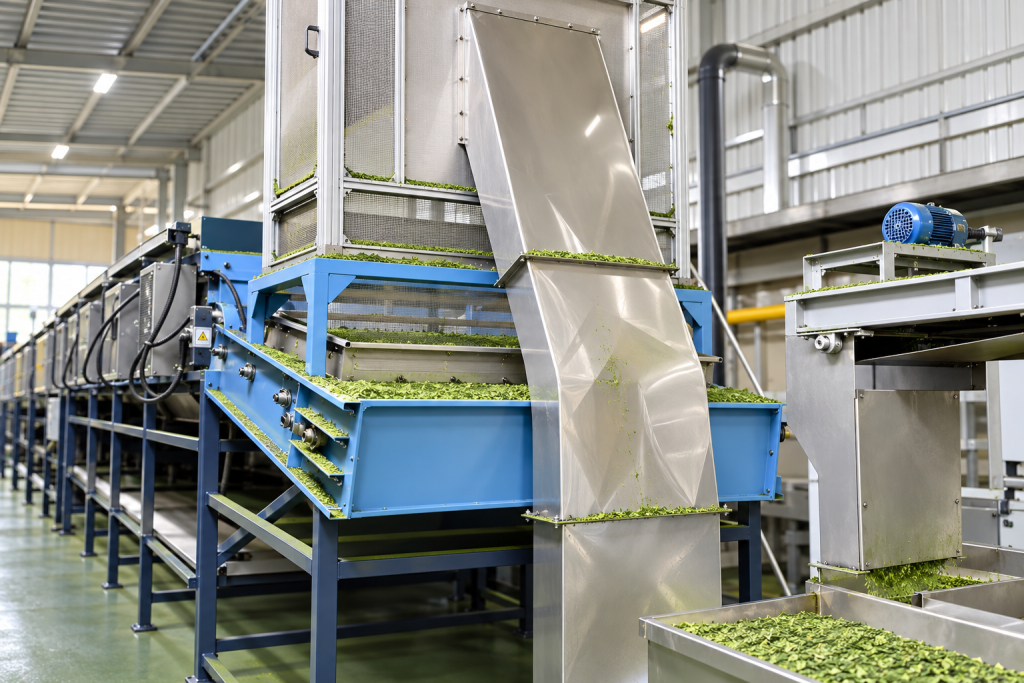
After harvest, the leaves are heat-fixed to limit oxidation, dried and refined before being finely milled.
In traditional Japanese production, the refined leaf material used for matcha is known as tencha. Japanese tea sources identify tencha as the raw material used to make matcha. (JETRO)
So matcha is not simply:
ordinary finished green tea placed into a grinder.
The cultivation and processing path matters.
For a detailed explanation, see our guide to How Matcha Is Made.
Where Does Matcha Originally Come From?
The answer depends on whether we are talking about the historical origin of powdered tea or the modern matcha tradition.
Powdered tea practices developed in China and later reached Japan through cultural and religious exchange. Japanese sources describe tea as having been introduced from China more than 1,000 years ago. (JETRO)
Over time, Japan developed its own tea-growing, processing and preparation traditions.
Matcha became closely connected with Japanese tea culture and eventually with chanoyu, or the Japanese tea ceremony.
Because of this history, modern consumers often think of matcha as exclusively Japanese.
That association is understandable culturally, but it does not mean tea suitable for powdered green tea production can only be cultivated in Japan.
Today, commercial matcha is produced in more than one tea-growing origin.
Where Is Matcha Grown Today?
Modern matcha production is most strongly associated with Japan, but commercial matcha is also produced in countries including China.
The growing location can influence the finished product through differences in:
- climate
- soil
- cultivar
- elevation
- shading practices
- harvest timing
- processing systems
- producer specifications
However, country of origin alone does not tell a buyer everything about quality.
Two matcha products from the same country can perform very differently.
Likewise, products from different origins may each be suitable for different commercial applications.
Matcha Grown in Japan
Japan has a long-established matcha industry with regional tea traditions across the country.
Japanese green tea is produced in multiple regions, each with its own climate, cultivars and processing traditions. JETRO notes that Japanese tea—including matcha—is produced across Japan and includes many regional styles. (JETRO)
Several regions are especially well known for tea used in matcha production.
Uji, Kyoto
Uji is one of the most internationally recognized names associated with Japanese matcha.
The region has a long history of covered tea cultivation and premium Japanese tea production.
Some Uji producers continue to grow tea using traditional covered cultivation before steaming, drying and stone milling the finished leaf material. (JETRO)
Aichi / Nishio
Aichi Prefecture is another important area for Japanese tencha and matcha production.
The region has established producers specializing in shaded tea cultivation and matcha processing.
Shizuoka
Shizuoka is one of Japan’s major tea-producing regions and supplies multiple styles of Japanese green tea, including matcha products.
Fukuoka / Yame
Yame is widely known for premium Japanese tea and has its own regional growing conditions and tea traditions. (JETRO)
These names can be meaningful, but buyers should still evaluate the actual product.
A famous region does not automatically make every matcha from that region appropriate for every use.
Matcha Grown in China
China has a long history of tea cultivation and is also an important source of commercial powdered green tea and matcha-style products.
For B2B buyers, China-origin matcha can be particularly relevant for applications such as:
- café drinks
- baking
- desserts
- confectionery
- food manufacturing
- beverage brands
- private label programs
- larger-volume commercial supply
The important point is not to treat:
China = culinary
or:
Japan = ceremonial
as universal rules.
Those shortcuts are too simplistic.
Within any origin, producers can offer multiple sensory and application profiles depending on raw material selection, cultivation, processing and product specification.
A commercial buyer should therefore evaluate China-origin matcha using the same practical criteria applied to any other origin:
color, flavor, bitterness, aroma, fineness, dispersion, application performance, documentation and repeat-order consistency.
For a deeper comparison, see our guide to Chinese vs Japanese Matcha for Commercial Buyers.
Does Matcha Have to Come From Japan?
No—not as a simple botanical or commercial rule.
Matcha is strongly associated with Japan because Japan developed the cultural traditions, production systems and preparation methods that shaped modern matcha.
However, the tea plant itself is not exclusive to Japan, and commercial matcha-style powdered green tea is also produced outside Japan.
What matters is that sellers accurately disclose origin rather than presenting one origin as another.
For buyers, a better purchasing question is:
Does this specific product meet the sensory, technical and commercial requirements of my application?
rather than:
Which country is automatically best?
Does Origin Determine Matcha Quality?
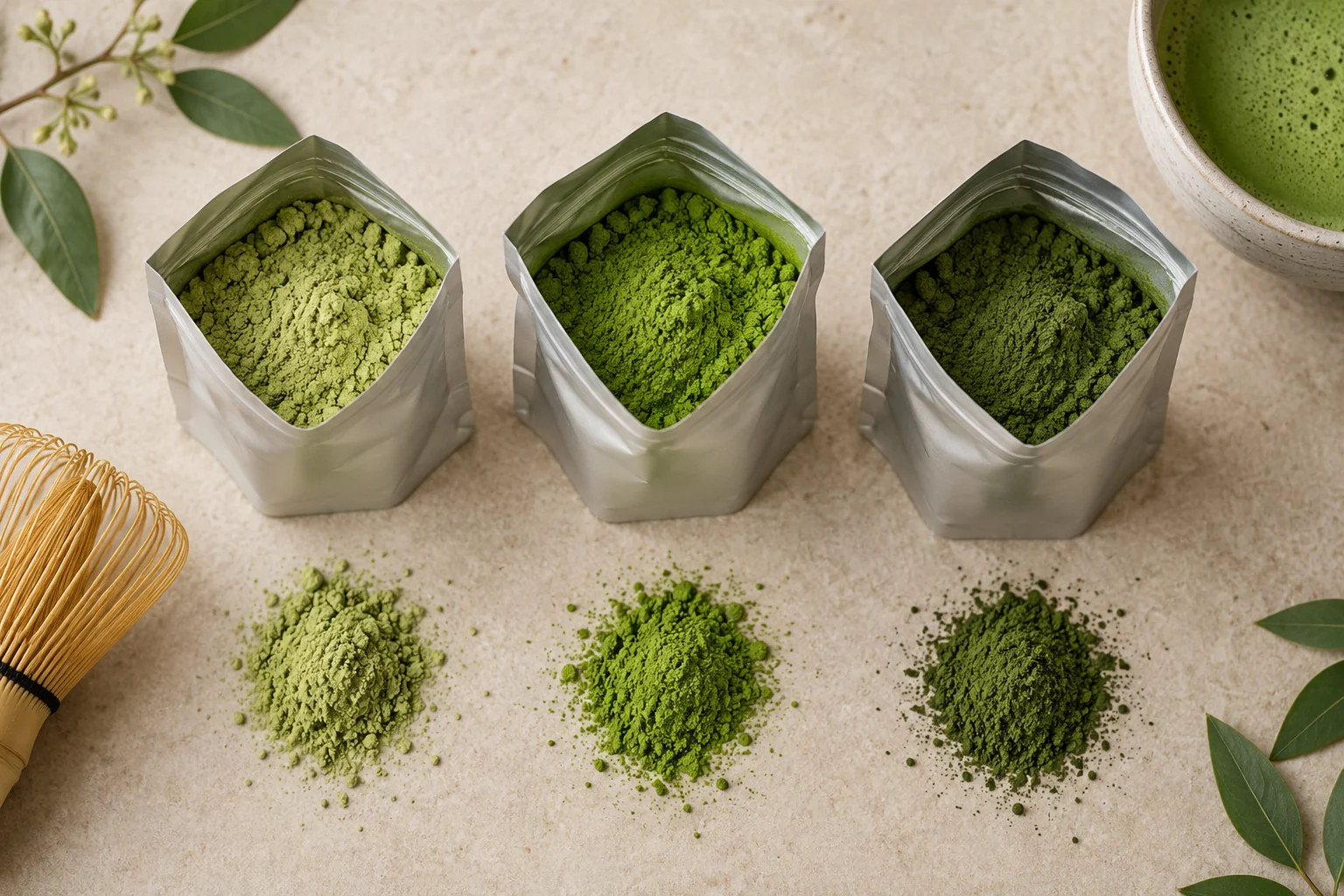
Origin can influence matcha quality, but it does not determine quality by itself.
Several other factors can be equally important.
Cultivar
Different tea cultivars can produce different aroma, color, bitterness and umami characteristics.
Shading
Pre-harvest shading influences leaf development and can affect color, amino acids and bitterness.
Japanese matcha production commonly uses covered cultivation before harvest. (JETRO)
Harvest Timing
Younger or earlier harvested leaf material may produce different sensory characteristics from later harvested material.
However, harvest timing should be considered together with intended application.
A bakery and a premium whisking brand may not need the same raw material profile.
Processing
Heat fixation, drying, refining and milling all affect the finished powder.
Storage
Even good matcha can lose color and aroma if it is exposed to excessive oxygen, moisture, light or heat.
See our guide to Matcha Packaging & Storage for more information.
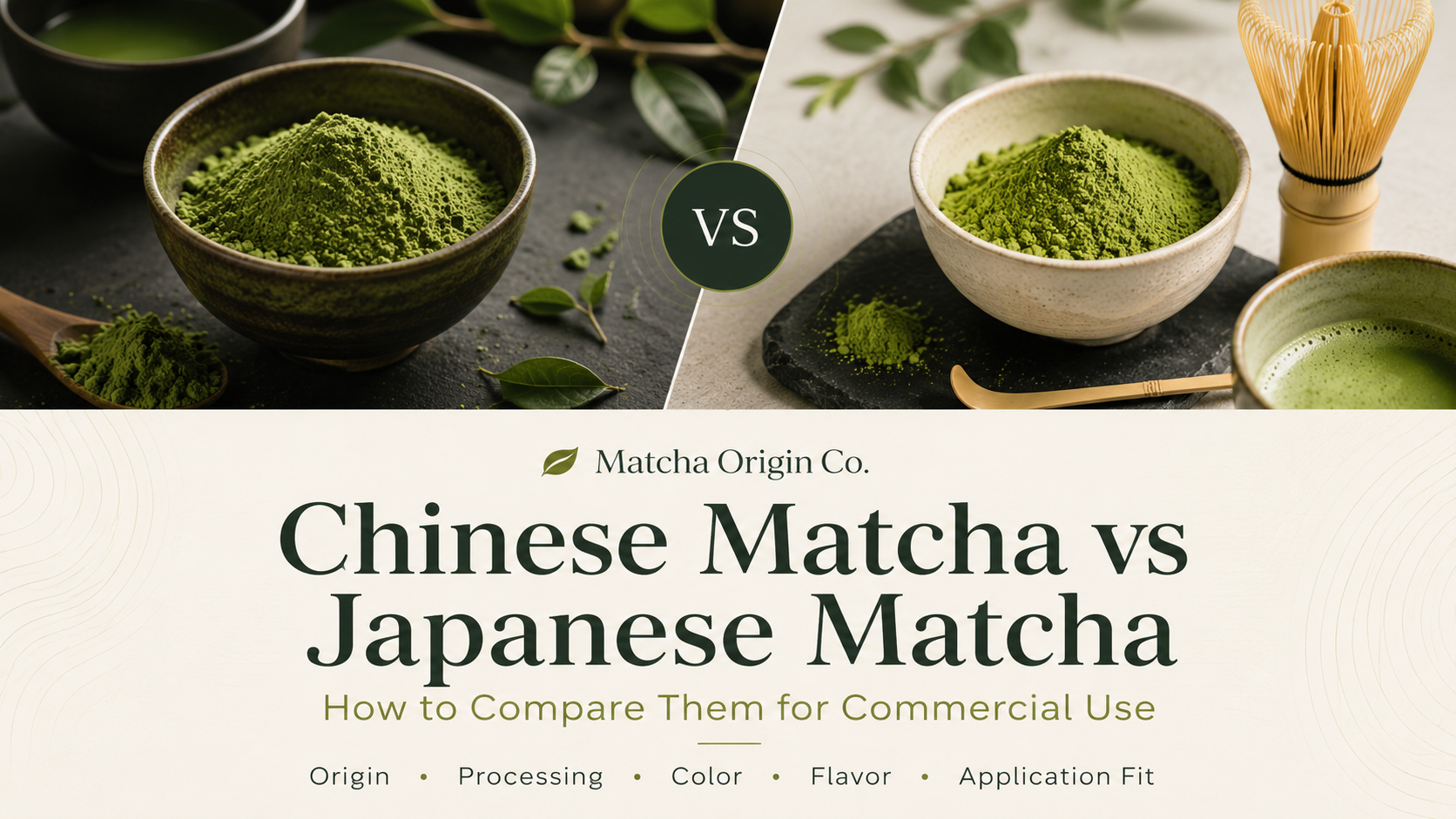
Japan vs China: Which Matcha Origin Is Better?
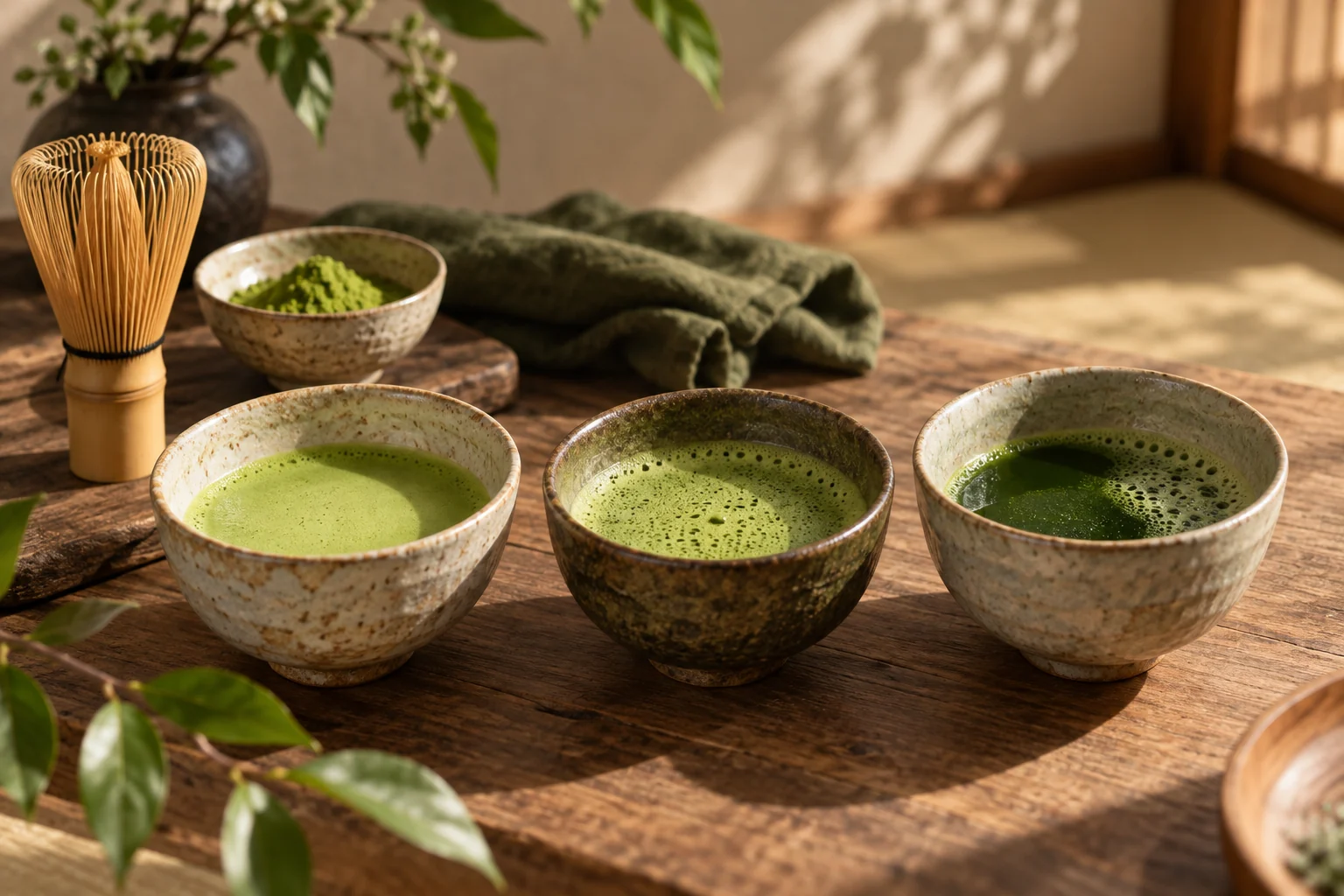
There is no universally correct answer.
It depends on the intended product.
For straight whisking, a buyer may prioritize:
- smoothness
- aroma
- umami
- mouthfeel
- finish
For cafés:
- color in milk
- tea flavor through milk
- bitterness balance
- dosage
- cost per serving
For baking:
- flavor after heat
- finished-product color
- bitterness
- formulation performance
- cost-in-use
For manufacturing:
- repeatability
- technical specifications
- supply volume
- documentation
- batch consistency
This is why Matcha Origin Co. uses an application-led sourcing approach rather than treating country of origin as a complete quality ranking.
What Commercial Buyers Should Verify About Matcha Origin
If you are sourcing matcha for a café, food product or brand, ask for more than just a country name.
1. Country of Origin
Confirm where the tea was actually produced.
2. Producer or Supply Partner
Where available, understand who grows or processes the product.
3. Product Specification
Review the specific product rather than relying only on words such as:
ceremonial
premium
culinary
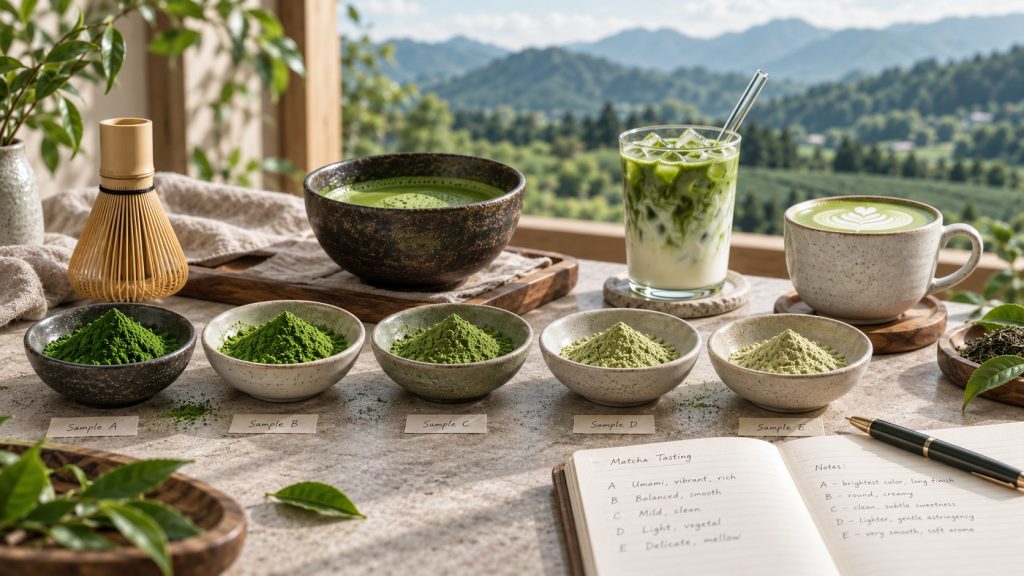
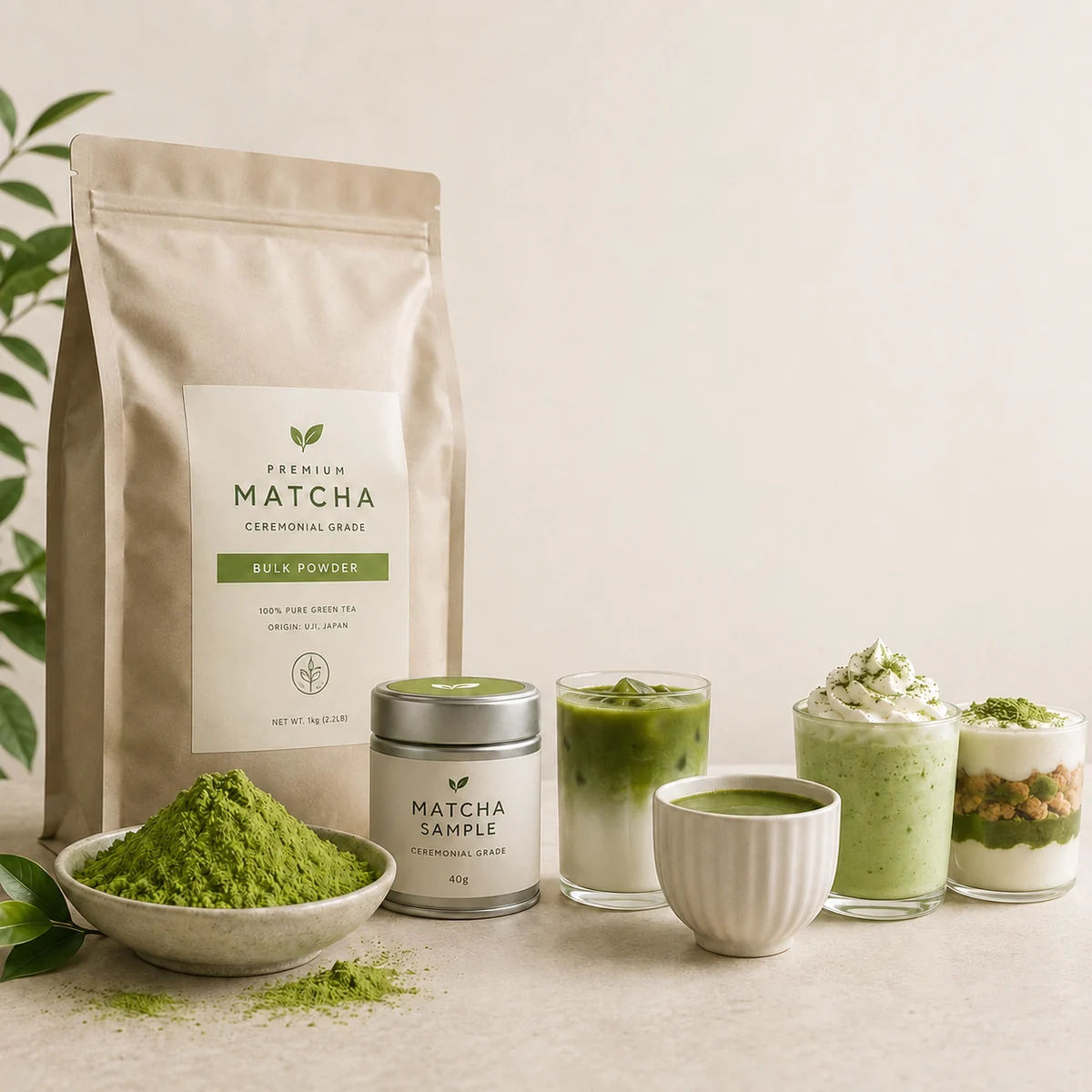
4. Sample Performance
Test the matcha in your actual application.
A product intended for an iced latte should be evaluated in milk and ice—not only whisked with water.
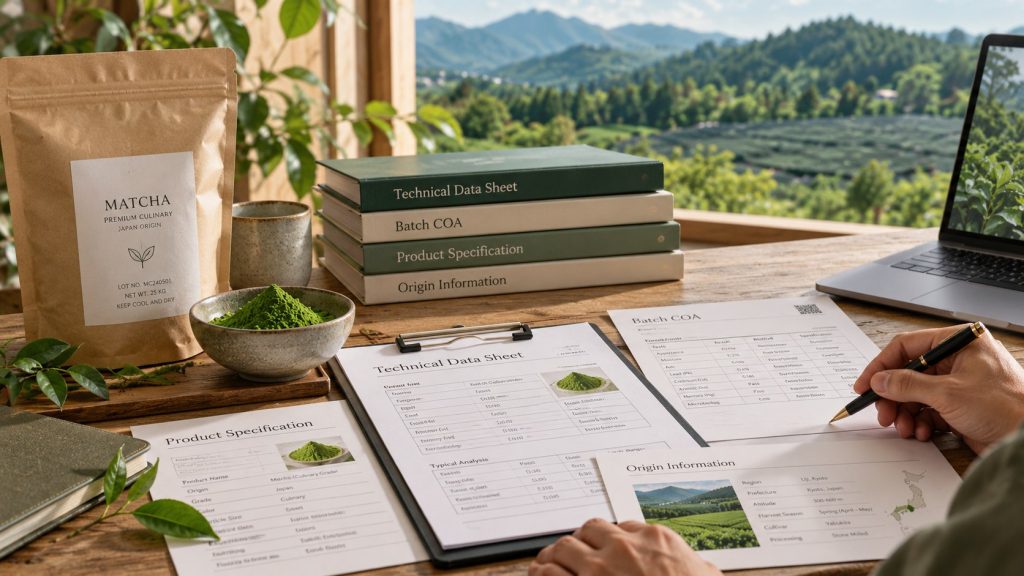
5. Batch Documentation
Depending on the product and project, this may include:
- TDS
- COA
- ingredient information
- testing documentation
- organic documentation
- batch information
6. Repeat-Order Consistency
For commercial buyers, one excellent sample is not enough.
The supplier should also be able to support an acceptable level of consistency as the order scales.
See our Available Documentation and Quality & Testing resources for more information.
Continue your commercial evaluation with our Quality & Testing and Available Documentation resources.
Is Matcha From China Real Matcha?
This question often appears because many consumers associate matcha almost entirely with Japan.
The more useful approach is to separate cultural terminology from commercial product evaluation.
China has a long tea-growing history and produces powdered green tea products using shaded cultivation and fine milling for commercial applications.
A buyer should not assume that every China-origin product and every Japan-origin product are identical.
Instead, evaluate the product’s actual:
- raw material
- cultivation
- processing
- sensory characteristics
- specifications
- documentation
- intended use
Transparent origin disclosure is more important than attempting to hide or reframe where the product was produced.
Why Origin Matters More for B2B Buyers
For consumers, origin may be primarily about flavor preference or cultural interest.
For a business, origin can also affect:
- price
- minimum order quantity
- production capacity
- documentation
- lead time
- freight
- private label options
- supply continuity
A café buying a few kilograms per month has different sourcing needs from a food manufacturer purchasing hundreds of kilograms.
That is why origin should be evaluated as part of the complete supply decision, rather than as a standalone marketing claim.
Frequently Asked Questions
Where does matcha come from?
Matcha comes from the Camellia sinensis tea plant. Powdered tea practices originated in China and later developed into the matcha traditions strongly associated with Japan today. Modern commercial matcha is produced in Japan and in other tea-growing countries, including China. (JETRO)
Where is matcha grown?
Matcha is most strongly associated with Japanese tea-growing regions such as Kyoto, Aichi, Shizuoka and Fukuoka, but commercial matcha is also produced outside Japan, including in China.
What plant does matcha come from?
Matcha is made from Camellia sinensis, the same tea species used for many green, black and oolong teas. (JETRO)
Does all matcha come from Japan?
No. Japan is the origin most closely associated with modern matcha culture, but commercial matcha is also produced outside Japan.
Is Chinese matcha lower quality?
Not necessarily. Quality depends on the specific raw material, cultivation, processing, sensory profile and application. Origin alone is not enough to determine whether a product is suitable.
Which country makes the best matcha?
There is no single answer for every application. Straight whisking, café drinks, baking and food manufacturing can require different matcha characteristics.
Is Uji the only place that produces matcha in Japan?
No. Uji is famous for premium Japanese tea, but matcha and tea used for matcha are produced in multiple Japanese regions.
Choosing Matcha by Origin and Application
Country of origin is useful information—but it should be the beginning of the evaluation, not the end.
For commercial sourcing, compare:
Origin → Product Profile → Sample → Application Test → Documentation → Commercial Supply
Matcha Origin Co. supports cafés, bakeries, beverage companies, food manufacturers and brands with application-focused sourcing, B2B samples and commercial matcha supply.