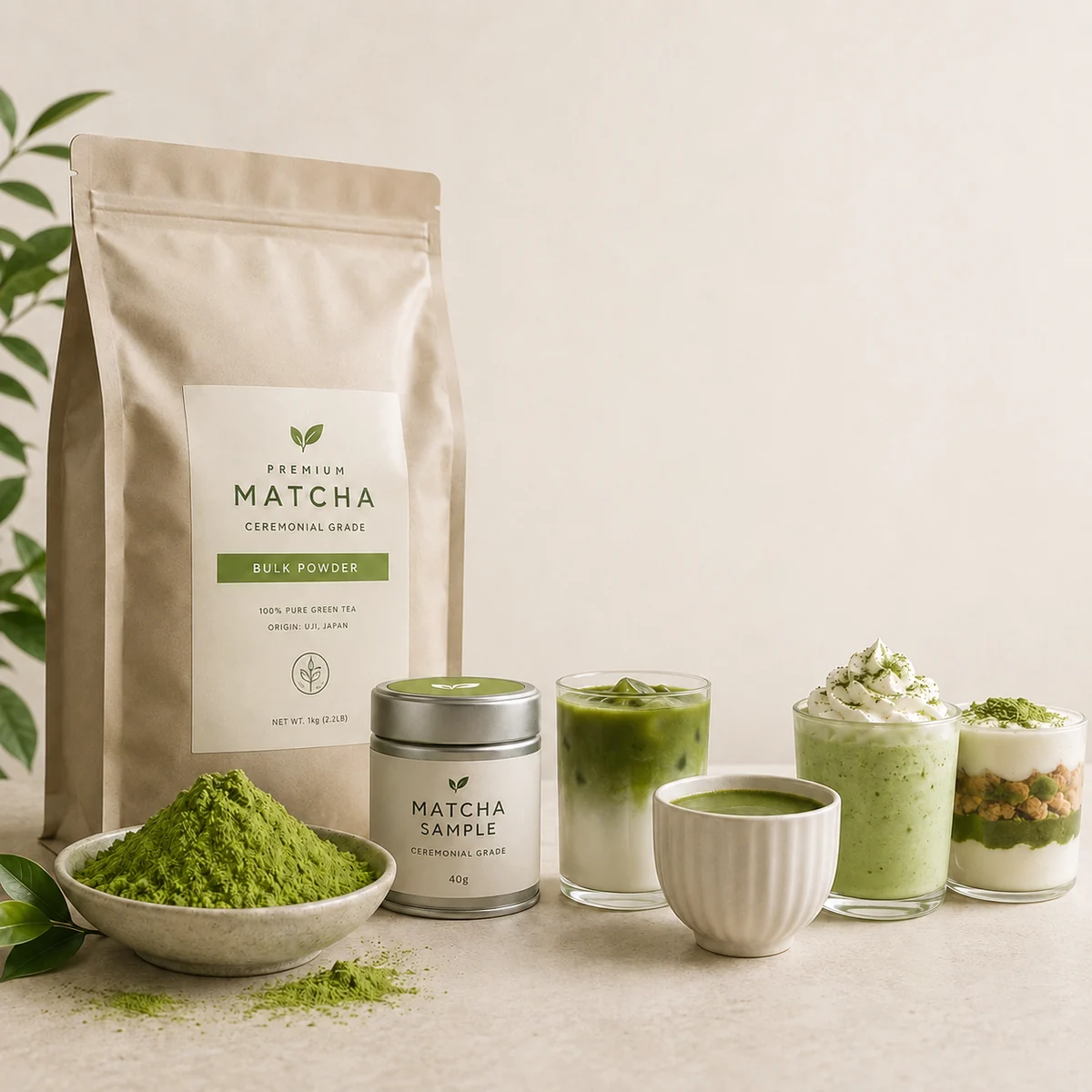
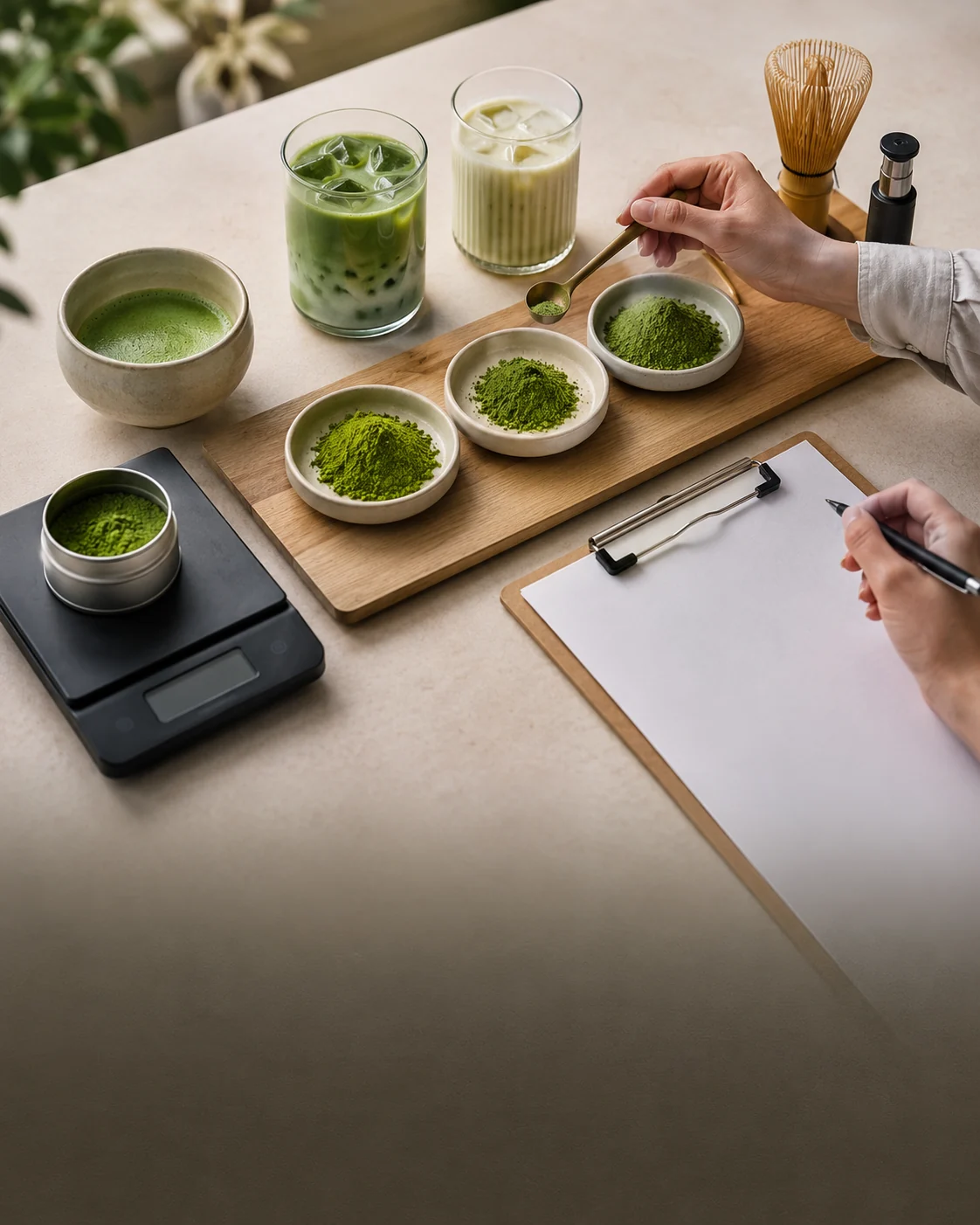
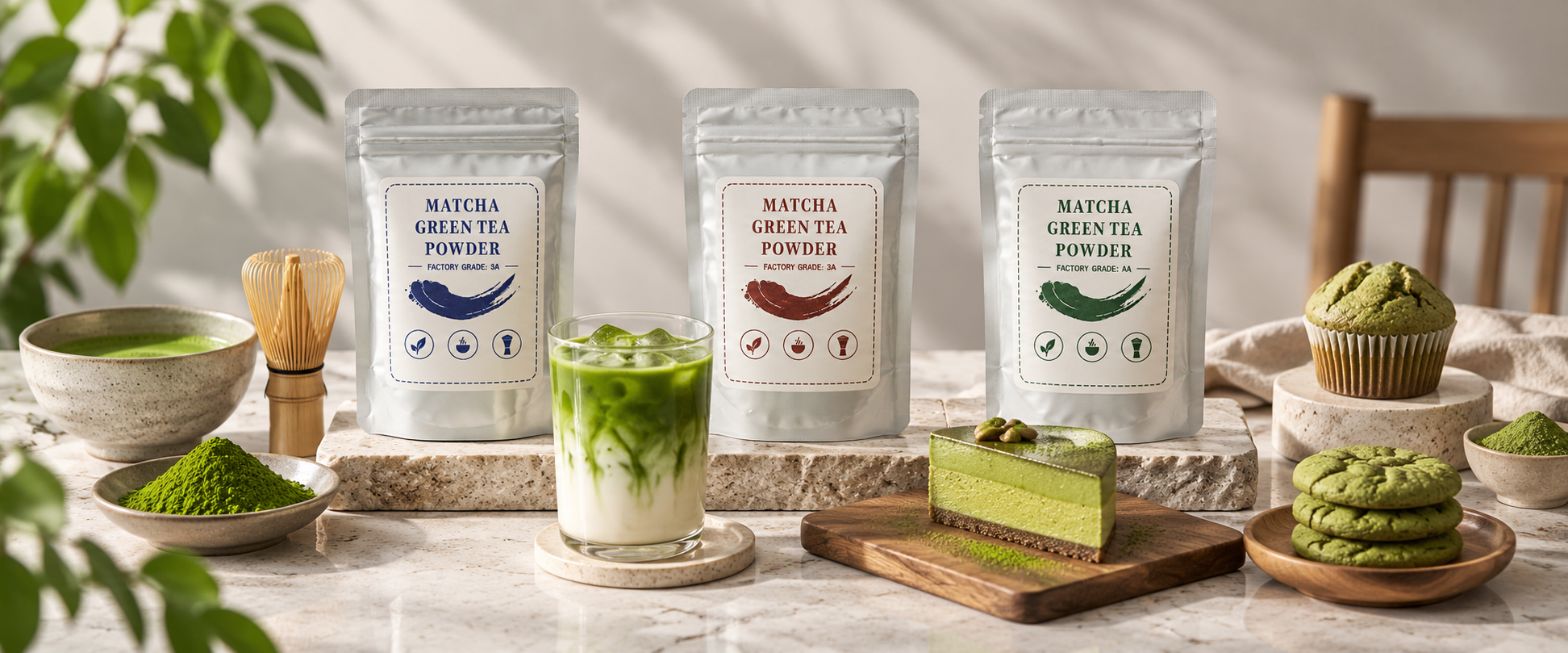
Requesting B2B matcha samples is only the beginning. The real sourcing decision starts after the samples arrive: the buyer must test application fit, document the result, review technical information, compare commercial cost and define what an approved product should look like for repeat supply.
The Short Answer
A reliable matcha sample to bulk order workflow follows six decisions: define the application, shortlist relevant profiles, test every sample under the same conditions, review documentation, compare cost-in-use and approve the commercial route. The sample is not a tasting gift; it is a controlled product-development step before scale.
1. Define the Final Application
Before comparing samples, define what the business plans to make. An iced strawberry matcha latte, a baked cookie, a bottled drink and a straight-whisked tea require different sensory and operational performance.
A useful application brief includes the formulation, target market, expected commercial volume, packaging route and required documentation. This allows a supplier to recommend relevant options instead of sending every available product. Start with the Matcha Profile Directory to understand how commercial profiles are organized by application.
Buyer rule: “Send your best matcha” is not a specification. Application comes first.
2. Shortlist Profiles That Fit the Project
The next step is not to test every possible powder. It is to identify the two or three profiles most likely to work. A café might compare Café / Latte and Premium Latte profiles. A bakery might begin with Culinary. A straight-tea program may compare Classic, Premium and Reserve ceremonial profiles.
This keeps testing focused and prevents price or grade language from deciding the result before the application has been evaluated.
3. Request Evaluation Samples
Once suitable profiles have been identified, the project can move into physical testing. Matcha Origin Co. uses a 50 g B2B evaluation sample format so buyers can run practical tests before committing to commercial quantity.
The sample should answer whether the powder behaves correctly in the recipe, whether the finished color and flavor meet the target, whether the required dose is practical and whether the texture suits the final product. Begin through the B2B sample request process.
4. Test Every Sample Under the Same Conditions
A fair comparison changes one major variable: the matcha sample. Cafés should keep milk, dose, water, sweetener, ice, cup size and preparation method constant. Bakeries should keep recipe, dose, oven temperature, pan size and baking time constant. Straight-whisking tests should use the same powder dose, water quantity, temperature and whisking method.
For a complete testing method, use the guide to comparing matcha samples from suppliers.
5. Judge the Finished Product, Not Only the Dry Powder
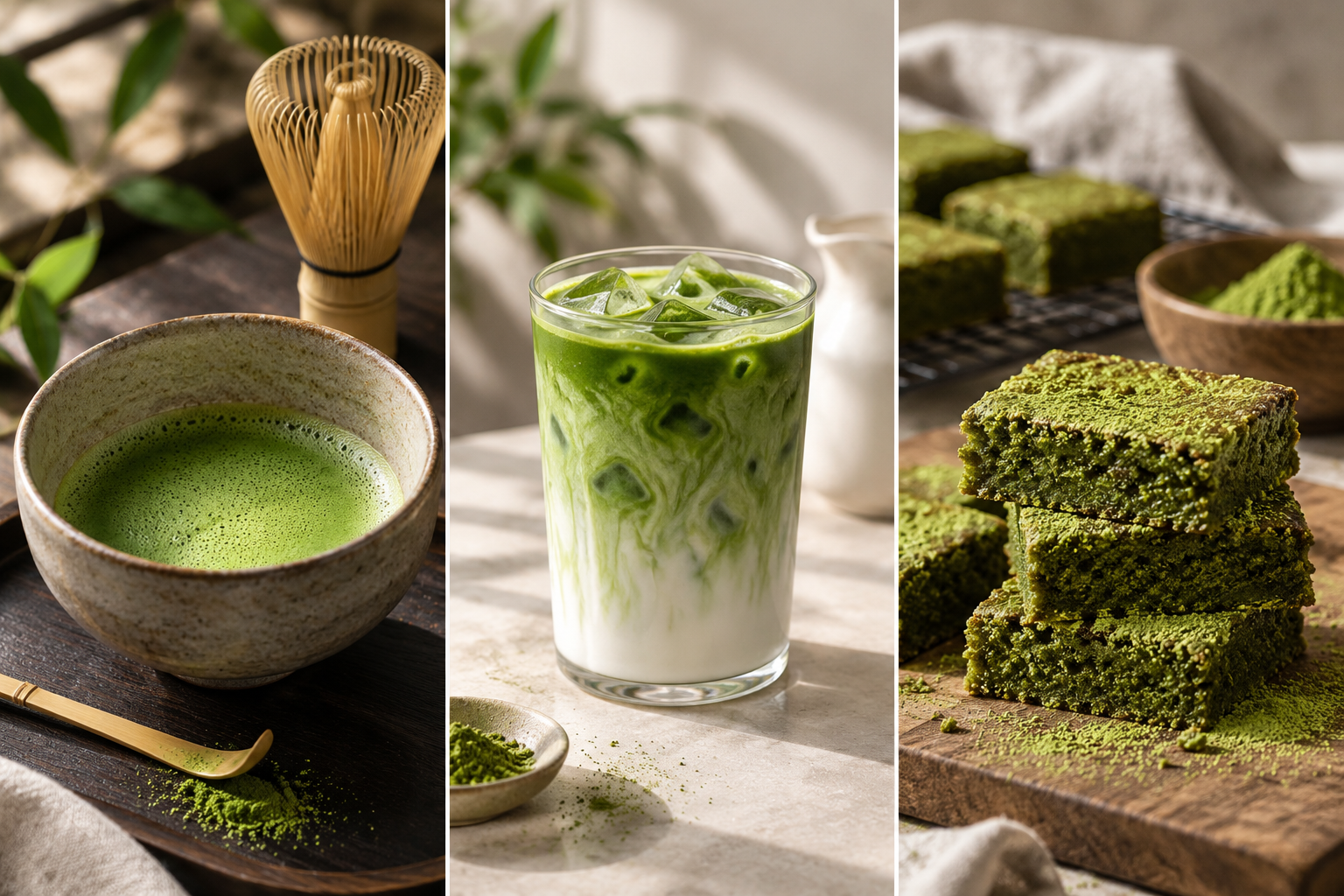
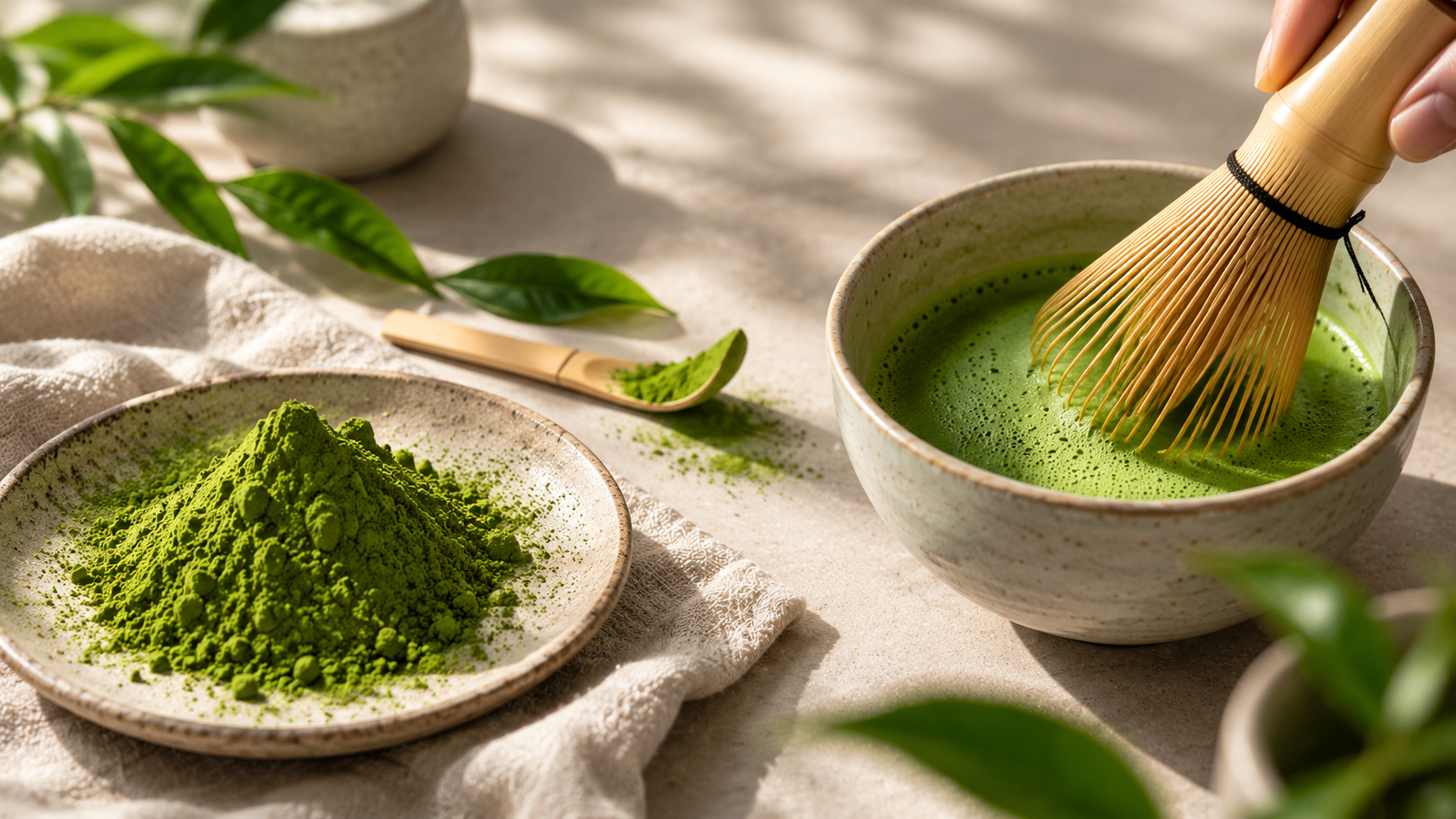
Dry powder color is useful for initial observation, but it is not the product the customer will buy. The real decision may concern an iced latte, cookie, bottled beverage, cake, mousse or bowl of whisked matcha.
One sample may look brighter dry but become weak in oat milk. Another may look less vivid on the table yet produce a stronger café drink. A culinary profile may taste assertive in water but retain its character better after baking. The relevant question is: what survives into the customer-ready product?
6. Record Results With a Commercial Scorecard
Written results make the decision repeatable and explainable. A simple scorecard is enough; it does not need to imitate laboratory analysis.
Swipe to view the full table →
| Evaluation area | What to review | Decision question |
|---|---|---|
| Color | Dry powder and finished application | Does it meet the visual target after processing? |
| Aroma | Freshness and tea character | Are there unwanted or weak notes? |
| Flavor | Presence and balance | Does matcha remain identifiable? |
| Bitterness / astringency | Balance in the final recipe | Is it acceptable at the target dose? |
| Texture | Mouthfeel, dispersion or sediment | Does it suit the serving format? |
| Dose required | Grams per serving or batch | Is the target result commercially practical? |
| Cost-in-use | Cost per drink or finished unit | What does performance actually cost? |
| Overall fit | Application, supply and support | Can this become an approved commercial profile? |
7. Narrow the Choice Before Comparing Commercial Pricing
Pricing becomes more meaningful after application testing has reduced the shortlist. The cheapest powder per kilogram may need a larger dose; a higher-priced sample may reach the target at a lower dose. The better comparison is often cost per finished serving or finished product.
Café buyers can use the Matcha Cost per Serving Calculator to estimate serving cost, monthly usage and purchasing quantity from the tested dose.
8. Review Technical Information and Documentation
A sample can perform well and still require technical review before commercial approval. The scope depends on the buyer, product and destination market. Buyers may need product specifications, ingredient and origin information, testing documentation, batch information or applicable certification records.
Technical Data Sheet
Describes the product profile and reference specifications. It is not automatically a batch-specific laboratory result.
Certificate of Analysis
May provide information related to a specific batch where applicable and available.
Testing and Certification
Only applies to the products, samples or harvests included in the confirmed testing or certification scope.
Use Available Documentation, Quality & Testing and Batch Traceability to understand which record answers which sourcing question.
9. Choose Standard Bulk Supply or Private Label
After the matcha profile is approved, the route may split. Standard bulk supply is usually simpler: confirm product, quantity, commercial price, shipping and continuity. A private-label matcha project adds pack size, packaging format, artwork, labeling, target market and project volume.
Private-label minimums and production requirements should be confirmed for the actual packaging project rather than inferred from a normal bulk order.
10. Review Commercial Quantity and Landed Cost
Swipe to view the full table →
| Commercial quantity | Pricing approach | Buyer focus |
|---|---|---|
| 1–4 kg | Standard commercial tier | First order and controlled validation |
| 5–9 kg | Volume tier | Growing monthly use |
| 10–19 kg | Larger volume tier | Established production demand |
| 20 kg+ | Request Volume Pricing | Project-specific supply planning |
Commercial evaluation should combine product fit, price, landed cost and supply reliability. Freight, duties, taxes or destination charges may affect the final cost depending on the shipping arrangement. Review the current Bulk Matcha route once the tested profile is approved.
11. Confirm Packaging and Storage Requirements
Packaging is part of product handling, not only branding. Confirm how the bulk product will be packed, how much will be opened at one time, how opened and unopened stock will be stored and whether the customer-facing product needs another format. See the practical Packaging & Storage guide.
12. Place the First Commercial Order
At this stage, the buyer has defined the application, selected a profile, tested samples, reviewed documents and evaluated price. The first order is therefore not a guess. It is also an operational validation: measure actual consumption, storage workflow, production behavior and customer response before expanding volume.
13. Keep an Approved Product Reference
Record the approved profile, relevant specifications, sample-test results, preferred formulation and important batch or packaging information. This reference becomes valuable when purchasing changes hands, production moves, the business expands or a later batch needs comparison.
14. Expect Controlled Agricultural Variation
Matcha is an agricultural product, so reasonable natural variation should not be confused with unacceptable inconsistency. Small differences in shade, aroma or intensity can occur while the product remains within its agreed commercial profile and performs correctly in the approved application.
The practical standard is not photographic sameness. It is controlled suitability within the relevant specification, supported by application testing and traceability.
15. Make Repeat Supply Easier Than the First Order
Once the buyer and supplier understand the approved profile, target application, normal volume, documentation needs and packaging expectations, future orders should require less trial and error. The conversation changes from “Can you send some matcha?” to “We need the approved profile for this application and quantity.”
From Sample Request to Bulk Supply
The complete wholesale matcha order process can be summarized in ten stages:
Frequently Asked Questions
Should I order samples before buying matcha in bulk?
For a new product or supplier, sample testing is usually the safer commercial path. It lets the team evaluate matcha in the actual drink, recipe or formulation before committing to larger quantity, while also giving the buyer time to confirm documentation, pricing and supply requirements.
How much sample matcha do I need?
Matcha Origin Co. currently uses a 50 g B2B evaluation sample format. Whether one sample is enough depends on the number of recipes, preparation repeats, team members and serving formats being tested. Plan the test matrix before opening the sample so every candidate receives the same evaluation.
Should I choose the sample with the brightest green color?
Not automatically. Color matters, but commercial approval should also consider flavor, texture, performance in the finished product, required dose, cost-in-use, consistency and supplier support. The brightest dry powder is not always the strongest or most economical choice in milk, baking or manufacturing.
Can I request several profiles for comparison?
Yes, when several profiles are relevant to the application. A focused shortlist of two or three candidates is normally more useful than requesting every option. It reduces test variables and keeps the commercial decision tied to the intended product instead of grade names alone.
When should I ask for documentation?
Identify essential documentation requirements early so unsuitable options can be removed. Conduct the deeper technical or batch-specific review after the shortlist is narrow enough to know which exact product, profile or batch the document must cover.
Does sample approval guarantee identical future batches?
No agricultural ingredient should be judged by photographic sameness alone. The relevant standard is controlled commercial consistency: later supply should remain within the agreed specification and continue to perform acceptably in the approved application.
What if I want private label after testing?
Approve the matcha profile first, then treat packaging as a separate project layer. Pack size, material, artwork, labeling, destination market and volume can affect feasibility, minimums and timing. Confirm those requirements against the actual private-label project rather than assuming the bulk terms are identical.
Ready to Move From Evaluation to Commercial Supply?
A good matcha sample to bulk order process reduces uncertainty before scale. Define the application, test the relevant profiles, review the supporting information and move forward only when the finished product and commercial route meet your requirements.
Leave a Reply