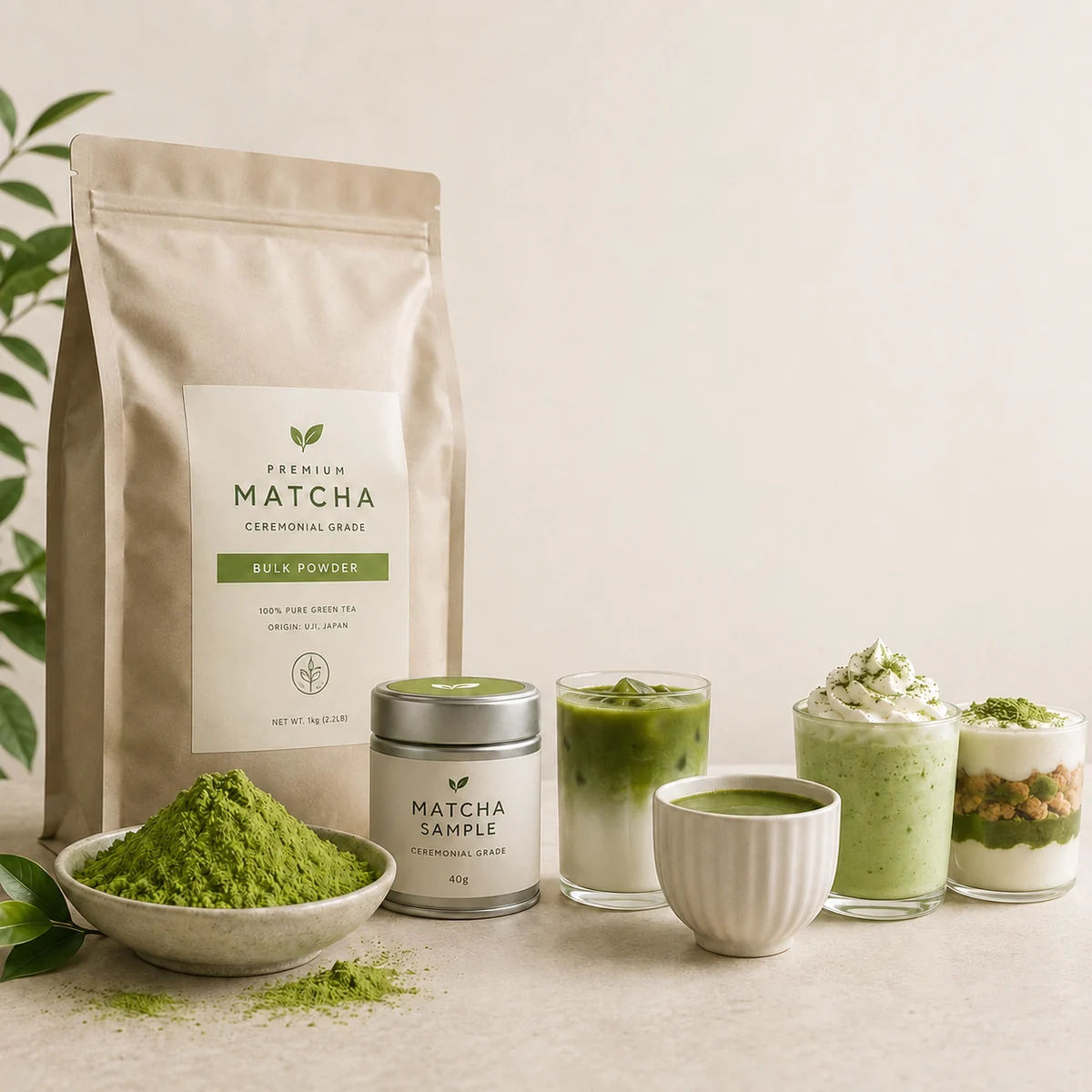
Buying matcha in bulk is different from purchasing a retail bag of tea.
Commercial buyers need to consider application, specification, consistency, documentation, packaging and supply requirements before comparing price.
A structured buying process reduces the risk of choosing a matcha that looks attractive in a sample but does not perform well in the finished product.
Table of Contents
Bulk Matcha Buyer Checklist
| Before You Buy | What to Confirm |
|---|---|
| Application | Latte, whisking, baking, manufacturing or private label |
| Sample | Test in the actual finished product |
| Specification | Sensory, particle size, moisture and relevant technical parameters |
| Documentation | TDS, batch COA, testing and certification where applicable |
| Packaging | Bulk format, liners, storage and shelf life |
| Supply | Lead time, repeat-order consistency and batch identification |
| Commercial Fit | Price, dosage, freight and finished-product performance |
Step 1: Define Your Application
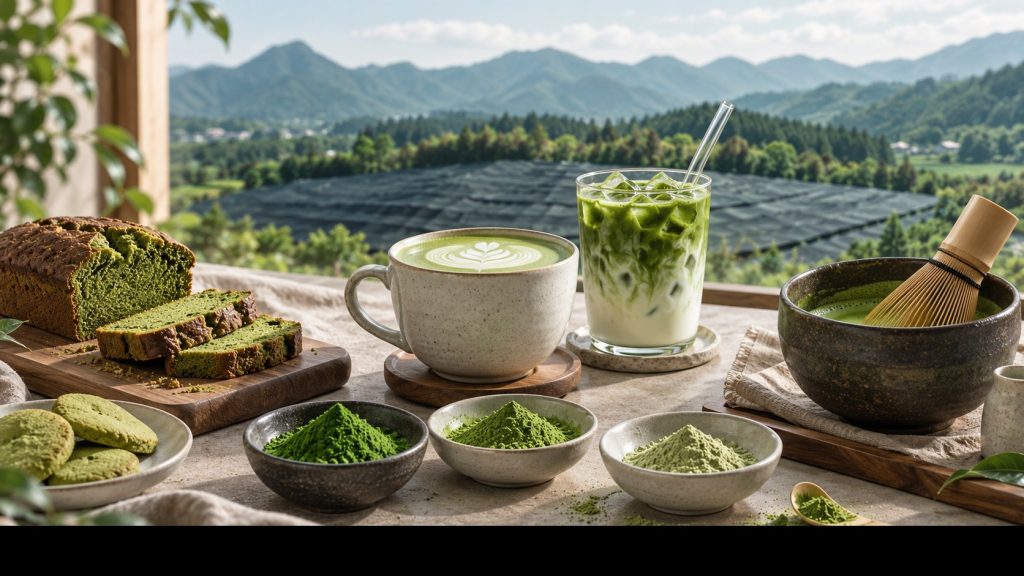
Start with what you are making.
For example:
- café lattes
- straight whisking
- bakery products
- desserts
- ice cream
- packaged beverages
- food manufacturing
- private label retail products
Application determines the type of sample you should evaluate.
Step 2: Define Your Commercial Requirements
Before asking for a quote, prepare basic purchasing information.
Useful details include:
- intended application
- expected monthly or annual volume
- target packaging format
- destination country
- organic requirement if applicable
- documentation requirements
- private label requirements
- target price positioning
This allows suppliers to recommend more relevant options.
Step 3: Request Samples
Do not choose a bulk matcha only from photographs or specification sheets.
Request samples first.
A café should test matcha in its actual latte recipe.
A bakery should use the real recipe and baking process.
A food manufacturer should evaluate the product under production conditions as closely as practical.
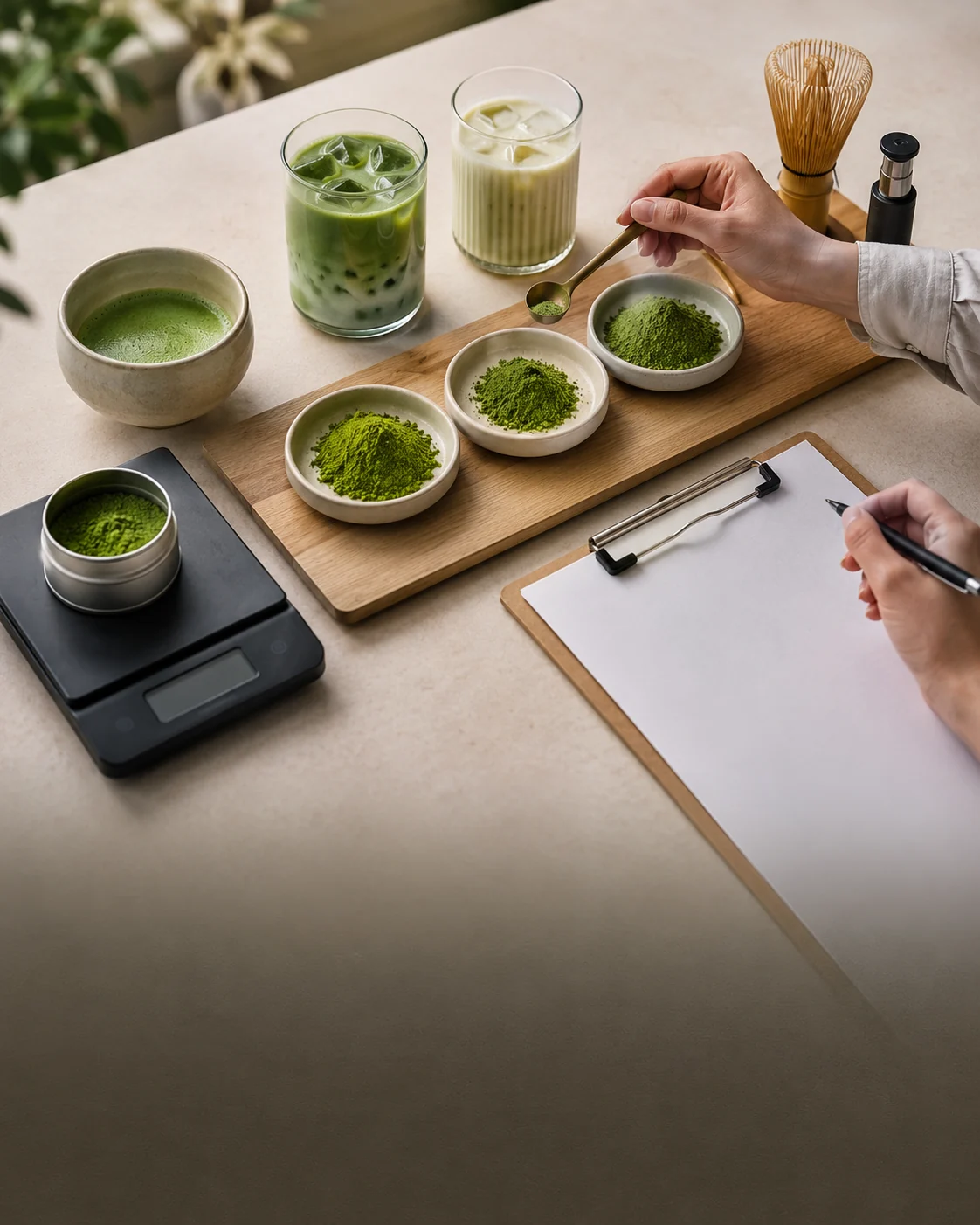
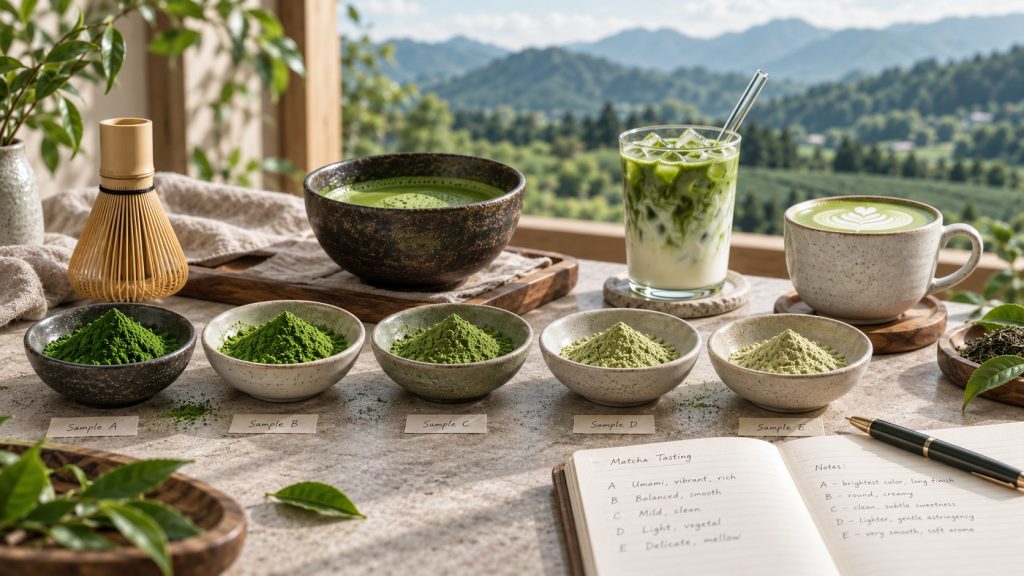
Step 4: Compare Products Under Controlled Conditions
When comparing samples, keep your test conditions consistent.
Record:
- dosage
- recipe
- water or milk
- processing temperature
- preparation method
- finished color
- flavor
- texture
- cost-in-use
This creates a more reliable purchasing comparison.
Step 5: Review the Technical Specification
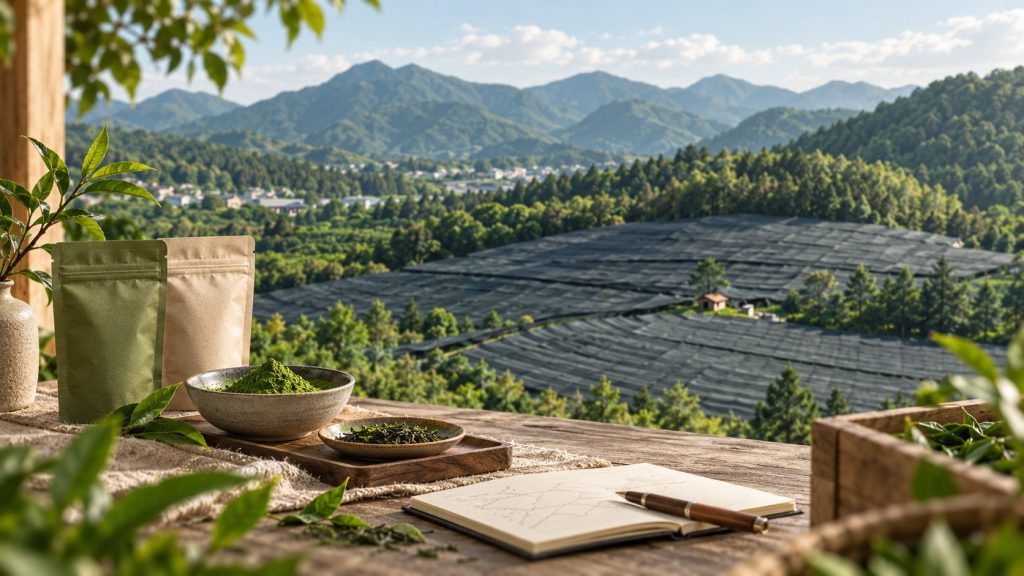
Do not compare products only by supplier grade names. Grade terminology is not standardized across suppliers, so buyers should compare the actual product specification and application performance instead.
A product specification may include:
- origin
- processing information
- particle size
- moisture
- sensory characteristics
- physical and chemical parameters
- packaging
- shelf life
The exact specification depends on the selected product.
Step 6: Review Available Documents
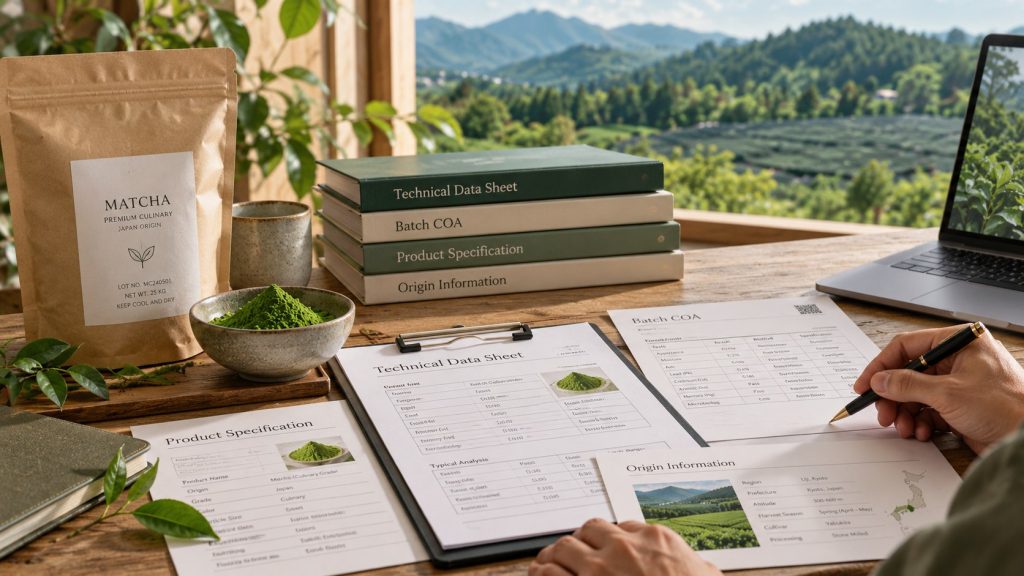
Depending on the project, buyers may request:
- Technical Data Sheet
- manufacturer COA
- batch-specific COA
- organic documentation
- third-party analytical testing
- product specification
- origin information
- batch information
Review our available documentation for the types of information that may be provided.
| Document | What It Tells You |
|---|---|
| TDS | Standard product specifications for commercial evaluation |
| Batch COA | Analytical results for a specific batch |
| Third-Party Test | Results for the tested sample and stated test scope |
| Organic Documentation | Certification coverage for the applicable product/supply chain |
| Batch / Traceability Info | Product and batch identification information |
Step 7: Compare Price Correctly
Do not compare bulk matcha solely by price per kilogram.
A lower-priced matcha may require a different dosage or may produce a different finished result.
Commercial buyers should consider:
price per kilogram
- dosage
- finished performance
- packaging
- logistics
- consistency
For cafés, cost per cup is often more meaningful than cost per kilogram.
Step 8: Confirm Packaging and Logistics
Bulk packaging may vary depending on product and order requirements.
Before ordering, confirm:
- packaging format
- net weight
- carton or drum configuration
- shelf life
- storage requirements
- lead time
- shipping method
- export documentation

Step 9: Confirm Repeat-Order Requirements
If the product becomes part of your regular menu or retail range, consistency becomes important.
Confirm how the supplier identifies:
- product specifications
- batches
- production information
- repeat orders
Frequently Asked Questions About Buying Matcha in Bulk
1. Which product profile best fits my intended application?
The right matcha profile depends on how the product will be used. Matcha for lattes, straight whisking, baking and food manufacturing can require different levels of flavor intensity, color, fineness and cost-in-use.
Start by defining your finished application, then compare suitable samples under the same preparation conditions before choosing a bulk product.
2. Can I evaluate samples before placing a bulk order?
Yes. Sample evaluation is recommended before committing to commercial quantities.
Test the matcha in the actual product you plan to sell—for example, your café latte recipe, bakery formulation or straight-whisking preparation—and record dosage, color, flavor, texture and finished-product performance.
Request matcha samples
3. What technical specifications are available?
Available specifications depend on the selected product and may include origin, processing information, particle size, moisture, sensory characteristics, physical and chemical parameters, packaging and storage guidance.
Selected products also have a downloadable Technical Data Sheet (TDS) for commercial evaluation.
Review available documentation
4. Is a batch-specific COA available for the selected batch?
Batch-specific Certificates of Analysis may be available for applicable commercial batches.
A COA should be matched to the relevant product and batch rather than treated as a universal specification for every matcha product. Buyers requiring batch documentation should confirm availability before shipment.
5. What third-party testing or certification documentation applies to this product?
Third-party testing and certification coverage varies by product, supplier, batch and test scope.
Depending on the selected matcha, documentation may include analytical testing, pesticide screening or organic certification. Buyers should confirm which documents specifically apply to the product and batch being evaluated.
Review available documentation for the selected product
6. What bulk packaging formats are available?
Bulk packaging depends on the product, order quantity, shipping requirements and intended use.
Commercial formats may include export cartons with food-grade barrier liners or other bulk configurations. Final net weight, packaging structure and private-label requirements should be confirmed during quotation.
7. How are repeat orders and batch consistency managed?
For repeat purchasing, the selected product profile, technical specification and relevant batch information should be recorded so future orders can be compared against the agreed commercial requirements.
Because agricultural ingredients naturally vary between harvests and batches, commercial consistency is best managed through specification control, sample evaluation and appropriate batch documentation rather than assuming every batch will be analytically identical.
Ready to Evaluate Matcha for Bulk Supply?
Start with the application you are developing, then compare suitable matcha profiles through sample evaluation before moving to commercial quantities.
Matcha Origin Co. supports B2B buyers with product matching, sample evaluation, technical documentation and commercial supply coordination.
Leave a Reply