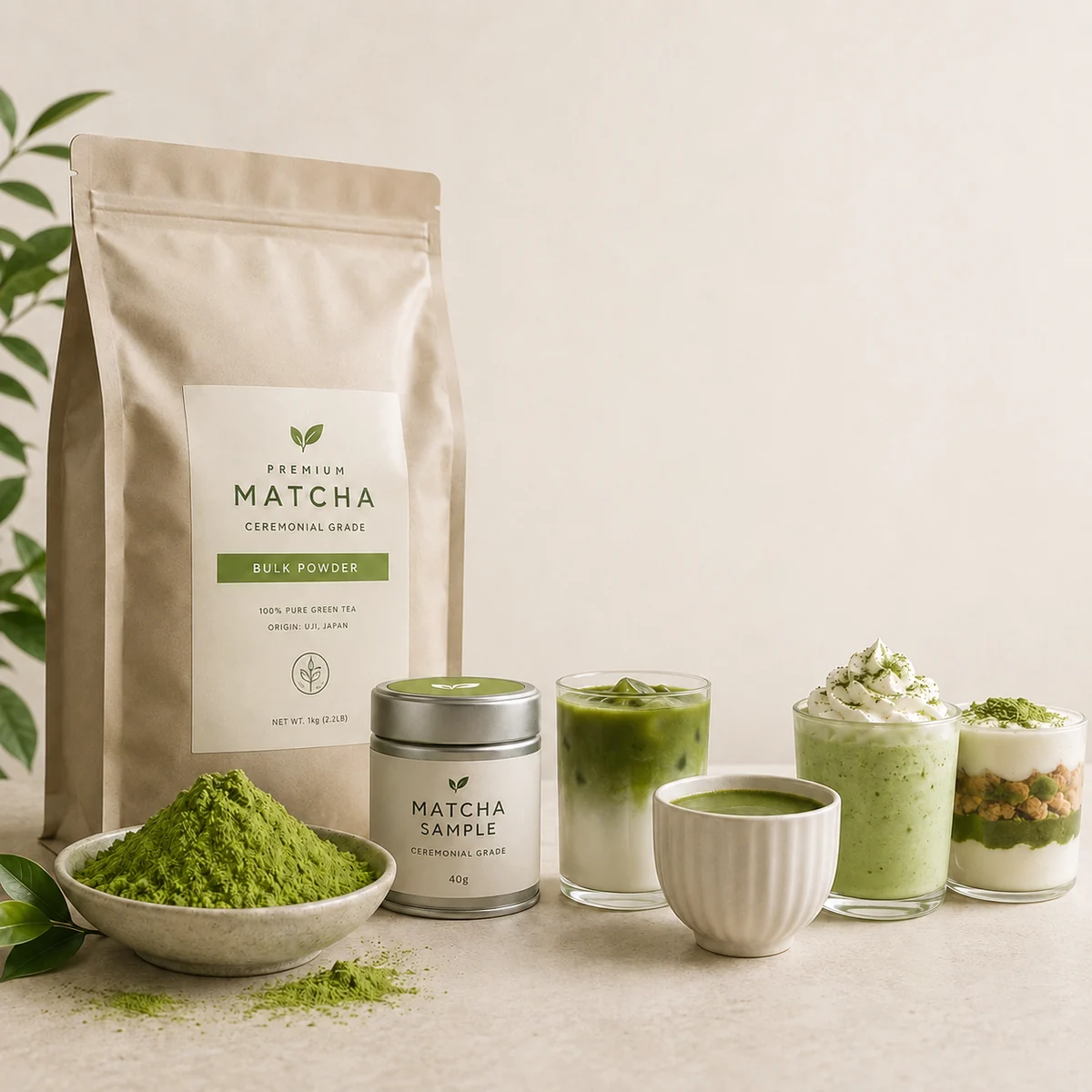
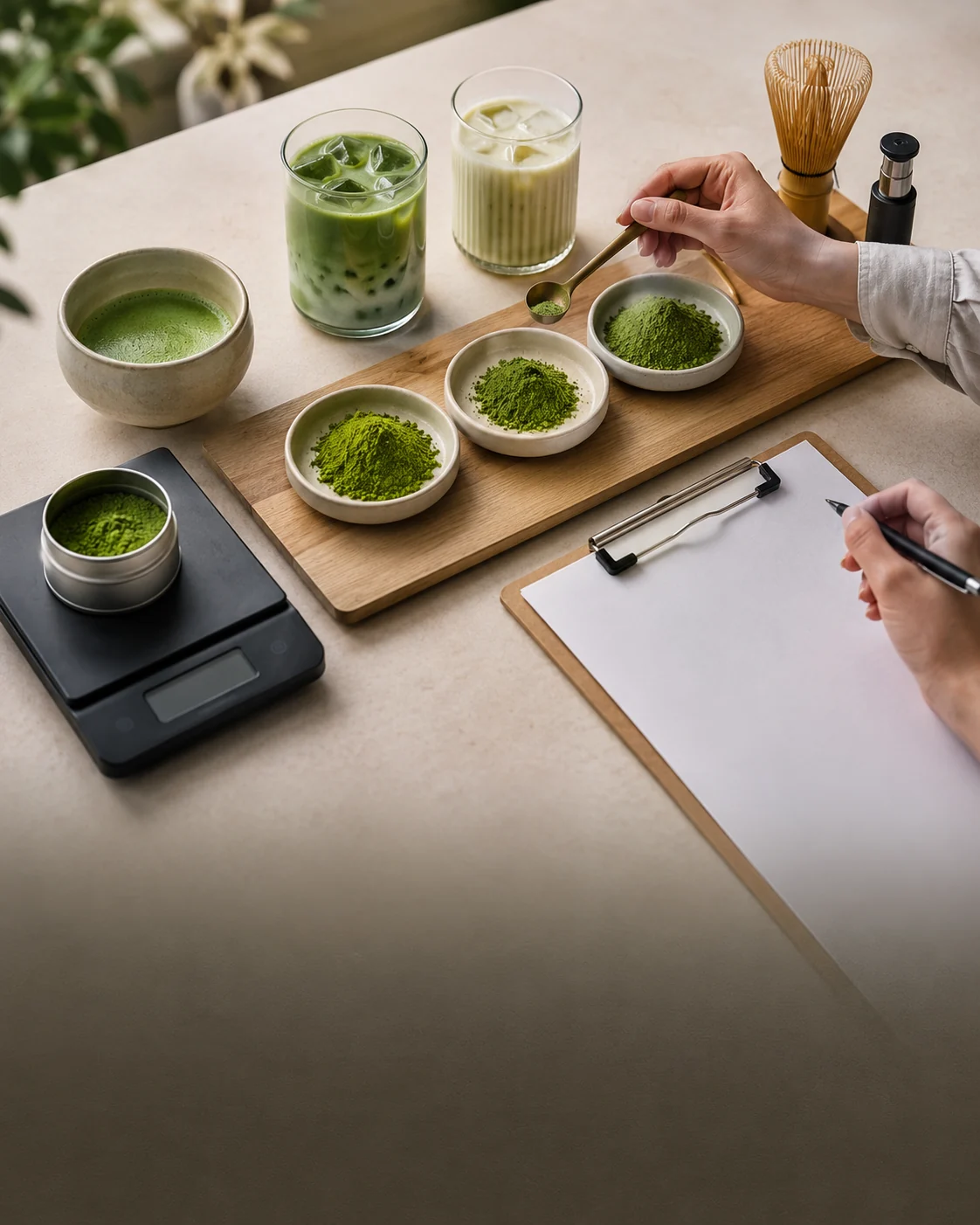
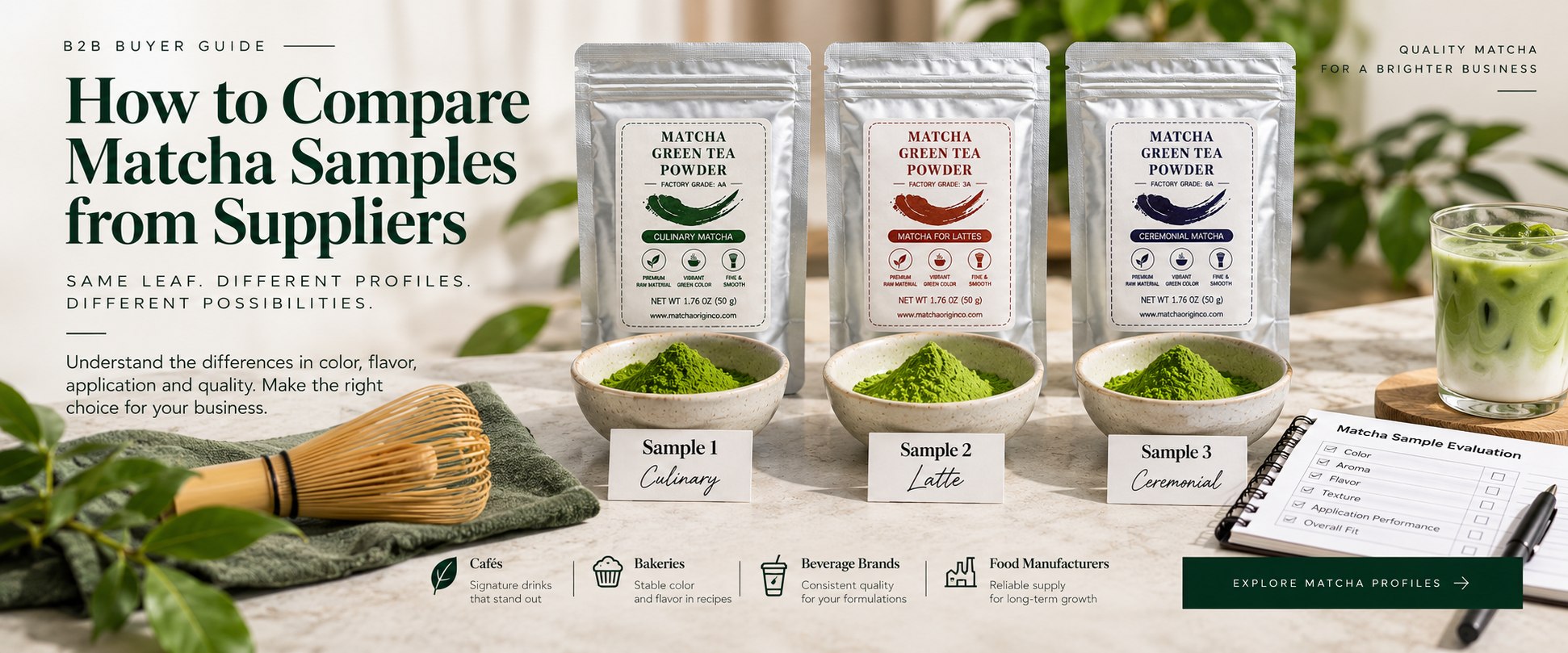
Matcha samples from different suppliers can vary in color, aroma, texture and performance—even when every pouch is described as “premium.” For cafés, bakeries, beverage brands and food manufacturers, the right comparison is not simply which dry powder looks greenest. It is which profile performs most consistently in the product you intend to sell.
The Short Answer
To compare matcha samples fairly, test every sample with the same dose, water, milk, sweetener, temperature and preparation method. Evaluate dry powder only as a reference. Make the final decision from finished-application color, flavor presence, bitterness, texture, price-to-performance and the supplier’s documentation and batch support.
Why Matcha Samples Can Look and Taste So Different
Matcha is an agricultural product that is shaped by raw material, growing conditions, processing, milling, storage and product design. A study of 25 commercial matcha samples found measurable differences in color, chlorophyll, particle characteristics and taste-related components across samples from different producing regions. The point for buyers is practical: two legitimate matcha products can have noticeably different sensory profiles without one being universally “good” and the other “bad.”
Processing also matters. Research on tencha—the leaf material used to make matcha—found that different drying temperature settings changed chlorophyll-related color characteristics. That supports what buyers often observe in samples: color is meaningful, but it is the result of several production variables and should not be treated as a complete quality verdict by itself.
1. Compare Profiles Designed for the Same Application
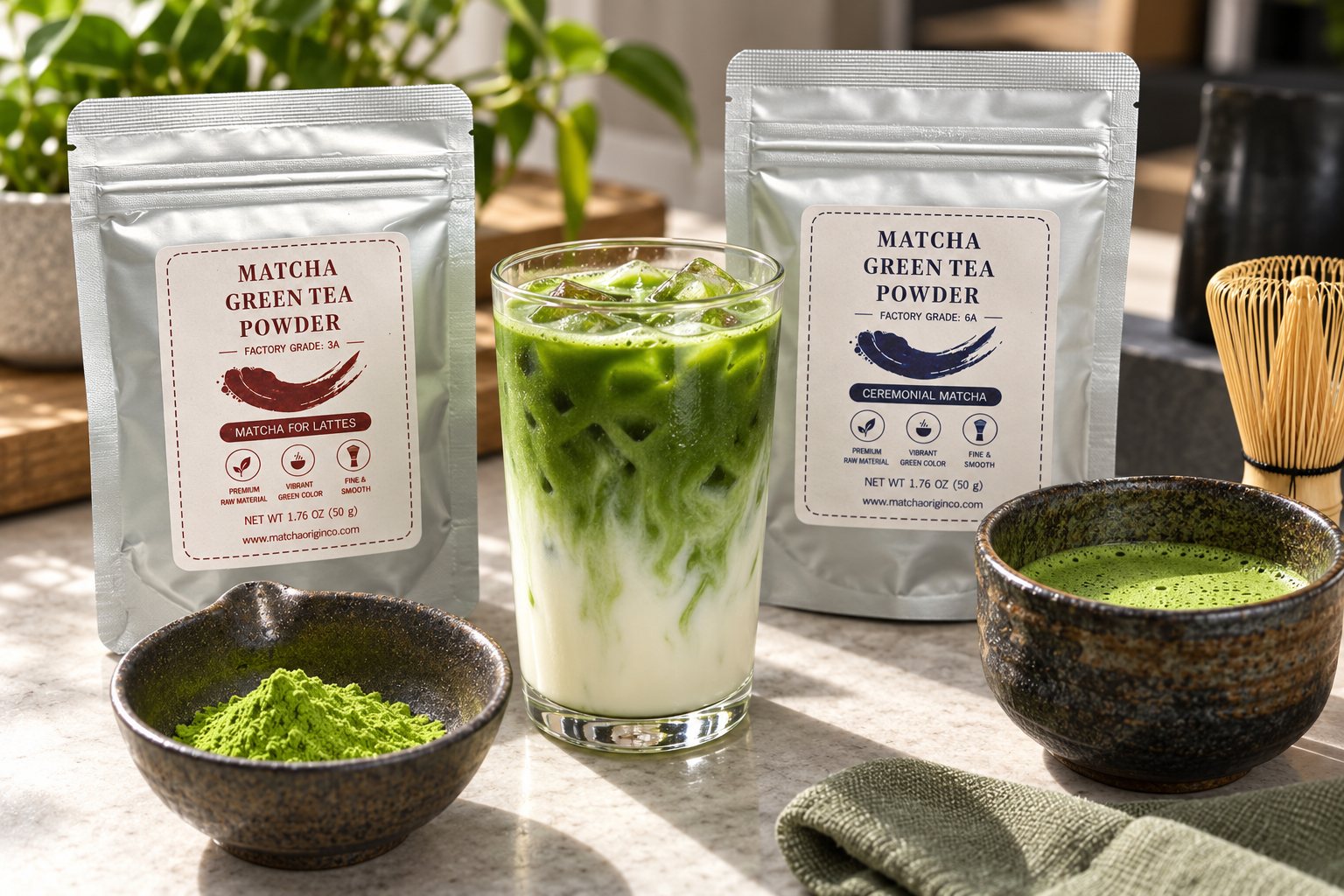
The first sourcing mistake is comparing every sample as though all matcha powders are intended to do the same job. A strong culinary profile, a milk-compatible latte profile and a straight-whisking profile solve different problems.
Culinary Matcha
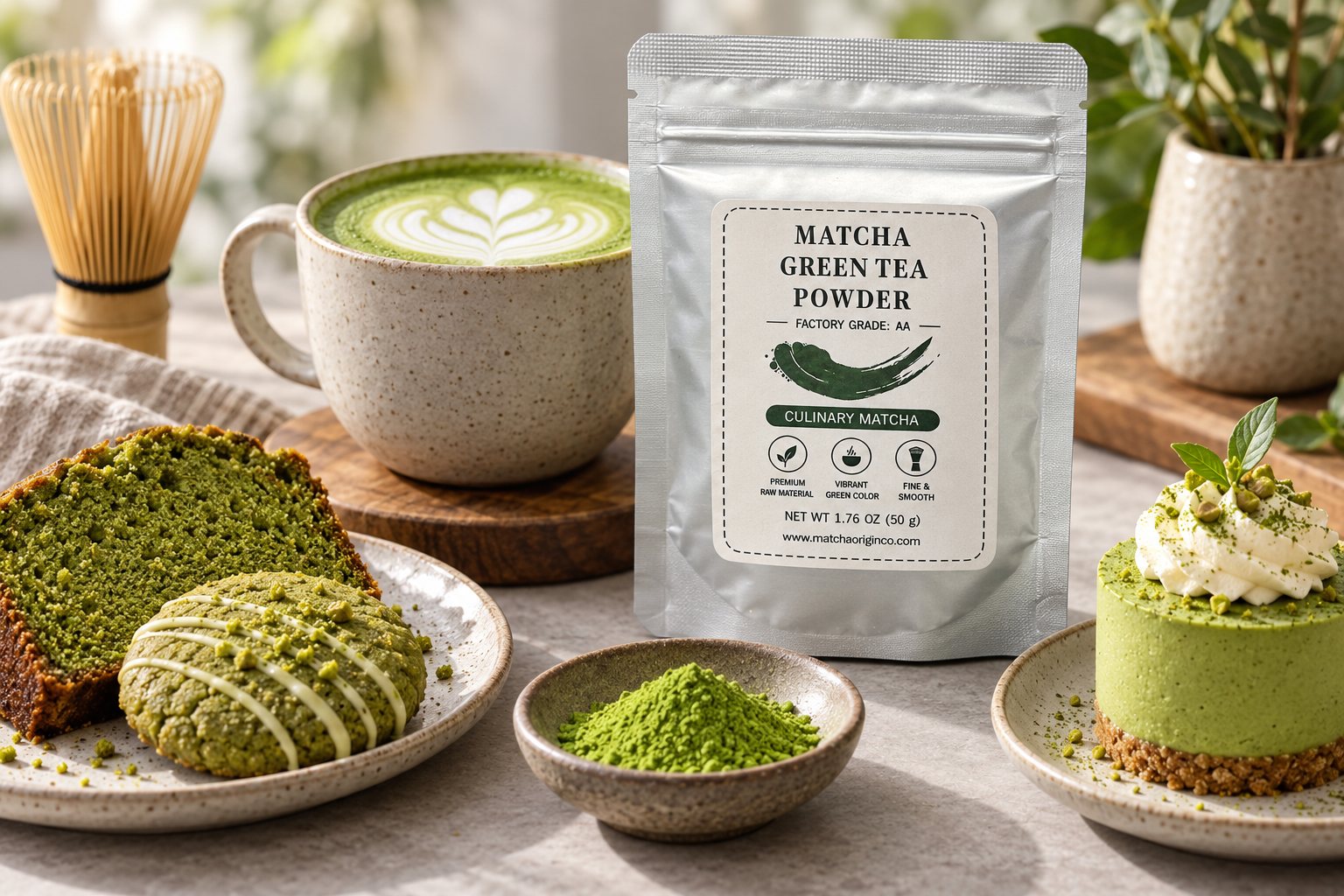
Designed for baking, desserts and food manufacturing, where matcha must remain noticeable beside flour, sugar, fat, heat or other strong ingredients.
Café / Latte Matcha
Designed for milk-based and flavored drinks, where color, tea presence, dispersion and balance must survive dilution and sweetness.
Ceremonial Profiles
Designed for straight whisking and premium tea service, where aroma, mouthfeel, bitterness, umami and finish are experienced with less masking.
Start by comparing like with like. Our Matcha Profiles & Pricing guide organizes commercial options by intended application rather than presenting one universal “best grade.”
2. Color Matters, but the Greenest Powder Is Not Automatically the Best Buy
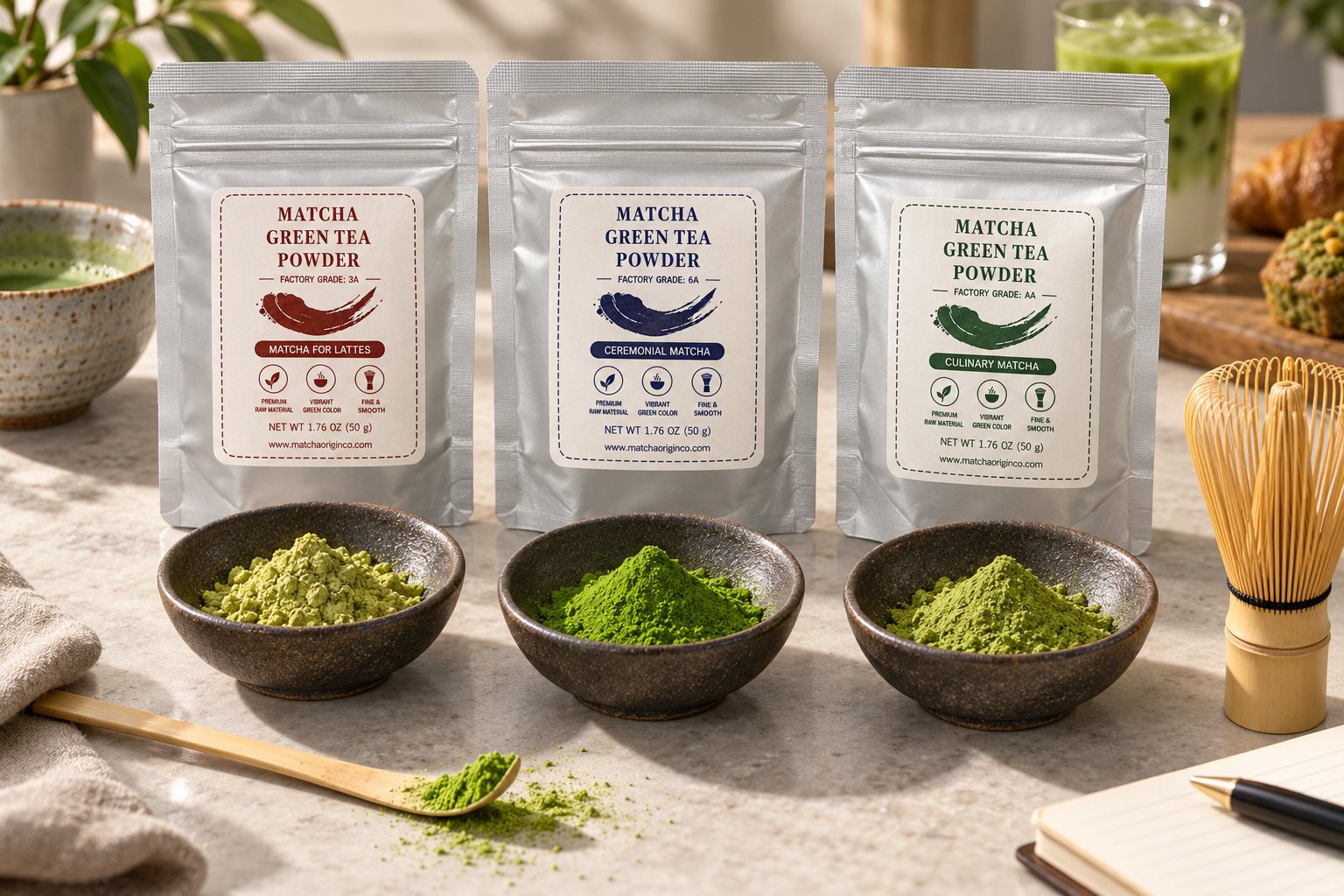
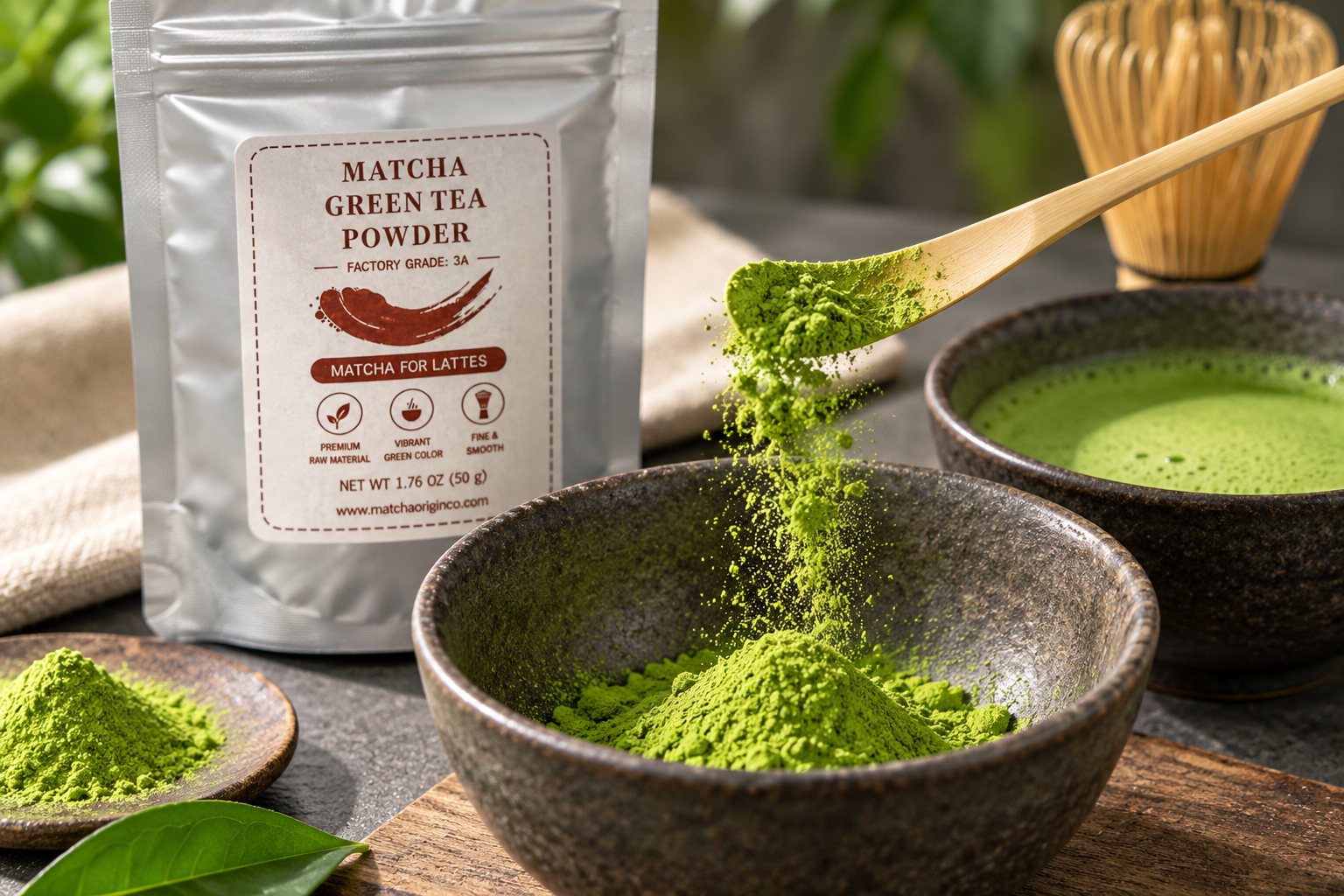
Dry powder color is useful for screening, particularly when visual presentation matters. But it should not decide the purchase on its own. Lighting, white balance, background color, camera processing and screen settings can make supplier photos look more different than the physical samples really are.
Compare physical samples in the same room, under the same light, in identical containers and at the same dose. Then repeat the comparison in the finished application. Oat milk, ice, syrups, fruit purées, flour, fat and heat can all change what the customer ultimately sees.
Buyer rule: evaluate matcha color in the final product, not only in the pouch or tasting bowl.
3. Control the Preparation Method
Preparation can materially change the sensory result. A controlled study comparing agitation conditions used fixed matcha and water quantities while changing mixing speed and time, and found that agitation affected aroma and taste profiles. For commercial buyers, that means inconsistent preparation can create apparent differences that are not caused by the matcha alone.
- Use one matcha dose for every sample.
- Use the same water volume and temperature.
- Use the same whisking or mixing time.
- Use the same milk, sweetener, ice and cup size.
- Prepare samples in a consistent sequence.
- Record results before discussing price or supplier identity.
If Sample A is tested at 2 g and Sample B at 4 g, the result says more about dose than product performance. Change one variable at a time.
4. Test Matcha in the Product You Will Actually Sell
For cafés and beverage brands
Taste in water to understand the base tea character, then test in the actual recipe. A delicate sample may be pleasant when whisked alone but become difficult to detect after adding 200 ml of milk, syrup and ice. A stronger profile may produce the more balanced commercial latte. See our guide to matcha for lattes and café drinks.
For bakeries and dessert businesses
Evaluate the baked or chilled product after it reaches its normal serving condition. Review finished color, identifiable matcha flavor, bitterness, required dose and cost per batch. A more expensive powder is not automatically more economical if the recipe needs a higher dose to reach the target result. Explore matcha for baking and desserts.
For food manufacturers
Test inside the real formulation and process. Mixing order, pH, heat treatment, holding time and packaging can affect the final appearance and flavor. Bench samples are useful, but pilot-scale validation is the safer basis for a commercial decision.
5. Use a Commercial Matcha Sample Scorecard
A practical scorecard helps a team compare matcha samples consistently without pretending that sensory judgment is laboratory analysis. Rate each factor from 1 to 5, then weight the factors that matter most to your product.
| Evaluation factor | Score | What to check |
|---|---|---|
| Dry powder color | 1–5 | Brightness, tone and uniformity under controlled light |
| Aroma | 1–5 | Freshness, intensity and off-notes |
| Dispersion | 1–5 | Clumping, suspension and sediment using one method |
| Finished-product color | 1–5 | Appearance in the actual drink, bake or formulation |
| Matcha flavor presence | 1–5 | Whether tea character remains identifiable |
| Bitterness / astringency | 1–5 | Balance at the intended dose and sweetness |
| Texture / mouthfeel | 1–5 | Smoothness and fit for the serving format |
| Application fit | 1–5 | Overall suitability for the product you will sell |
| Price vs performance | 1–5 | Required dose and finished result, not price alone |
| Supplier support | 1–5 | Specifications, documentation, traceability and continuity |
The most important row is application fit. A sample can score well in isolation and still be the wrong product for your business.
6. Compare Samples Blind When Possible
Price, origin claims and packaging can influence perception before the first sip. For important decisions, label the samples with neutral codes such as Sample 1, Sample 2 and Sample 3. Score sensory and application performance first; reveal supplier and price information afterward.
Blind comparison does not remove every source of bias, but it keeps the first evaluation focused on what is in the cup or finished product. Commercial considerations can then be added as a separate decision layer.
7. Evaluate the Supplier Behind the Sample
A commercial buyer is not only purchasing 50 g of evaluation powder. You are assessing whether the supplier can support repeat orders and the information your project requires.
- Product specifications and intended application
- Available testing and documentation scope
- Batch identification and traceability
- Commercial MOQ and lead time
- Packaging and private-label options
- Communication and export support
- Supply continuity and approach to batch variation
Use Quality & Testing, Available Documentation and Batch Traceability to separate sensory evaluation from technical and procurement checks. A general Technical Data Sheet and a batch-specific Certificate of Analysis answer different questions and should not be treated as interchangeable.
8. Understand Normal Batch Variation
Because tea is agricultural, controlled variation can occur in shade, aroma or flavor intensity. The commercial question is whether the batch remains within an agreed specification and continues to work in the intended application.
Normal controlled variation
Small sensory or visual differences that stay within the accepted range and do not materially change the finished product.
Unacceptable inconsistency
Changes large enough to alter dose, process, color, flavor or customer experience beyond the agreed requirement.
9. Give the Supplier a Useful Application Brief
“Send me your best matcha” is not a useful commercial brief. A supplier may interpret “best” as a premium straight-whisking profile even when the project is a sweet iced latte or baked product.
- What are you making?
- Will milk, sweetener, fruit, flour, fat or heat be involved?
- What is the serving size and target matcha dose?
- Is color, flavor intensity, texture or cost the priority?
- What is the expected order volume?
- What documentation or certification scope is required?
The more specific the application information, the more useful the sample recommendation becomes.
The Best Matcha Sample Is the One That Works in Your Product
Commercial sample evaluation is about fit, not winning a beauty contest on the tasting table. Compare relevant profiles under controlled conditions, test them in the real application and evaluate the supplier support required for repeat purchasing.
Frequently Asked Questions
Is brighter green matcha always higher quality?
No. Color is an important evaluation factor, but it should be considered with aroma, flavor, texture, application performance and consistency. For a business, the finished drink, baked product or formulation matters more than dry powder color alone.
Should I compare matcha samples in water or milk?
Use both when the final product contains milk. Water reveals the underlying tea character; the complete milk-based recipe shows whether the matcha remains visible and flavorful under real service conditions. Keep dose, milk, sweetness, ice and preparation method identical.
Why does one matcha taste smooth in water but weak in a latte?
Milk, sweetener, ice and flavorings can reduce perceived tea intensity. A delicate profile may be pleasant for straight drinking but less suitable for a flavored latte. Test for balance at the intended commercial dose rather than judging the water preparation alone.
Should bakeries use the same matcha profile as cafés?
Not necessarily. Baking introduces flour, sugar, fat and heat, while café drinks introduce milk, dilution and often ice or syrup. Each business should compare profiles in its own finished application and evaluate required dose, color, flavor and cost.
What documents should I request with a sample?
Depending on the product and sourcing stage, useful information may include a technical specification, ingredient and origin information, applicable testing documentation, batch details and available certification scope. Confirm which documents apply to the specific product and batch rather than assuming every document covers every SKU.
Sources
- Variations of main quality components of matcha from different regions in the Chinese market, Food Science & Nutrition.
- The application of untargeted metabolomics coupled with chemometrics for the analysis of agitation effects on the sensory profiles of matcha tea, Food Chemistry: X.
- Effect of different drying temperature settings on the color characteristics of Tencha, Food Chemistry: X.
Leave a Reply