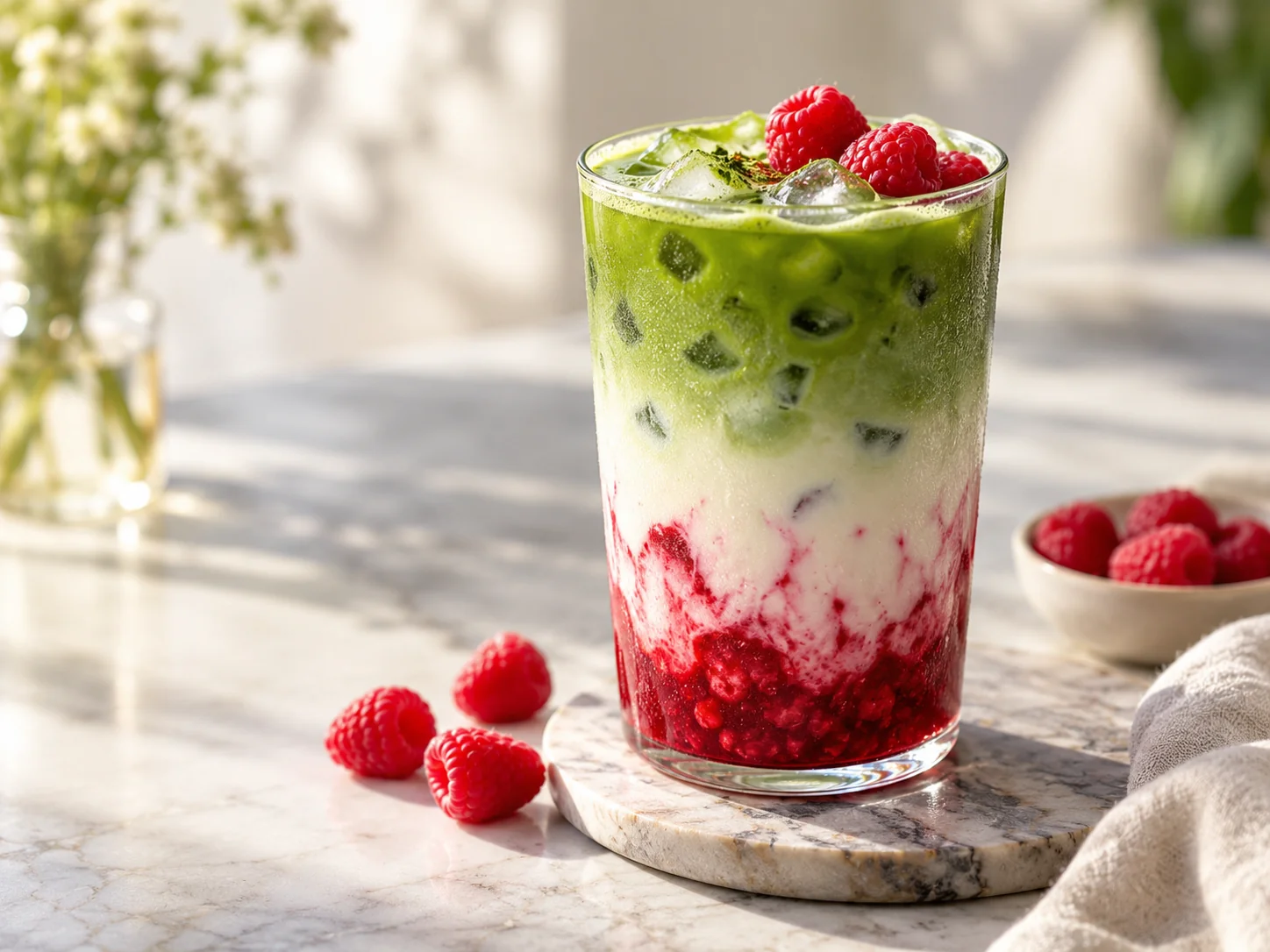
Raspberry, cold milk and matcha create a sweet-tart café drink with strong visual contrast and a more pronounced berry character than a classic matcha latte.
This raspberry matcha latte recipe gives cafés and beverage brands a measured starting formula for developing a layered iced drink while keeping matcha dose, fruit sweetness and commercial cost under control.
The formula below is a café development recipe, not a universal standard. Raspberry purée, syrup, milk and matcha products vary, so approve the final recipe using your actual ingredients and service format.
Raspberry Matcha Latte: Café Starting Recipe
Yield: 1 iced drink
Suggested cup: approximately 450–500 ml
Starting matcha dose: 3 g
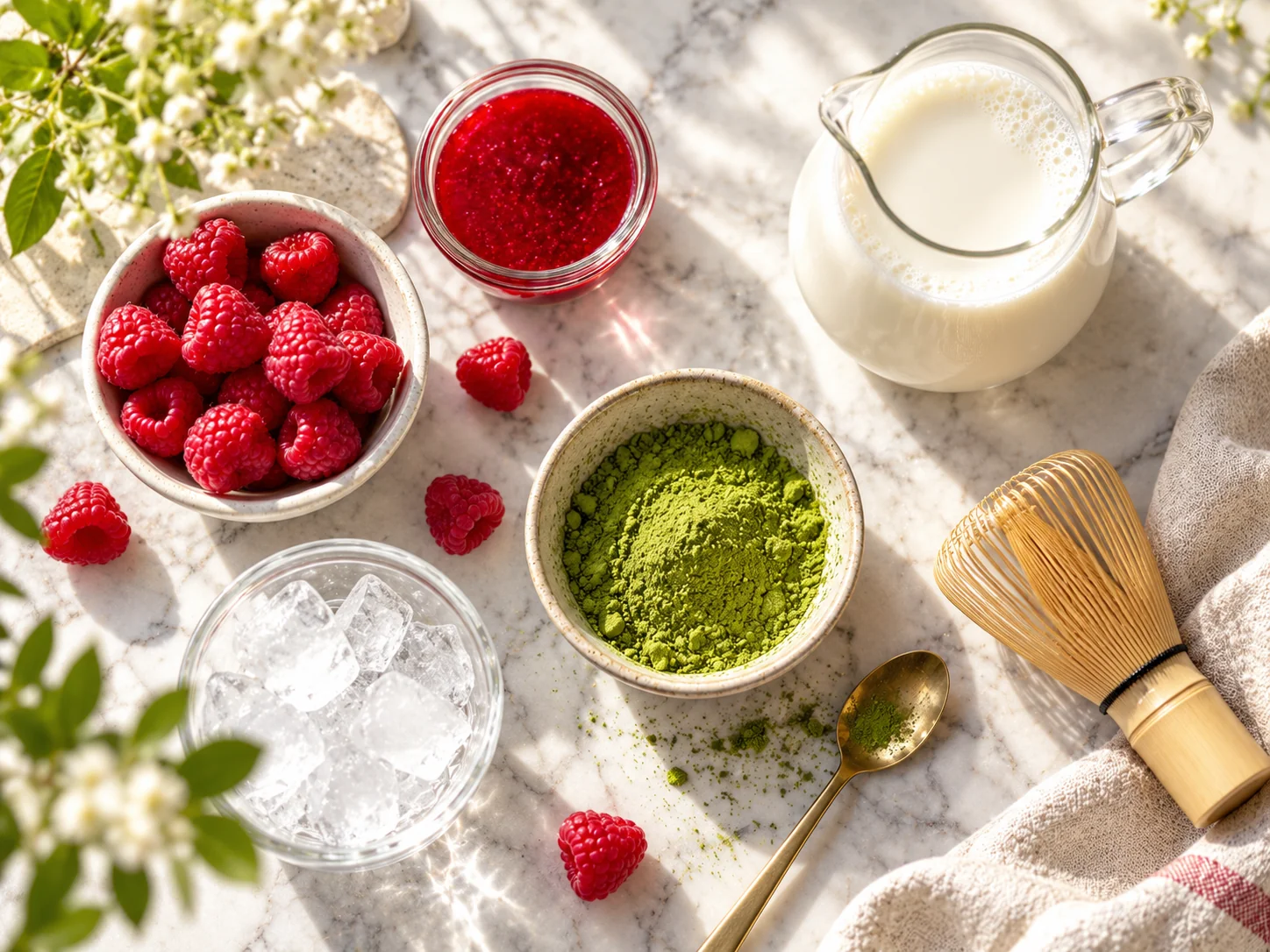
| Ingredient | Starting Amount |
|---|---|
| Unsweetened matcha powder | 3 g |
| Warm water | 40 ml |
| Unsweetened raspberry purée | 35 g |
| Simple syrup | 8–10 ml |
| Cold milk | 160–180 ml |
| Ice | approximately 120 g |
Use water at approximately 70–80°C to prepare the matcha.
If you use a commercial sweetened raspberry sauce or syrup instead of unsweetened purée, reduce or omit the additional simple syrup before tasting.
How to Make an Iced Raspberry Matcha Latte
1. Prepare the raspberry base
Measure 35 g of raspberry purée into the serving glass.
Add 8–10 ml of simple syrup and mix until even.
For a fresh-fruit version, blend raspberries until smooth. Strain the purée if your café wants a cleaner texture and fewer seeds.
Record whether the approved recipe uses fresh purée, frozen fruit or a commercial raspberry product. Changing the fruit source can noticeably change sweetness, acidity and texture.
2. Whisk the matcha
Sift 3 g of matcha into a bowl or preparation vessel.
Add 40 ml of warm water and whisk until smooth and lightly frothy.
Do not use boiling water.
3. Build the fruit layer
Add the raspberry base to the bottom of the glass.
Add ice carefully so the fruit layer remains visible.
4. Add the milk
Pour 160–180 ml of cold milk slowly over the ice.
For a stronger layered appearance, pour gently and avoid stirring at this stage.
5. Finish with matcha
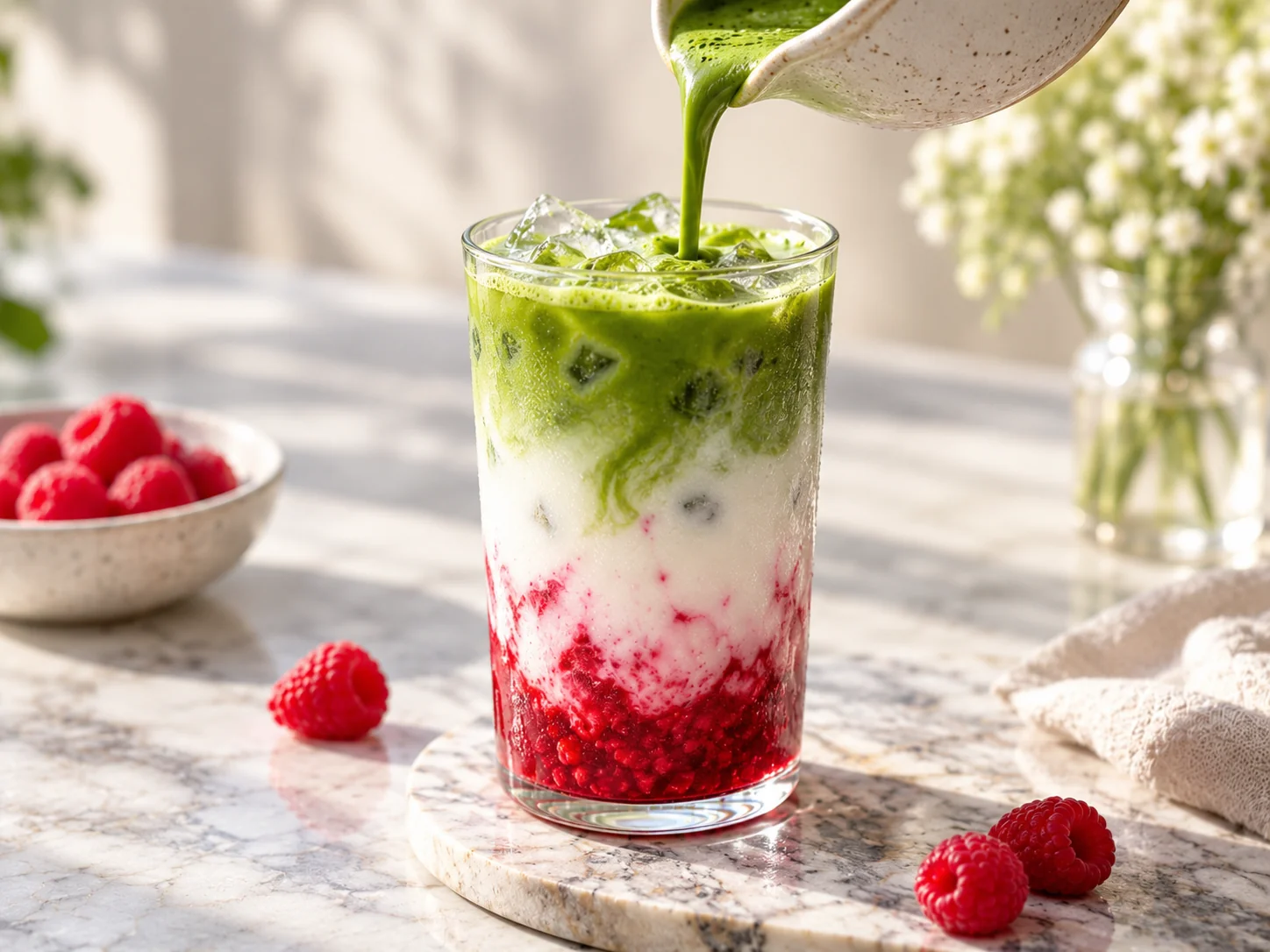
Pour the whisked matcha slowly over the ice.
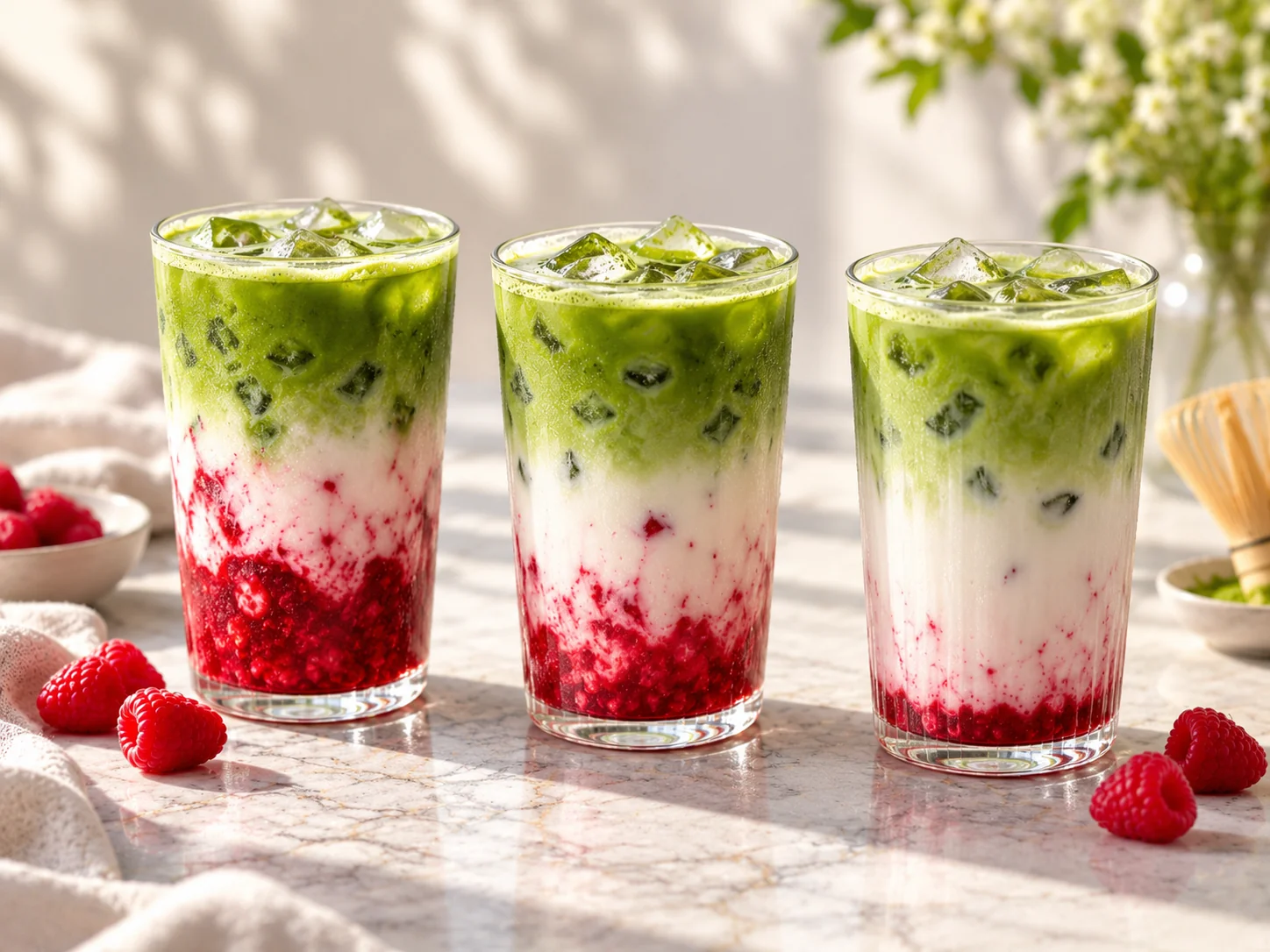
The finished drink should show a raspberry-red base, pale milk center and green matcha layer.
Serve promptly and instruct the customer to stir before drinking.
What Should a Raspberry Matcha Latte Taste Like?
The drink should balance three distinct elements:
Raspberry provides fruit acidity and sweetness.
Milk softens the acidity and provides body.
Matcha should remain recognizable after the fruit and milk are combined.
A successful café recipe should not taste only like sweet raspberry milk with green color on top.
When evaluating the drink, record:
- raspberry intensity
- acidity
- sweetness
- matcha flavor through milk
- bitterness and astringency
- finished color
- body and texture
- aftertaste
- cost per serving
Taste the drink after stirring, not only while the layers are visually separated.
Raspberry vs Strawberry Matcha Latte
Raspberry and strawberry may look like similar menu ideas, but they do not necessarily behave the same way in a recipe.
Raspberry usually brings a sharper tartness and stronger acidity, while strawberry often produces a softer, sweeter fruit profile.
That difference can change:
- required syrup level
- matcha dose
- milk balance
- perceived bitterness
- finished color
- fruit-to-tea balance
Do not simply replace strawberry purée with the same amount of raspberry and assume the finished drink is approved.
Treat it as a separate café recipe.
For a softer fruit profile, see our Strawberry Matcha Latte Recipe for Cafés.
Café Recipe Testing Matrix
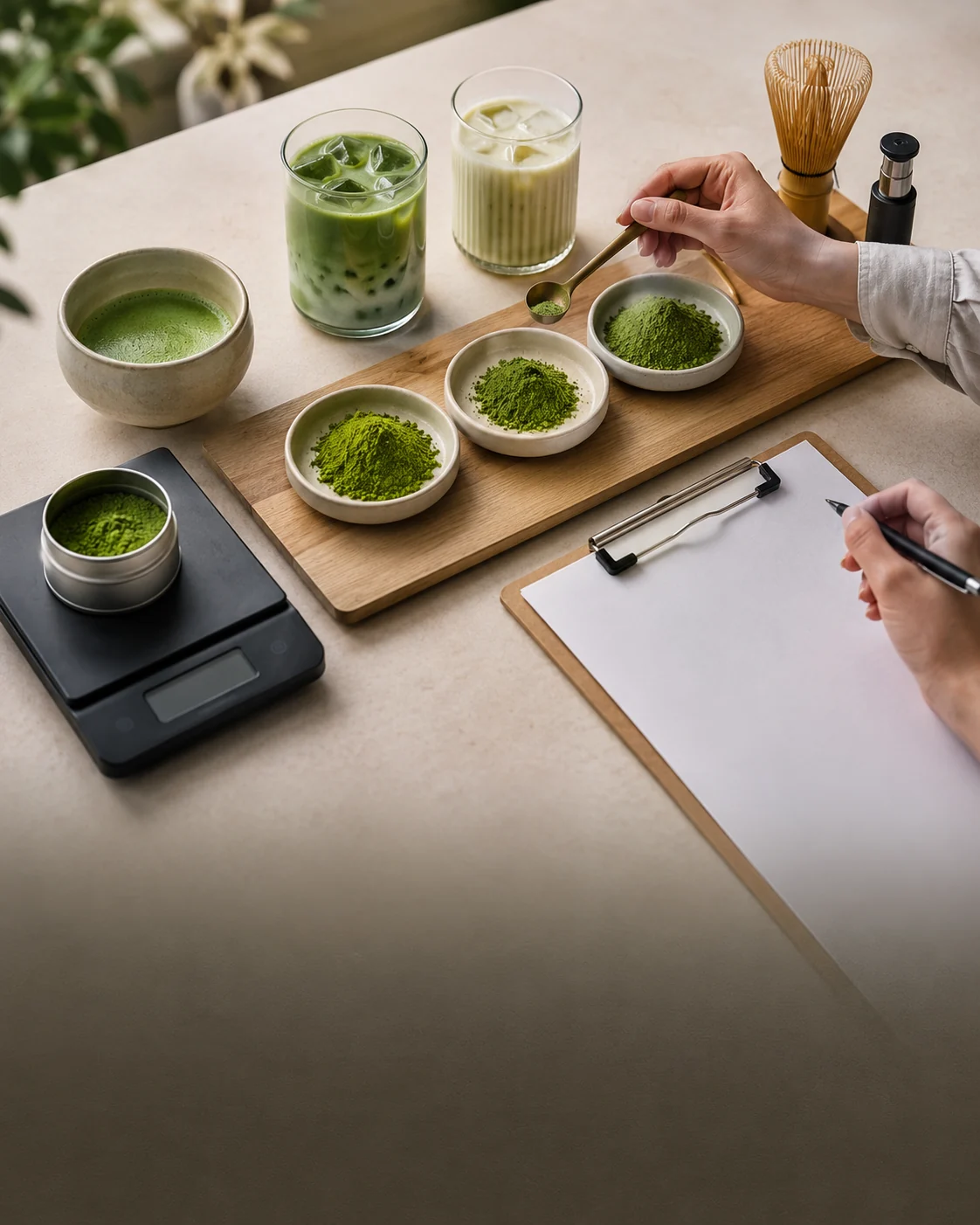
Rather than approving the first formula, compare several versions under the same conditions.
| Test | Matcha | Raspberry Purée | Syrup | What to Evaluate |
|---|---|---|---|---|
| A | 3 g | 30 g | 8 ml | Lighter fruit baseline |
| B | 3 g | 35 g | 8 ml | Balanced starting point |
| C | 3 g | 40 g | 8 ml | Stronger raspberry |
| D | 3 g | 35 g | 12 ml | Sweeter café profile |
Keep the milk, ice, cup size and preparation method unchanged.
Evaluate each version for:
fruit intensity, acidity, sweetness, matcha visibility, bitterness, color and cost.
If raspberry dominates the drink, reduce the fruit before automatically increasing the matcha.
If the acidity is appropriate but the drink tastes too tart, adjust sweetness separately.
Change one variable at a time whenever practical.
How Much Matcha Should a Café Use?
This recipe starts with 3 g of matcha per serving.
That amount is a development point—not a universal rule.
The correct dose depends on:
- cup size
- milk volume
- raspberry concentration
- sweetness
- matcha product
- target tea intensity
- menu price
If 3 g disappears behind the fruit and milk, test a slightly higher dose under the same recipe conditions.
If the tea becomes overly bitter or the cost per serving becomes difficult to support, compare a different matcha profile before simply reducing or increasing ingredients at random.
For a structured dosage method, see:
How Much Matcha Powder Should You Use for a Latte?
A 10-Drink Café Planning Batch
For menu planning, the starting recipe scales approximately as follows:
| Ingredient | One Drink | 10 Drinks |
|---|---|---|
| Matcha powder | 3 g | 30 g |
| Water | 40 ml | 400 ml |
| Raspberry purée | 35 g | 350 g |
| Simple syrup | 8–10 ml | 80–100 ml |
| Milk | 160–180 ml | 1.6–1.8 L |
| Ice | 120 g | 1.2 kg |
These totals are useful for purchasing and service planning.
They are not a recommendation to prepare ten complete drinks or hold a large batch of whisked matcha in advance.
A café may standardize the raspberry base separately and portion it consistently during service.
Prepare the matcha and final drink according to your approved workflow.
Any prepared fruit component should follow appropriate refrigeration, holding and discard procedures.
Do not assign a shelf life to homemade raspberry purée without an appropriate food-safety assessment.
Fresh Raspberry vs Commercial Purée
Both can work, but they create different operational requirements.
Fresh or Frozen Raspberry Purée
Useful when a café wants a more natural fruit texture or house-made positioning.
However, sweetness and acidity may vary by fruit lot.
The café also needs a consistent process for:
washing, blending, straining, portioning, refrigeration and discard.
Commercial Raspberry Purée or Sauce
Often easier to standardize.
Check:
- sugar content
- fruit percentage
- acidity
- viscosity
- serving size
- storage instructions
If the commercial product is already sweetened, adjust the added syrup before finalizing the drink.
The important point is repeatability.
Why Raspberry Works With Matcha
Raspberry contributes both sweetness and acidity.
Matcha contributes vegetal tea character, bitterness and aroma.
Milk softens both ingredients and changes how they are perceived.
That contrast can create a drink that feels brighter than a standard matcha latte.
However, too much fruit can cover the matcha completely.
This is why a café should evaluate the finished drink rather than choosing a matcha based only on dry powder color or a grade label.
Choosing Matcha for a Raspberry Latte
A raspberry matcha latte does not automatically require the most expensive matcha available.
The better question is:
Which matcha remains recognizable in this specific raspberry-and-milk recipe at an acceptable dose and cost?
Compare samples for:
- flavor through milk and fruit
- bitterness
- finished color
- dispersion
- approved dose
- cost per serving
- consistency between lots
A Café / Latte Matcha Profile may work well for regular service.
A Premium Latte Matcha Profile may be useful when stronger tea presence or premium menu positioning is important.
Test both under exactly the same drink conditions.
Calculate the Cost per Serving
A visually attractive drink still needs to work commercially.
Calculate the matcha portion of the recipe with:
price per kilogram ÷ 1,000 × grams used per serving
Then add the actual cost of:
- raspberry
- syrup
- milk
- ice
- garnish
- cup
- lid
- straw or serviceware
- normal preparation losses
If one matcha requires 4 g to remain noticeable while another performs well at 3 g, kilogram price alone may not show which recipe has the better commercial cost.
Use the approved drink formula when comparing.
Matcha Cost Per Serving Calculator →
Barista Notes for Consistent Results
Standardize the raspberry base
Record the exact fruit product, purée amount and syrup amount.
Do not switch between sweetened sauce and unsweetened purée without adjusting the recipe.
Control the layers
A thicker fruit base, cold milk, sufficient ice and a slow pour make separation easier.
The layers are visual—not the final tasting format.
Test every milk option
Dairy, oat and other plant-based milks can change sweetness, body and color.
Approve them separately if your menu offers several choices.
Use weight during development
A scale is more useful than visual estimates when building a repeatable commercial recipe.
After approval, validate pumps, scoops or other service tools against the final specification.
Change one variable at a time
If the drink is too tart, adjust sweetness.
If matcha is too weak, adjust matcha dose or test another profile.
If the raspberry is overpowering, reduce fruit.
Avoid changing several ingredients simultaneously.
Menu Positioning Ideas
A raspberry matcha latte can work as:
- a summer signature drink
- a spring seasonal latte
- a fruit matcha series
- a premium iced beverage
- a café social-media feature
- a berry alternative to strawberry matcha
A simple customer-facing menu description could be:
Raspberry Matcha Latte
Matcha layered with milk and a sweet-tart raspberry base.
Avoid unsupported health or nutritional claims.
Frequently Asked Questions
How much raspberry purée should I use?
This development formula starts at approximately 35 g of unsweetened raspberry purée per drink. The correct amount depends on fruit concentration, sweetness, acidity, cup size and the target menu profile.
Can cafés use raspberry syrup instead of purée?
Yes. Commercial raspberry syrup can simplify service, but its sweetness and flavor intensity differ from purée. Rebuild the recipe around the actual syrup rather than replacing the purée one-for-one.
Can I use frozen raspberries?
Yes, if they are handled according to appropriate food-safety procedures and processed into a consistent fruit base. Recipe performance should be validated using the actual fruit product the café intends to purchase regularly.
What matcha works best with raspberry?
Choose matcha according to finished-drink performance. It should remain recognizable through the milk and fruit at an acceptable dose, bitterness level and cost per serving.
Why are the layers mixing?
Thin fruit purée, insufficient ice or fast pouring can disturb the layers. Use a cold, sufficiently thick fruit base and pour the milk and matcha slowly.
Can I prepare the raspberry matcha latte in advance?
For best visual quality and ice control, assemble the finished drink during service. Components may be prepared separately according to validated food-safety, refrigeration and holding procedures.
Is this recipe suitable for a commercial café?
It is a starting development formula. Test your actual matcha, raspberry product, milk, cup, ice and workflow before approving the final commercial recipe.
Develop Your Café’s Raspberry Matcha Recipe
A strong raspberry matcha latte should balance fruit acidity, sweetness, milk and tea rather than simply create attractive layers.
Test the recipe under consistent conditions, document the approved formula and calculate the finished cost before scaling it across the menu.
Matcha Origin Co. supports cafés and beverage brands with application-focused matcha profiles, evaluation samples and commercial supply.
Explore another café recipe:
Strawberry Matcha Latte Recipe for Cafés
Honey Lavender Matcha Latte Recipe for Cafés
Salted Vanilla Matcha Latte Recipe for Cafés