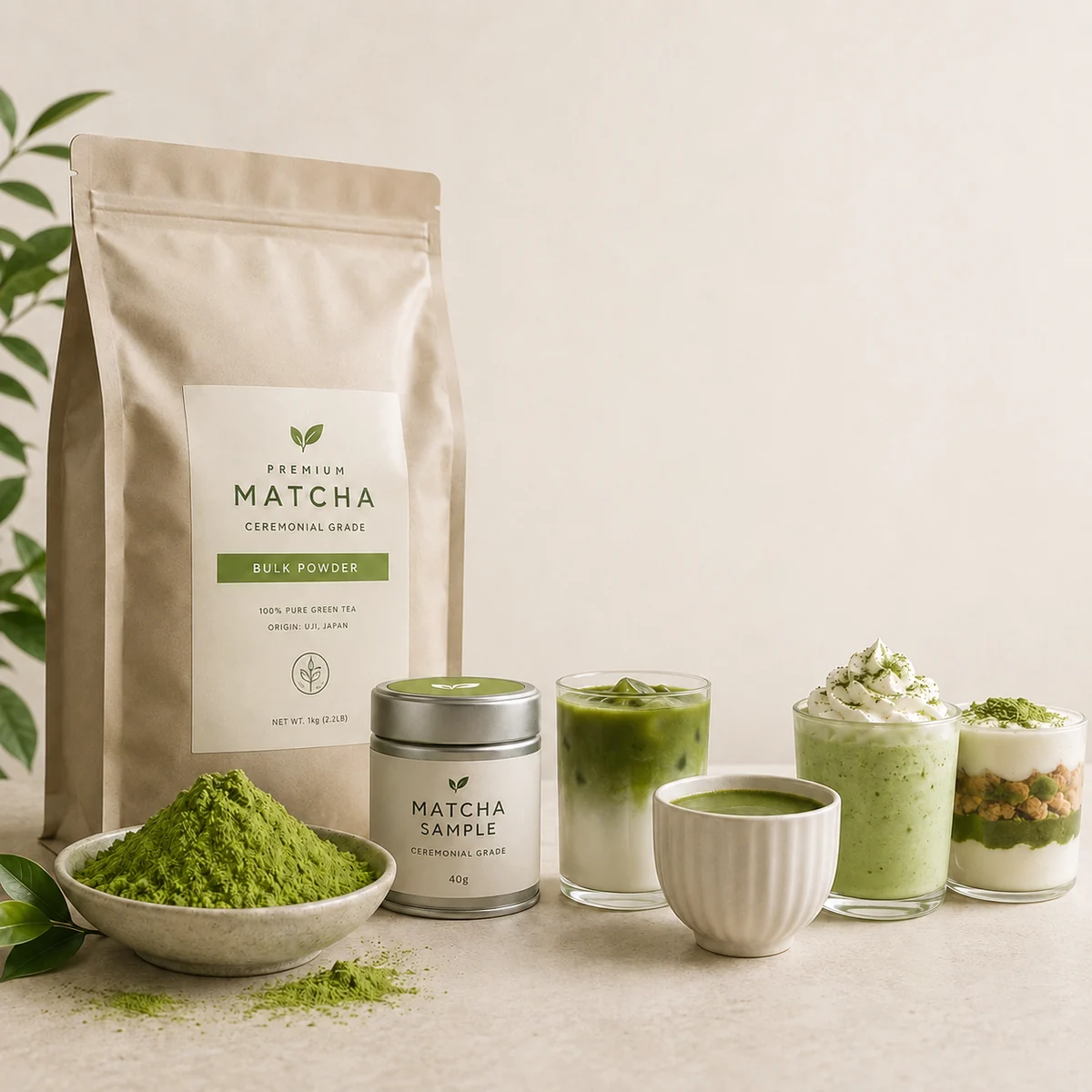
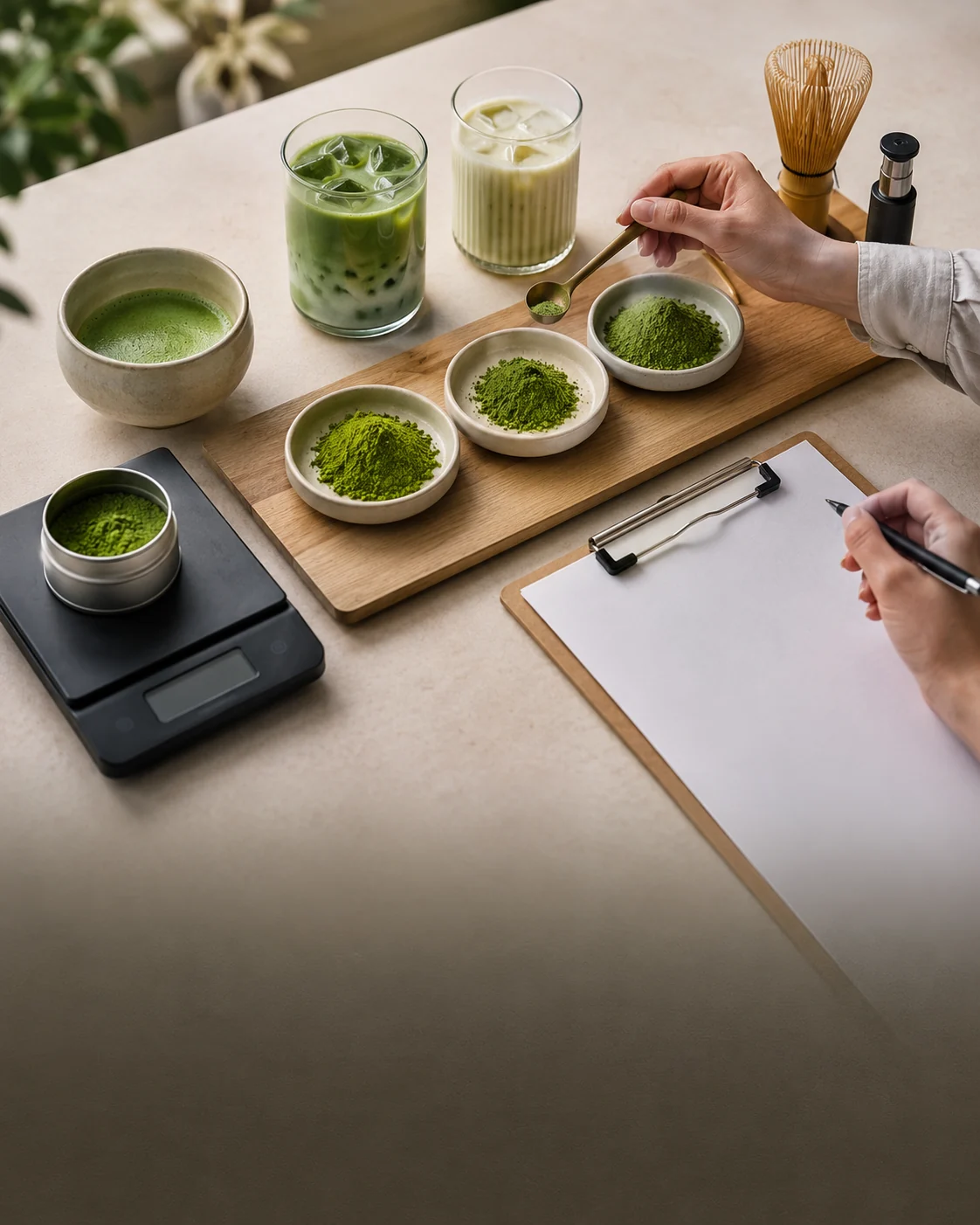
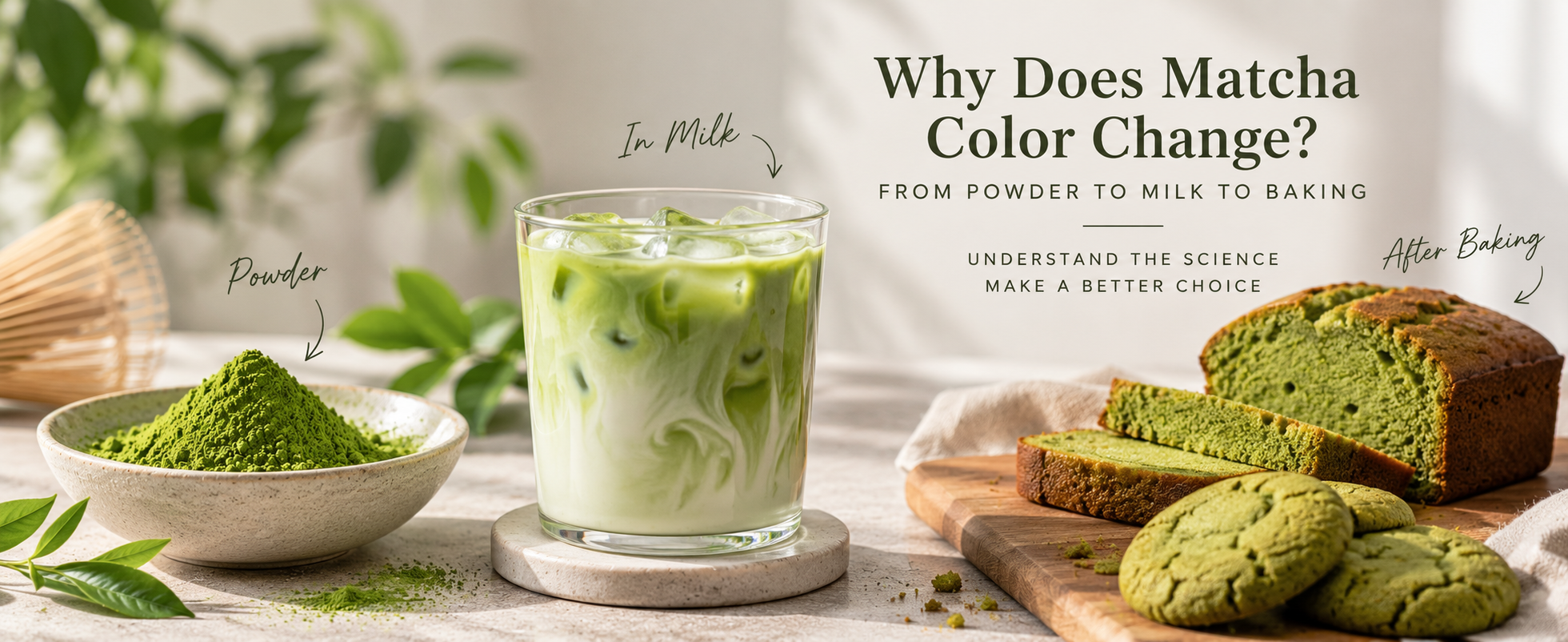
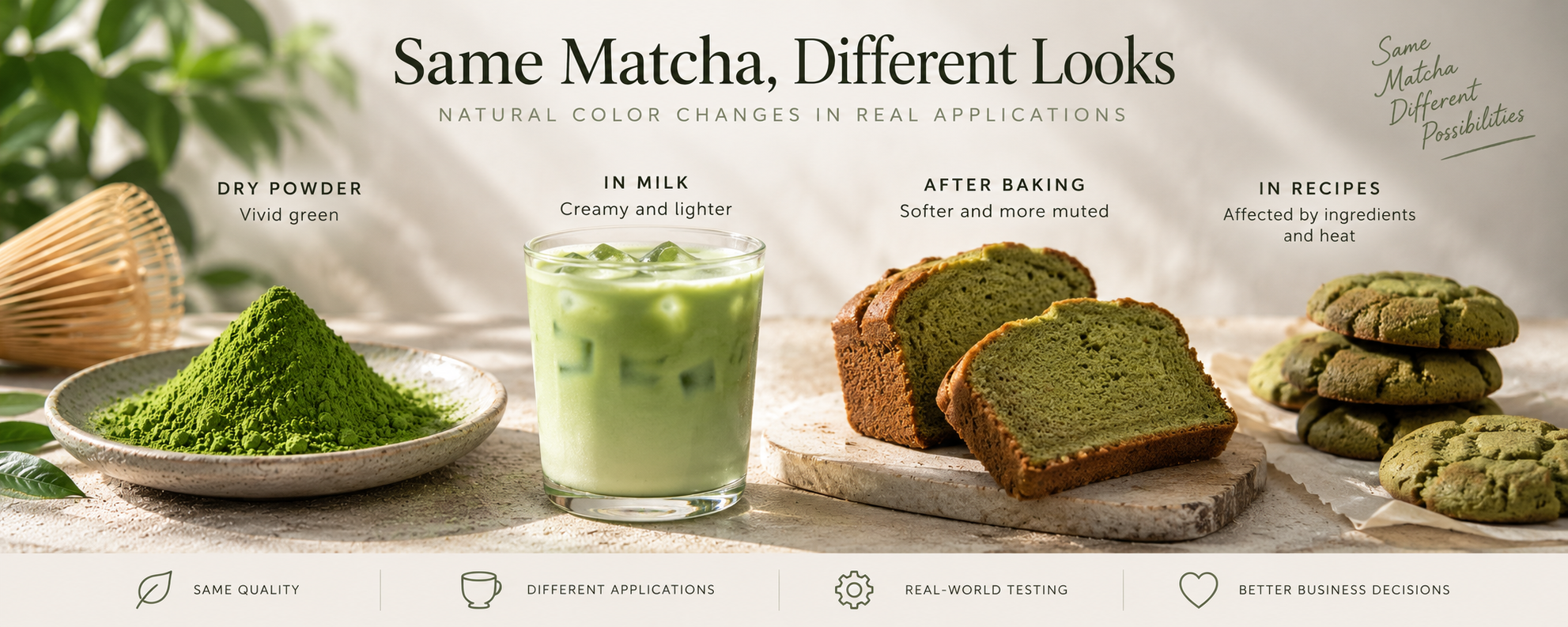
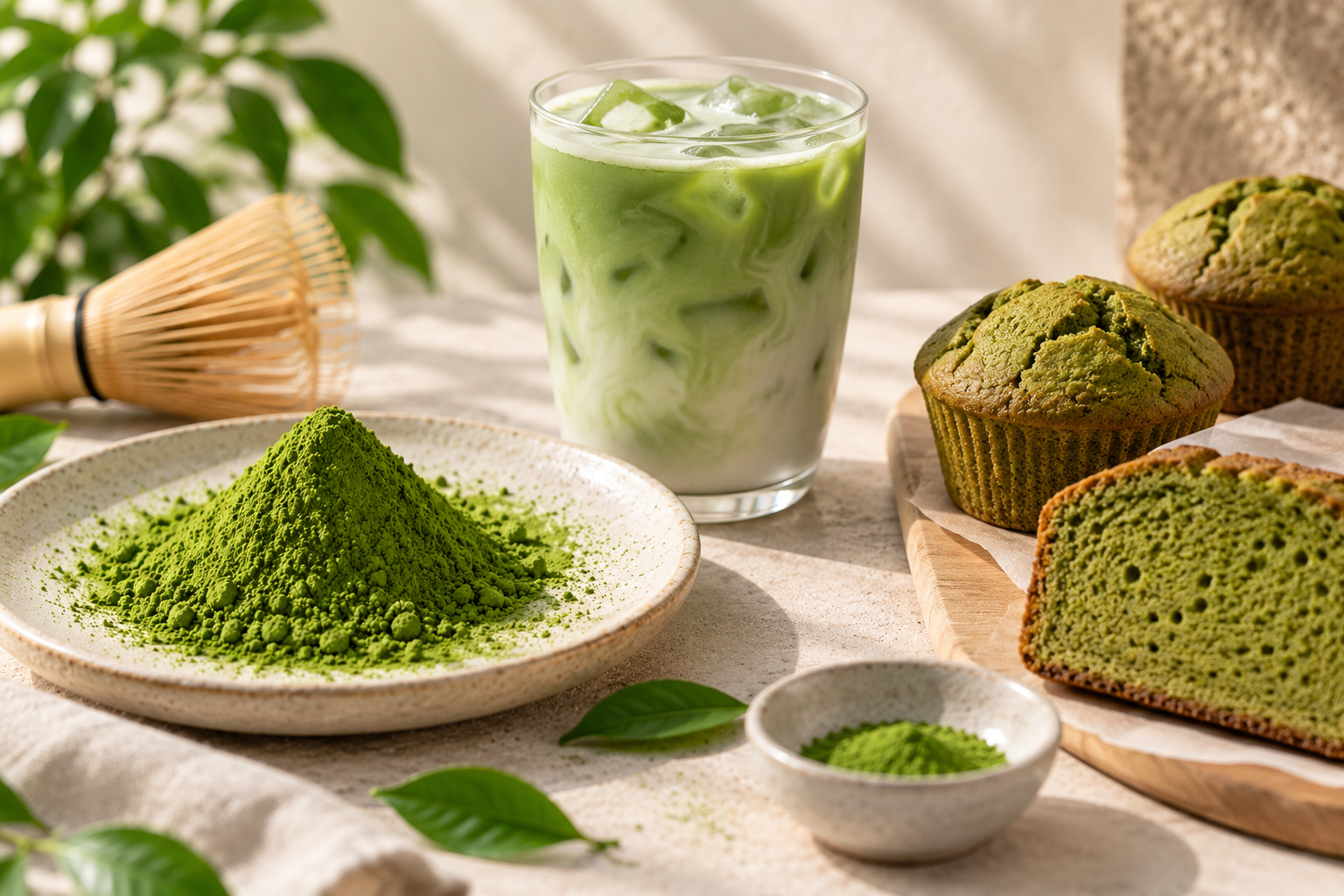
A matcha sample can look vivid green in the pouch and become much lighter in milk or more muted after baking. These matcha color changes do not automatically mean the powder is poor quality. Dilution, milk opacity, dose, heat, pH, oxygen, other ingredients and processing time all affect what the finished product looks like.
The Short Answer
Dry-powder color and finished-product color measure different things. Milk makes green look lighter, baking exposes pigments to heat and browning, and acidic ingredients can shift chlorophyll toward duller or olive tones. B2B buyers should therefore compare matcha in the exact latte, bakery formula or food process they plan to sell–not from supplier photos or dry powder alone.
1. Dry Powder Color and Finished Product Color Are Different
Dry matcha is highly concentrated. You are looking directly at finely ground tea particles without milk, flour, sugar, water or other ingredients changing the visual field. Once the powder enters a recipe, the visible green becomes part of a larger food matrix.
That is why the same matcha may look softer in a latte, cake batter, cookie dough, mousse, ice cream or bottled beverage. Sometimes the largest visual difference is simply dilution. Commercial evaluation should record dry-powder appearance and finished-application appearance as two separate observations.
2. Why Matcha Color Looks Lighter in Milk
Milk does not merely add volume. Its opaque white appearance changes how green is perceived. A concentrated matcha shot can look vivid, while the same shot dispersed through 150-250 ml of milk becomes pale, creamy or less saturated.
Dairy milk, oat milk, almond milk and other alternatives also differ in base color and opacity. If a cafe serves oat milk, the sample should be evaluated in that exact oat milk. If the signature drink includes vanilla syrup, cold foam or fruit, those ingredients belong in the test too. See Matcha for Lattes & Cafe Drinks for application-specific selection.
3. Dose and Cup Size Change Latte Color
A 2 g dose will not look identical to a 4 g dose, even when the same powder is used. Three grams in a 240 ml drink can also look much stronger than three grams in a 450 ml iced drink. A fair comparison therefore requires a standardized recipe.
Swipe to view the full table ->
| Variable | Keep constant | Why it matters |
|---|---|---|
| Matcha dose | Same grams per test | Changes green intensity and flavor |
| Milk | Same brand and type | Changes opacity and base color |
| Milk and water volume | Same quantity | Controls dilution |
| Ice and sweetener | Same quantity | Controls total build and visual clarity |
| Cup size | Same vessel | Prevents background and depth differences |
| Preparation | Same workflow | Controls dispersion and foam |
4. Flavors and Toppings Change the Visual Result
Commercial drinks often contain strawberry puree, vanilla syrup, banana cream, citrus, coconut, chocolate or cold foam. These additions bring their own colors and opacity. A bright matcha may appear less saturated beneath a thick topping, while fruit can create contrast or muddy the drink depending on the build.
For cafes, the customer-facing menu item is the correct place to judge performance. An isolated matcha shot is useful for diagnosis, but it is not the product being sold.
5. Heat Is a Major Reason Matcha Looks Duller After Baking
Baking creates a harsher environment than a cold latte. Matcha in cookies, cake or bread may be exposed to elevated temperatures for 20, 40 or 60 minutes. Chlorophyll pigments contribute strongly to the green appearance, and heat can reduce their visual stability.
A controlled food-science study observed chlorophyll degradation and greenness loss during heating, while a matcha-biscuit study reported that high-temperature processing could make green-tea color less green and more yellow. These findings support a practical conclusion: baking results must be tested in the actual recipe and process, not predicted from powder color alone.
Research context: chlorophyll degradation during heating and matcha-enriched biscuit processing and sensory evaluation.
6. Acidic Ingredients Can Shift Green Toward Olive
Recipe chemistry matters. In chlorophyll-containing foods, acidic conditions can promote changes that reduce vivid green appearance. Lemon juice, yogurt, cultured dairy and some fruit preparations may therefore contribute to a duller or more olive result.
This does not mean acidic recipes should be avoided. It means a plain cookie and a lemon-matcha cake are separate application tests. Food-science literature identifies acid, heat, oxygen and light as important chlorophyll stability factors, so the full formulation–not one ingredient in isolation–should guide development.
Research context: a review of chlorophyll degradation in processed foods describes acid-mediated conversion to duller pigment forms.
7. Recipe pH Can Affect Color–but It Is Not a Free Fix
Alkaline conditions can sometimes preserve a greener visual impression better than strongly acidic conditions. Commercial bakers should not respond by adding excessive baking soda solely for color. Changing pH can also affect flavor, texture, rise, browning and aftertaste.
The sound approach is to develop a balanced formula first, then compare matcha samples under that same formula. A brighter crumb is not a win if the product develops an alkaline taste or an unsuitable texture.
8. Browning Reactions Compete With Green
Matcha is not the only component changing in the oven. Sugar, flour, proteins and fats contribute to surface browning. Golden, toasted and brown tones can visually compete with the green crumb, especially on cookies and loaf crusts.
Inspect both surface color and interior color. A loaf may have a browned crust while retaining a much greener center. Judging only the outside can therefore give an incomplete answer.
9. Processing Time Changes the Result
A short-baked cookie and a long-baked loaf should not be expected to retain identical color. Longer heat exposure gives more opportunity for pigment and recipe changes. Application testing must reflect the real production process.
10. Storage Before Use Also Matters
Light, oxygen, moisture and heat can affect matcha during storage. A sample that has already been poorly handled may begin with less desirable color and aroma, while a good matcha can deteriorate after opening if it is repeatedly exposed.
Buyers should evaluate both initial sample quality and the planned commercial handling routine. Review practical recommendations in Packaging & Storage.
11. Supplier Photos Are Not Controlled Color Tests
Daylight, cool LEDs, camera exposure, white balance, background, editing and monitor settings can make the same powder look dramatically different. Supplier photography is useful for reference, but it is not a controlled comparison.
When samples arrive, place them in the same containers, use the same lighting and photograph them with the same camera settings. Then follow the full matcha sample comparison method.
12. Brightest Green Does Not Always Mean Best Commercial Fit
Imagine Sample A creates the brightest latte, while Sample B gives stronger matcha flavor, smoother mouthfeel and a more practical cost per serving. There is no universal winner. The correct weighting depends on the product and customer promise.
A highly visual cafe drink may give color more weight. Straight whisking may prioritize aroma, texture and finish. A bakery may value flavor retention and interior color after heat. Color matters, but it is one commercial criterion rather than the entire decision.
13. Latte Buyers Should Judge Color in Milk
For cafe applications, evaluate finished color together with flavor presence, dispersion and cost per serving. A matcha that performs well across all four can be a stronger commercial option than the visually brightest powder.
Swipe to view the full table ->
| Evaluation | Decision question |
|---|---|
| Finished color | Is the latte visually attractive in the real cup? |
| Flavor presence | Can customers still identify matcha after milk and sweetener? |
| Dispersion | Is the drink smooth and repeatable across staff? |
| Cost per serving | Is the dose commercially practical? |
Use the Matcha Profile Directory to shortlist Cafe / Latte and Premium Latte options before testing.
14. Bakeries Should Judge Color After Cooling
Do not approve a matcha from raw batter alone or from the first minute after the product leaves the oven. Allow the item to cool, then inspect the crust, interior, green intensity, flavor, bitterness, moisture and customer-facing appearance.
For baking and desserts, a Culinary Matcha Profile is a logical starting point, but it still needs validation in the real formula. See Matcha for Baking & Desserts.
15. Evaluate Color Together With Flavor and Cost
Optimizing color too aggressively can push dose and bitterness in the wrong direction. Sample A may produce the brightest cake only at a high dosage, while Sample B produces a slightly softer green with better flavor and a more practical cost.
The goal is not maximum green. It is the right combination of color, flavor, texture and cost in the finished product.
16. A Simple B2B Matcha Color Testing Method
Use the same formula for every candidate and change only the matcha sample. For cafe testing, make identical drinks. For bakery testing, divide one base batter into equal portions. Photograph the finished products under identical lighting and record both visual and sensory results.
17. When Color Differences Should Concern a Buyer
Some natural variation is expected. A large, unexplained change between an approved product and a later commercial batch deserves investigation when the same formulation and process now produce a noticeably different result.
Review product specifications, batch identity, storage history, supplier communication and repeat application tests together. The Batch Traceability guide explains how records support that investigation.
18. Agricultural Ingredients Are Not Paint Swatches
Matcha comes from tea leaves. It is an agricultural ingredient, not an industrial pigment manufactured to one exact RGB value. Controlled variation can occur between harvests or lots without making the product unsuitable.
A commercial sourcing program should establish an acceptable range based on sensory quality, relevant specifications and finished-application performance. The target is reliable suitability for the buyer’s product–not photographic identity under every condition.
19. How Matcha Origin Co. Approaches Color Evaluation
We recommend testing matcha according to intended use. Cafe buyers test in the actual milk and drink build. Bakeries test after mixing, heating and cooling. Food businesses use the real formulation and process. Straight-whisking buyers evaluate color alongside aroma, texture, bitterness, umami and finish.
The correct profile is the one that performs well in the product being sold–not simply the powder that photographs brightest.
Frequently Asked Questions
Why does matcha become pale green in milk?
Milk dilutes matcha and its white opacity reduces the visible saturation of green. Matcha dose, milk type, milk volume, ice and cup size can all change the result. Compare samples in the exact recipe and serving format you plan to sell.
Why does matcha turn brown when baked?
Heat, recipe pH and normal browning reactions can all shift a baked product toward muted, olive or brown-green tones. The crust may look darker than the interior. Judge the cooled finished product and compare samples under identical baking conditions.
Does olive matcha always mean poor quality?
No. Context matters. Dry powder that already looks degraded may warrant review, but olive tones in a finished bake can result from heat, acidity and other recipe conditions. Quality should be assessed with sensory performance, documentation and consistency–not color alone.
Which matcha stays brightest in milk?
The answer should come from application testing, not supplier photography. Shortlist relevant latte profiles, then use the same dose, milk, volume, sweetener and preparation method. The strongest commercial choice should also deliver suitable flavor, texture and cost per serving.
How can I keep baked matcha greener?
Control the formula, avoid unnecessary overbaking and compare suitable matcha profiles under the same processing conditions. Do not radically change recipe pH solely for color without testing the effect on flavor, rise, browning and texture.
Should I choose matcha based on color alone?
No. B2B buyers should evaluate color alongside flavor, aroma, texture, application performance, required dosage, cost, consistency and supplier support. The brightest dry powder is not automatically the best matcha for a latte, bakery product or food formulation.
Evaluate Matcha Where It Actually Matters
A bright dry powder can be a positive signal, but customers experience the finished latte, cookie, cake, dessert or beverage. Choose matcha based on how its color, flavor and cost perform in that final application.
Leave a Reply