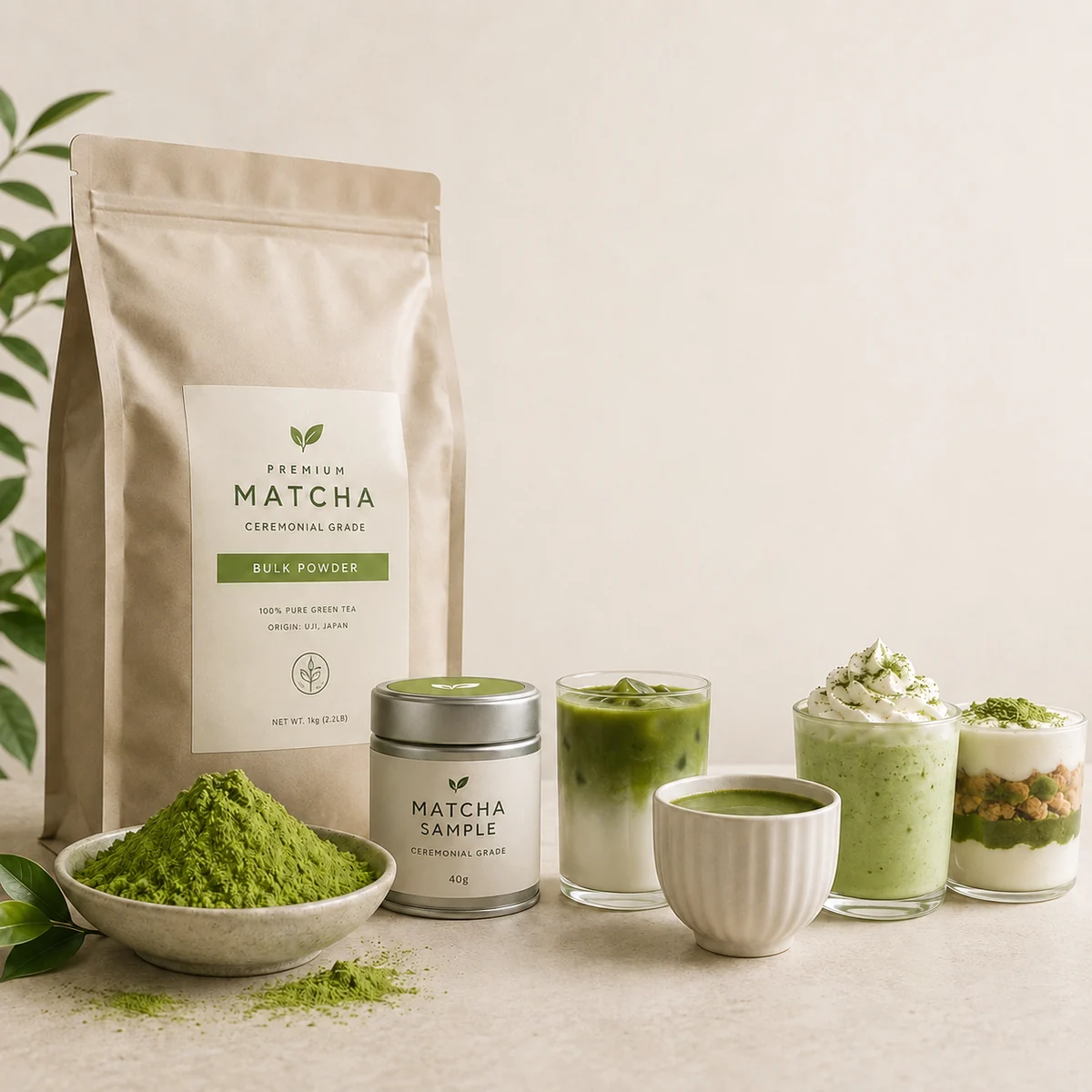
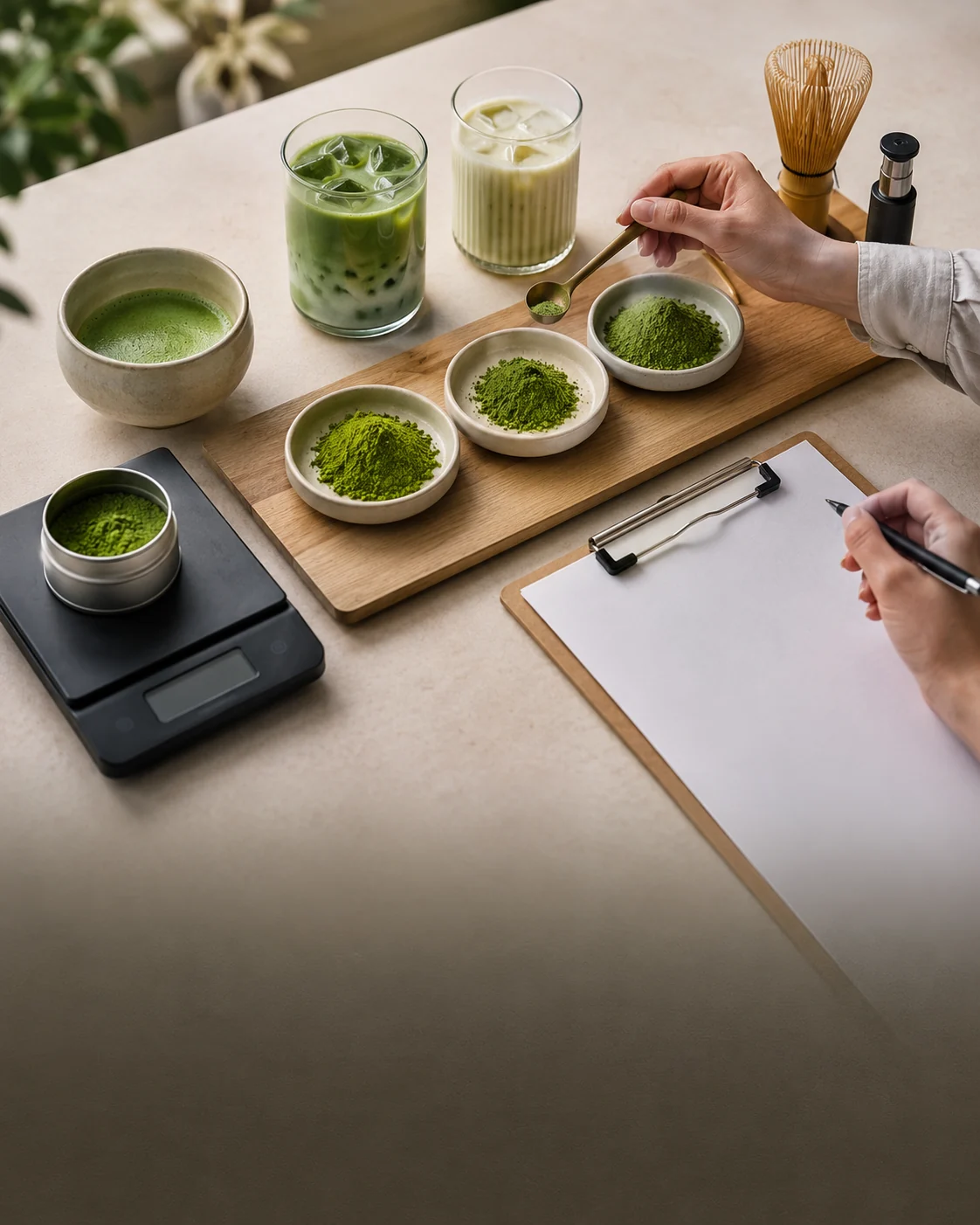
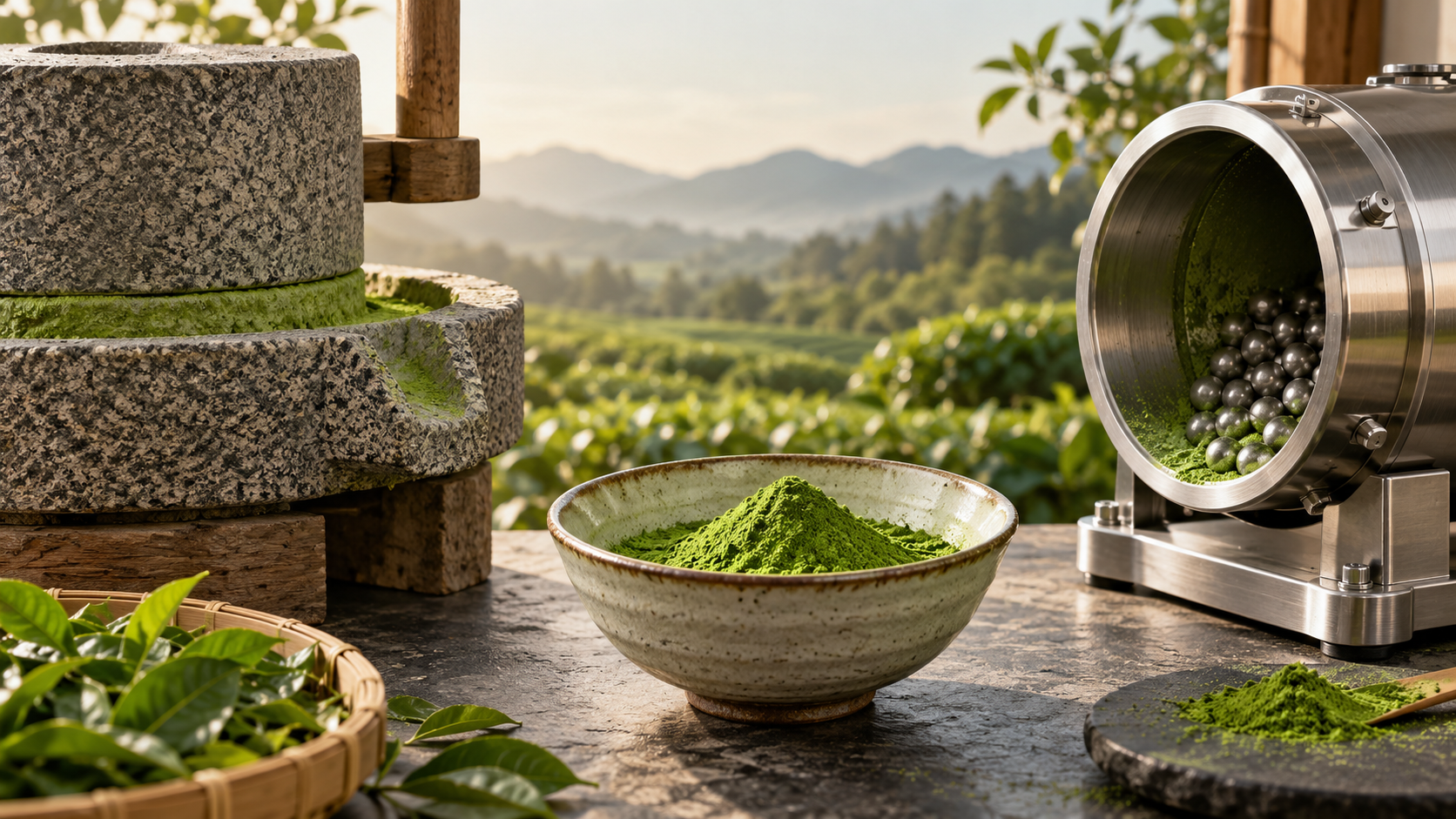
Stone milling and ball milling can both produce fine matcha powder, but they are not interchangeable marketing labels. They are processing choices with different implications for throughput, particle-size distribution, heat management, powder behavior and application fit.
The Short Answer
Mill for the application, not for the marketing label. Stone milling is valued for traditional process control and low-throughput fine grinding. Ball milling can offer controlled, scalable size reduction. Neither method can replace good leaf material, sound process control or finished-product testing.
A stone mill cannot rescue poor raw material, and a ball mill does not automatically make good raw material inferior.
In This Guide
Start With the Leaf Material, Not the Mill
Milling is the final size-reduction stage in a much longer production chain. Before powder reaches a mill, cultivation, harvest, fixation, drying, refining, storage and raw-material selection have already shaped its color, aroma and taste. Traditional Japanese production mills refined tencha, while commercial specifications and terminology can vary by origin and producer.
That is why a buyer should first confirm what material enters the mill and how it was processed. Our matcha production process guide explains the stages that precede fine grinding.

What Is Stone-Milled Matcha?
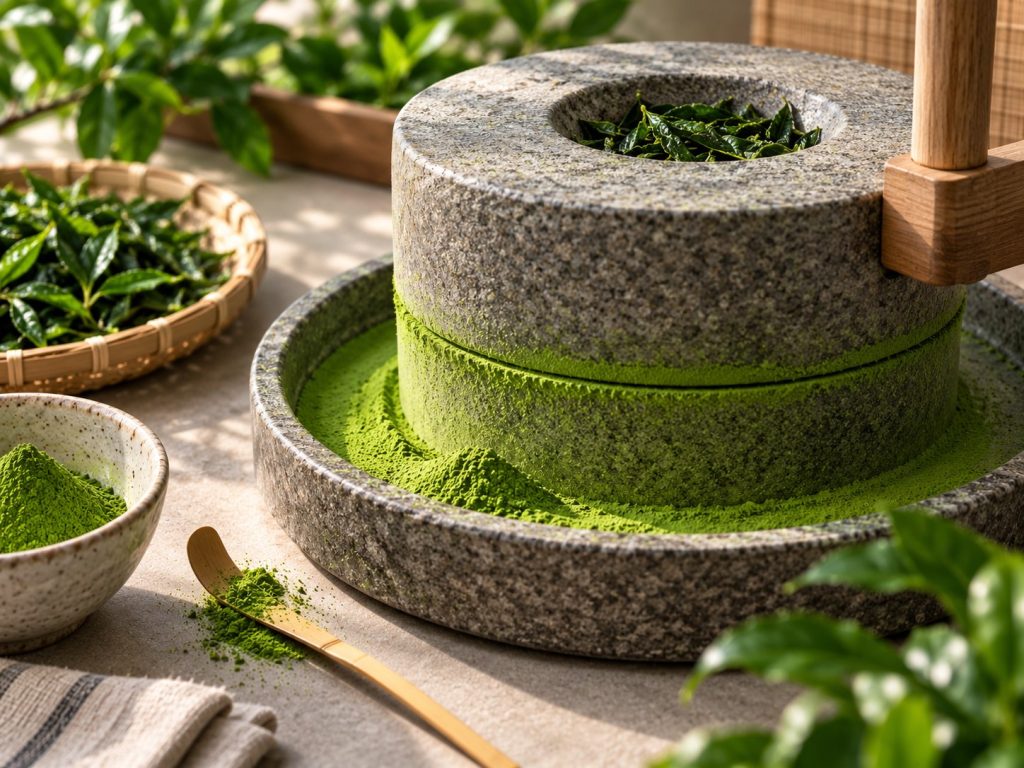
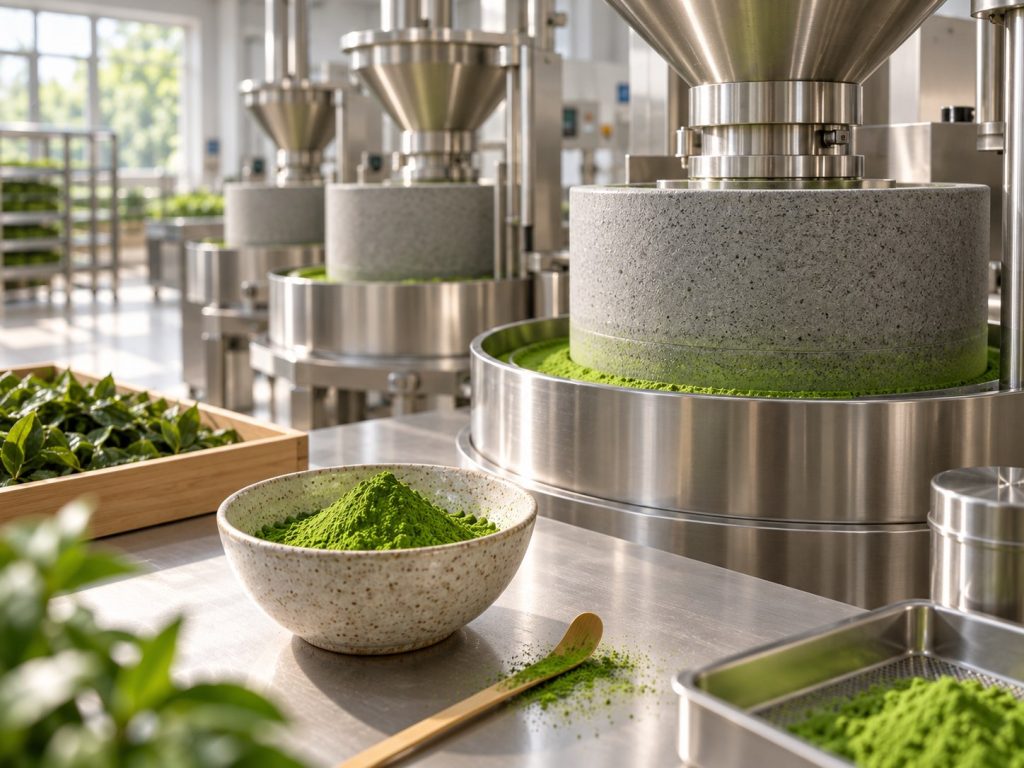
Stone-ground matcha is produced by feeding refined tea material between paired grinding stones. Traditional granite mills rotate slowly and produce fine powder at relatively low throughput. The controlled feed and slow action are intended to limit excessive heat buildup while creating a smooth powder.
Stone milling is closely associated with traditional matcha production, but the phrase stone-milled does not disclose leaf quality, freshness, particle-size distribution, storage conditions or batch consistency. It describes one process step—not the whole product.
What Is Ball-Milled Matcha?
A ball mill uses a rotating or agitated chamber containing grinding media. Contact between the media and tea material reduces particle size. Equipment design, rotational speed, milling time, media size, loading ratio and temperature control all influence the result.
Ball milling can support greater throughput and repeatable industrial processing, but “ball-milled” is not one fixed specification. Research shows that changing operating parameters changes the mechanical and physical properties of the powder. Buyers therefore need actual data from the selected product, not assumptions based on the mill name.
Stone Milling vs Ball Milling at a Glance
| Comparison point | Stone milling | Ball milling | Buyer implication |
|---|---|---|---|
| Process | Slow feed between grinding stones | Grinding media inside a controlled chamber | Ask for the selected product’s actual specification |
| Throughput | Typically lower | Typically higher and easier to scale | May affect capacity, lead time and cost |
| Heat control | Slow operation can limit heat buildup | Depends on time, speed, load and cooling | Ask how temperature is monitored |
| Particle profile | Fine powder with method-specific distribution | Adjustable through equipment and parameters | Review distribution data, not one adjective |
| Best-known fit | Traditional and premium straight-whisking contexts | Scalable beverage, bakery and manufacturing programs | Validate in the real application |
| Main risk | Paying for process prestige without application benefit | Assuming every ball-milled powder performs alike | Compare samples and evidence |
Particle Size: D10, D50 and D90 Matter More Than “Ultra-Fine”
Particle size affects how a powder feels, disperses and moves through a process. A supplier may report a median size such as D50: half of the measured particle population is smaller and half is larger under the stated test method. D10 and D90 help describe the fine and coarse ends of the distribution.
- D10: the size below which 10% of the measured particles fall.
- D50: the median particle size.
- D90: the size below which 90% of the measured particles fall.
A single D50 number can hide a broad tail of coarse particles, and results can differ by measurement method and sample preparation. Ask for the test method, distribution data and batch context when particle size is commercially important.
Finer is not automatically better. The most useful particle profile is the one that delivers the required mouthfeel, dispersion, flow and process performance at an acceptable dose and cost.
Learn how D50 and D90 affect commercial matcha →
How Milling Method Relates to Application
Straight Whisking
Aroma, finish and mouthfeel are exposed. Traditional process may carry customer value, but sensory performance should still decide.
Lattes & Café Drinks
Dispersion, tea presence, color and speed of service matter after milk, sweetener and ice are added.
Baking & Desserts
Finished color, flavor retention, dose and cost-in-use matter more than dry-powder prestige.
Food Manufacturing
Flow, dosing, dust, mixing order, equipment compatibility and repeat supply become central.
Straight Whisking: Texture Is Only One Part of the Cup
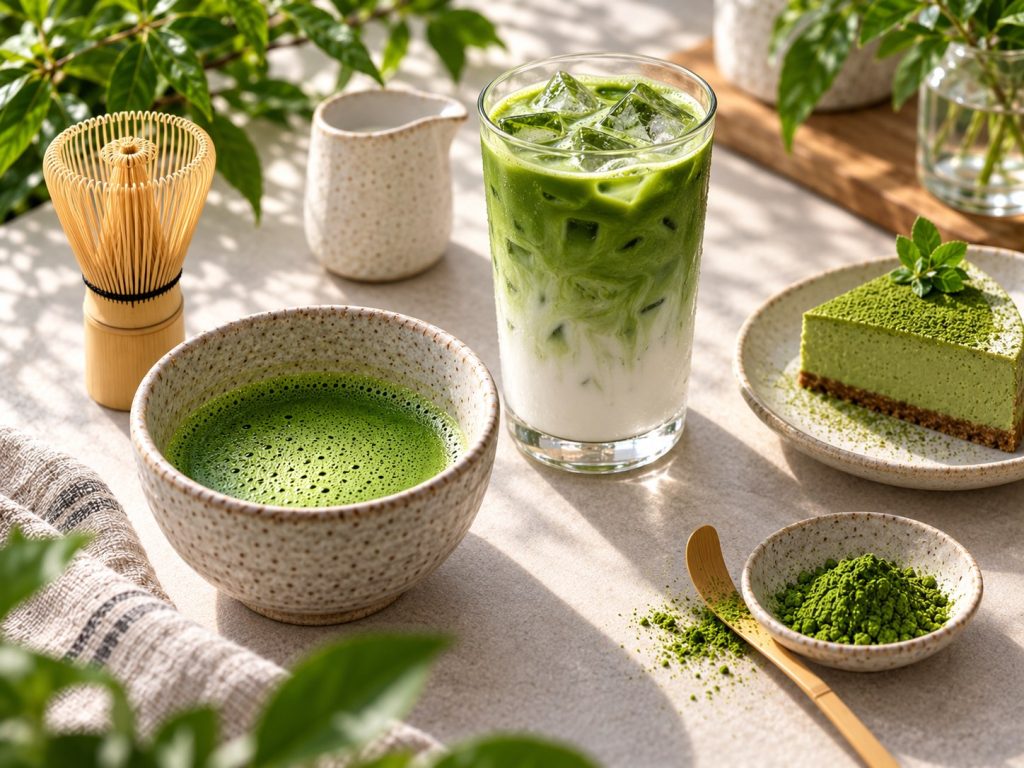
For straight whisking, a buyer experiences the powder with little masking. A fine, controlled particle profile can support a smoother mouthfeel, but aroma, bitterness, astringency, umami and finish also depend on the raw material and earlier processing. Stone milling may be relevant to a traditional or premium service story; it should still be confirmed by blind sensory testing.
Cafés: Test the Complete Recipe and Service Method
In café drinks, milk, syrup and ice can change perceived intensity and color. Fine powder does not guarantee easy service: sifting, pre-slurry preparation, blender use, holding time and staff technique can all affect clumping and sediment. Compare candidate powders at the same dose using the actual recipe and equipment.
Baking: Judge the Product After Heat
Baking introduces flour, sugar, fat, moisture, pH and heat. Those variables can dominate what the customer sees and tastes. A bakery should compare the final cake, cookie or filling after normal processing and storage—not pay more for a milling story that disappears in the recipe.
Powder Flow and Production Handling
Very fine cohesive powders may not flow freely. Electrostatic behavior, moisture, particle shape and size distribution can affect feeding, dust and packing. One Japanese study comparing milling methods found method-specific differences in charge and flowability; its result is useful evidence that powder handling should be measured, not a universal ranking of all stone and ball mills.
Manufacturers should request relevant flow or bulk-density information when automated dosing matters, then confirm behavior on their own equipment.
Heat: Ask About Control, Not Assumptions
Grinding converts mechanical energy into heat. Slow stone milling is commonly used to limit rapid heat buildup. Ball-mill temperature depends on equipment design, speed, cycle time, media load, batch size and cooling. A serious comparison therefore asks how the supplier monitors product temperature and how the selected process is validated.
Ball-Milling Time Is a Process Variable
Longer milling is not automatically better. Studies of ball-milled tea powders show that milling time, rotational speed and ball-to-material ratio can change particle size and physical properties. Excess processing can also change energy use, powder behavior and throughput. The correct endpoint belongs in a product specification, not a generic claim.
Does Milling Method Determine Matcha Color?
No. Milling can influence appearance through particle size, surface area and process heat, but leaf maturity, shading, fixation, drying, storage, oxygen exposure and the finished application also matter. Compare dry powder under controlled lighting and confirm color in the product you will sell.
Do Not Turn Milling Method Into a Grade System
“Stone-milled” and “ball-milled” are process descriptions. They are not regulated universal grades and do not tell a buyer whether a powder is best for whisking, lattes or baking. Terms such as ceremonial, premium and culinary can also vary between suppliers. Use a clear application brief, specifications and samples instead.
Do Not Pay for a Process Your Customer Cannot Experience
If two products deliver the same customer experience, process reliability and documentation in your application, a more prestigious milling label may not create additional commercial value. Spend where the difference remains visible or tasteable in the finished product.
Stone Milling Is a Process, Not a Quality Certificate
A supplier should be able to explain the raw material, milling controls, finished specification and appropriate application. A stone-milled claim without batch evidence or sample performance is incomplete. The same is true for a ball-milled claim that promises consistency without supporting data.
Questions to Ask a Matcha Supplier
- What leaf material enters the mill, and how was it refined?
- Which milling method is used for this specific SKU?
- What particle-size data are available, and which test method was used?
- How are milling time and product temperature controlled?
- What are the expected flow, dispersion and sediment characteristics?
- Which application was the profile designed for?
- Can samples be tested in our real formula and process?
- How is batch consistency monitored?
- What documentation is available for the selected product and batch?
- What are the MOQ, capacity and repeat-order lead time?
Matcha Origin Co.’s Application-First Approach
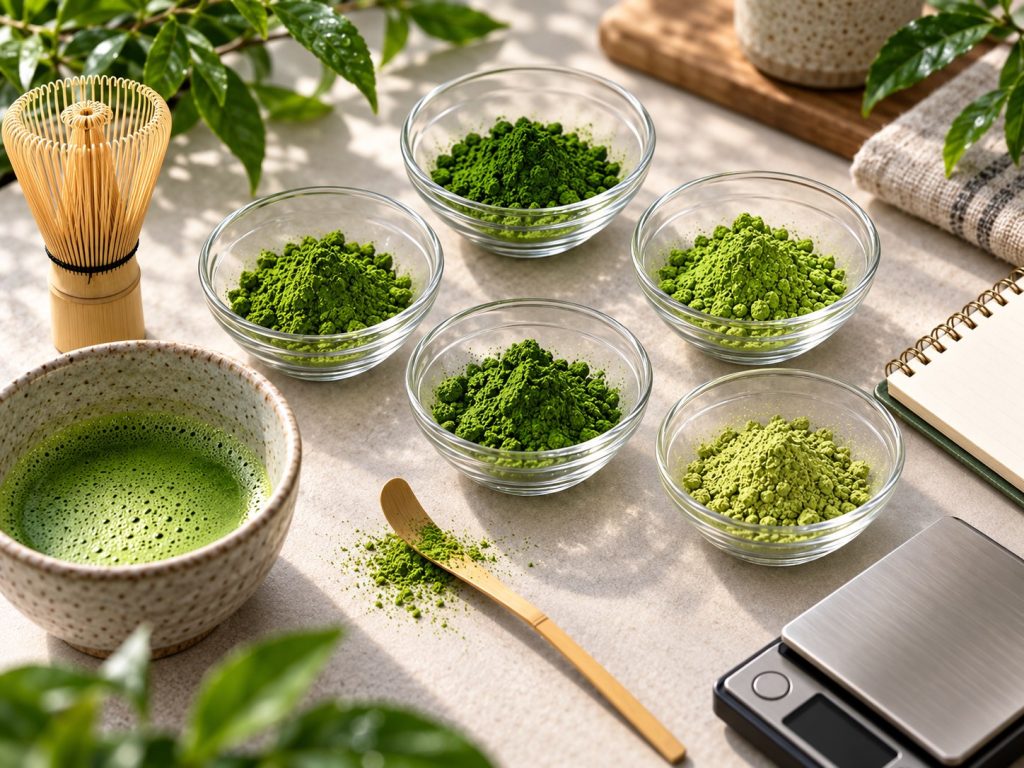
We do not treat one milling method as the universal answer for every buyer. The practical starting point is the finished product: straight-whisked tea, a café drink, a baked item or a manufactured food. From there, buyers can compare relevant profiles, review the applicable specification and validate samples under controlled conditions.
Commercial Buyer Checklist
| Verify | What good evidence looks like |
|---|---|
| Application fit | Results in your actual drink, bake or formulation |
| Raw material | Clear product and origin information for the selected SKU |
| Milling method | Method tied to the specific product, not a site-wide slogan |
| Particle size | Distribution, unit, method and batch context |
| Heat control | Process explanation or monitored limits where relevant |
| Powder handling | Observed dispersion, flow and sediment in your process |
| Consistency | Agreed specifications and batch-identification approach |
| Commercial supply | MOQ, capacity, packaging and lead time aligned to demand |
Frequently Asked Questions
Is stone-milled matcha always better?
No. Stone milling is a respected traditional process, but quality and suitability also depend on raw material, previous processing, storage, freshness and application performance.
Is ball-milled matcha real matcha?
Milling method alone does not determine authenticity. Confirm the starting material, complete production route, origin, labeling requirements and supplier evidence for the specific product.
Is ball-milled matcha good for lattes?
It can be. A latte profile should be judged by dispersion, color, tea presence, texture and balance in the actual milk, sweetener and service method—not by milling method alone.
Is stone-milled matcha better for ceremonial use?
Stone milling is strongly associated with traditional straight-whisking matcha, but the cup still depends on leaf material, processing and freshness. Compare sensory performance rather than treating “stone-milled” as a guarantee.
Does ball milling generate more heat?
It can generate heat, but the amount depends on equipment, speed, time, media load, batch size and cooling. Ask how the selected process controls and monitors temperature.
What particle size should matcha be?
There is no universal target for every application. Review the full particle-size distribution and test mouthfeel, dispersion, flow and finished-product performance using the intended process.
Can the same supplier use different milling methods?
Yes. A supplier may source or produce different profiles for different applications. Confirm the method, specification and supporting documentation for the exact SKU being evaluated.
Sources
- Yamamasa Koyamaen: Traditional matcha production flow.
- Experimental study and numerical simulation of the influence of ball milling on mechanical and physical properties of matcha powder, Powder Technology, 2024.
- The effect of milling method on the physicochemical properties of matcha, Journal of the Japanese Society for Food Science and Technology, 2009.
- Effects of ball-milling parameters on superfine green tea powder, Foods, 2025.
Choose the Profile That Works in Your Product
Compare relevant matcha profiles, test samples under controlled conditions and review the production information that matters to your application.
Leave a Reply