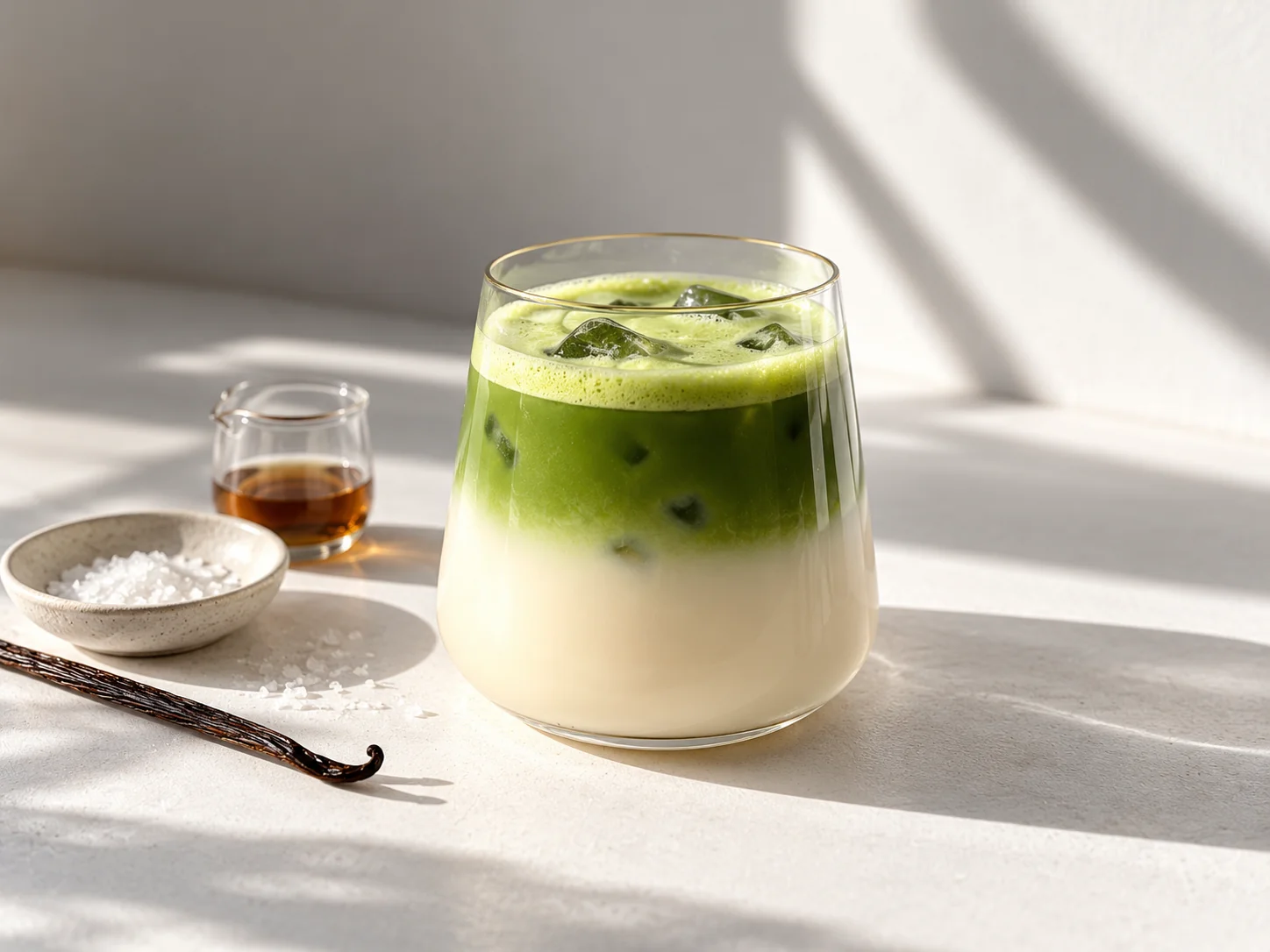
A salted vanilla matcha latte combines matcha, milk, vanilla and a very small amount of salt. For café service, start with 3 g matcha, 40 ml warm water, 150–170 ml milk and 10–15 ml vanilla syrup. Treat this as a development formula: test the salt, sweetness and tea intensity under the same conditions before approving your café recipe.
This guide covers iced and hot preparation, controlled tasting, higher-volume service and ingredient costing. The aim is a drink your team can reproduce, with matcha still recognizable through the milk and vanilla.
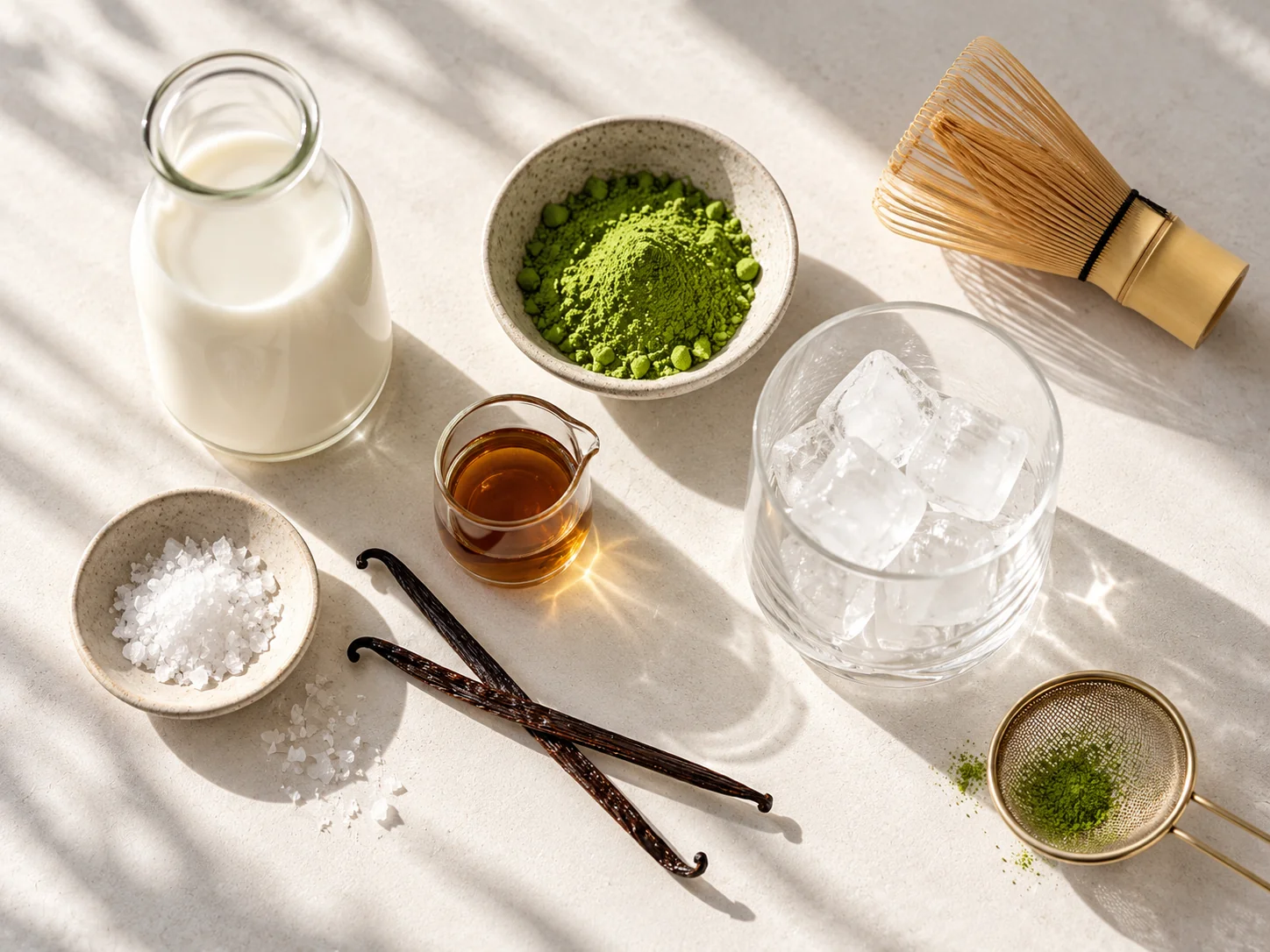
Salted Vanilla Matcha Latte Recipe Card
Yield: one café serving. Format: iced or hot. Preparation: approximately 5 minutes with ingredients ready. Starting matcha dose: 3 g. This is a proposed test formula, not a claim of a validated commercial recipe.
| Ingredient | Iced starting point |
|---|---|
| Unsweetened matcha | 3 g |
| Warm water | 40 ml at 75–80°C |
| Cold milk | 150–170 ml; use 160 ml for comparison tests |
| Vanilla syrup | 10–15 ml |
| Fine sea salt | A measured trial amount; see the salt test below |
| Ice | Enough for your chosen glass; standardize its weight during testing |
Use a latte or café matcha profile as a starting point. Vanilla syrup provides sweetness as well as aroma; vanilla extract is not an equal-volume substitute. If you change syrup brands, repeat the sweetness test. Choose a glass that comfortably holds the liquid and ice without forcing a last-minute change in portions.
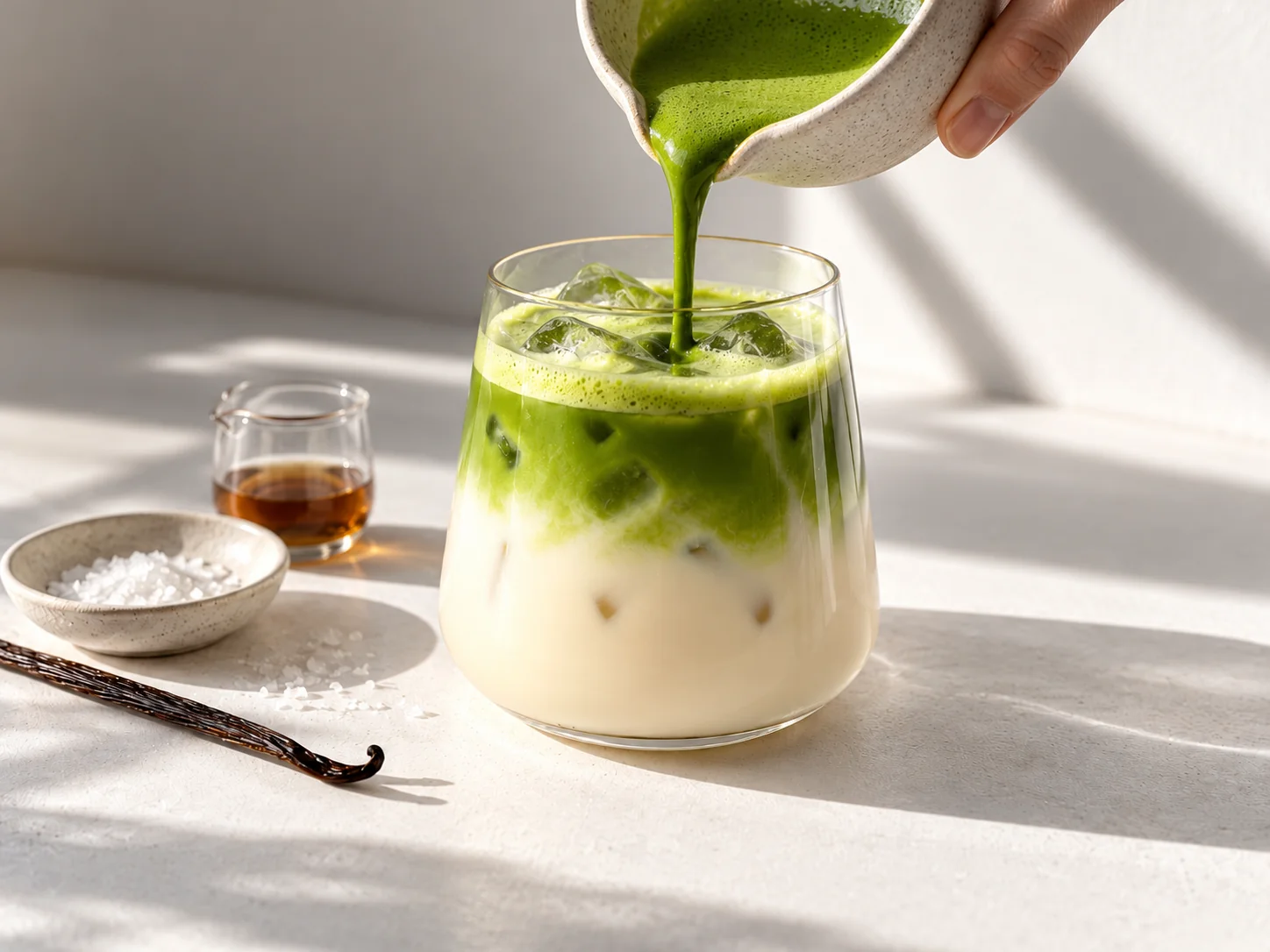
How to Make an Iced Salted Vanilla Matcha Latte
- Sift and whisk. Sift 3 g matcha into a clean bowl. Add 40 ml warm water and whisk until smooth, checking for dry clumps around the bowl.
- Prepare the vanilla milk. Mix 160 ml cold milk with 10 ml vanilla syrup and your measured salt trial. Dissolve the salt fully rather than scattering coarse crystals over the finished drink.
- Add ice. Put a consistent portion of ice into the serving glass, then add the flavored milk.
- Layer the matcha. Pour the whisked tea gently over the ice. A slow pour helps retain the green and white presentation.
- Stir and serve. For a layered presentation, show the drink first and stir before tasting or ask the customer to stir. Evaluate the combined drink, not an isolated sip from the upper layer.
Record the exact milk volume, ice weight and cup size in the final service recipe. A photograph is useful for presentation training, but measured portions are what make the drink repeatable.
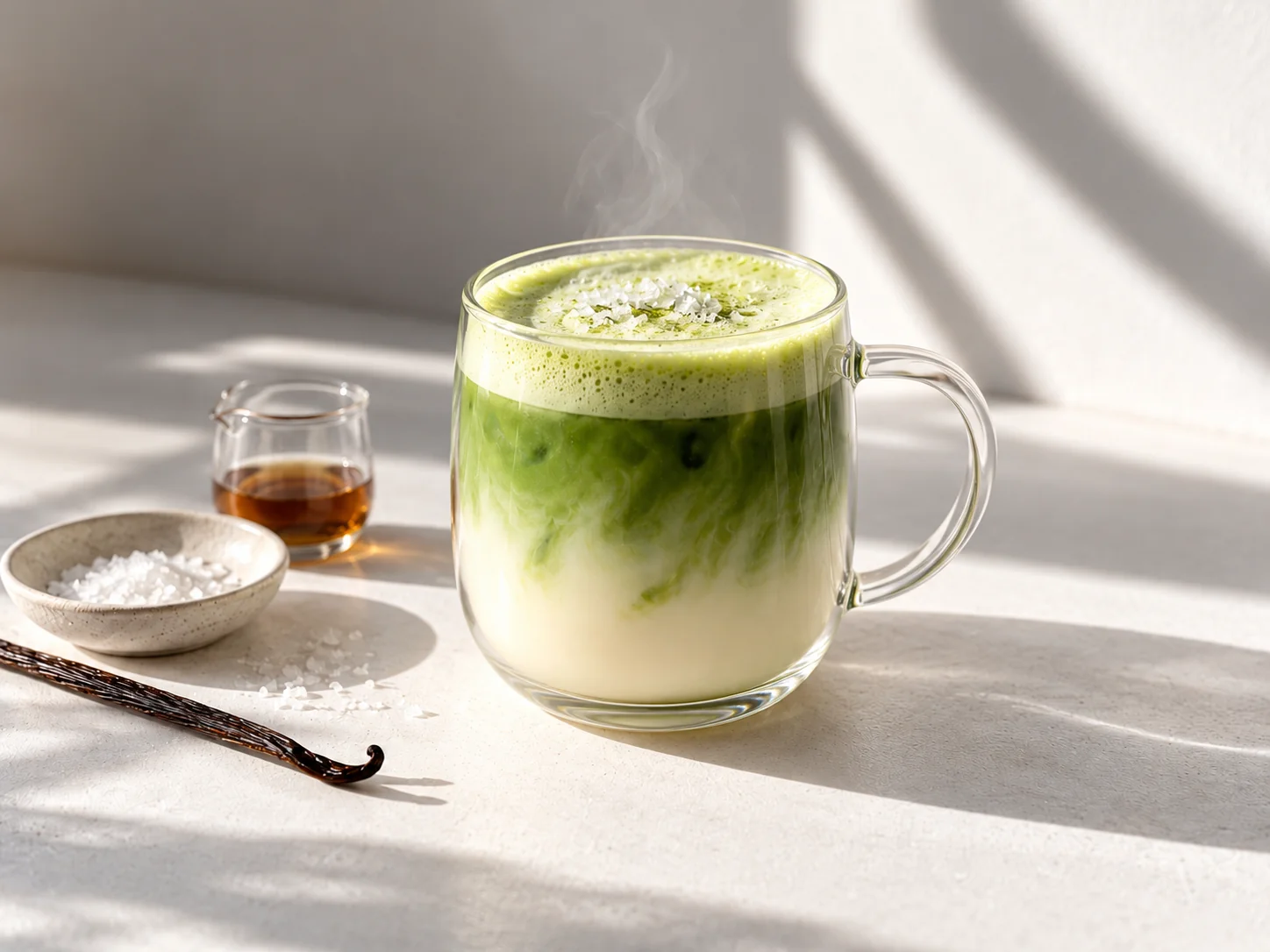
Hot Salted Vanilla Matcha Latte Option
For the first hot trial, keep 3 g matcha, 40 ml whisking water, 160 ml milk and 10 ml vanilla syrup. Omit the ice. Dissolve the measured salt with the syrup and a little milk, whisk the matcha separately, then combine with freshly steamed milk using your normal milk-handling procedure. Select a cup with room for the liquid and foam.
Retaste the hot version independently. Temperature and foam change the drinking experience, so an iced recipe does not automatically become an approved hot SOP. The hot photograph shows a possible presentation; loose salt garnish is optional and is not part of the measured base formula.
Why Test Salt with Vanilla and Matcha?
Vanilla contributes a familiar aroma and, when delivered in syrup, sweetness. A small salt addition may change how a particular drink’s sweetness and bitterness are perceived. The effect depends on the tea, milk, syrup and serving temperature; it should be judged in your actual formula.
Too much salt can dominate the drink and obscure the matcha. Salt is a recipe variable, not a fixed universal amount. Establish an unsalted reference first so the team can decide whether the addition improves the drink at all. Avoid treating a larger pinch as an automatic improvement.
A Measured Café Salt Test
A pinch is difficult to reproduce across staff. For development, make a small 1% salt solution by dissolving 1 g fine salt in 99 g potable water. Each gram of this solution contains 0.01 g salt. This makes small trial additions easier to measure; label the solution clearly and follow your preparation and discard procedures.
For an exploratory comparison, trial 0 g, 3 g and 6 g solution per drink, equivalent to 0 g, 0.03 g and 0.06 g salt. These are tasting points, not a universal recommended dose. Keep total whisking liquid at 40 g: use 40 g plain water for the reference, 37 g water plus 3 g solution for the light trial, and 34 g water plus 6 g solution for the higher trial. Dissolve the salt solution into the milk base and use the remaining plain water to whisk the tea.
| Test | Matcha | Vanilla syrup | Salt | Purpose |
|---|---|---|---|---|
| A | 3 g | 10 ml | None | Unsalted reference |
| B | 3 g | 10 ml | 0.03 g | Light-salt comparison |
| C | 3 g | 15 ml | 0.03 g | Sweeter menu option |
| D | 3 g | 10 ml | 0.06 g | Check whether more salt helps or overwhelms |
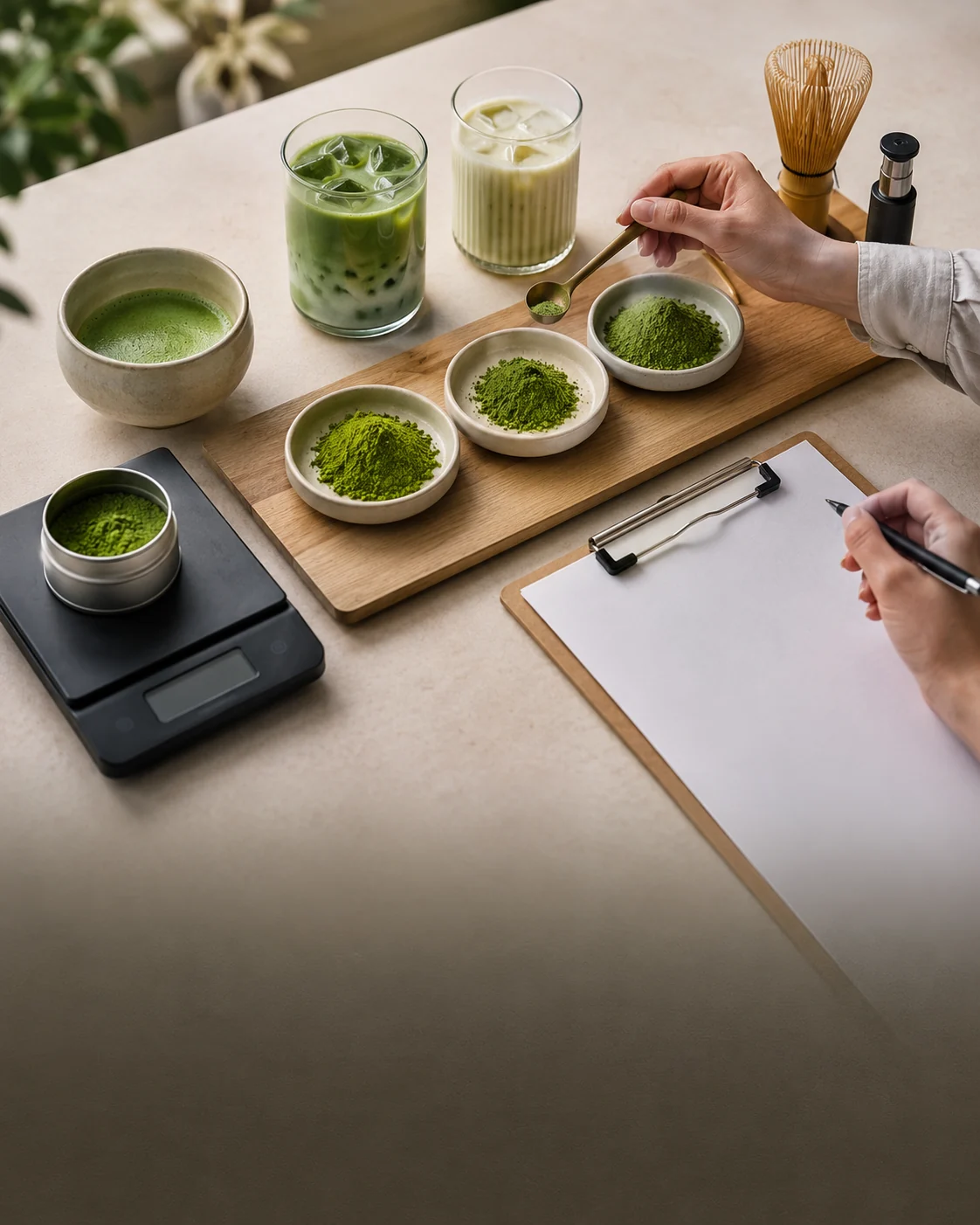
Compare A with B and D to assess salt. Compare B with C to assess syrup. Keep milk, ice, temperature, matcha lot and tasting delay consistent. Score finished color, matcha flavor through milk, vanilla intensity, sweetness, salt perception, bitterness and astringency. Record comments and cost alongside scores, then repeat the preferred version before approval.
Higher-Volume Café Service
Standardize the vanilla-and-salt milk base separately while preparing the matcha consistently per order. At the 160 ml milk and 10 ml syrup setting, ten drinks require 1.6 L milk and 100 ml syrup. The tea requirement is 30 g matcha and 400 ml total preparation liquid across ten orders. Scale salt only after selecting an approved trial level.
If using the light salt-solution trial, ten drinks use 30 g solution and 370 g plain whisking water in total. Divide the mixed milk base into ten equal portions by weight; confirm that the portioning method fits the service recipe. Keep milk refrigerated and use your established hygiene, holding and discard rules. This article does not establish a shelf life for the base.
Whisk to order where practical. If any matcha component is pre-batched, validate holding time, temperature, color, dispersion and flavor under actual service conditions. Do not assume a large batch can sit all day without affecting quality. Train staff to remix components where required and to follow the same assembly order.
Calculate Cost per Serving
Matcha cost per drink = price per kg ÷ 1,000 × grams used. At this starting dose, multiply your cost per gram by three. Then add milk, syrup, salt, ice, packaging and any garnish, including your normal waste allowance. Ingredient cost alone does not cover labor, overhead or the margin required for menu pricing.
Use the matcha cost-per-serving calculator for the matcha component. Compare samples at the dose needed to deliver your approved flavor, rather than choosing only by kilogram price.
Which Matcha Profile Should a Café Test?
For an everyday vanilla matcha latte, start by comparing a Café / Latte profile in the finished drink. For a signature menu item, also trial a Premium Latte option to see whether its flavor and appearance justify the cost in your specific formula. These are comparison directions, not guarantees that a named grade will perform best.
Compare Matcha Profiles and review our guide to matcha for lattes and café drinks. For a broader discussion of tea dosage beyond this recipe, see how much matcha powder to use for a latte.
Frequently Asked Questions
How much matcha should a café use in a salted vanilla latte?
Start with a controlled 3 g trial in this formula. Taste with your actual milk and syrup before changing the dose. Record any adjustment so staff can reproduce the approved drink.
Can I make a salted vanilla matcha latte iced or hot?
Yes. Use the iced and hot methods above as separate development trials. Approve the sweetness, salt level and serving size for each format independently.
What milk works with salted vanilla matcha?
Dairy or plant-based milk can be tested. Choose based on flavor, body, sweetness and how clearly the matcha comes through. Retest each milk option and communicate relevant allergens.
Should cafés use ceremonial matcha for vanilla matcha lattes?
Not necessarily. Compare products by finished-drink performance, consistency and cost at the required dose. A ceremonial label alone does not establish that a powder is the best fit for milk and syrup.
Build Your Next Café Menu Trial
Request matcha samples from Matcha Origin Co and share your milk choice, target dose, expected volume and intended menu positioning. Use the same recipe and tasting notes to compare options before selecting a supply specification.
Explore another café menu concept: try our Strawberry Matcha Latte Recipe for Cafés for a fruit-led alternative.