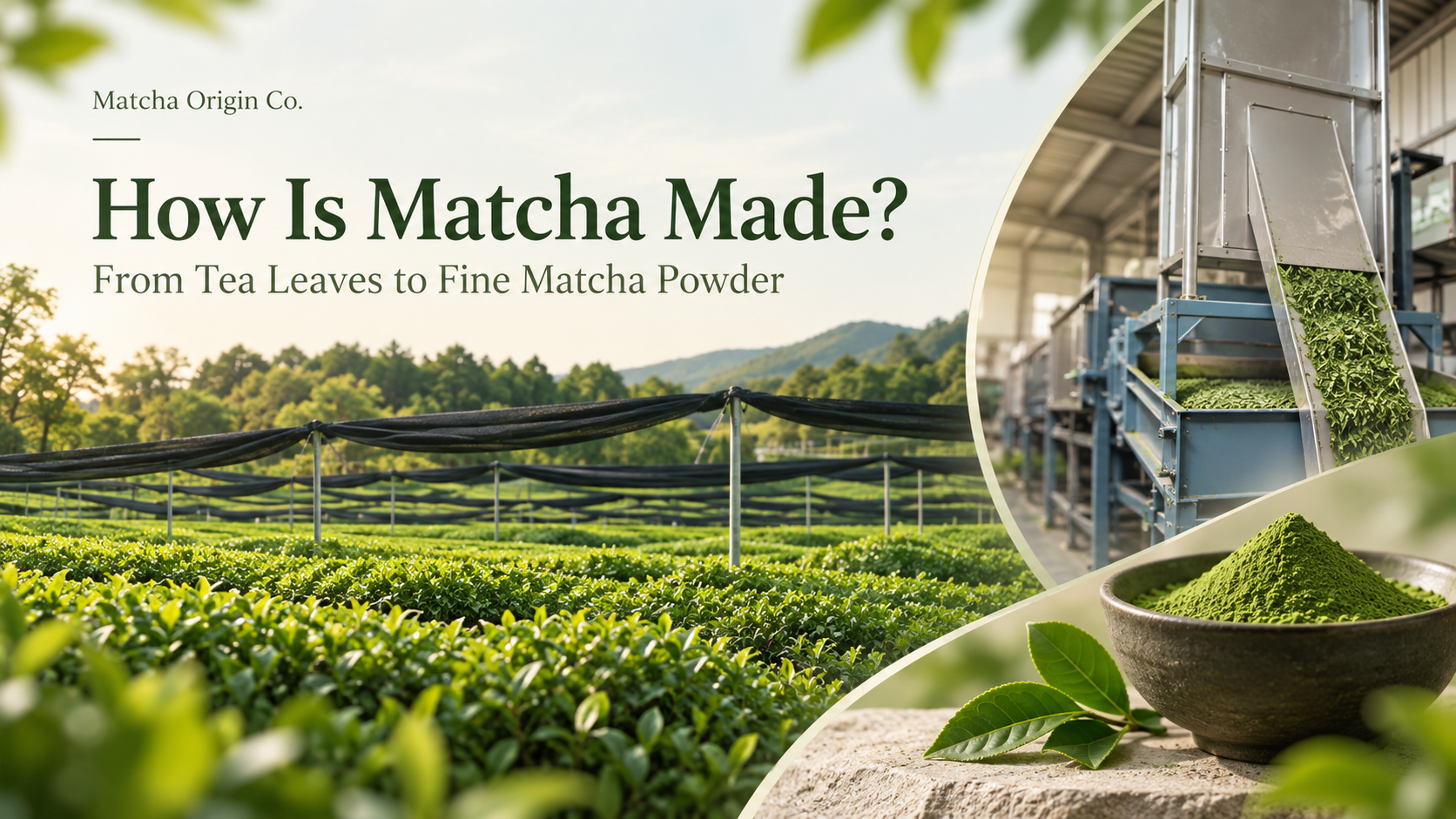
Matcha may look simple in the cup, but producing a fine, stable matcha powder requires control at every stage—from cultivation and harvest to heat fixation, refining, milling and storage.
For commercial buyers, understanding how matcha is made is more than a look behind the scenes. Production choices can influence color, aroma, bitterness, umami, particle size, dispersion and performance in a finished application.
A matcha selected for straight whisking may be evaluated differently from one intended for café lattes, bakery products or large-scale food manufacturing. This guide follows the production process from shaded tea leaves to finished powder and explains what B2B buyers should verify before scaling an order.
Table of Contents
What Is Matcha Made Of?
Matcha is made from finely milled green tea leaf material from the tea plant Camellia sinensis. In traditional Japanese production, shaded leaves are processed into tencha: leaf material that is steamed, dried without rolling, refined and then milled into powder.
Matcha is not simply ordinary finished green tea placed into a grinder. Cultivation, leaf selection, fixation, drying, refining, milling and storage all contribute to the finished product.
Commercial methods vary by producer, origin and specification. Buyers should therefore assess the actual product, its intended use and its supporting documentation instead of relying on a single production term.
How Is Matcha Made? The 7 Main Steps
The sequence below describes the main stages. Exact equipment and process controls can differ, but each stage has a practical effect on the powder a buyer eventually evaluates.
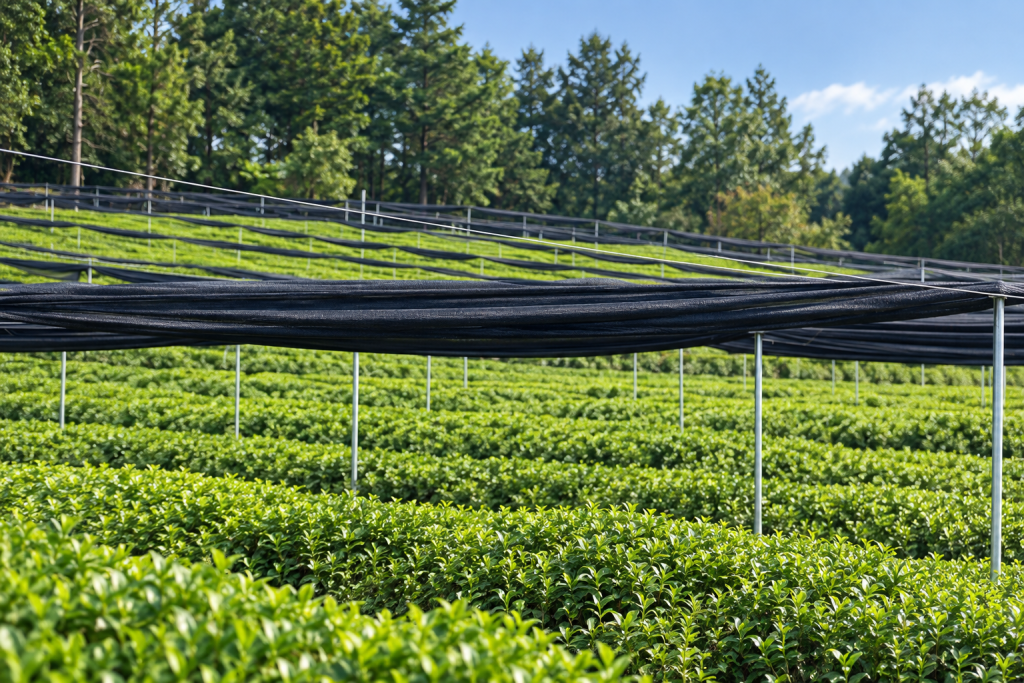
1. Tea Plants Are Cultivated and Shaded
Shade cultivation reduces the direct sunlight reaching the leaves before harvest. This changes leaf development and can influence green color, amino-acid composition, umami, bitterness and astringency.
The number of shaded days should not be treated as a universal quality score. Cultivation schedules vary, and the better sourcing question is whether the finished matcha fits the intended application and specification.
2. Tea Leaves Are Harvested
After shading, the leaves are harvested according to the producer’s target profile. Harvest timing, leaf maturity and field conditions can influence aroma, tea intensity, astringency and refinement.
One harvest is not automatically right for every buyer. A bakery may need a stronger tea character that remains noticeable after flour, sugar, dairy or chocolate are added. Straight-whisked service may place more emphasis on aroma, smoothness, umami and a restrained finish.
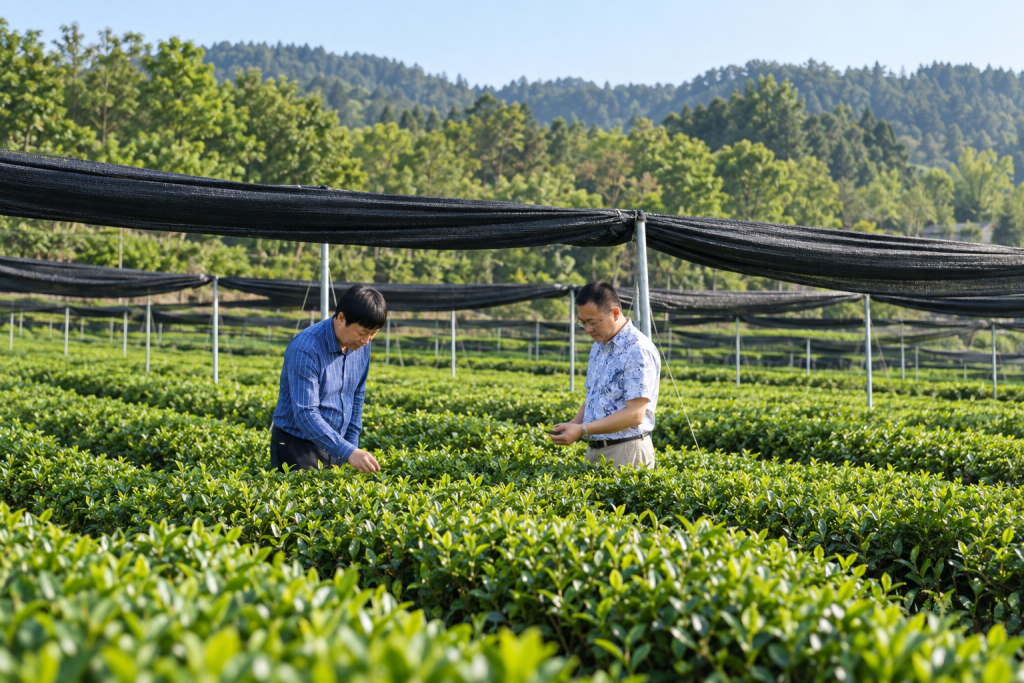
3. The Leaves Are Heat-Fixed
Freshly harvested tea leaves contain enzymes that drive oxidation. Heat fixation is used shortly after harvest to stop that enzymatic activity. Steaming is closely associated with Japanese matcha production, although exact conditions vary by producer.
This stage can affect fresh vegetal aroma, green appearance, bitterness and flavor stability. Careful process control matters even when the starting leaf material is strong.
4. The Leaves Are Dried and Refined
After fixation, the leaves are dried under controlled conditions. Refining can reduce or remove stems, coarse veins and unsuitable material according to the product specification. The prepared leaf material then becomes the basis for milling.
Consistency at this stage matters to commercial buyers because the composition of the material entering the mill can affect repeat-batch appearance and performance.
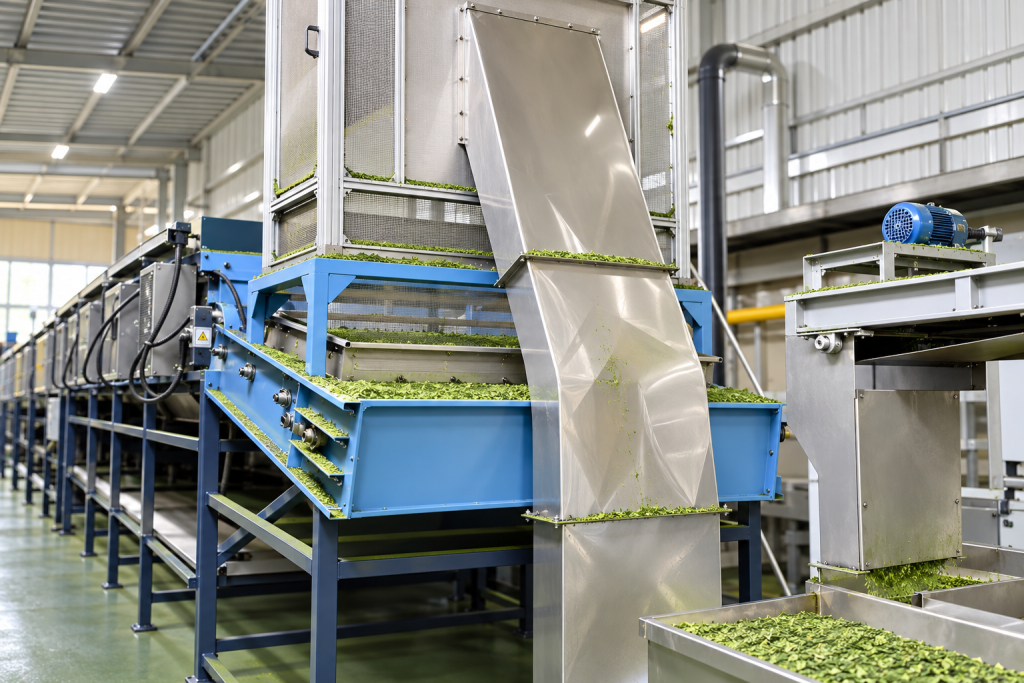
5. The Tea Material Is Finely Milled
The refined material is milled into a fine powder. Traditional matcha is strongly associated with stone milling, while commercial production may also use other controlled fine-milling systems. The relevant question for a buyer is how the finished powder performs.
- Is the powder uniform?
- Does it disperse appropriately for the recipe?
- Is the mouthfeel suitable for the intended drink or food?
- Does the product remain consistent across approved commercial batches?
A finer powder can support smoother mouthfeel and dispersion, but particle size should always be considered together with the intended use. Review our Matcha Production Process page for more supply-side context.
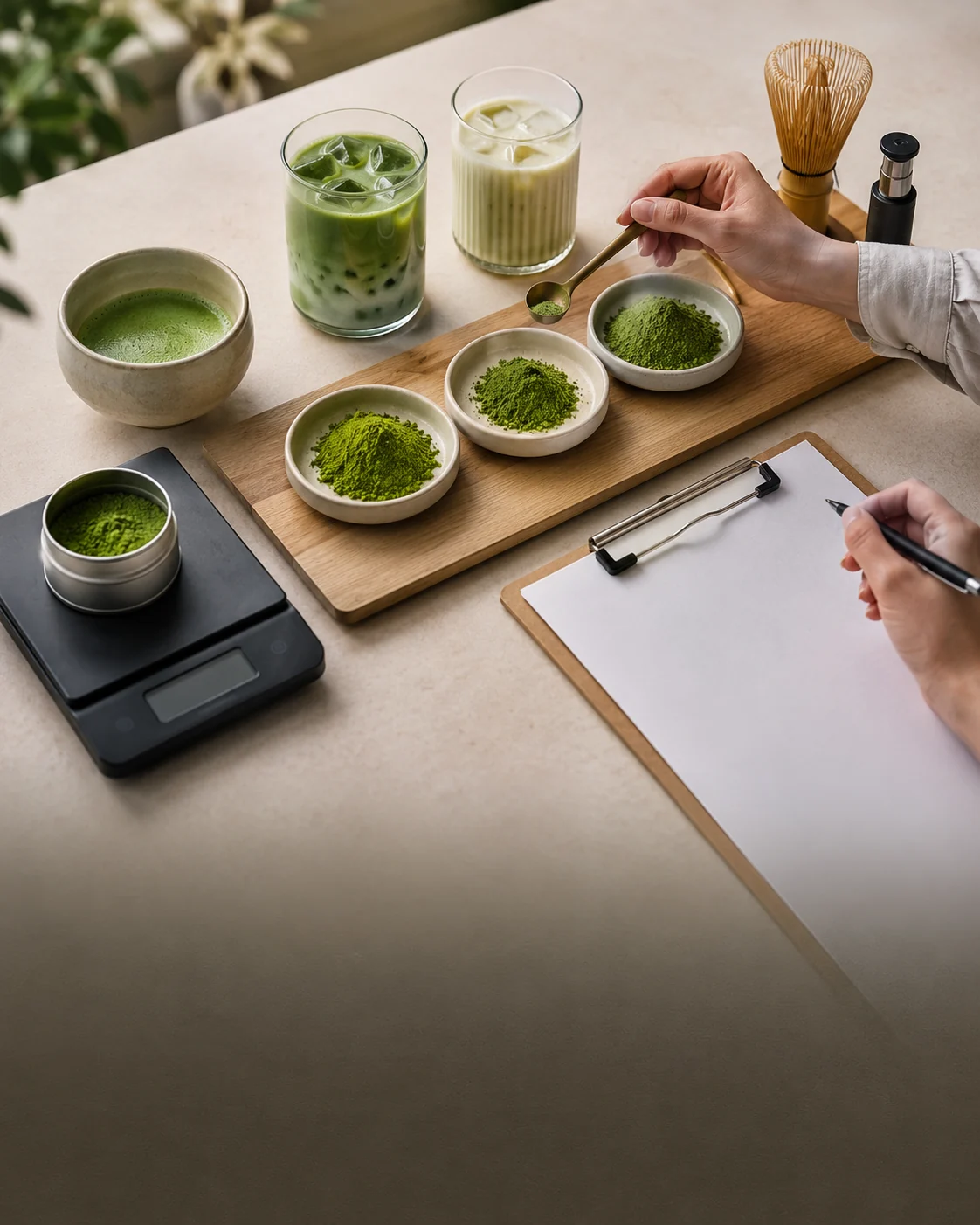
6. The Matcha Is Evaluated
Once milling is complete, the powder can be evaluated through sensory review, application testing and relevant technical measurements.
Visual
- Powder color
- Uniformity
- Prepared color
Sensory
- Aroma and umami
- Bitterness and astringency
- Sweetness and finish
Technical
- Moisture
- Fineness or particle size
- Other confirmed specifications
Not every buyer needs every measurement. A café may care most about color in milk, tea intensity and dispersion. A food manufacturer may prioritize process performance, finished-product color, cost-in-use and specification consistency. A premium tea brand may focus more heavily on straight-whisking performance.
7. Matcha Is Packed and Stored
Matcha is sensitive to oxygen, moisture, heat, light and strong surrounding odors. Packaging and storage are therefore part of quality management, not only logistics.
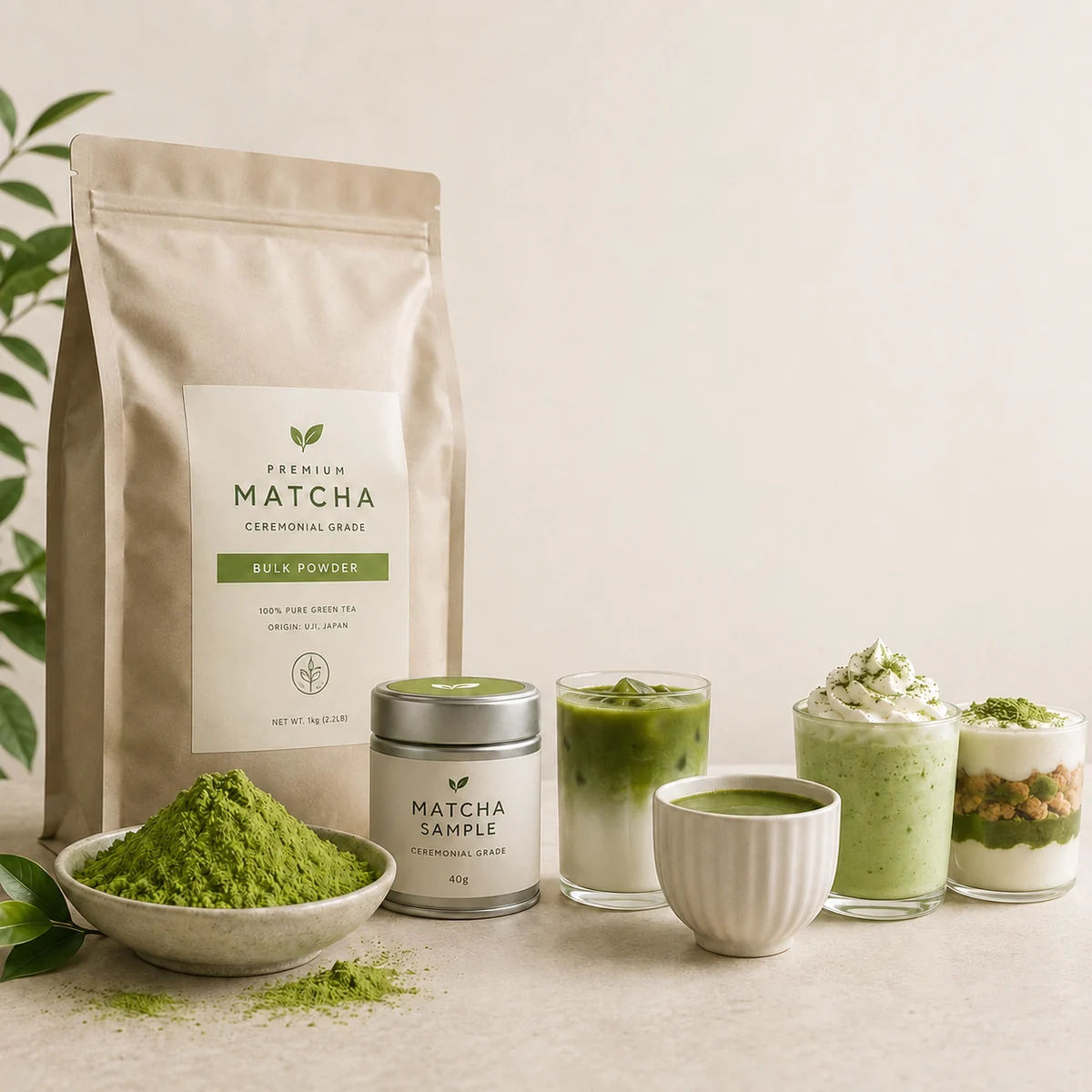
High-barrier packaging, sealed liners and appropriate storage can help protect color, aroma and sensory stability. Commercial formats may range from evaluation pouches to larger bulk packs according to the order quantity and project requirements. See our Packaging & Storage Guide.
How Production Affects Matcha Quality
| Production Factor | What a Buyer May Notice |
|---|---|
| Shading | Color and the balance of umami, bitterness and astringency |
| Leaf and harvest selection | Aroma, tea intensity and sensory refinement |
| Heat fixation | Freshness, vegetal character and color preservation |
| Drying and refining | Cleanliness, uniformity and repeatability |
| Milling | Fineness, mouthfeel and dispersion |
| Packaging and storage | Protection of color, aroma and finished-product stability |
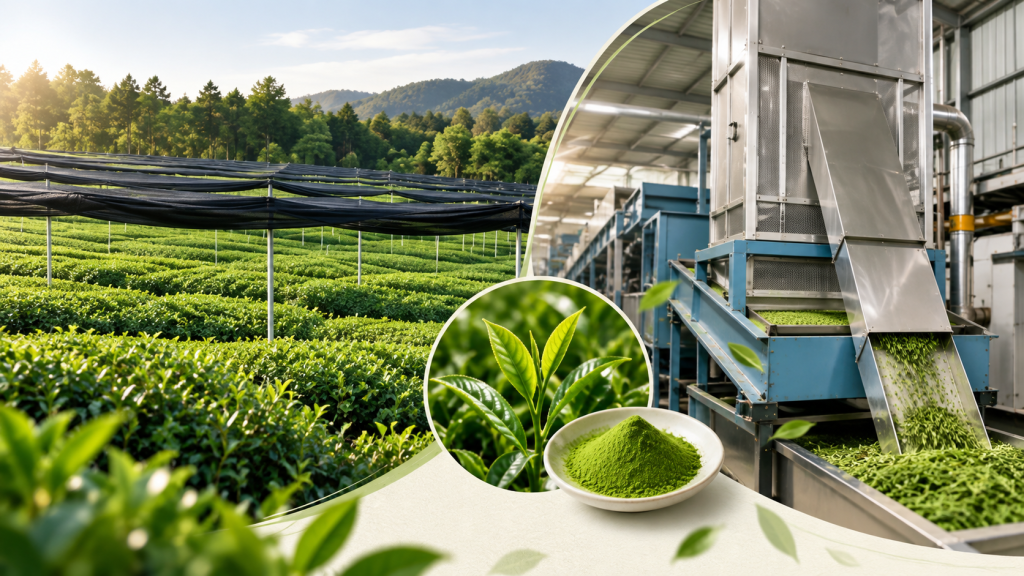
Two products can both be described as 100% green tea powder and still perform very differently. The meaningful comparison is the finished matcha in the buyer’s actual application.
Is Bulk Matcha Made Differently From Retail Matcha?
Not necessarily. Bulk matcha is not a quality grade. The word “bulk” generally describes commercial quantity or packaging rather than one sensory level.
Bulk supply can include matcha for baking, food manufacturing, café drinks, straight whisking and premium private-label products. A larger order does not automatically mean lower quality; it means the product and packing format have been selected for a commercial requirement.
This is why buyers should compare samples before scaling. Explore our Bulk Matcha Supply options.
Culinary, Latte and Whisking Matcha Prioritize Different Results
Culinary Matcha
Common uses include baking, desserts, confectionery and food manufacturing. Buyers may prioritize recognizable tea character, finished-product visibility and practical cost-in-use.
Café / Latte Matcha
Hot and iced lattes, smoothies and café drinks require testing with the actual milk, sweetener and serving format. Color and tea flavor must remain suitable after mixing.
Straight-Whisking Profiles
When matcha is served with water, aroma, umami, texture, bitterness and finish are more exposed. Sampling should reproduce the intended preparation method.
What Commercial Matcha Buyers Should Verify
| Check | Why It Matters |
|---|---|
| Country of origin | It should be stated accurately for the selected product. |
| Product specification | Review the confirmed parameters relevant to the intended application. |
| Batch information | A general specification and a batch-specific COA serve different purposes. |
| Testing scope | Confirm which sample, method, date and product a report covers. |
| Available documentation | TDS, COA, testing and certification availability varies by product and project. |
| Application performance | The product should be tested in the buyer’s real recipe or preparation method. |
| Packaging and repeat supply | Confirm pack format, storage, lead time and repeat-order requirements. |
A production story is useful context, but it should not replace product evaluation. Review the selected product alongside its quality and testing information and the Available Documentation Hub.
Does Matcha Have to Come From Japan?
Japan has the strongest historical and cultural association with matcha, and traditional Japanese tencha production remains an important reference for the category. Commercial matcha is also produced in other tea-growing regions, including China.
For B2B sourcing, origin should always be disclosed, but country name alone does not establish whether a product fits a particular café, food or retail application. Buyers should compare cultivation, processing, sensory profile, technical specification, documentation and batch consistency for the product being offered.
Learn more in our guide to Chinese Matcha for Commercial Applications.
Frequently Asked Questions
What is matcha made of?
Matcha is made from green tea leaf material from Camellia sinensis that is cultivated, harvested, heat-fixed, dried, refined and finely milled. Traditional Japanese matcha is associated with tencha, while exact commercial methods and specifications vary by producer and origin.
Is matcha just ground green tea?
Not exactly. Matcha production begins before milling. Shade cultivation, leaf selection, fixation, drying and refining all affect the material that enters the mill. Ordinary finished green tea that is simply ground does not automatically share the same production profile.
Why are tea plants shaded before harvest?
Shading reduces direct sunlight and changes how the leaves develop. It can influence color, amino-acid composition, umami, bitterness and astringency. The finished product should still be evaluated against its intended application rather than judged by shading duration alone.
Is culinary matcha made differently from ceremonial matcha?
They may share the same broad production stages, but leaf selection, harvest, processing specifications and finished-product targets can differ. Culinary products are selected for performance in food, while straight-whisking profiles place more emphasis on exposed sensory qualities.
Is bulk matcha lower quality than retail matcha?
No. “Bulk” describes commercial quantity or packaging, not one universal quality level. Bulk supply can range from cost-conscious culinary ingredients to premium straight-whisking profiles. The correct choice depends on the intended product and purchasing requirements.
What should a commercial buyer test first?
Test the matcha in the actual finished application. A café should use its real milk and recipe; a bakery should evaluate the baked result; and a manufacturer should reproduce its formulation and process as closely as practical before approving commercial supply.
Official Production References
- Ministry of Agriculture, Forestry and Fisheries of Japan: Uji Tea and tencha processing
- Nihon-Cha Instructor Association: Introduction to Japanese tea
Sourcing Matcha for a Commercial Project?
Matcha Origin Co. supports cafés, bakeries, food manufacturers and brands with application-based product matching, evaluation samples, bulk supply and technical documentation support.
Continue with our guide to where matcha is grown and how origin affects commercial sourcing.
Leave a Reply