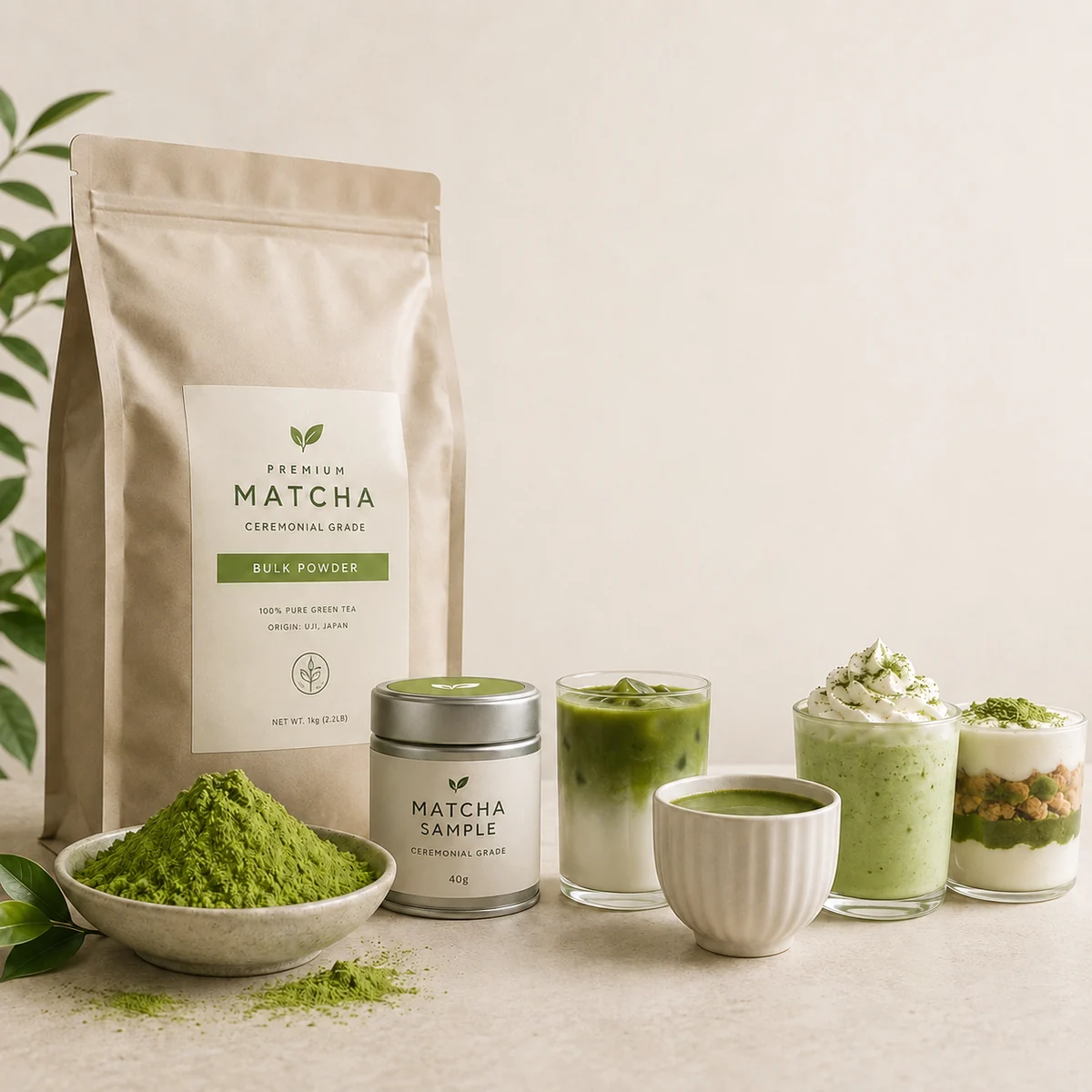
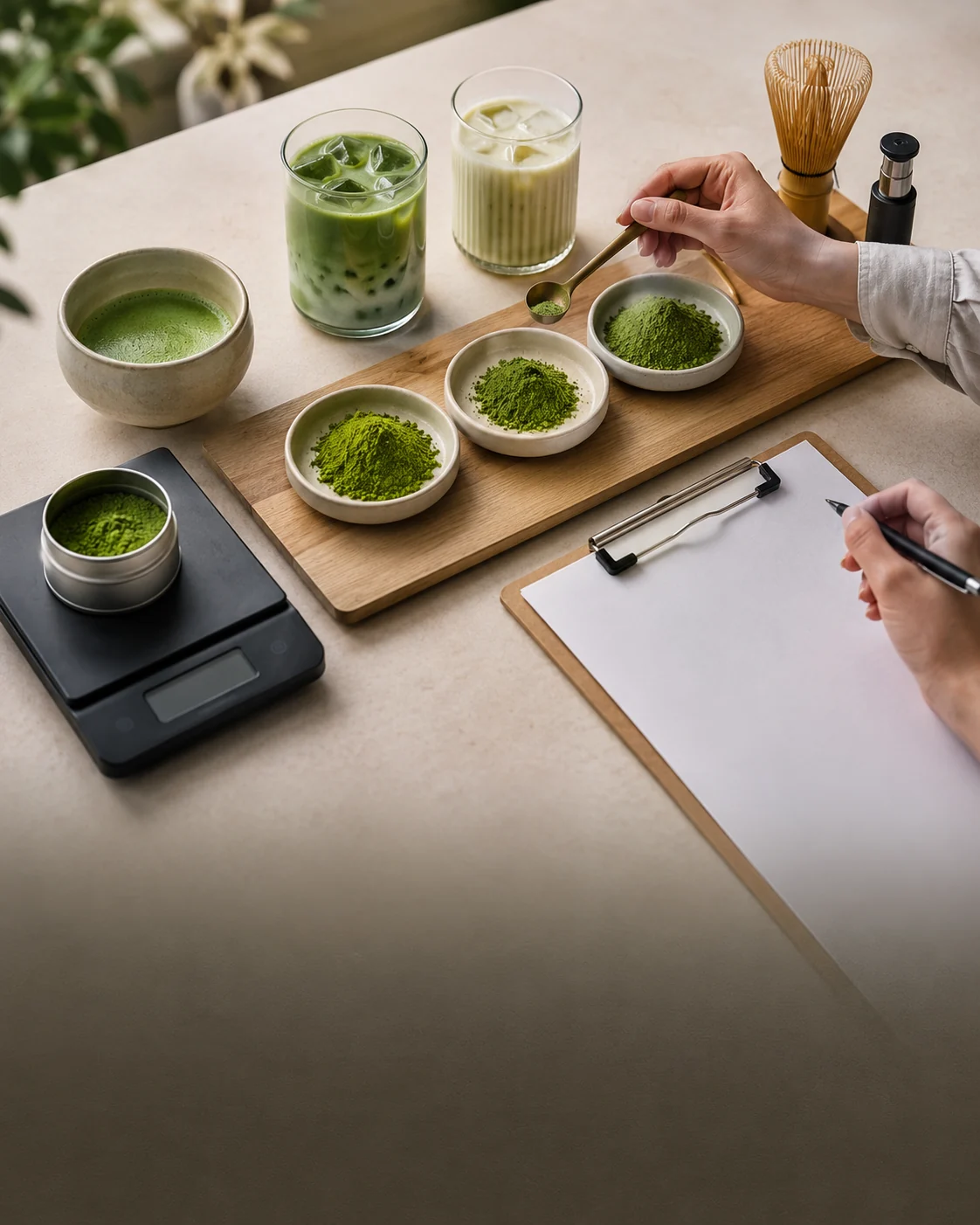
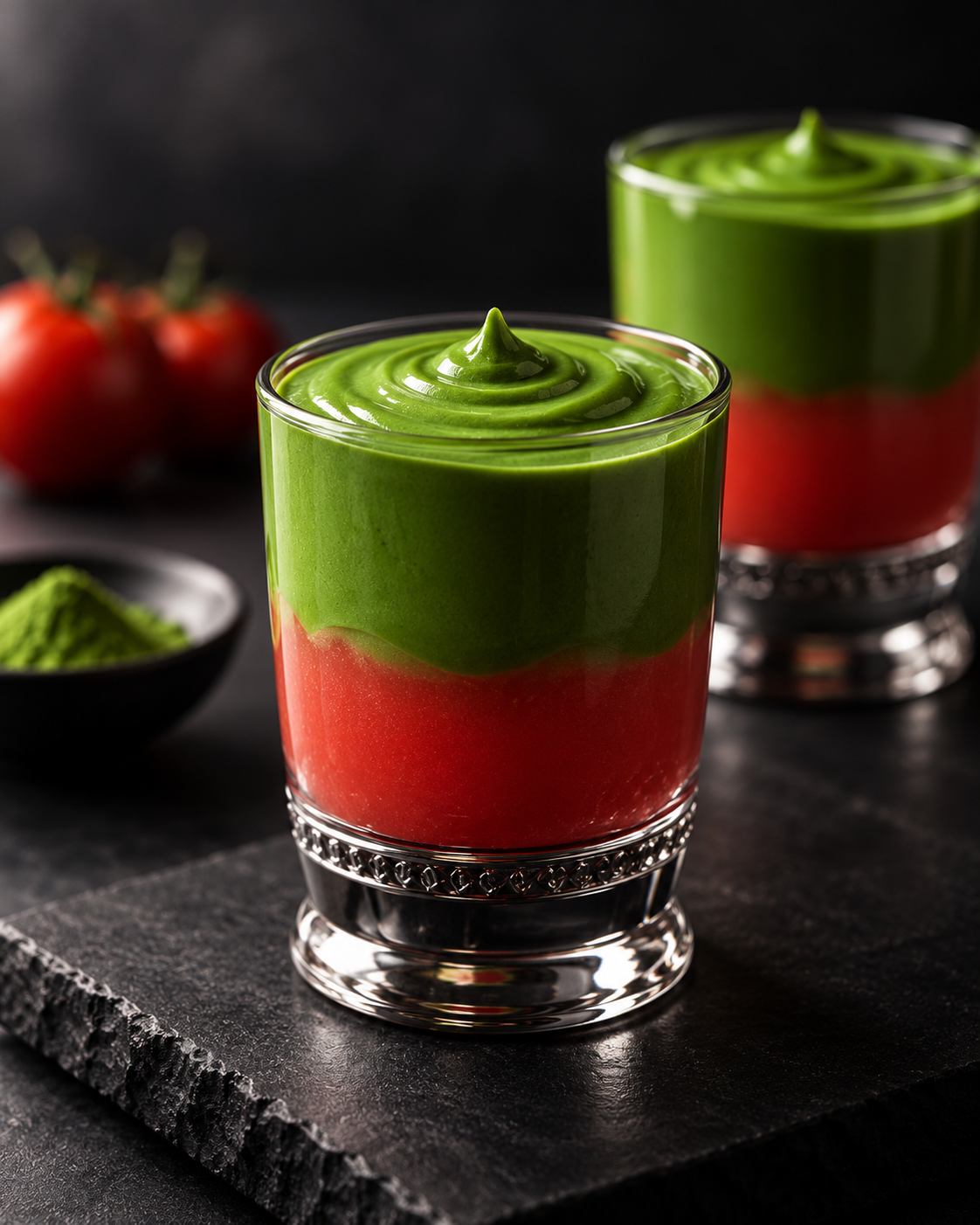
Tomato and matcha are an unexpected pairing. This tomato matcha mousse recipe keeps them in separate layers: a smooth, lightly sweet tomato base underneath a creamy green matcha mousse. The red-and-green dessert is a creative café special or a starting point for culinary matcha evaluation. The recipe was tested as a layered dessert rather than a blended mousse so the tomato acidity and matcha layer could be evaluated separately.
The key idea: Keep the tomato and matcha components separate rather than blending them together. This preserves the visual contrast and lets you evaluate the matcha layer for color, flavor and texture on its own.
Kitchen-tested by Matcha Origin Co. This tomato matcha mousse recipe has been tested for layer setting, sweetness balance, tomato–matcha flavor balance and overnight stability. The tomato and matcha layers remained visually distinct after chilling, with no material collapse or separation observed during the test period.
Prefer a classic sweet version? See our Matcha Mousse Recipe.
Ingredients
For the Tomato Layer
- 250 g ripe cherry tomatoes or ripe tomatoes
- 18 g granulated sugar
- 5 g lemon juice
- 2.5 g powdered gelatin
- 15 g cold water
- A small pinch of fine salt
For the Matcha Mousse
- 6 g matcha powder
- 80 ml whole milk
- 120 ml heavy cream
- 22 g granulated sugar
- 3 g powdered gelatin
- 18 g cold water
- 20 ml warm water
Optional Garnish
- A light dusting of matcha
- A small tomato garnish or microgreens for a more savory presentation
Tested yield: 4 × 120 ml glasses. Tomato layer: 45 minutes of chilling; final chill: 3 hours. Exact setting time and serving yield can vary with gelatin strength, glass size and refrigerator temperature.
Step 1 — Prepare the Tomato Layer
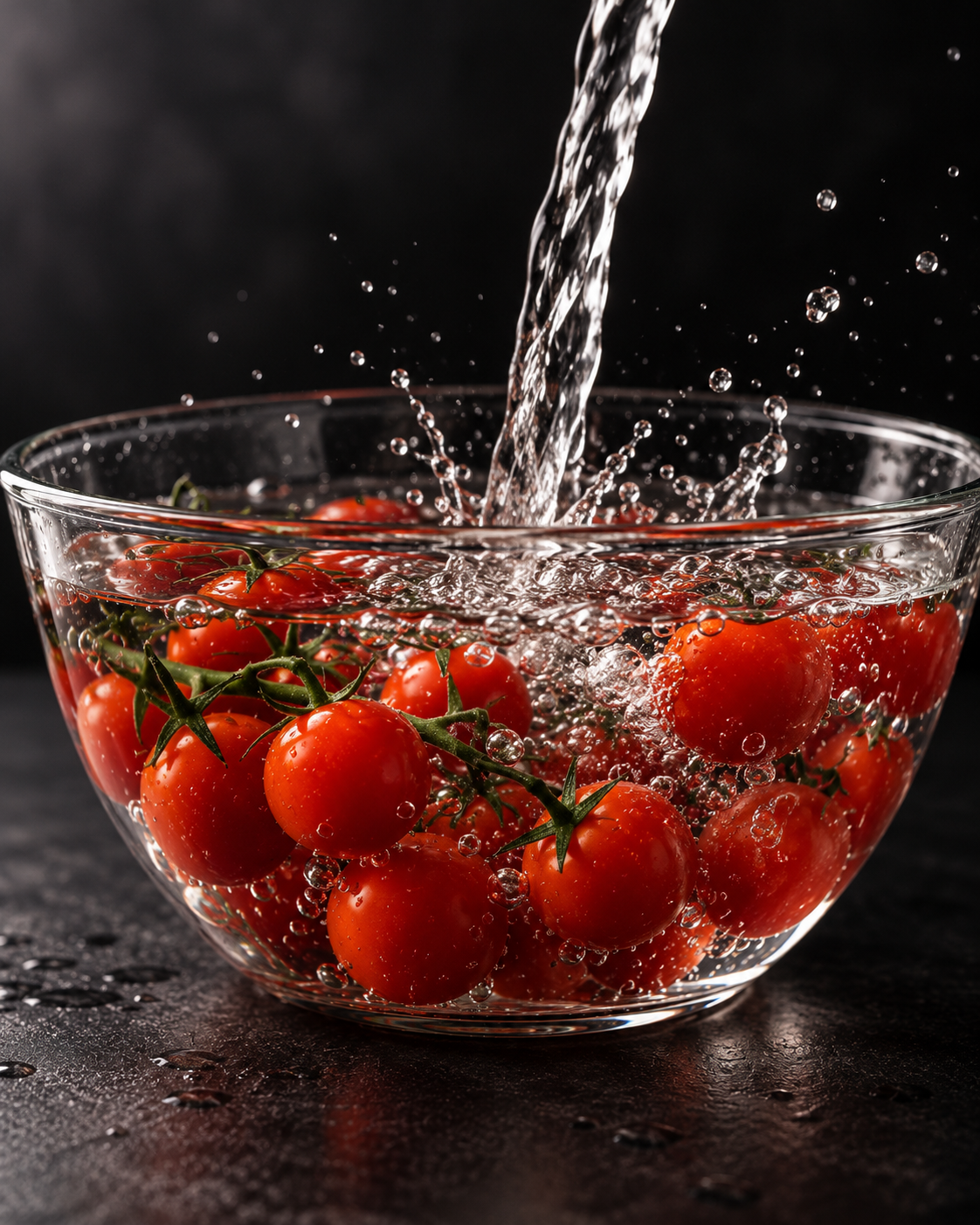
Wash the tomatoes thoroughly and remove the stems. Blend 250 g tomatoes until smooth. Pass the puree through a fine-mesh sieve to remove seeds and larger pieces of skin, pressing gently with the back of a spoon.
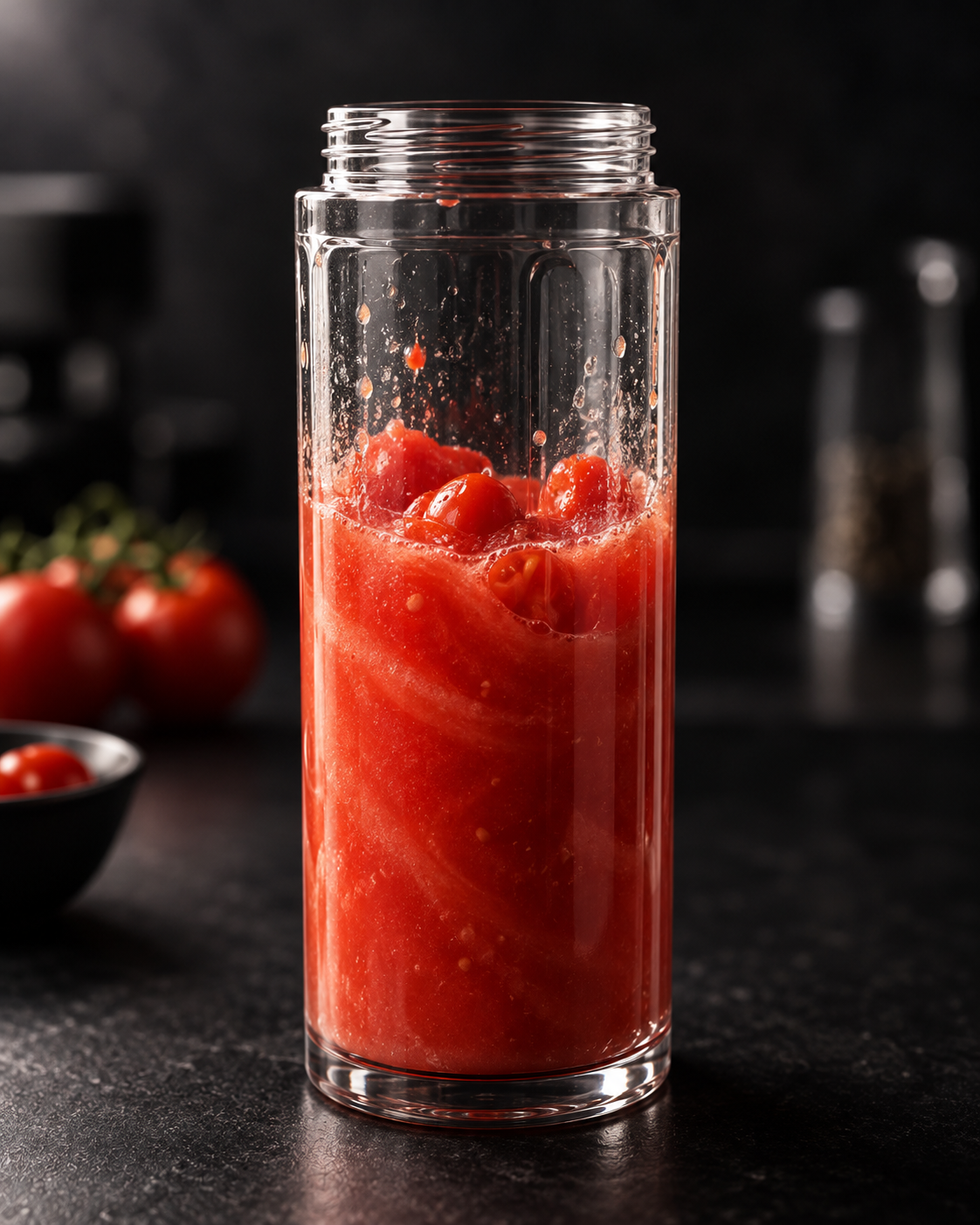
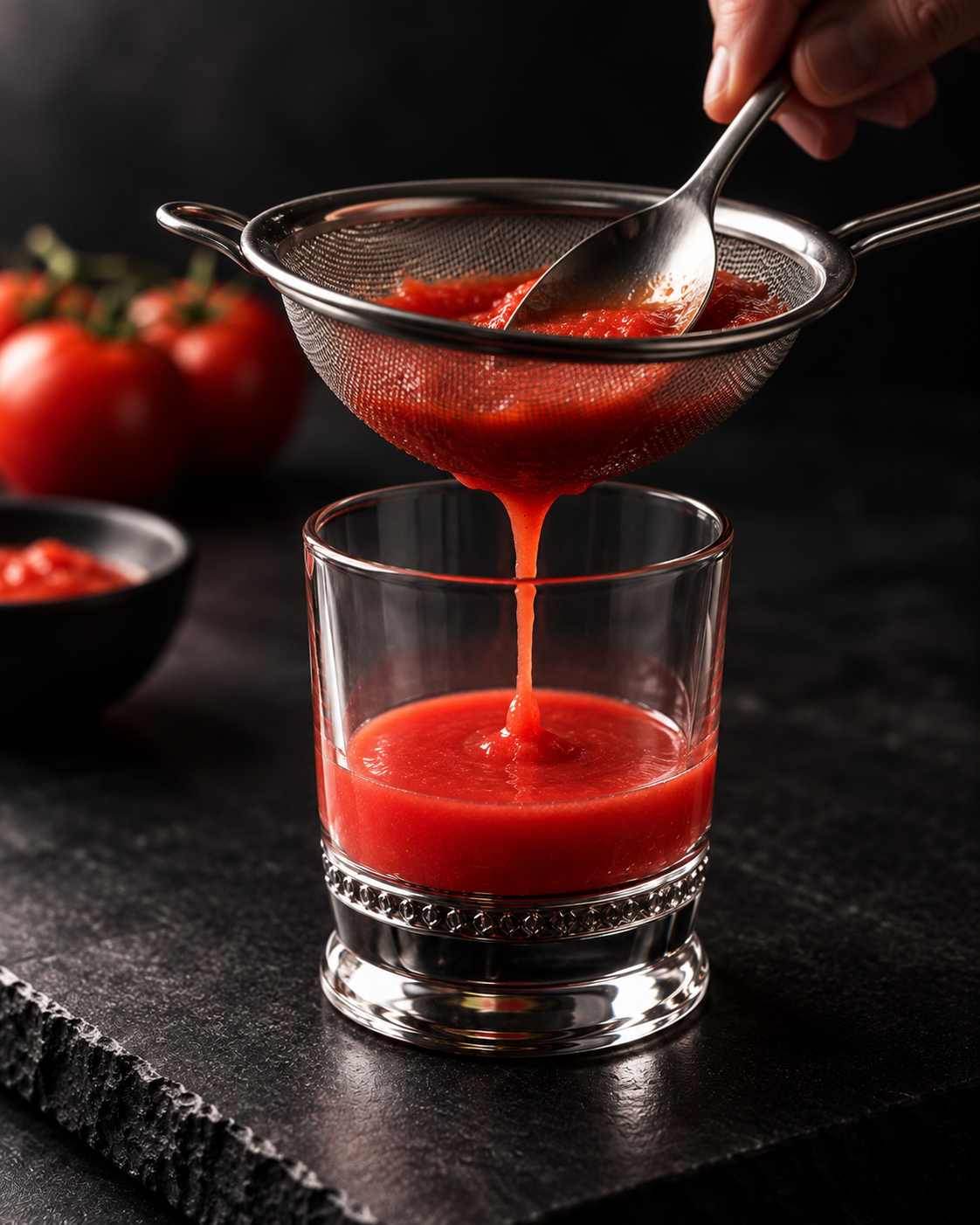
Bloom 2.5 g powdered gelatin in 15 g cold water for about five minutes. Warm roughly one-third of the tomato puree over low heat with 18 g sugar and a small pinch of salt; do not boil aggressively. Add the bloomed gelatin and stir until completely dissolved. Remove from the heat, then stir in the remaining puree and 5 g lemon juice.
Divide the tomato mixture between four 120 ml serving glasses. Chill the tomato layer for 45 minutes, or until the surface is firm enough to support the matcha mousse layer.
Step 2 — Prepare the Matcha
Sift 6 g matcha powder into a small bowl. Add 20 ml warm water gradually and whisk into a smooth paste with no visible dry clumps. Preparing the matcha separately helps reduce clumping when it is added to the milk mixture.
Step 3 — Make the Matcha Mousse
Bloom 3 g powdered gelatin in 18 g cold water for about five minutes. Warm 80 ml whole milk with 22 g granulated sugar over low heat until the sugar dissolves; do not boil. Remove from the heat and stir in the bloomed gelatin until fully dissolved.
Whisk in the prepared matcha paste until the mixture is even in color. Let it cool until it is no longer hot but is still fluid. Whip 120 ml heavy cream to soft peaks, then gently fold the cooled matcha mixture into the cream in several additions. Fold rather than stirring aggressively to keep the mousse light.
Step 4 — Assemble the Tomato Matcha Mousse
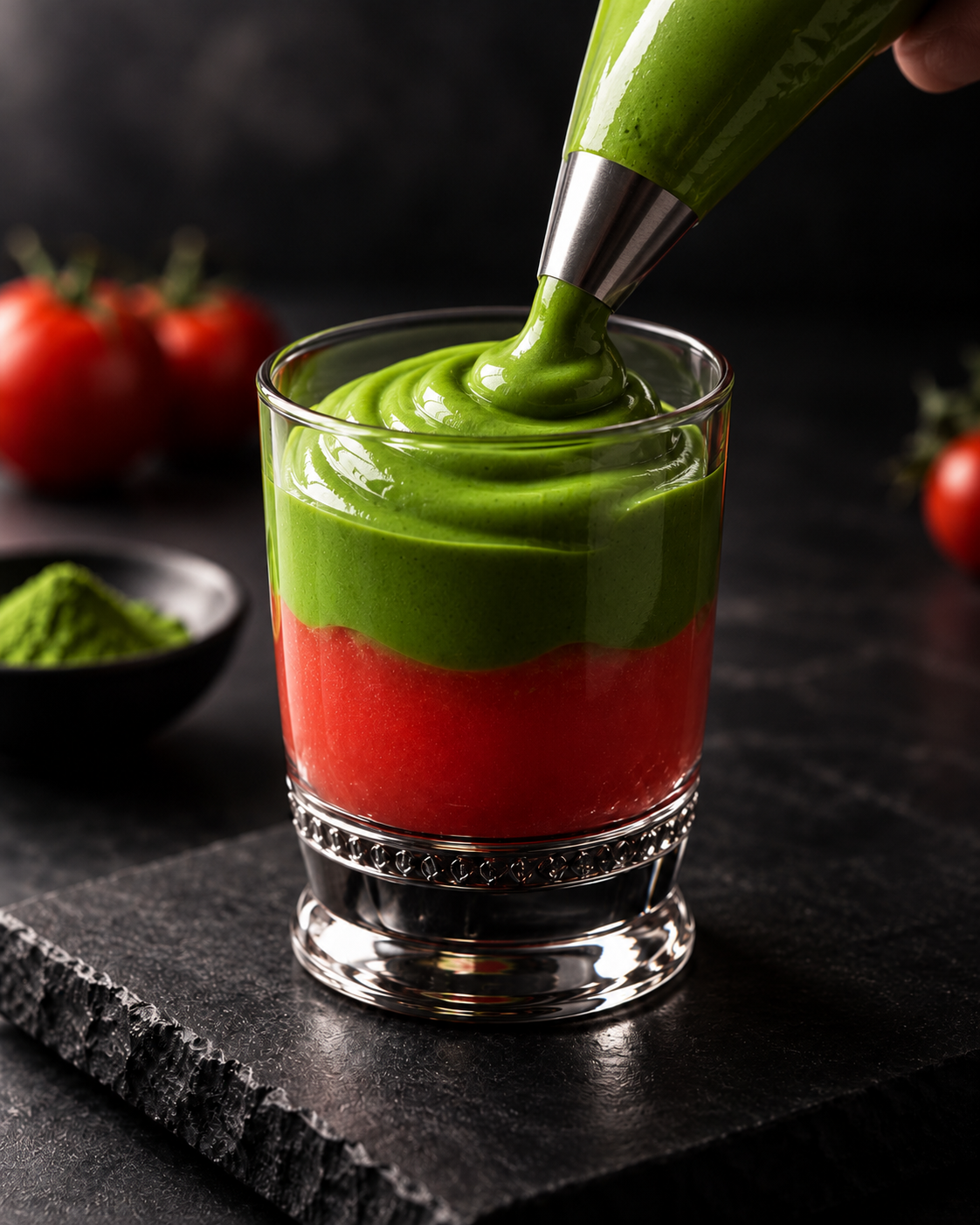
Make sure the tomato layer is sufficiently set. Gently spoon or pipe the matcha mousse over it, then smooth the surface or make a small swirl. Return the glasses to the refrigerator and chill for 3 hours, or until the mousse is fully set. Serve chilled.
Recipe Notes
Test Notes
During testing, the tomato layer set firmly enough to support the matcha mousse, and the matcha layer held its structure after chilling.
Sweetness was balanced against the tomato’s natural acidity and the matcha’s bitterness/astringency.
The finished dessert remained stable through the following day without significant weeping, collapse or layer separation.
Exact setting time and serving yield can vary with gelatin strength, glass size and refrigerator temperature.
Why Keep Tomato and Matcha in Separate Layers?
Tomatoes are acidic, while matcha’s green appearance is influenced by chlorophyll. Acidic ingredients can shift green chlorophyll-based color toward duller or more olive tones. Keeping the layers separate helps preserve the red-and-green contrast and makes the matcha component easier to evaluate.
For product development, this separation also lets you change the matcha profile or dose without reformulating the tomato base. Learn more in Why Matcha Color Changes in Milk and Baking.
How to Adjust the Recipe
For a sweeter dessert
Increase sweetness gradually rather than changing several ingredients at once. Keep the matcha dose fixed during the first test so you can see how added sweetness changes perceived bitterness and matcha character.
For a more savory version
Reduce the sugar in the tomato layer and evaluate with a very small amount of salt. Retest texture and set after changing the formula.
For a stronger matcha flavor
Increase the matcha dose only after testing the current version. More matcha can increase intensity, but may also increase bitterness or astringency and alter texture and cost.
For a softer mousse
A softer texture may require adjusting the gelatin or cream ratio. Test any change as a complete formulation.
Which Matcha Should You Use for Tomato Matcha Mousse?
Start with a culinary matcha profile instead of automatically choosing the highest-priced profile. Evaluate matcha in the finished mousse alongside dairy, sugar, tomato acidity and chilled texture.
- Finished green color and aroma
- Matcha flavor intensity and bitterness/astringency balance
- Compatibility with dairy and the separate tomato layer
- Texture and dose required per serving
- Cost per finished portion
A profile that performs well here may be more useful commercially than a higher-priced straight-whisking profile whose nuances are less apparent in the finished dessert. Explore Matcha for Baking & Desserts and Culinary Matcha Powder.
Testing This Recipe for a Café or Dessert Menu?
Keep preparation conditions consistent when comparing culinary matcha samples. Color, aroma, flavor, bitterness, texture and required dose can change once matcha is combined with other ingredients.
Keep Constant
- Tomato quantity and sugar level
- Milk, cream and gelatin amounts
- Matcha dose during the first comparison
- Chilling conditions, glass size and preparation method
Record
- Finished matcha color and flavor intensity
- Bitterness, astringency and texture
- Tomato-matcha balance and appearance after chilling
- Matcha cost per serving
This comparison is more useful than judging dry powder color alone. If you are developing a café dessert, bakery product or commercial food formulation, tell us the application and expected purchasing volume so suitable culinary profiles can be shortlisted for evaluation. Request Culinary Matcha Samples.
Frequently Asked Questions
What is tomato matcha mousse?
Tomato matcha mousse is a layered dessert with a smooth tomato base and a separate creamy matcha mousse layer. The separation preserves the red-and-green contrast and allows the matcha layer to be evaluated independently.
Can matcha be used with tomato?
Yes, but formulation matters. Tomato acidity can influence matcha color and sensory balance, so this development recipe keeps the two components in separate layers rather than blending them into one mixture.
What type of matcha works best for mousse?
A culinary matcha profile is a practical starting point. Choose based on the finished dessert’s color, flavor intensity, bitterness or astringency, texture and cost per serving.
Can I use more matcha for a stronger green color?
You can test a higher dose, but more matcha does not guarantee a better result. It can also increase bitterness, alter texture and raise cost per serving.
Why is the tomato puree strained?
Straining removes seeds and larger pieces of skin, creating a smoother layer and cleaner visual finish.
Can cafés request matcha samples for dessert development?
Yes. Commercial buyers can request culinary matcha samples and compare them under the same recipe conditions before selecting a profile for larger-volume purchasing.
Has this tomato matcha mousse been kitchen-tested?
This recipe has been kitchen-tested by Matcha Origin Co. as a layered tomato-and-matcha dessert. Commercial users should still validate the formulation with their own ingredients, equipment and service conditions before scaling.
Developing a Matcha Dessert for Commercial Use?
Specifications can narrow the options, but the finished application should make the final decision. Test shortlisted profiles in the actual dessert, keep conditions consistent, record performance and confirm the approved dose before scaling.
Explore Matcha for Baking & Desserts · View Culinary Matcha Powder · Request B2B Samples
Leave a Reply