A dirty matcha latte combines matcha, milk and coffee in one drink, bringing together the vegetal character of matcha with the roasted flavor of coffee.
In cafés, dirty matcha is commonly prepared with espresso. The preparation stills on this page illustrate a different but practical variation using instant coffee as the coffee base, followed by milk and separately prepared matcha.
Both approaches can work. The better method depends on the equipment, service format, target flavor and cost of the café.
For commercial use, treat the recipes below as development starting points rather than universal standards. Matcha, coffee, milk and sweetness should be tested together in the finished drink before the recipe is approved for service.
What Is a Dirty Matcha Latte?
A dirty matcha latte is a milk-based matcha drink with added coffee.
A typical café version includes:
matcha + water + milk + espresso
The result should not taste like coffee with green coloring or like matcha with an unrelated espresso shot added on top.
A good recipe balances:
- matcha flavor
- roasted coffee character
- milk
- bitterness
- sweetness, if used
- total caffeine intensity
- finished color
- cost per serving
The ratio between matcha and coffee matters more than simply making both components stronger.
Instant-Coffee Preparation Demonstration
The preparation stills below show a simple dirty matcha workflow using instant coffee rather than espresso.
The visible preparation sequence is:
- prepare the instant coffee base
- mix or froth the coffee with water
- prepare matcha separately
- add milk to the coffee base
- pour the prepared matcha into the drink
- mix before drinking
The exact ingredient weights and volumes are not reliably visible in the video, so the commercial formula below should not be presented as measurements taken from the footage.
Use the video as a preparation demonstration and the measured formulas below as starting points for controlled recipe testing.
Instant Coffee Version — Starting Café Formula
For cafés without an espresso machine, pop-up concepts, recipe testing or simplified service, an instant-coffee version can be evaluated.
Yield: 1 iced drink
Suggested cup: approximately 450–500 ml
These measurements are a development starting formula, not quantities extracted from the video.
Different instant coffee products vary significantly in roast intensity, bitterness and solubility.
Test the actual brand you intend to use.
1. Prepare the coffee base
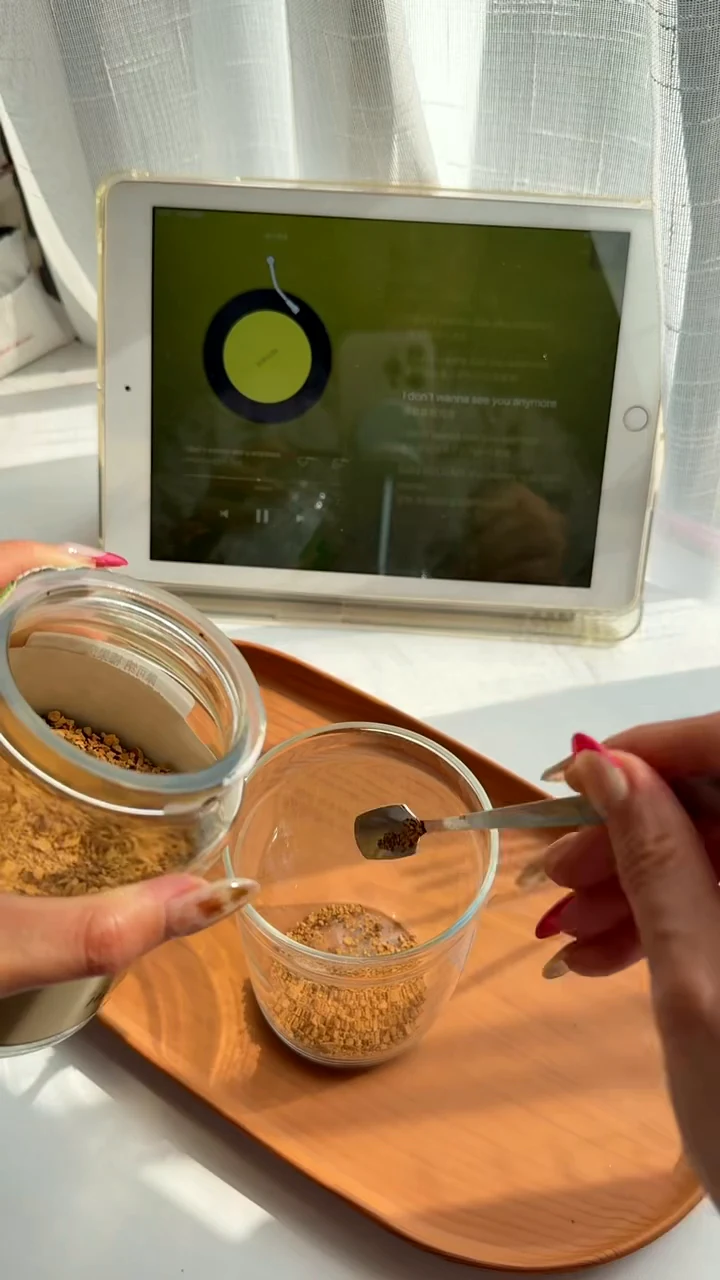
Measure the instant coffee into a preparation vessel.
Add approximately 30 ml of water and mix until the coffee is evenly dispersed.
The water temperature and coffee dose should remain consistent during testing.
2. Prepare matcha separately
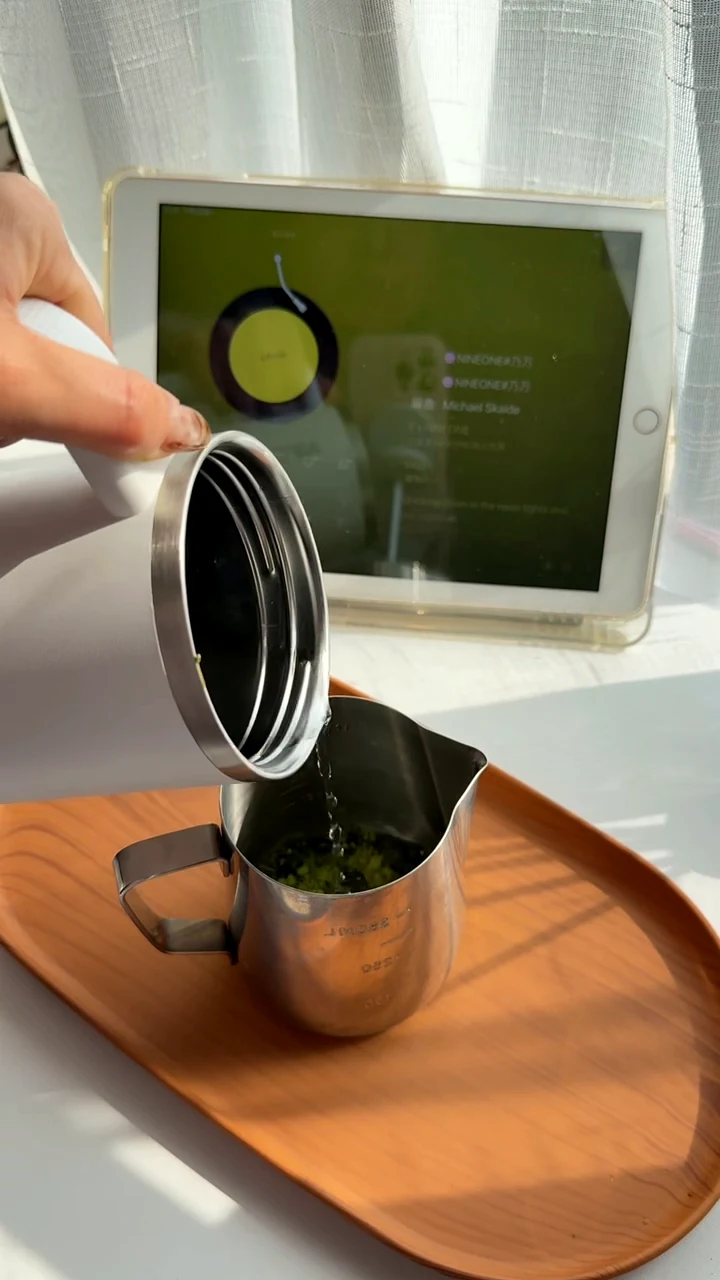
Sift 3 g of matcha into a clean bowl or vessel.
Add approximately 40 ml of warm water at around 70–80°C.
Whisk until smooth with no visible dry powder.
Preparing the matcha separately helps you control dispersion before it enters the milk-and-coffee base.
3. Build the milk-and-coffee base
Add ice to the serving glass.
Pour in approximately 160 ml of cold milk.
Add the prepared coffee base.
You can mix the coffee and milk completely or leave some separation for presentation.
4. Pour the matcha
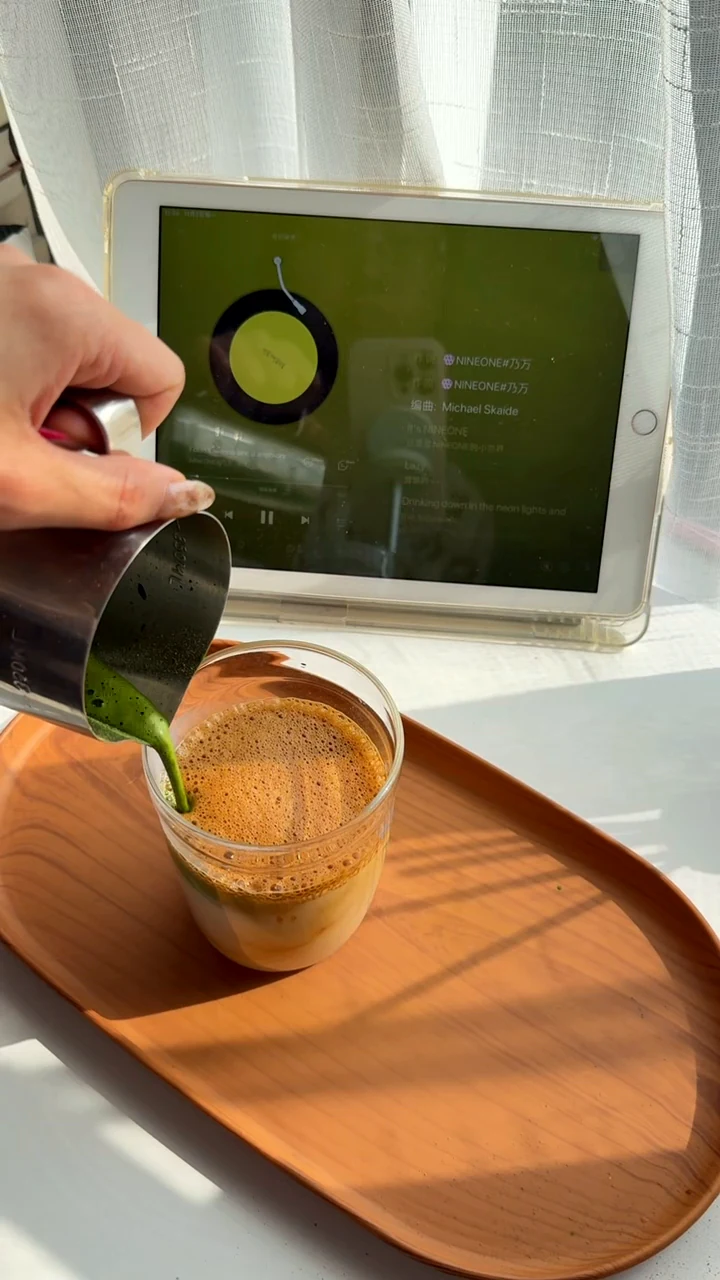
Pour the prepared matcha slowly over the drink.
For a stronger visual layer, pour over the ice or over the back of a spoon.
Layering is mainly a presentation effect.
5. Stir and evaluate
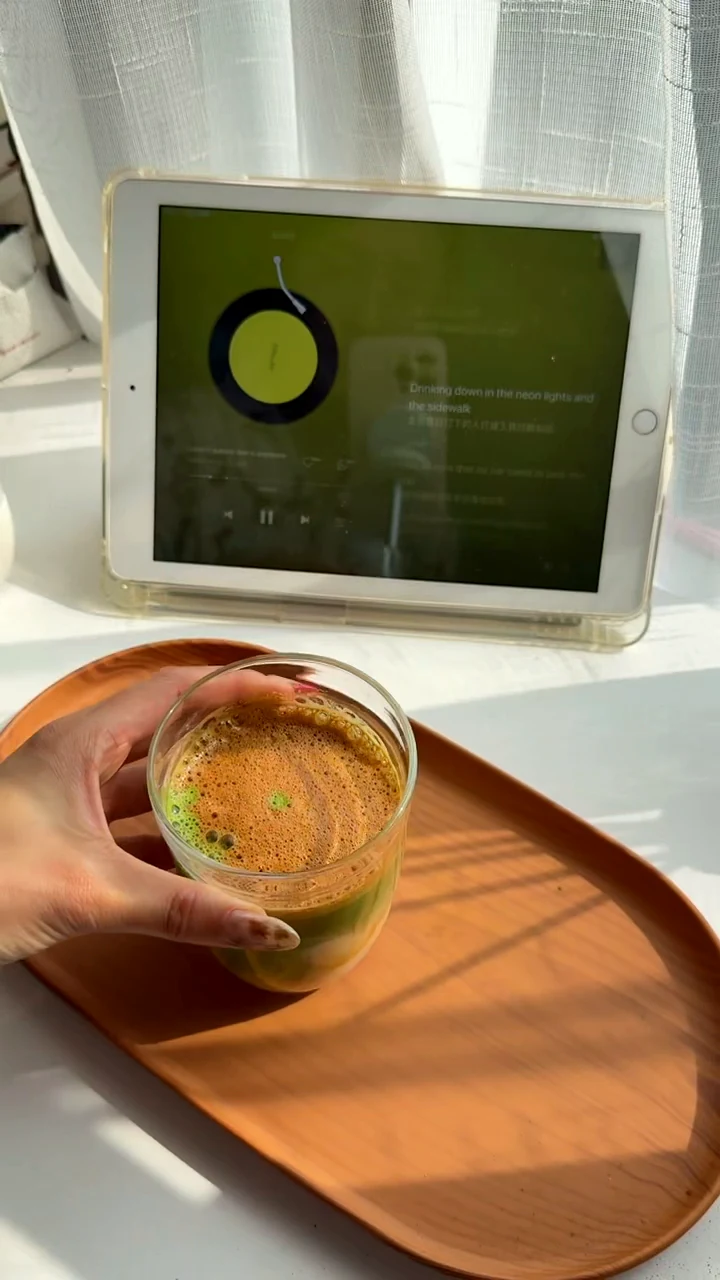
Taste the drink after the coffee, milk and matcha are fully combined.
This gives a more useful picture of the final customer experience.
Café Espresso Version
For cafés with espresso equipment, the more conventional commercial version uses an espresso shot.
Yield: 1 iced drink
Suggested cup: approximately 450–500 ml
The espresso specification should follow the café’s approved coffee program.
Do not treat “one shot” as a universal flavor standard because espresso dose, yield, roast and extraction differ between cafés.
1. Prepare the matcha
Sift the matcha.
Add warm water and whisk until fully dispersed.
2. Prepare the espresso
Pull the espresso using your café’s standard espresso recipe.
Keep the espresso specification consistent during recipe testing.
3. Add ice, milk and optional sweetener
Add ice and milk to the glass.
If the recipe includes sweetener, add the approved amount consistently.
4. Combine coffee and matcha
There are several possible build styles.
You can add:
milk → espresso → matcha
or:
milk → matcha → espresso
The visual result will differ, but the final recipe should still be evaluated after stirring.
5. Stir and evaluate
Evaluate whether both coffee and matcha remain identifiable.
If one completely dominates, adjust one variable at a time.
Instant Coffee vs Espresso
These two versions serve different operational needs.
| Factor | Instant Coffee | Espresso |
|---|---|---|
| Equipment | Minimal | Espresso machine |
| Coffee preparation | Dissolved coffee base | Extracted espresso |
| Service complexity | Lower | Standard café workflow |
| Coffee character | Depends heavily on instant product | Depends on bean, roast and extraction |
| Recipe control | Coffee grams + water | Espresso dose/yield specification |
| Useful for | Testing, pop-ups, simple operations | Established café menus |
Instant coffee is not automatically a lower-value method, and espresso is not automatically the better recipe.
The question is whether the finished drink matches the menu concept and can be reproduced consistently.
For a specialty café, espresso will usually fit the existing workflow more naturally.
For small operations or recipe testing, instant coffee may be easier to standardize.
Matcha-to-Coffee Balance
Dirty matcha contains two ingredients that can both contribute bitterness and strong flavor.
This creates a common recipe problem:
increasing both matcha and coffee does not necessarily make the drink better.
The café should find the point where both ingredients remain recognizable.
A useful testing matrix is:
| Test | Matcha | Coffee | Objective |
|---|---|---|---|
| A | 2.5 g | 1 espresso shot | Coffee-forward |
| B | 3 g | 1 espresso shot | Balanced baseline |
| C | 3.5 g | 1 espresso shot | Matcha-forward |
Keep the following unchanged:
-
espresso specification
-
milk
-
ice
-
cup
-
sweetener
-
water
-
preparation method
Then evaluate the finished drinks side by side.
What Should a Dirty Matcha Latte Taste Like?
A balanced dirty matcha should allow the customer to notice both components.
Evaluate:
-
matcha flavor through milk
-
coffee roast character
-
coffee bitterness
-
matcha bitterness and astringency
-
sweetness
-
milk balance
-
aroma
-
aftertaste
-
overall intensity
-
cost per serving
The ideal balance depends on the menu.
A coffee-focused café may want espresso to lead.
A matcha-focused café may want matcha to remain more prominent.
Neither is universally correct.
Why Can Dirty Matcha Taste Too Bitter?
Coffee and matcha can both contribute bitterness.
If the drink becomes harsh, do not immediately add a large amount of syrup.
Review the variables separately.
Matcha dose
Too much matcha may increase bitterness without improving overall balance.
Coffee extraction
Poorly balanced espresso can contribute excessive bitterness independently of the matcha.
Coffee quantity
Adding a second shot may overwhelm the tea.
Matcha preparation
Keep water temperature and dispersion consistent.
Milk volume
Too little milk can make both tea and coffee intensity feel much stronger.
Sweetener
Sweetness can change perceived bitterness, but it should not be used to hide a poorly balanced base recipe.
How Much Matcha Should a Café Use?
A practical starting point is around 2.5–3 g per serving.
However, matcha dosage should be evaluated against:
coffee strength
milk quantity
cup size
sweetness
matcha profile
menu positioning
If 3 g disappears after espresso is added, do not automatically increase the matcha.
First confirm that the coffee component is not unnecessarily strong.
For a structured approach to café dosage testing, see How Much Matcha Powder Should You Use for a Latte?.
One Espresso Shot or Two?
More espresso does not automatically create a better dirty matcha.
A double shot may work for a strongly coffee-forward drink, but it can also overwhelm the matcha and increase bitterness.
If your café wants to test two shots, compare:
1 shot + approved matcha dose
against:
2 shots + the same matcha dose
before changing other ingredients.
Record:
-
coffee dominance
-
matcha visibility
-
bitterness
-
milk balance
-
customer-facing flavor profile
-
ingredient cost
The final recipe should be a deliberate menu decision.
Dirty Matcha With Oat Milk
Oat milk can work especially well in coffee-and-matcha drinks because it often contributes additional body and perceived sweetness.
However, plant-based milks vary substantially.
Test the actual oat milk used by the café.
Compare:
-
sweetness
-
texture
-
matcha visibility
-
coffee flavor
-
separation
-
overall balance
Do not assume the dairy recipe can be copied without adjustment.
If both dairy and oat versions appear on the menu, approve them separately.
Hot Dirty Matcha Latte
Dirty matcha can also be served hot.
A starting formula could be:
| Ingredient | Starting Amount |
|---|---|
| Matcha | 2.5–3 g |
| Warm water | 40 ml |
| Espresso | 1 shot |
| Steamed milk | 170–180 ml |
| Sweetener | Optional |
Prepare the matcha and espresso separately.
Combine them with steamed milk using the café’s preferred build method.
Do not assume the iced formula will taste identical when served hot.
Temperature changes aroma, sweetness and perceived bitterness.
Approve the hot version separately.
10-Drink Café Planning
For menu planning, an iced espresso formula can be estimated as:
| Ingredient | 1 Drink | 10 Drinks |
|---|---|---|
| Matcha | 3 g | 30 g |
| Water for matcha | 40 ml | 400 ml |
| Espresso | 1 shot | 10 shots |
| Milk | 160 ml | 1.6 L |
| Ice | 120 g | 1.2 kg |
This is a purchasing and planning reference.
It is not a recommendation to prepare ten completed dirty matcha lattes in advance.
For busy service, standardize the individual components and assembly process rather than holding finished iced drinks.
Should Cafés Batch Matcha for Dirty Matcha?
A café can explore pre-batched matcha or another service component, but it should be tested independently.
Evaluate:
-
color over time
-
settling
-
dispersion
-
flavor
-
holding conditions
-
portion consistency
-
food-safety requirements
For high-volume menu development, you can also compare a pre-portioned matcha cold foam workflow or other standardized café components.
Do not copy an arbitrary online shelf life into your own operation.
Choosing Matcha for Dirty Matcha
Use our matcha for lattes and café drinks guide for the broader application criteria, then test the selected matcha in your actual coffee-and-milk recipe.
Dirty matcha does not automatically require the highest-priced or ceremonial-positioned matcha.
The matcha needs to compete with:
milk
coffee roast
espresso bitterness
optional sweetener
That means the most useful test is the completed drink.
Compare samples for:
-
matcha flavor through coffee and milk
-
bitterness
-
finished color
-
dispersion
-
dose required
-
consistency
-
cost per serving
A Café / Latte Matcha Profile may work well for regular café service.
A Premium Latte Matcha Profile may be worth testing if the matcha needs to remain more prominent beside espresso.
Compare current options in Matcha Profiles & Wholesale Price Guide.
Cost per Serving
Dirty matcha combines two relatively high-value beverage components, so cafés should calculate the complete drink rather than only the matcha cost.
Calculate the matcha portion with:
matcha price per kilogram ÷ 1,000 × grams used
Then add:
-
espresso / coffee cost
-
milk
-
sweetener
-
ice
-
cup and lid
-
garnish
-
normal preparation losses
A lower-cost matcha is not necessarily the lower-cost recipe if it requires substantially more powder to remain noticeable beside the coffee.
Likewise, a stronger espresso specification may require adjustments elsewhere in the drink.
Use the Matcha Cost Per Serving Calculator when comparing café formulas.
Dirty Matcha Troubleshooting
The espresso completely covers the matcha
Before increasing matcha, test a less dominant coffee specification or reduce the coffee portion.
Then reassess the matcha dose.
The matcha covers the coffee
Reduce the matcha dose slightly while keeping the espresso and milk constant.
The drink tastes too bitter
Check both components separately.
Do not assume the matcha is the only source of bitterness.
The matcha is clumpy
Sift the powder and fully disperse it before combining with the drink.
The layers disappear
Layer separation depends on density, ice and pouring technique.
The visual effect is secondary to the finished taste.
Different baristas make different drinks
Convert the recipe into measurable specifications:
-
matcha grams
-
water
-
espresso specification
-
milk volume
-
syrup portion
-
ice
-
cup size
-
assembly sequence
Do not rely on phrases such as “a scoop of matcha” or “some coffee.”
Café SOP Example
Once approved, record:
| Item | Approved Specification |
|---|---|
| Matcha product | Selected profile |
| Matcha dose | ___ g |
| Matcha water | ___ ml |
| Coffee type | Espresso / instant |
| Espresso specification | ___ |
| Instant coffee dose | ___ g if applicable |
| Coffee water | ___ ml if applicable |
| Milk | ___ ml |
| Sweetener | ___ ml |
| Ice | ___ g |
| Cup | ___ ml |
| Build order | Defined |
| Final sensory target | Defined |
This turns a recipe into an operational café standard.
Menu Positioning Ideas
Dirty matcha can work as:
-
a coffee-and-matcha crossover drink
-
an alternative to a standard iced latte
-
a premium morning matcha
-
a signature café beverage
-
a matcha option for existing coffee customers
A simple menu description could be:
Dirty Matcha Latte
Matcha, milk and espresso served over ice.
For the instant-coffee variation:
Coffee Matcha Latte
Matcha layered with milk and a smooth coffee base.
Clear menu naming is especially useful when customers may expect espresso from the word “dirty.”
Frequently Asked Questions
What is a dirty matcha latte?
A dirty matcha latte combines matcha, milk and coffee. Café versions commonly use espresso, while simplified variations can use an instant coffee base.
Does dirty matcha contain espresso?
Usually, but not always. Espresso is common in café dirty matcha recipes. The preparation stills on this page illustrate an instant-coffee variation instead.
How much matcha should I use?
A practical development range is around 2.5–3 g per serving, but the final dose depends on coffee strength, milk, cup size and desired matcha intensity.
How many espresso shots should go into dirty matcha?
One shot is a practical starting point. Test additional coffee separately because a stronger espresso component can overwhelm the matcha.
Can I make dirty matcha with instant coffee?
Yes. Instant coffee can be used as a simplified coffee base. Standardize the instant coffee product, coffee dose and water so the recipe remains repeatable.
Can dirty matcha be made with oat milk?
Yes. Test the specific oat milk because sweetness, body and interaction with coffee and matcha vary between products.
Should cafés use ceremonial matcha for dirty matcha?
Not necessarily. For a milk-and-coffee application, finished-drink performance is more useful than selecting from the ceremonial label alone.
Is coffee and matcha too bitter together?
They can become overly bitter if the coffee, matcha or both are too strong. Develop the recipe systematically rather than hiding excessive bitterness with additional sweetener.
Build a Dirty Matcha Around Your Café’s Real Ingredients
The best dirty matcha latte is not determined by one fixed internet recipe.
The coffee program, matcha product, milk, sweetness and serving format all affect the finished drink.
Start with a controlled formula.
Change one variable at a time.
Compare the finished drink after stirring.
Then document the approved recipe so every barista can reproduce it.
Matcha Origin Co. supports cafés and beverage brands with application-focused matcha profiles, evaluation samples and commercial supply.
Calculate Matcha Cost Per Serving →
Continue building your café matcha menu with:
Matcha Cold Foam Recipe for Cafés
Brown Sugar Matcha Latte Recipe for Cafés